

The 1986 Porsche 962C, a dominant force in the International Motor Sports Association Grand Touring Prototype (IMSA GTP) series, hit speeds exceeding 230 mph on qualifying runs at tracks like Le Mans. This era, stretching from 1981 to 1993, unleashed some of motorsport’s most audacious machinery, blurring the lines between race car and experimental aircraft. Designs looked like fever dreams from a CAD program, each curve sculpted for raw speed, not curb appeal. This period ripped up the rulebook, giving us a vision of racing’s future that still feels years ahead.
In the mid-1980s, IMSA’s GTP regulations granted engineers an unprecedented canvas, transforming racetracks into crucible labs for audacious automotive design. Manufacturers pushed boundaries, creating machines that felt less like traditional cars and more like fighter jets on wheels, bending aerodynamics and engine performance to their will. This was a genuine golden age, where innovation flourished unchecked by restrictive rulebooks, spawning radical concepts that quietly influenced road car technology. The most extreme and impactful vehicles from this period tore up convention, forging an unforgettable chapter in motorsport history.
1. Ford Mustang GTP
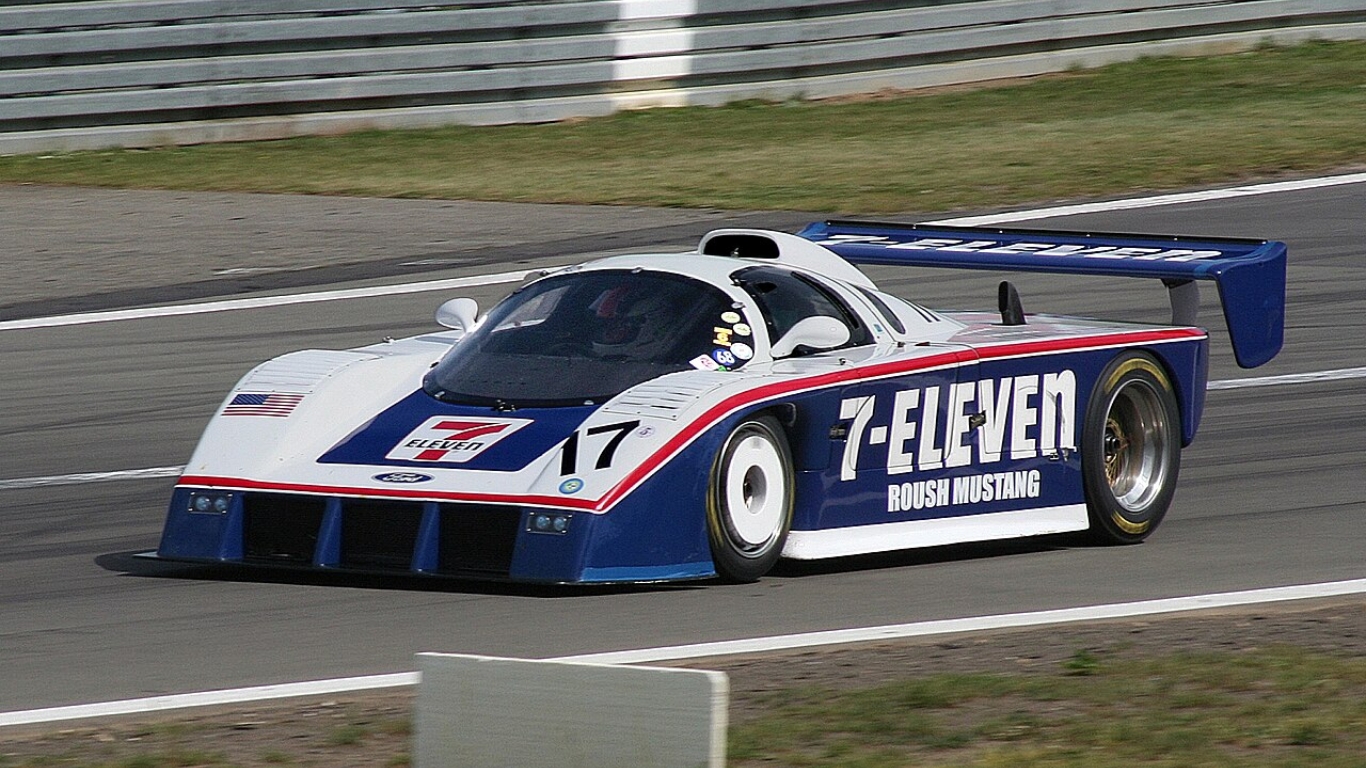
A front-engine gamble that shocked IMSA with a debut win, then vanished into reliability nightmares.
The Ford Mustang GTP made a sensational debut, winning overall at the 1983 Road America 500. Bob Riley’s design gambled on a front-engine layout: a turbocharged 1.7-litre bi-turbo four, later a 2.1-litre Cosworth BDA-based turbo four delivering 600 hp. This freed the carbon-fiber Nomex composite monocoque’s underside for massive ground-effect tunnels, creating huge downforce.
Drivers initially loved its raw speed, but frustration quickly followed. Reliability issues plagued the program, making consistent pace impossible after that lone victory. Ford campaigned the Mustang GTP through 1984, then shifted to conventional mid-engine designs starting in 1985. The Mustang GTP proves audacious engineering needs more than just a big idea to win in the long run.
2. Spice SE89P

The privateer’s Swiss Army knife that mixed and matched engines like a buffet.
The Spice SE89P, debuting in 1989, proved anyone could bite without a factory budget. Spice Engineering built this compact, carbon-and-Kevlar monocoque for privateer teams. It offered a buffet of engine choices: slot in Pontiac, Chevrolet, Oldsmobile, Buick, or even Ferrari powerplants. This adaptability made the car stretch limited resources effectively.
Visually, the car was narrow and undersized compared to factory giants, giving it a distinctive silhouette in the Camel Lights class. Privateer teams leveraged its engine flexibility to outmaneuver factory efforts, optimizing powerplants for different race conditions. It was a defiant statement against escalating costs, proving clever engineering still netted significant results.
3. Argo JM19
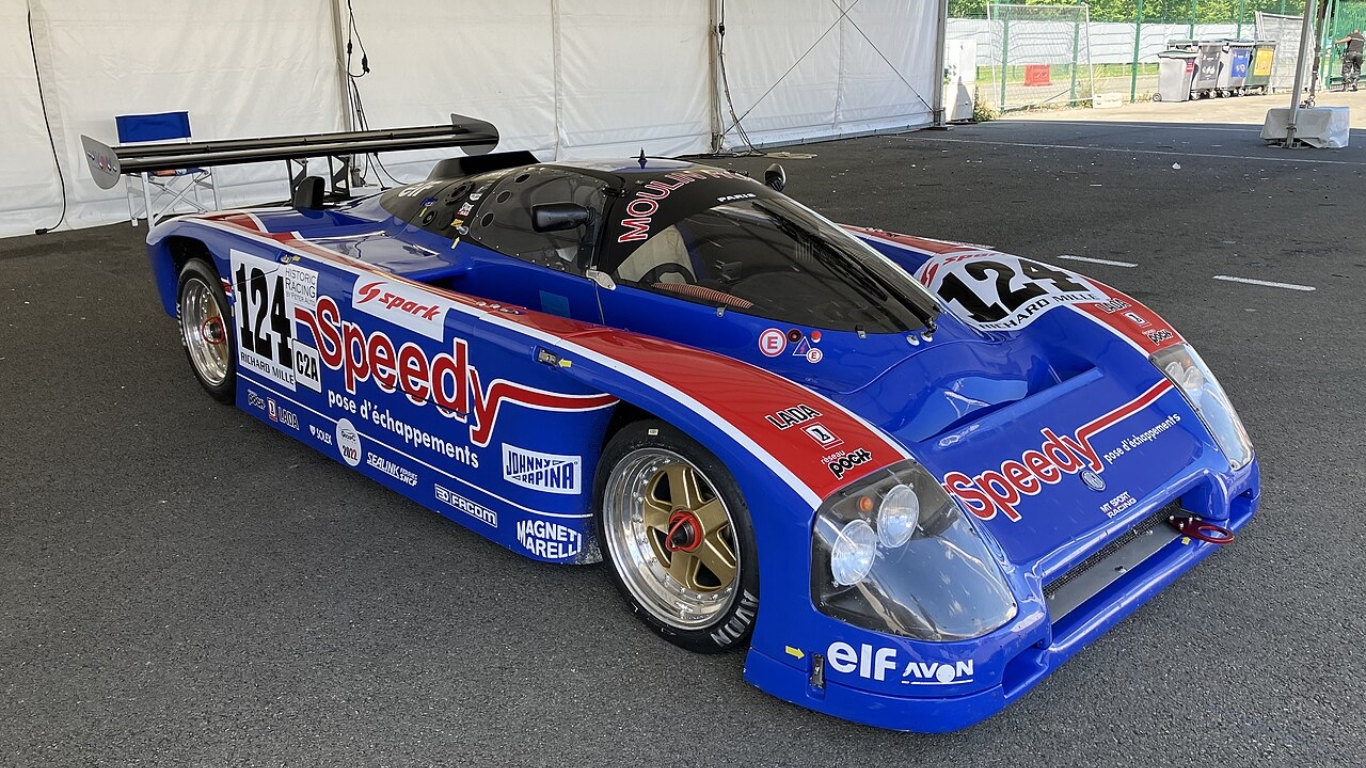
A full-length aluminum honeycomb monocoque that racked up 7 wins and 21 podiums on privateer grit.
The Argo JM19, introduced by British constructor Argo Racing Cars in 1985, achieved 7 wins and 21 podiums across IMSA and Group C2. Its full-length aluminum honeycomb monocoque, with carbon-fiber composite bodywork by Achim Storz, emphasized low drag and reduced weight.
Engine versatility defined the JM19, from Jim Downing’s successful Mazda 13B rotary to a volatile Motori Moderni turbo V6, reputed to produce up to 1,000 bhp. That power was a high-stakes gamble. Its often unfinished aesthetic reflected its privateer origins and proved results can trump polish. The JM19 delivered consistent performance on shoestring budgets, showing that focused engineering beats bottomless factory wallets.
4. Tiga GC288
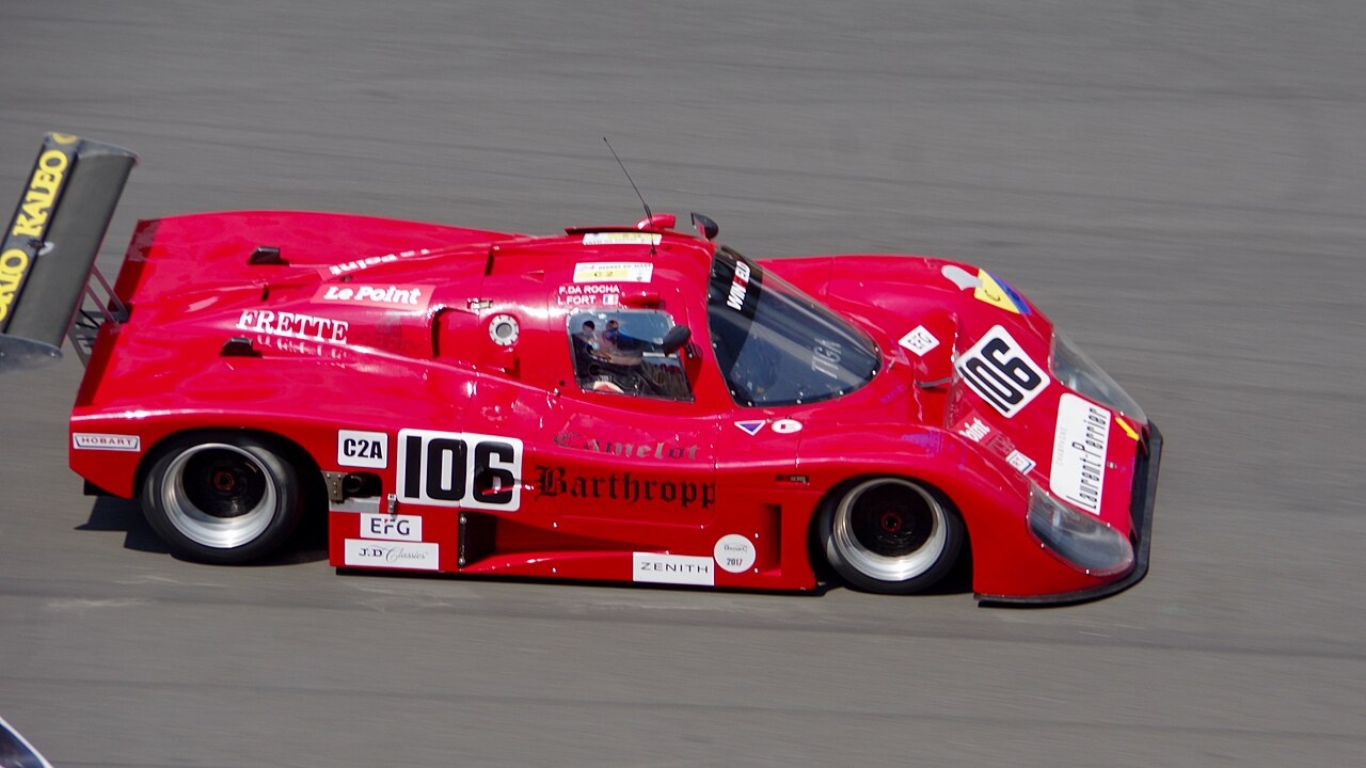
Three chassis built, one championship won—privateer engineering at its sharpest.
Only three Tiga GC288 chassis were built, yet they punched well above their weight in both Group C2 and IMSA Lights. This British prototype’s robust aluminum honeycomb monocoque and in-board suspension maximized ground-effect tunnels, pinning the car to the track. Powerplants included Ford-Cosworth DFL V8s, delivering 465–490 bhp from 3.3–3.5 litres, and Buick V6s. This mid-engine, rear-drive coupe weighed just 850 kg (1,874 lb).
Essex Racing’s Tiga secured the 1989 IMSA Camel Lights Championship, proving focused engineering challenges big budgets. Chassis #365 notably won the C2 class at the Nürburgring 1000 km in 1988. Tiga’s effective design showed smarts, not just cash, rewrites racing outcomes. That relentless privateer drive resonates with anyone pushing an underdog vehicle to its limits.
5. Chevrolet Corvette GTP

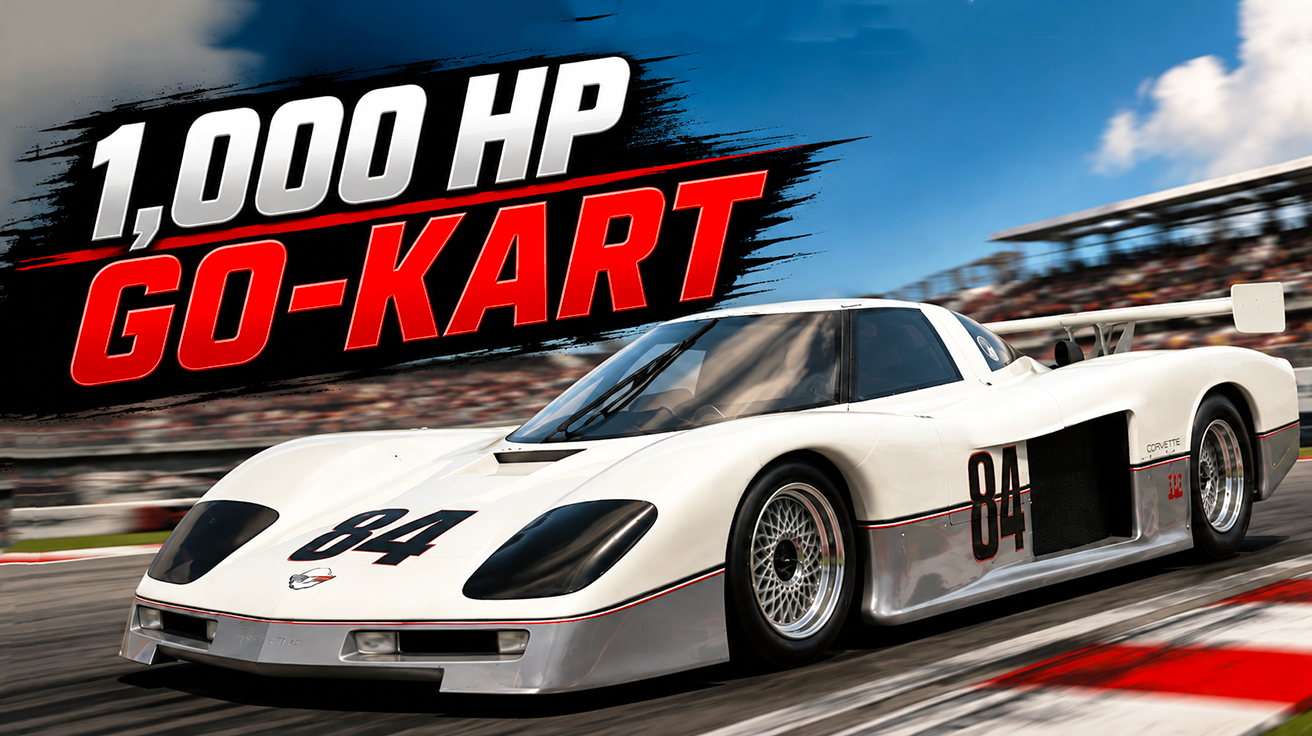
A 1,000-hp factory prototype that married Lola engineering with Corvette branding—and ate budgets alive.
MotorTrend once described the Chevrolet Corvette GTP as essentially a “1,000 horsepower go-kart,” a label underscoring its raw nature. General Motors and Lola Cars International co-developed this beast, clothing a purpose-built Lola chassis in aerodynamic composite bodywork that only offered a visual echo of the C4 Corvette. This was a purebred racer, built for the track, not the open road.
Early versions housed a highly boosted 3.4-litre turbocharged Chevy V6, delivering over 750 hp, peaking at 1,000 hp for qualifying. Later, some chassis used 5.8-litre aluminum-block V8s, producing around 650 hp. Drivers battled both immense power and persistent reliability issues, a combination that made factory funding unsustainable. GM pulled support after the 1988 season, leaving private teams to soldier on with what remained of the program.