

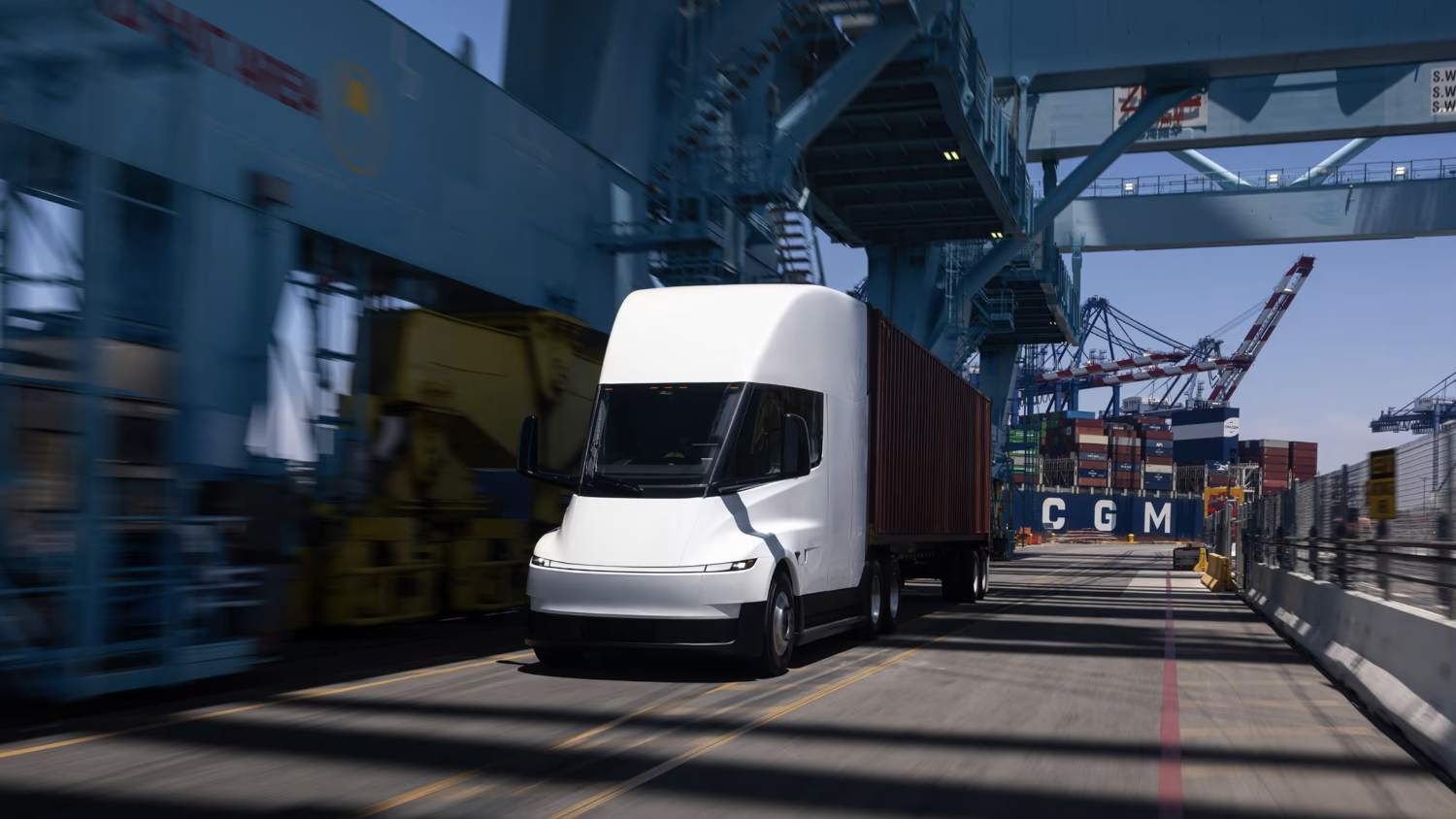
A deal that nearly doubles the entire U.S. electric Class 8 fleet just landed — and Tesla secured the lead role. ZET SCALE, a shipper–carrier purchasing alliance co-led by Catalyst Mobility and the Smart Freight Centre, announced a 2,500-truck battery-electric Class 8 commitment on September 22, describing it as the largest of its kind in North American history. Tesla cleared a competitive request-for-proposals process to become primary supplier. Kenworth, RIDE, and Volvo are named as secondary options. How many of the 2,500 vehicles will be Tesla Semis specifically remains unconfirmed.
How the Deal Works
ZET Financial’s fair-market-value leasing structure is designed to reduce the residual-value exposure that has long made fleet operators wary of electric trucks.
ZET Financial issues the purchase order and operates ZET Lease, a program intended to limit carriers’ risk when vehicle values are uncertain at lease-end. Founding shippers include Microsoft and PepsiCo. Planned deployment hubs span Los Angeles, Stockton, Bakersfield, Seattle–Tacoma, Houston, Dallas, San Antonio, Chicago, Atlanta, and the Newark–New York corridor.
- ZET SCALE says the 2,500-truck commitment is the largest electric Class 8 order in North American history
- The deal reportedly nearly doubles the current U.S. electric Class 8 fleet
- Tesla is primary OEM; Kenworth, RIDE, and Volvo serve as secondary options
- ZET Lease’s fair-market-value structure is intended to reduce carrier exposure to uncertain resale markets
- Long-term target: up to 10,000 trucks across North America
Demand Is Ready. Supply Has to Prove It.
Tesla’s primary-supplier status is significant, but confirmed delivery volume and a competitive RFP win are two very different things.
Tesla Semi program director Dan Priestley said Tesla was “proud to be the primary selection in the RFP” and characterized the deal as giving shippers and carriers a competitive edge. For context, this commitment is five times larger than the 500-truck Einride deal, previously described as Tesla’s largest Semi order — though that comparison reflects overall order size, not confirmed Tesla-specific unit counts.
Tesla’s dedicated Nevada Semi factory is designed for an eventual annual capacity of roughly 50,000 trucks. That figure represents theoretical full-rate output, not near-term production. Outside analysts reportedly estimate 2026 Semi deliveries at somewhere between 5,000 and 15,000 units — a range the 2,500-truck ZET SCALE commitment falls below, though delivery timing for the alliance remains unspecified. Tesla must still scale battery supply, assembly, charging infrastructure, and service operations concurrently. Separately, IMC Logistics announced plans for 50 Tesla Semis in California port drayage — predictable routes, return-to-base runs, and depot-charging opportunities that make battery-electric trucks operationally easier to deploy than on irregular long-haul corridors.
Why Carriers Are Still Watching Closely
Aggregating shipper demand is meant to close the confidence gap that has slowed electric freight adoption — but technology and infrastructure risks remain.
Catalyst Mobility CEO Michael Berube framed the challenge directly: “You can have good technology and still not have a market.” Fleet operators still face real technology risk and charging-infrastructure gaps. ZET Lease is intended to address residual-value uncertainty; the other barriers remain live concerns. The alliance’s demand-pooling model is designed to help break that deadlock — volume is expected to encourage manufacturer competition and give carriers greater confidence to commit.
The next figure worth tracking is how many of the 2,500 trucks are confirmed Tesla Semis, and whether delivery schedules hold as the Nevada factory ramps toward full production. The demand signal is on record. The factory floor still has to answer.