

Depreciation transforms six-figure dream machines into attainable realities, offering supercar performance without the original supercar price tag. Many cars that originally commanded well over $100,000 shed a staggering 70% of their value within a decade. For anyone who’s ever watched exotic metal scream past on a canyon road and felt the pull, this collection of high-octane legends delivers visceral driving experiences and character new cars often lack. These machines still provide pure driving joy on the open road—now at prices that won’t require liquidating retirement accounts.
10. Maserati GranTurismo (2008 – 2019)
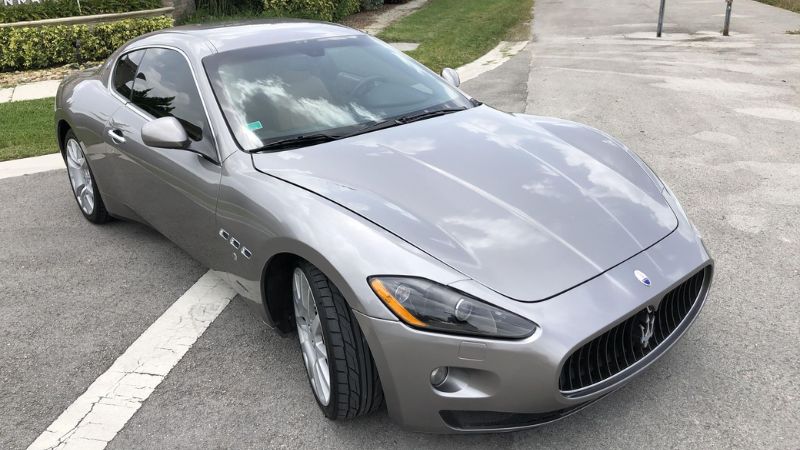
Italian passion meets accessible exotic ownership—if the repair bills don’t scare off first.
The first-generation Maserati GranTurismo arrived in 2008 as a rolling sculpture, a 2+2 grand tourer styled by Pininfarina that commanded attention throughout its production run. Early models featured a Ferrari-derived 4.2-liter naturally aspirated V8 producing around 400 hp, while later 4.7-liter versions cranked out up to 454 hp. These Italian beauties originally fetched between $130,000 and $150,000.
A decade of depreciation—estimated at 70–75% over 10 years—has brought many examples within reach for under $30,000. This Maserati offers usable rear seats and a dramatic soundtrack, making accessible exotic ownership a real possibility. However, budget for significant repair bills, especially for suspension and electrical gremlins, not to mention its thirst for fuel. Few cars deliver such a blend of charisma and usable GT capability at such an attainable price.
9. Alfa Romeo Giulia Quadrifoglio (Launched ~2016)
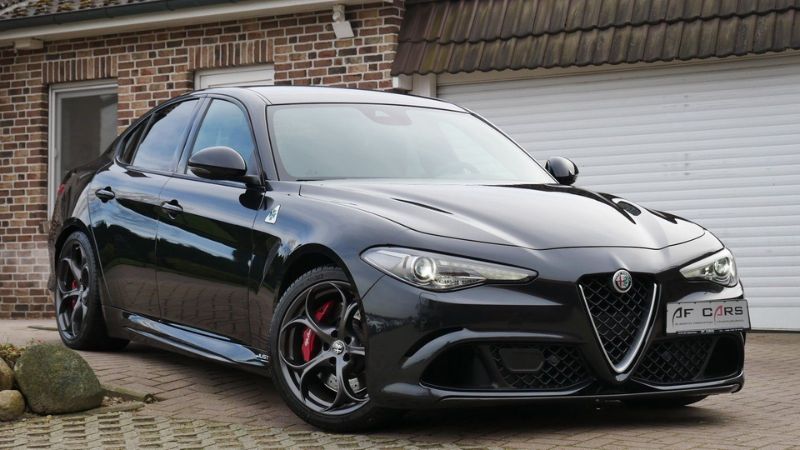
A sedan packing 505 horses for under $35,000 sounds impossible—until the repair bills arrive.
This Italian sedan, born to challenge the German establishment, packs a Ferrari-derived 2.9-liter twin-turbo V6 churning out a ferocious 505 hp and 443 lb-ft of torque. That’s enough to launch from 0 to 60 mph in the mid-3-second range, accompanied by an exhaust note that screams to a top-end rush. Original pricing hovered around $75,000, but steep depreciation means many now trade for about half that.
The Quadrifoglio’s sharpness is undeniable; its adaptive dampers, torque-vectoring diff, and Brembo brakes deliver handling that rivals dedicated sports cars. Anyone who’s hammered third gear on a backroad knows the grin that follows. However, Alfa’s historical reputation lingers. Long-term tests from Car and Driver documented electrical glitches, sensor problems, cooling system faults, and even complete engine replacements in some test vehicles. Consider an extended warranty mandatory, much like a spare tire on a cross-country run. This car demands accepting its quirks in exchange for an unparalleled driving experience.
8. Mercedes-Benz E63 AMG (W212)
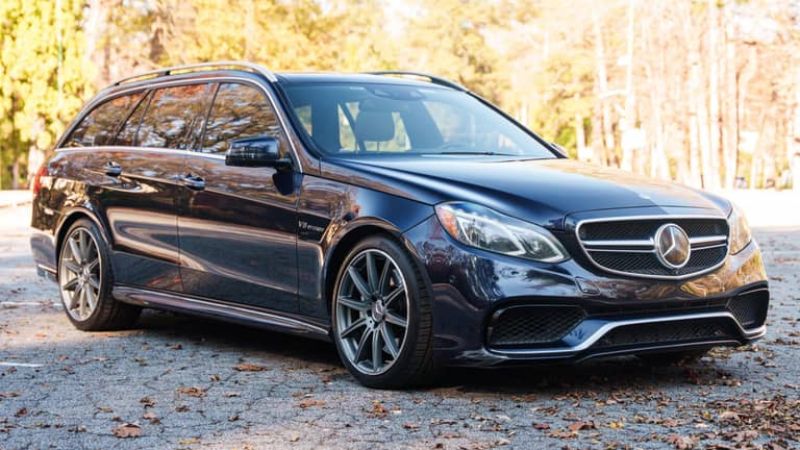
Hand-built AMG fury now trades for family-sedan money—maintenance costs not included.
Once commanding upward of $100,000 when new, the Mercedes-Benz E63 AMG (W212) now presents an almost scandalous proposition on the used market, often found for under $40,000. The package includes a hand-built AMG V8, whether the original naturally aspirated 6.2-liter pushing up to 518 hp or the later 5.5-liter twin-turbo variant delivering 577 hp and 590 lb-ft. This car offers brutal launch capability and composed cornering, all from a heated and cooled leather throne.
Picture a cross-country drive, devouring tarmac while the luxury interior makes the miles disappear. The rare wagon version, a true wolf in sheep’s clothing, combines family hauler practicality with supercar-slaying power. This potent mix of performance and opulence, however, carries the AMG tax: an uncompromising demand for precise and often costly maintenance involving complex air suspension, electronics, and that high-output twin-turbo V8.
7. BMW M5 (F10 Generation)
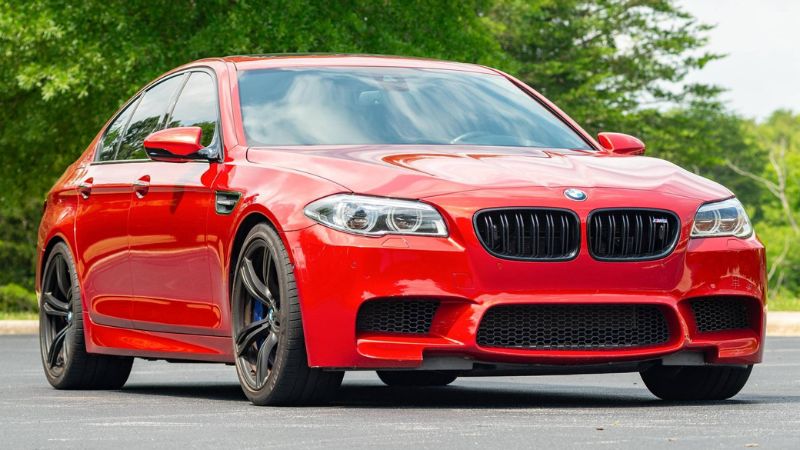
Twin-turbo torque replaces the V10’s scream—and the price tag drops to used Camry territory.
The fifth-generation BMW M5 cemented its legend as a super sedan, with its 4.4-liter twin-turbocharged V8 engine unleashing 560 hp and 502 lb-ft of torque. Zero to 60 mph arrives in about 4.0 seconds. This twin-turbo setup delivers impressive low-end torque, a significant shift from the high-revving V10 of its predecessor, with some markets even offering a 6-speed manual.
Imagine effortlessly eating up the miles on an unrestricted autobahn, the scenery blurring while commanding this understated missile. Originally priced between $90,000 and $100,000, examples now appear in the mid-$20,000 range. This blend of luxury and blistering performance comes with a caveat: budget for complex maintenance involving brakes, tires, and potential high-cost repairs to the dual-clutch transmission and turbochargers.
6. Cadillac CTS-V (Third Generation, 2016 – 2019)
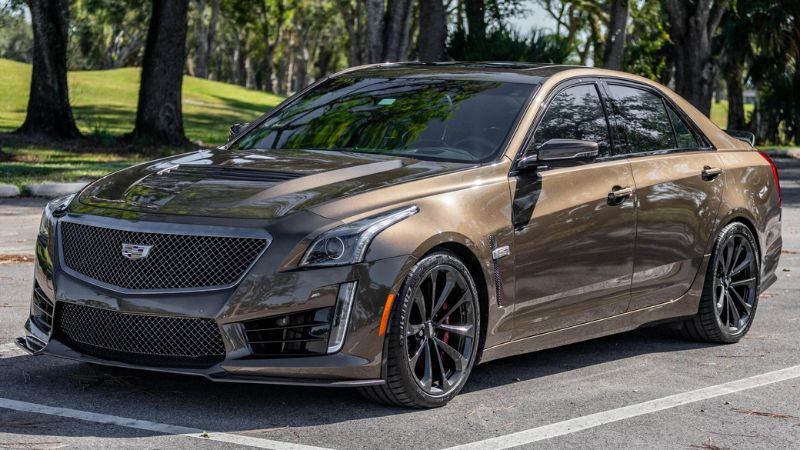
Corvette Z06 power in a four-door package—American muscle meets German supersedans.
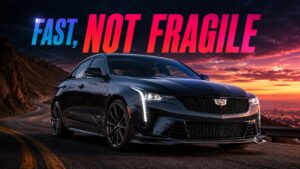
The third-generation Cadillac CTS-V pulled its formidable 6.2-liter supercharged V8 engine, the LT4, directly from the C7 Corvette Z06. This American iron delivered a staggering 640 hp and 630 lb-ft of torque, propelling the sedan from 0-60 mph in about 3.6 seconds and pushing toward a top speed over 200 mph. The supercharger’s mechanical shriek provides a distinct warning for anything in the path during overtaking maneuvers.
Cadillac equipped it with track-ready features like Magnetic Ride Control adaptive suspension and Brembo performance brakes, enabling it to outmaneuver many pricier European rivals. Originally costing around $85,000, this potent machine now commands roughly half that on the used market. The pushrod V8 proves simpler and cheaper to maintain than comparable high-output German turbo engines, though items like magnetic dampers and performance tires remain costly.
5. Jaguar F-Type R
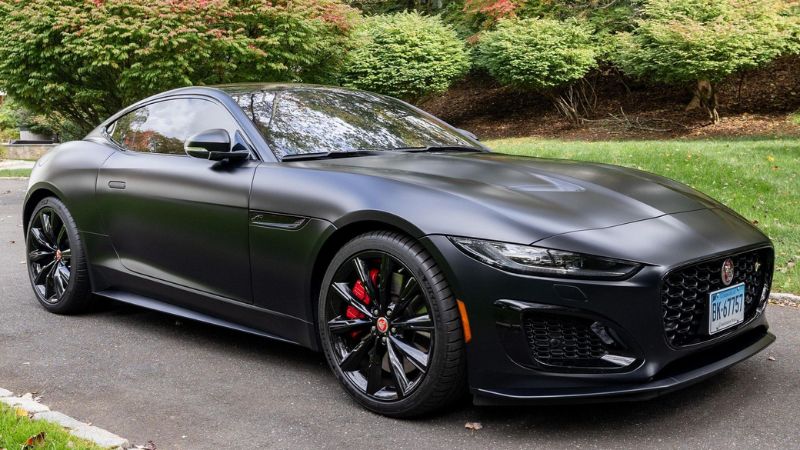
British drama meets supercharged fury—consumables vanish faster than free samples at Costco.
The 5.0-liter supercharged V8 in the Jaguar F-Type R announces itself with a visceral bark, ripping through quiet like a distant thunderstorm. Its timeless design feels sculpted, not merely drawn, welcoming drivers into a luxurious, driver-focused cabin. Unleashing 550-575 hp through an 8-speed automatic, it charges forward with aggressive urgency, transforming routine drives into spirited sprints.
While original MSRPs soared above $100,000, examples now appear for around $32,000. Ownership brings challenges: electronic gremlins and differential woes are known issues, while consumables like tires and brakes disappear rapidly. Despite these quirks, the F-Type R remains a raw, stylish performance bargain, delivering an unfiltered shot of adrenaline few cars can match.
4. Aston Martin V8 Vantage (First Generation)
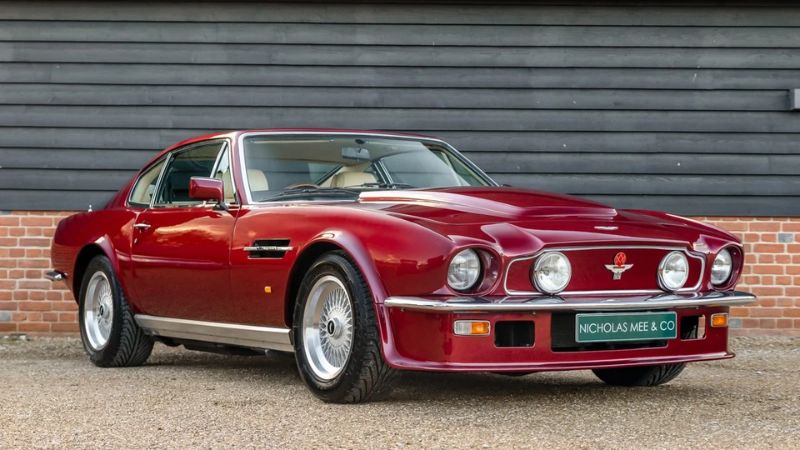
Hand-stitched leather and hydraulic steering—old-school thrills with old-school repair bills.
The first-generation Aston Martin V8 Vantage launched with a 4.3-liter V8 producing 380 hp, later enlarged to 4.7 liters with outputs over 400 hp. This machine delivers a masterclass in elegant British design and craftsmanship—a pure, analog experience. A mechanical ballet of rear-wheel drive and communicative hydraulic steering connects directly to the tarmac.
Inside, hand-stitched leather and solid metal switchgear confirm its luxurious intent. Every interaction feels substantial. Originally priced around $110,000, these cars now trade for a more attainable $30,000. That bargain comes with catches: manual models often need expensive clutch replacements, and the early infotainment system feels dated. For those seeking a genuine driver’s car and ready for its upkeep, this Vantage offers an unfiltered, old-school thrill ride.
3. Nissan GT-R (R35, Early Models)
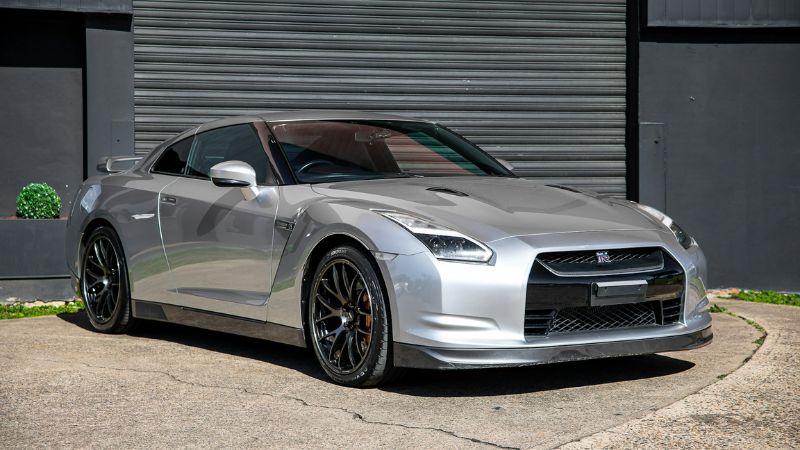
Godzilla awakens for used-car money—just budget for specialized fluid changes and massive brakes.
The Nissan GT-R (R35) launched globally in 2007-2008, immediately redefining supercar performance. Its 3.8-liter twin-turbo V6, the VR38DETT, initially produced 480 hp. This engineering marvel, coupled with a six-speed dual-clutch transaxle and intelligent all-wheel-drive, achieved 0-60 mph times in just 3.5 seconds—that immediate, brutal slingshot of grip from a perfect launch.
This robust platform also offered immense tuning potential, allowing owners to reliably push the engine past 600 hp with modifications. Yet, owning this “Godzilla” demands dedication; the dual-clutch transaxle requires specific, expensive fluid changes, and its massive brake rotors and high-performance tires are costly consumables. While its original MSRP was around $70,000 to $80,000, these early R35s now trade in the mid-$50k range.
2. BMW i8
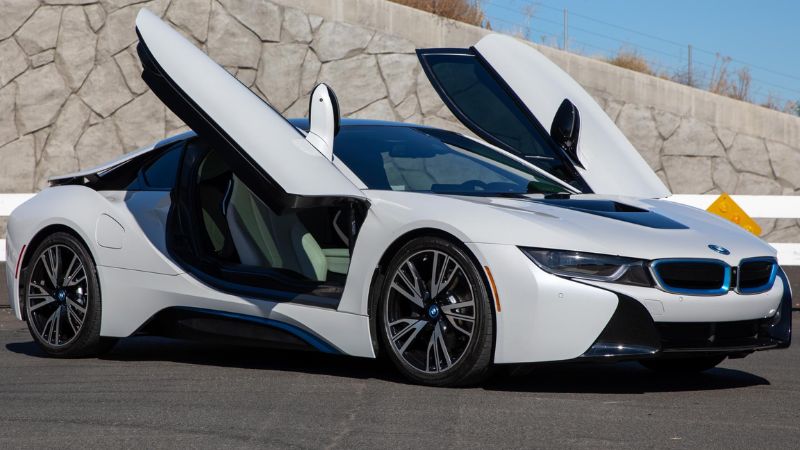
Concept-car looks meet plug-in reality—battery replacement costs lurk in the carbon-fiber shadows.
The BMW i8 arrived with dihedral doors swinging open as if inviting entry into a future where efficiency and exhilaration coexisted. Built around a carbon-fiber-reinforced plastic (CFRP) passenger cell, it married a 1.5-liter turbocharged 3-cylinder gasoline engine with an electric motor, delivering a combined 357-369 hp. The silent electric start, then the seamless churn of the small engine kicking in—an elegant dance that makes every drive feel like piloting a concept car from a Tokyo auto show.
This machine hit 60 mph in 4.2 seconds, a respectable sprint for a car that initially sold for $135,000 to $150,000 but now sits under $40,000. The sharp drop in value brings catches. Battery pack aging and eventual replacement costs are looming concerns, as are specialized repair bills for its exotic structure and complex electronics. The i8 turns heads and offers a genuinely different experience, but its long-term ownership costs ensure it remains expensive, even for savvy used-car shoppers.
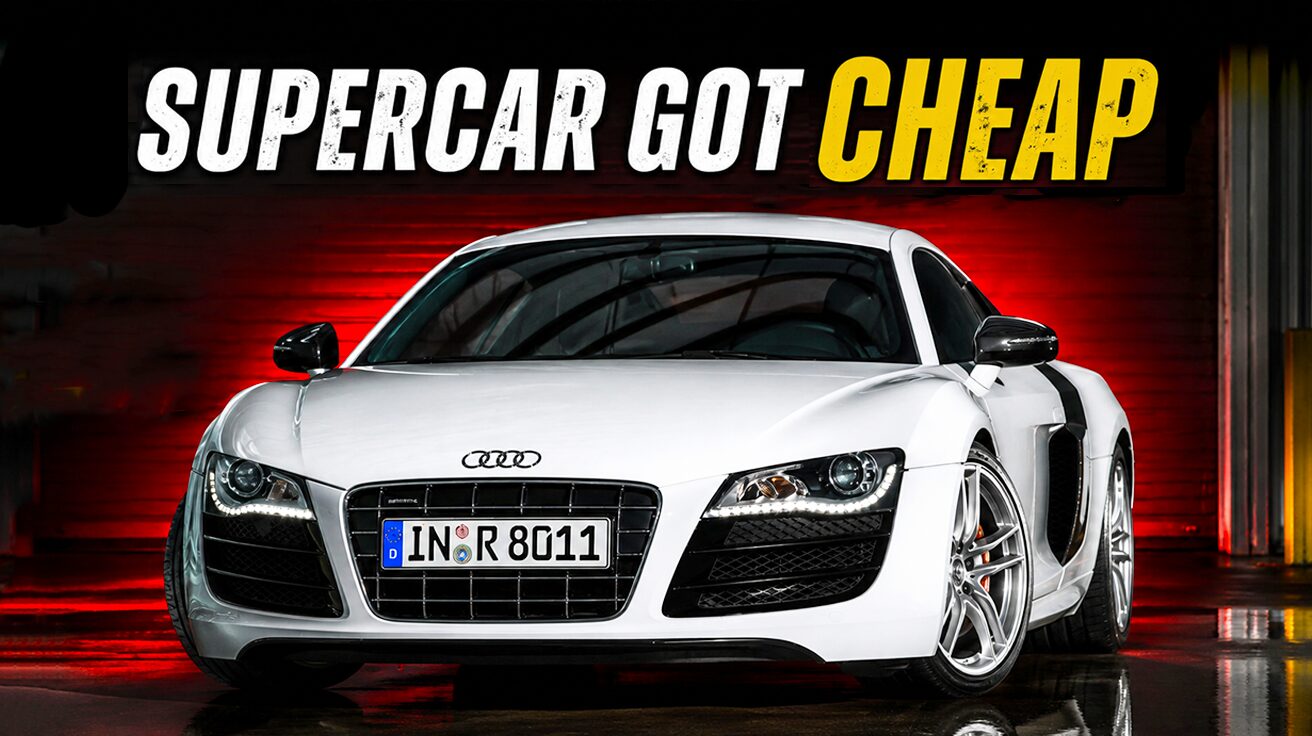
1. Audi R8 (First Generation)
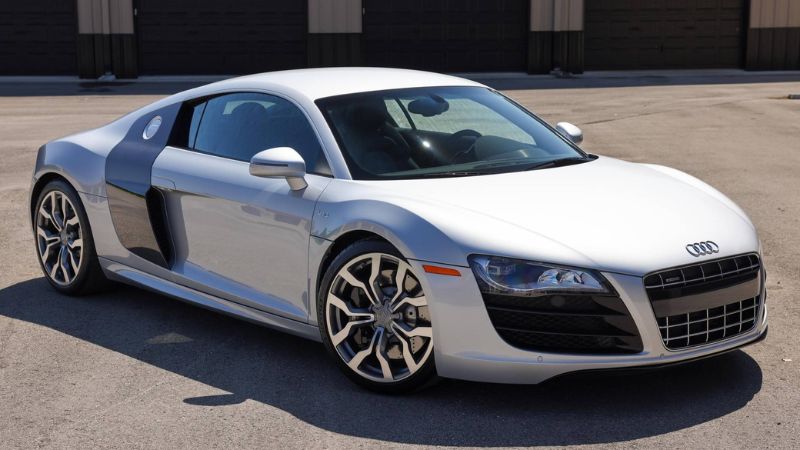
Tony Stark’s ride trades supercar thrills for everyday usability—and surprisingly solid reliability.
Tony Stark drove one in Iron Man, cementing the first-generation Audi R8’s place in popular culture as the accessible supercar. Choices included a 4.2-liter naturally aspirated V8 producing 420 hp or the snarling 5.2-liter V10 delivering between 525-552 hp. Many drivers found immense satisfaction rowing through the 6-speed gated manual, its satisfying mechanical clicks a visceral counterpoint to modern paddle shifters.
While early R-tronic automated manuals had notoriously expensive clutch replacements, the standard quattro all-wheel drive ensured a planted feel. Original U.S. pricing for the V8 started around $110,000 to $120,000, but today examples trade for well under $60,000. Beyond typical supercar expenses for brakes and tires, this machine proved remarkably reliable, offering supercar thrills without the usual exotic car neuroses—a true everyday weapon.