

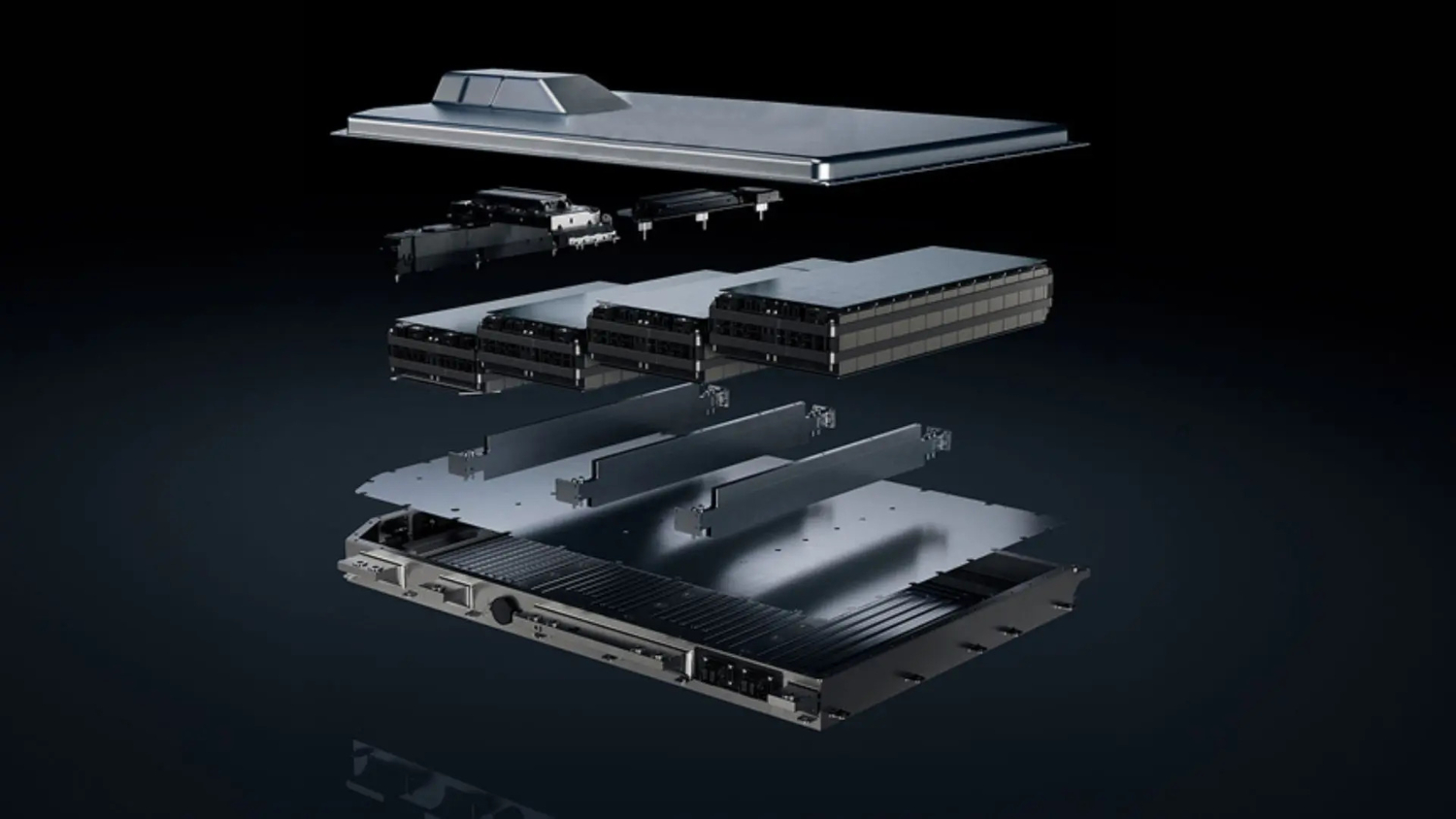
The gas car ahead of you fills in four minutes. Your EV needs forty. That charging-stop gap has quietly stalled mainstream EV adoption for years — but Chinese battery maker Sunwoda EVB may have just rewritten the math. At an industry conference in Zaozhuang, Shandong on September 16–17, 2026, the company unveiled a 15C lithium iron phosphate (LFP) battery system that charges from 10% to 97% in 9 minutes at room temperature, adding roughly 62 miles of range every 60 seconds. These are company figures from a conference presentation, not independently verified lab results — but the numbers, if they hold, dissolve the last psychological barrier blocking mainstream EV adoption.
What Those Numbers Actually Mean Behind the Wheel
The specs translate directly into how you plan — or stop planning — your next road trip.
Sixty-two miles per minute means enough range for a full urban commute added in under 90 seconds — an editorial extrapolation, not an official Sunwoda spec, but one that follows directly from the claimed rate. The “15C” label is engineer-speak for a battery accepting charging power roughly 15 times its own capacity at peak. For a pack near 99 kWh, that approaches approximately 1,500 kW — a calculated approximation based on Sunwoda’s earlier 98.8 kWh demonstration, per Electrive. Sunwoda says these speeds were achieved at room temperature, with no battery pre-heating required. For cold-climate drivers, the winter figure matters even more: at −20°C (−4°F), the system reportedly still charges 10–97% in 15 minutes while adding approximately 435 miles of range — enough to make a January road trip through Quebec feel considerably less like a gamble.
What Sunwoda is claiming, per conference data:
- 10% to 70% state of charge in roughly 5 minutes; 70% to 97% in another 4
- 435-mile (700 km) range on a full charge
- 10-year / 300,000 km warranty with no cap on ultra-fast charging sessions for non-commercial vehicles
- Cold-weather performance: 10–97% in 15 minutes at −20°C
- Integrated charging ecosystem combining solar generation, battery storage, and high-power DC chargers
Strong Chemistry, Infrastructure Still Catching Up
The battery technology is credible on paper; the charging network needed to support it is only beginning to take shape.
The obvious reader concern: does charging a battery at peak power approaching 1,500 kW shorten its life significantly? Sunwoda’s public answer is a warranty commitment — 10 years or 300,000 km, with no restrictions on ultra-fast session frequency for personal vehicles, according to The Electric Viking. That remains a company claim from a conference presentation rather than an independent lab result, and should be held accordingly. Even so, making that commitment publicly carries its own form of accountability.
The bigger story sits upstream. Sunwoda already supplies Geely, Dongfeng, and GAC. If those partners adopt the 15C system, this battery could reach production vehicles without waiting for a breakthrough automaker. The challenge is that the chemistry, the compatible vehicles, and the charging network all need to arrive together — and right now, megawatt-class ultra-fast chargers are still in early pilot deployments, far from broadly available. Sunwoda’s move to pair the battery with an open solar-plus-storage-plus-charger ecosystem suggests the company recognizes this bottleneck and is working to address the full energy supply chain, not just the cell.
Before It Reaches Your Driveway
The timeline depends less on the battery itself and more on which automakers and charging operators move first to build compatible infrastructure.
Real-world deployment hinges on which automaker commits first to a 15C-compatible platform and how quickly charging operators build the infrastructure to match. All figures here are company data presented at an industry conference — impressive, worth watching, and not yet production specs. The chemistry is genuinely notable. The rest is still being built.