

New analysis of 47.4 million MOT tests shows high-mileage EVs fail roadworthiness checks around 25% less often than comparable petrol cars — but battery health remains a separate question entirely.
The Numbers That Should Change How You Shop
At 90,000–120,000 miles, EVs fail MOT tests at 16.5% versus 22.1% for petrol cars — and the gap keeps widening above that.
Between 20,000 and 40,000 miles, EVs and petrol cars are essentially equal on MOT outcomes — 12% versus 11.7% failure rates. Unremarkable. But from 60,000 miles, something shifts. EV failure rates level off at around 16%. Petrol cars keep climbing, hitting 23.5% above 120,000 miles while EVs hold at 16%.
That is the finding from New AutoMotive’s analysis of 47.4 million UK MOT tests, commissioned by the British Vehicle Rental and Leasing Association. Researchers link the high-mileage advantage partly to the mechanical simplicity of electric drivetrains — fewer moving components means potentially less accumulated wear. That is New AutoMotive’s interpretation of the data rather than a proven causal finding, but the pattern across tens of millions of tests is difficult to dismiss.
A few results cut against the headline:
- EVs recorded approximately 1.8 times more tyre defects than petrol cars, possibly reflecting their greater weight and instant torque delivery, though the study does not establish a single cause
- Older, low-mileage EVs showed more brake corrosion — regenerative braking means conventional friction brakes are used far less frequently
- Despite being heavier, EVs outperformed petrol cars on suspension defects between 60,000 and 90,000 miles: 4.7 defects per 100 tests versus 6.1
- MOT tests assess brakes, tyres, suspension, steering and lights — they do not measure battery capacity, state of health, range loss or charging performance
“High mileage is not necessarily a proxy for poor condition,” said Ben Nelmes, New AutoMotive chief executive, “and electric drivetrain simplicity may become increasingly valuable as cars accumulate miles.”
Before You Buy: What the MOT Won’t Tell You
A clean MOT history is encouraging, but an independent battery-health report is the document that matters most for any used EV purchase.
The study arrives as fleet and leasing returns push used EVs into the market at scale — straight into the hands of buyers conditioned by odometer anxiety. “Mileage alone should not deter consumers,” said BVRLA chief executive Toby Poston. “A well-maintained, high-mileage EV can be a durable used vehicle.”
That well-maintained part carries real weight. Before committing, verify:
- the full MOT and service history
- tyre and brake condition
- recall status
- an independent battery-health report covering capacity, degradation and charging performance
Confirm whether any battery warranty remains and whether the car accumulated its miles in intensive fleet or rental use.
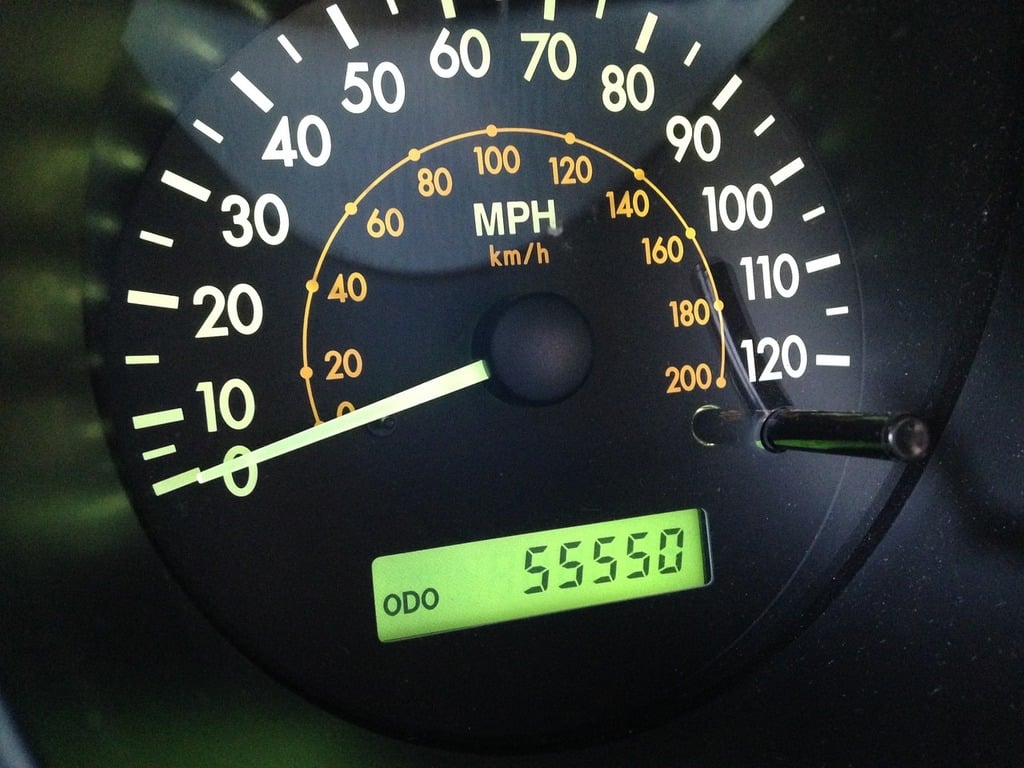
Mileage alone is not the right measure of risk. A 100,000-mile EV with solid battery documentation may be a sounder purchase than a 40,000-mile example without any. Model history, battery condition and price remain the decisive factors in whether a used EV is a smart buy — or simply a cheap one. Buyers weighing up reliable cars across fuel types will find the data increasingly points toward well-documented electrics at higher mileages.