

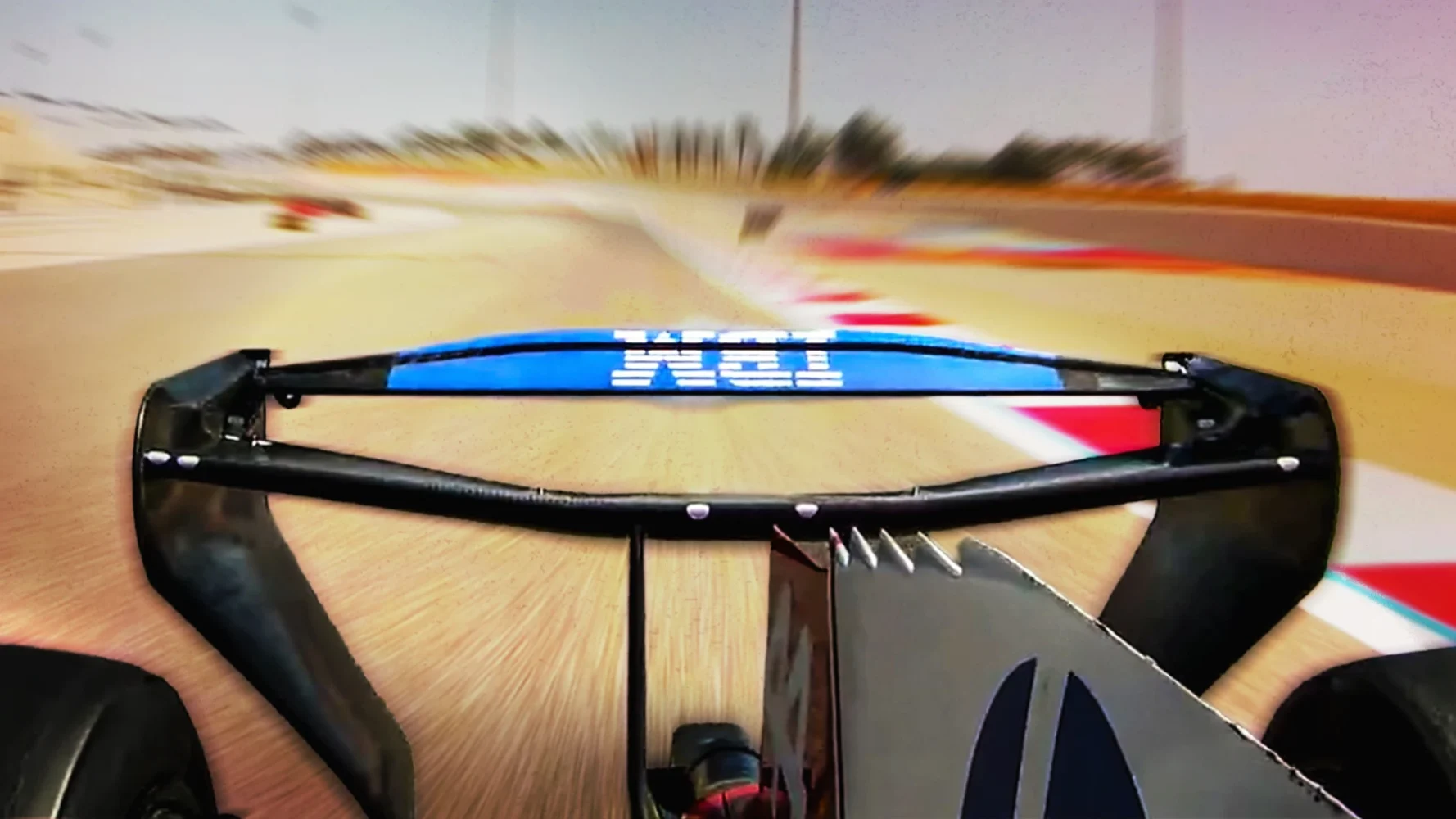
Your rear wing isn’t supposed to flip like a pancake. Yet Ferrari’s radical new design literally turns upside down at 200 mph, rotating a full 225 degrees to slice through air like a hot knife through butter. After Mercedes dominated Australia with a commanding 1-2 finish, Ferrari answered with engineering that looks more like interpretive dance than aerodynamics.
Lewis Hamilton dubbed it the “flip-flop wing” and the “Macarena”—and frankly, watching it work feels exactly that theatrical. When the SF-26 hits designated straight zones, the upper wing element spins completely inverted, creating a massive airflow gap that standard DRS systems can’t match.
The innovation emerged during Day 2 of pre-season testing in Bahrain, where the design shocked the paddock and immediately drew comparisons to science fiction. Unlike traditional rear wing adjustments, Ferrari’s system performs a complete 180-225 degree clockwise rotation, fundamentally changing how airflow interacts with the car’s aerodynamics.
The Engineering Gamble
While competitors rely on simple hinge mechanisms similar to previous DRS systems, Ferrari built something that belongs in a Transformer movie. The wing doesn’t just open—it pirouettes. This creates unprecedented drag reduction and even generates lift to aid top speed, potentially offering significant advantages on circuits with long straights.
The FIA declared it legal after thorough inspection, validating Ferrari’s interpretation of the 2026 regulations. However, the system comes with trade-offs that could prove costly. The robust actuators required to flip carbon fiber components at racing speeds add weight penalties to the SF-26 package.
During mode transitions, the wing briefly acts as an airbrake, creating momentary aero disadvantages that could prove problematic in wheel-to-wheel battles. These split-second vulnerabilities represent calculated risks in Ferrari’s pursuit of straight-line speed dominance.
High-Stakes Testing Phase
Ferrari accelerated development after skipping the wing in Australia, according to team principal Fred Vasseur, who emphasized reliability testing needs before committing to race implementation. The team originally planned to introduce the system later in the season but fast-tracked development to address Mercedes’ early-season advantage.
The Chinese Grand Prix offers perfect validation conditions. Shanghai’s kilometer-long back straight provides ideal testing grounds for stress-testing this mechanical marvel under race conditions during FP1 sessions.
Under 2026 regulations featuring higher-power engines and lighter chassis, straight-line speed becomes increasingly crucial for championship contention. Ferrari showed promise during pre-season testing but recognized the need for additional performance gains to challenge Mercedes consistently.
If the wing proves effective, rivals like Mercedes and Red Bull may develop similar systems, potentially triggering an aerodynamic arms race. However, if it fails catastrophically during Sprint Qualifying weekend, Ferrari’s championship hopes could flip upside down faster than their revolutionary rear wing.
The paddock holds its collective breath as Ferrari bets everything on a wing that dances.