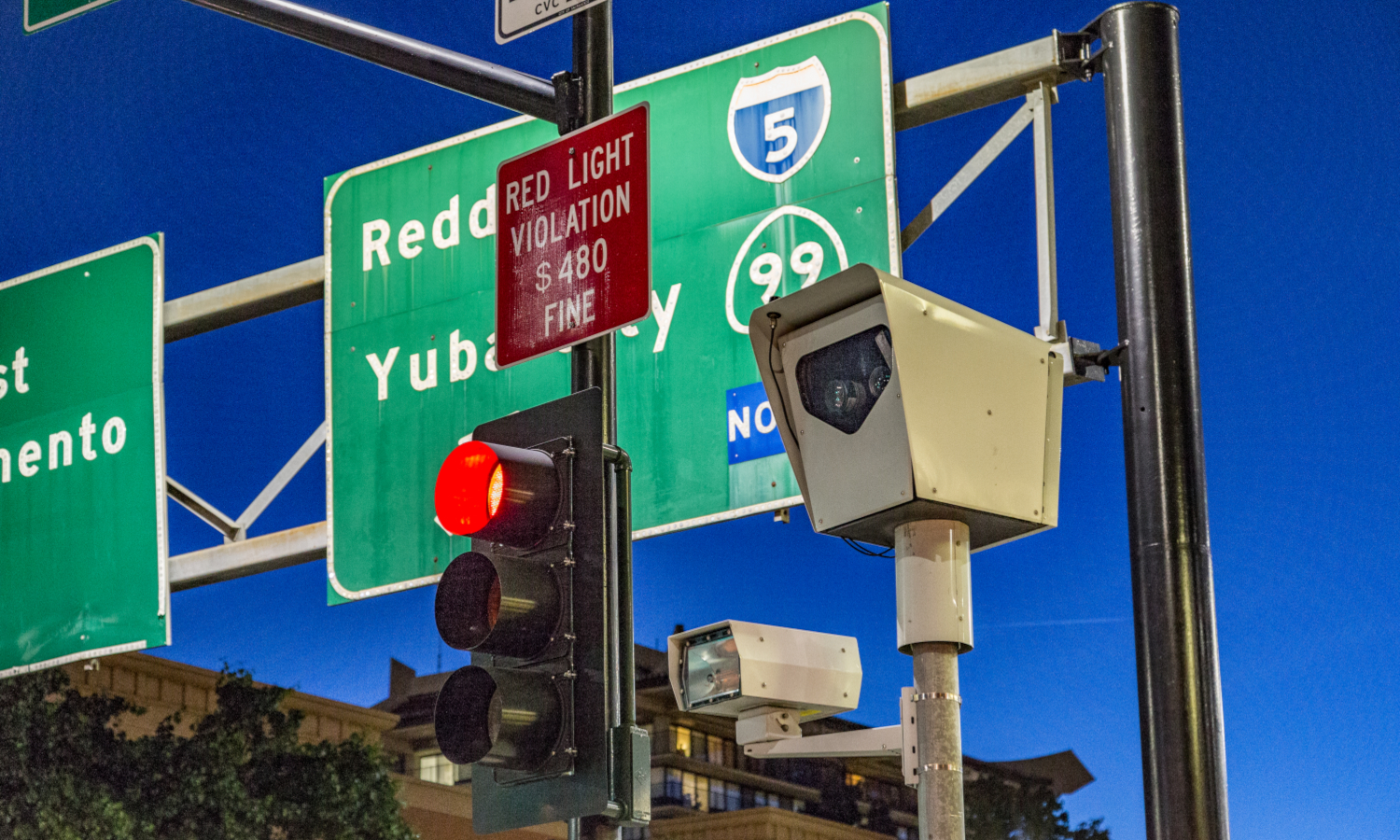
Red-light crashes killed an estimated 1,109 people and injured roughly 127,000 in 2021, according to the Governors Highway Safety Association — figures pending confirmation in the underlying report. The policy question, clearly, matters. But “15 states don’t have red-light cameras” collapses three distinct legal situations into one headline-friendly number.
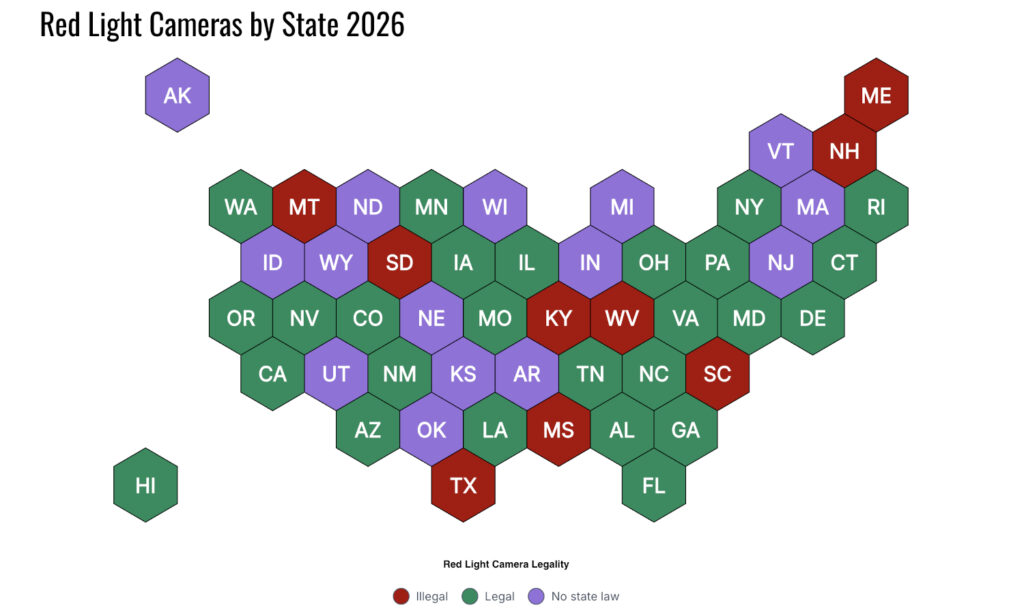
The GHSA currently identifies nine states with express statutory bans: Idaho, Maine, Mississippi, Montana, New Hampshire, South Carolina, South Dakota, Texas, and West Virginia. The broader count of 15 or more folds in states with discontinued programs, constitutional barriers, or simply no statute authorizing cameras at all. That last category — statutory silence — is not a ban. Local governments in those states may operate in genuine legal gray zones.
Ohio reportedly requires a live officer present at any camera installation. Nevada appears on some broader restriction lists but is absent from GHSA’s nine-state group; that discrepancy should be resolved against current Nevada law before treating it as an outright prohibition. “No red-light cameras” and “no statewide authorization” are not the same thing — and the difference can matter the moment a citation arrives in the mail.
What’s Actually Driving the Pushback
Safety concerns share the stage with due-process problems, equipment failures, and deep revenue suspicion.
Several distinct grievances have pushed states away from automated enforcement, and they don’t all point in the same direction.
The sharpest legal challenge came from Missouri, where the state Supreme Court ruled in 2015 that red-light-camera enforcement was unconstitutional — vehicle owners were effectively required to prove they weren’t driving, inverting the traditional burden of proof. Texas took a different route, enacting a full ban through 2019 legislation partly on due-process grounds. Opponents of the ban had cited roughly $18.3 million reportedly contributed to state trauma centers in 2017, according to Texas legislative records and Texas Tribune reporting, though that figure awaits independent confirmation.
Equipment and administration failures compounded the skepticism:
- New Jersey ended its program in 2014 after a computer error reportedly prevented approximately 17,000 tickets from being issued, drawing legal challenges over short yellow-light intervals.
- Redflex, a major camera vendor, reportedly faced federal convictions tied to gift-giving to officials in Chicago and Columbus — a claim that requires verification against federal court documents before being treated as established.
Then there is crash displacement. San Diego’s post-installation review found rear-end collisions increased even as right-angle crashes fell, consistent with drivers braking hard to avoid automated citations.
The Safety Data Cuts Both Ways
Camera programs can reduce dangerous crashes — but program design determines whether they actually do.
California’s 2002 State Auditor review found red-light crashes declined in five examined jurisdictions, with reductions ranging from 3% to 21%. The Insurance Institute for Highway Safety, in separate research, found cities using cameras saw a 21% reduction in red-light-running crash rates and a 14% reduction in fatal crashes at signalized intersections — figures that should be read alongside a systematic review published in peer-reviewed literature, which found that confidence intervals vary across studies and some show no statistically clear effect.
The same California audit documented rear-end collision increases at certain locations. San Diego officials recommended longer yellow-light intervals as a partial remedy. That detail exposes the real variable: program design. Yellow-light duration, citation review procedures, transparent revenue accounting, and functioning appeals processes determine whether a camera program functions as a safety tool or, as critics have framed it, a speed trap with better optics. Poorly designed or weakly supervised programs can generate new safety risks and legal problems — even when the underlying technology performs exactly as advertised.
What Texas Taught Everyone Else
The largest state to reverse course showed that due-process arguments outlast revenue projections.
Texas stands as the most instructive case study — a large program state that reversed course entirely through 2019 legislation. The due-process argument, that a vehicle owner and a vehicle’s driver are not necessarily the same person, proved more politically durable than projections about trauma-center funding. The GHSA map updates regularly, and a single legislative session can shift a state’s status in either direction.
Camera enforcement rules vary more sharply across state lines than most drivers expect, and certainly more than any navigation app will flag. The real lesson from the states that stepped back is not that cameras never work — it is that no automated enforcement program runs itself, and the ones that ignored that reality paid for it in court.