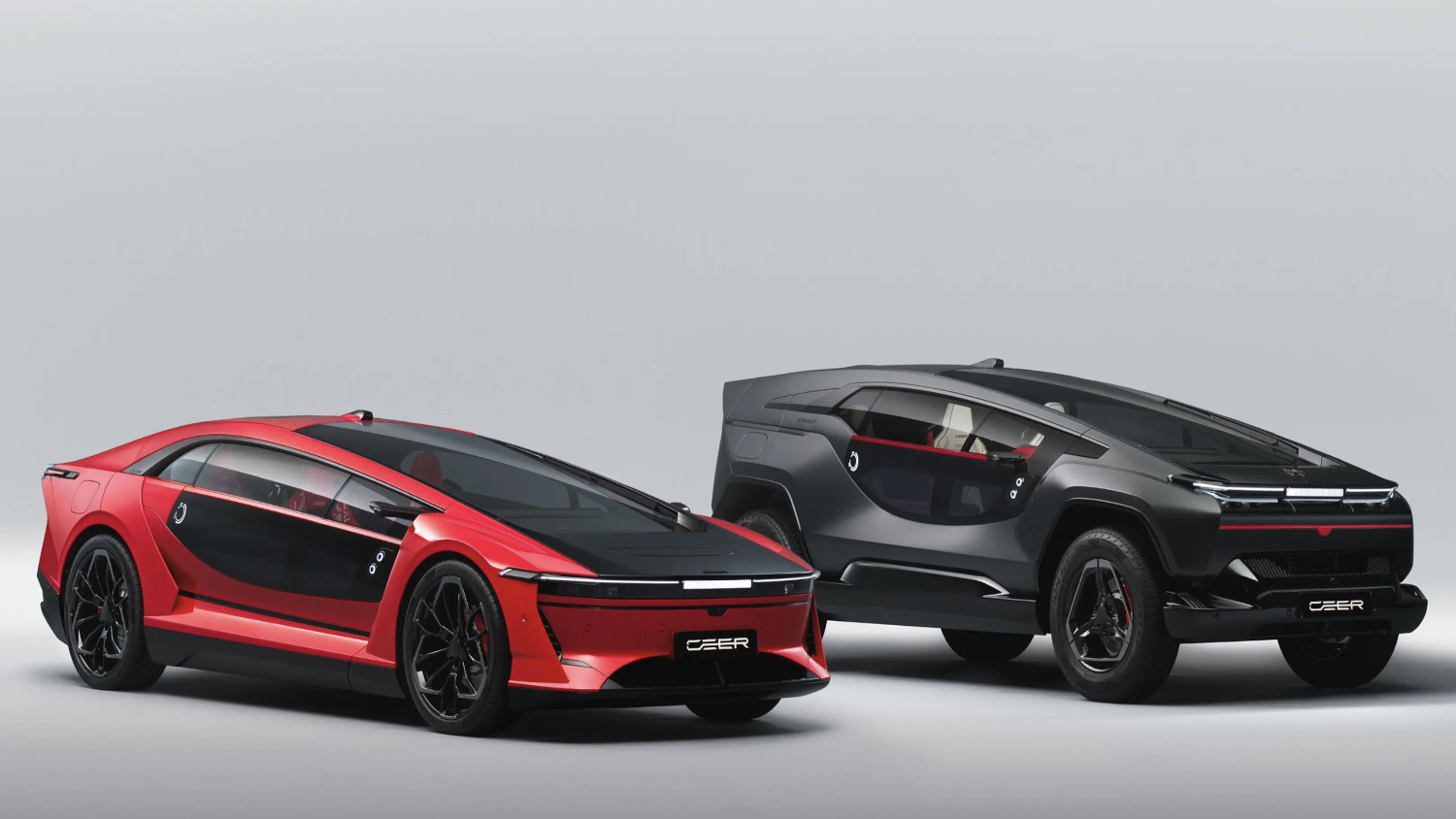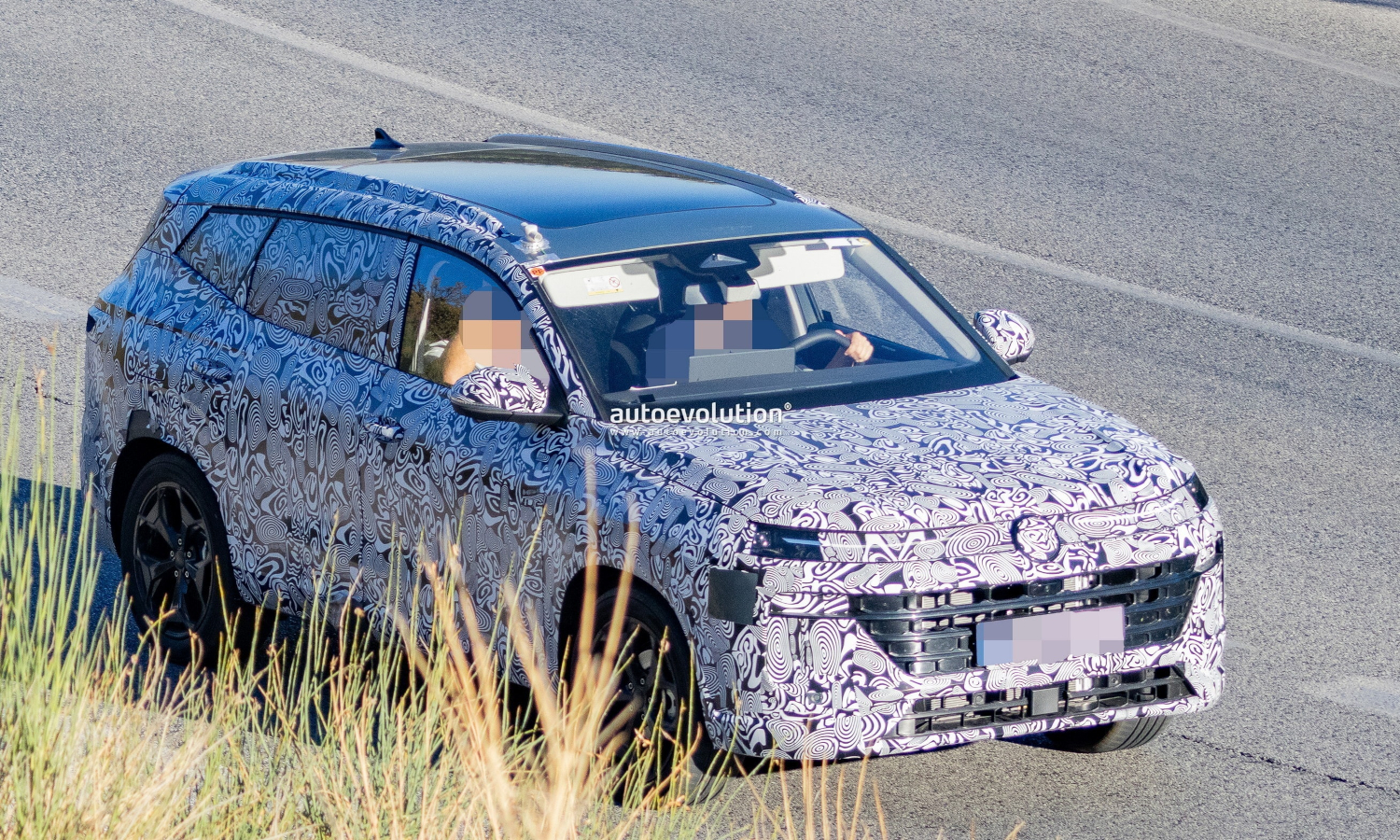


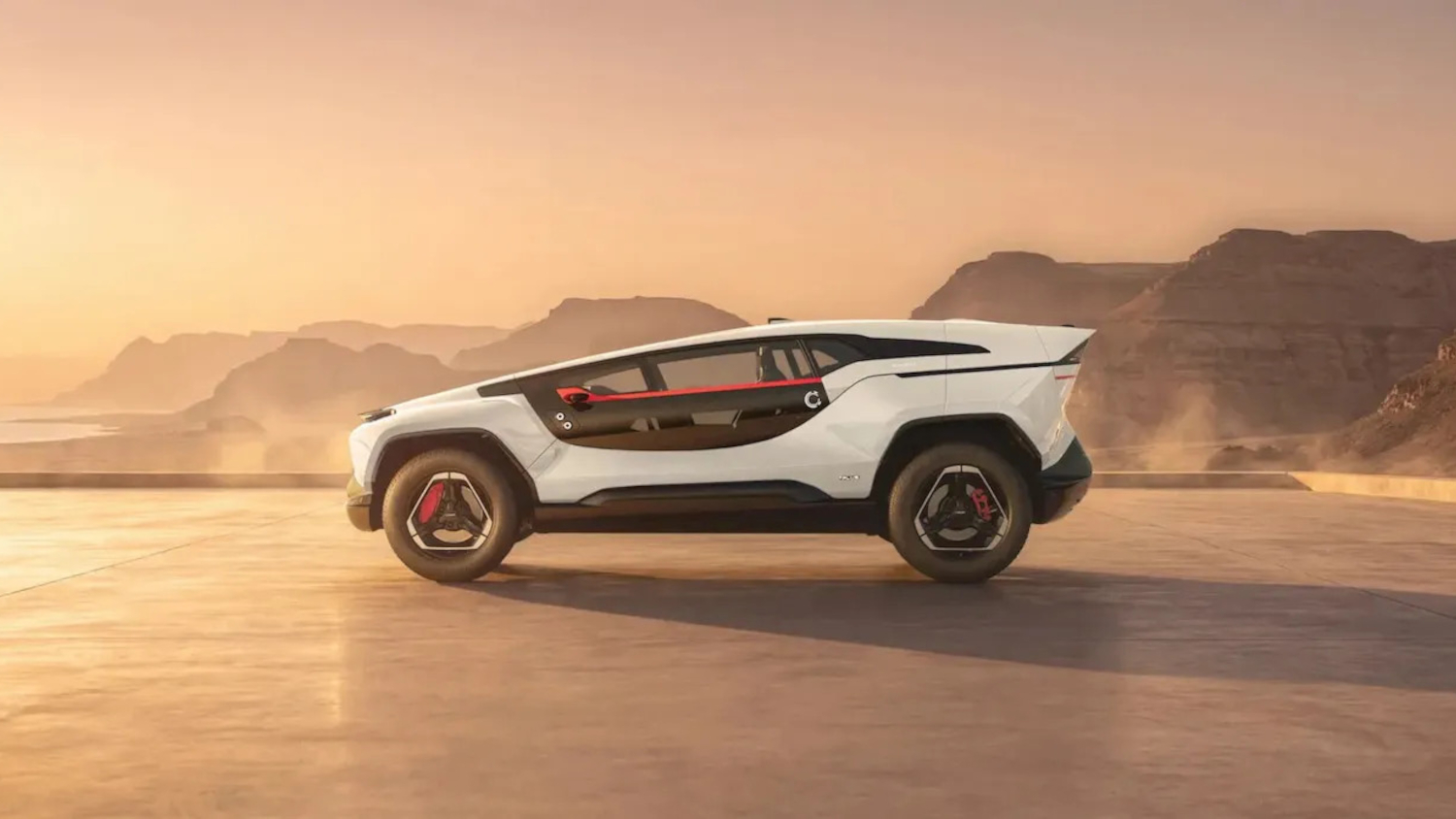
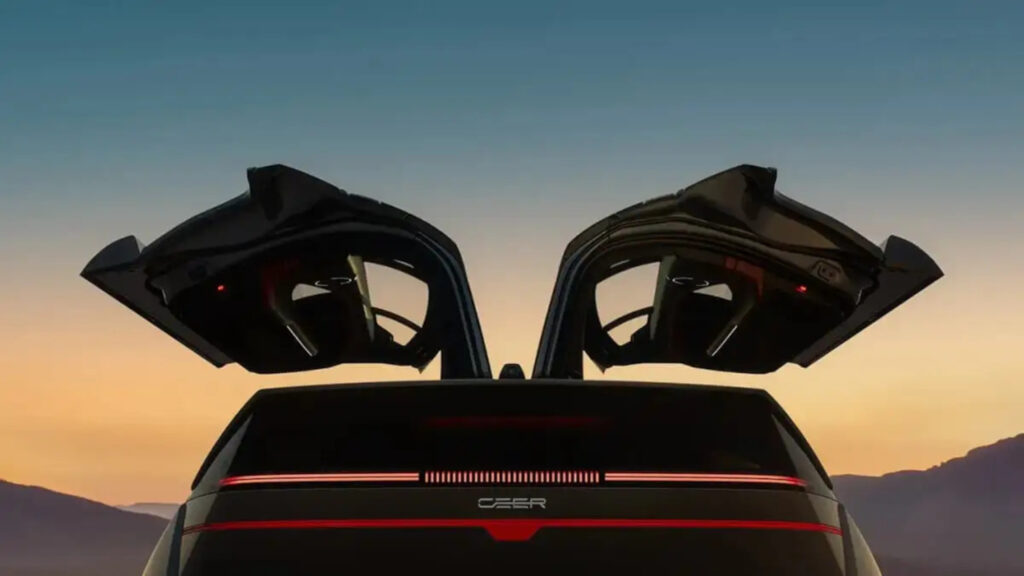
Zero to 100 km/h in 2.6 seconds. Eight hundred and fifty horsepower. A sedan longer than a stretched Mercedes S-Class. On September 21, 2026, Crown Prince Mohammed bin Salman revealed the EXOBOT — an electric sedan and SUV from Ceer, Saudi Arabia’s first EV homegrown automotive brand and its first Saudi-branded electric vehicles. The numbers are serious. So is the subtext: this is a sovereign wealth fund betting that a country built on oil can manufacture the thing replacing it. No pricing exists yet, and Ceer’s range figures use the NEDC test cycle — an older laboratory standard that typically flatters real-world numbers.
What Ceer Is Actually Claiming
Two body styles, one substantial battery, and specs designed to make you forget this brand is four years old.
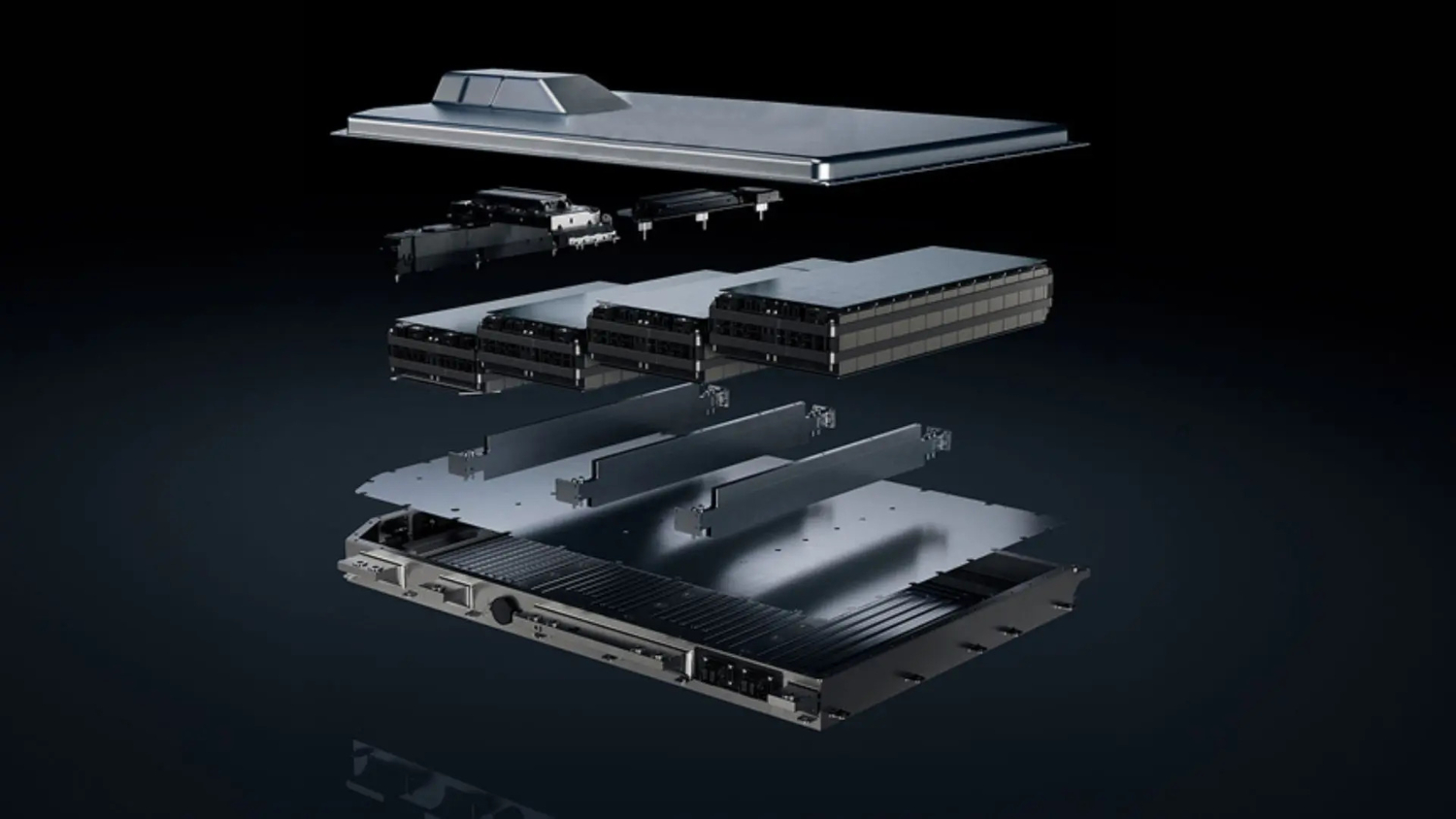
Both vehicles share a 112 kWh battery and 800-volt electrical architecture — the same high-voltage standard found in performance EVs like the Porsche Taycan, which enables faster charging by allowing lower electrical current for the same power output. The SUV charges from 10% to 80% in under 30 minutes under suitable fast-charging conditions. The sedan claims 670 km of NEDC range; the SUV claims 560 km. Real-world figures will run lower, as NEDC testing does not replicate typical driving conditions. A separate higher-output configuration reportedly produces 1,111 hp and 1,500 Nm of torque, cutting the sedan’s sprint to 2.1 seconds — though that remains a distinct spec, not the base vehicle.
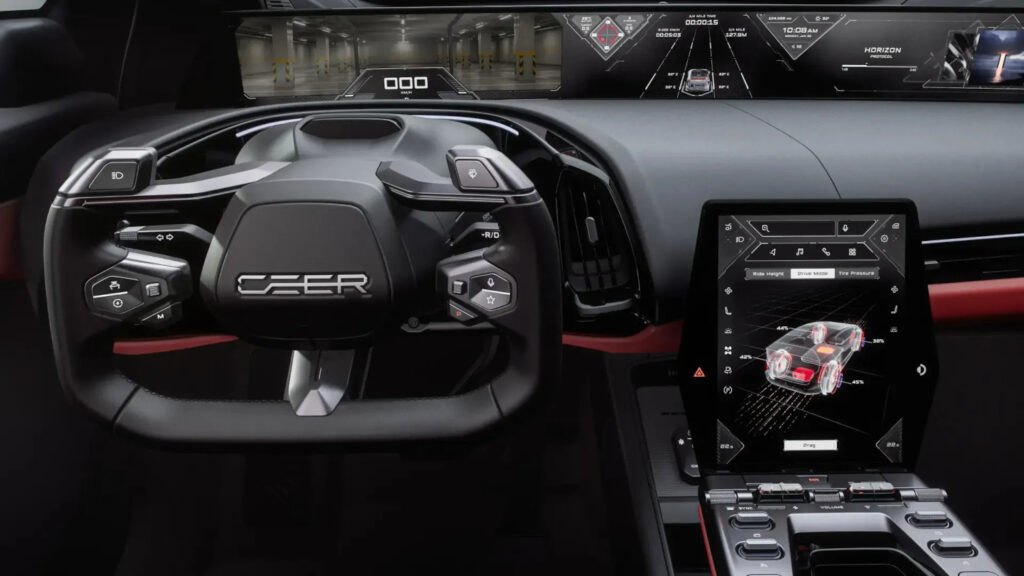
Key specs at a glance:
- Sedan: 850 hp, 0–100 in 2.6 sec, 670 km NEDC range, 5,260 mm long
- SUV: tri-motor AWD, 0–100 in 2.9 sec, 560 km NEDC range, 48-inch curved interior display
- SUV technology: steer-by-wire (steering managed electronically rather than through a conventional mechanical column), rear-wheel steering, adaptive air suspension
- Partners: Hyundai Transys for integrated drive systems; Rimac, a Croatian high-performance electric-drive technology company, for performance powertrain tech
- Timeline: series production reportedly begins January 2027; customer deliveries reportedly from March 2027 — both remain unconfirmed plans pending official confirmation
The Questions That Actually Matter Now
When a four-year-old brand posts hypercar numbers, the harder question is whether those numbers ever reach a customer’s driveway.
Ceer describes the vehicles as locally designed and engineered to the highest global standards — and the Rimac and Hyundai Transys partnerships help explain how that’s structurally achievable. New automotive brands rarely build everything from scratch. They assemble proven technology, localize manufacturing where possible, and scale from there. It is a pragmatic model, not a shortcut. For context on just how extreme EV performance claims can get, the 3,000 HP Concept from Koenigsegg illustrates the feasibility questions that surround any brand pushing hypercar numbers.
The company projects an $8 billion GDP contribution by 2034 and describes its manufacturing facility as the Middle East’s largest automotive production complex — both are Ceer’s own claims, not independently verified assessments. Seven vehicles over five years remains the stated ambition.
Pricing is undisclosed. Charging infrastructure across Saudi Arabia is still in development, and Ceer has not yet publicly detailed its after-sales network for the EXOBOT. Buyers evaluating the 2027 delivery timeline may find it useful to consider what else is worth waiting for across the broader EV landscape. The reveal itself is the straightforward part. Putting these cars in driveways at scale — that is where Vision 2030 gets tested, especially as other manufacturers have shown that ambitious EVs can be cancelled before production ever begins.