

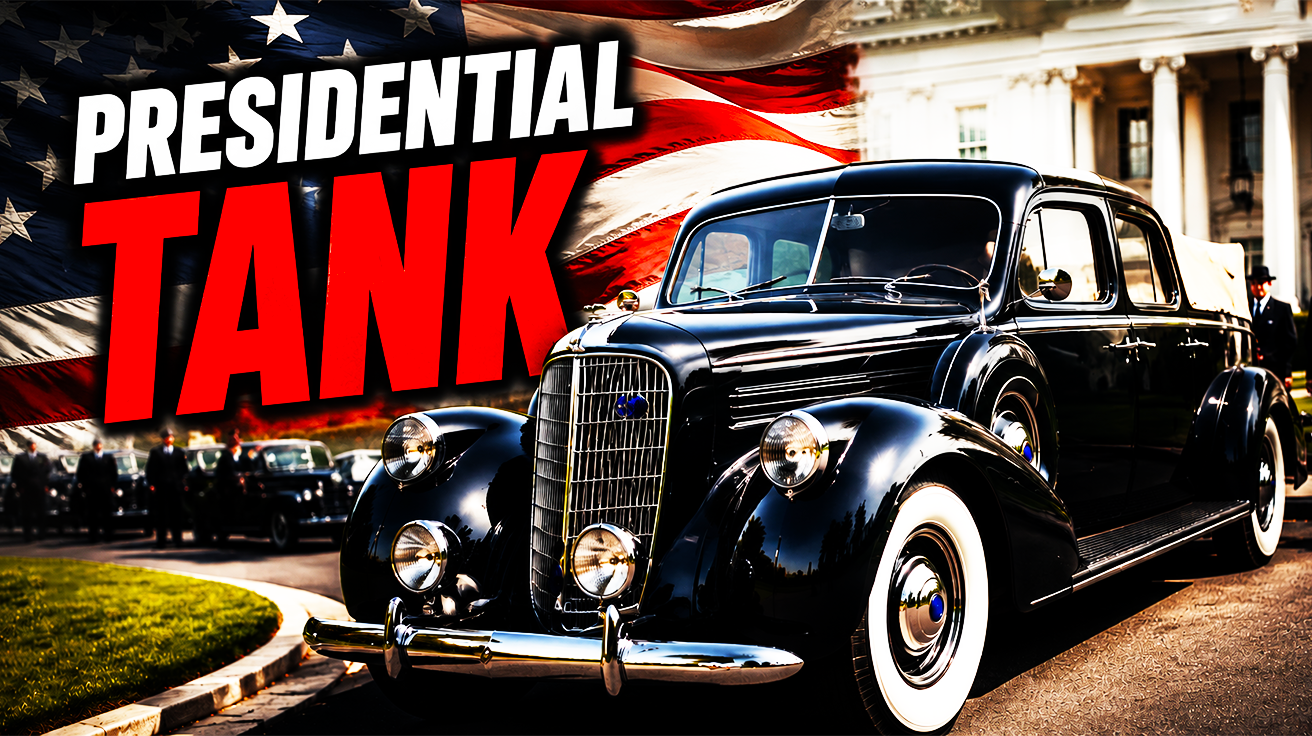
The US Secret Service maintains a fleet of presidential vehicles, each a rolling testament to armored ingenuity. These machines evolved from horse-drawn carriages to modern mobile bunkers, blending the meticulousness of a bespoke watchmaker with the sheer ruggedness of purpose-built defense systems. The vehicles represent the pinnacle of automotive security and innovation, a fascinating blend of power and protection. Their development is a master class in engineering adaptation, transforming presidential transport from simple parade pieces into armored command units.
What began as a simple drive became a relentless pursuit of safety, power, and presidential presence. The shift from steam novelty to ballistic protection shows how dramatically the scope expanded. Discover the machines that moved history.
1. Stanley Steamer
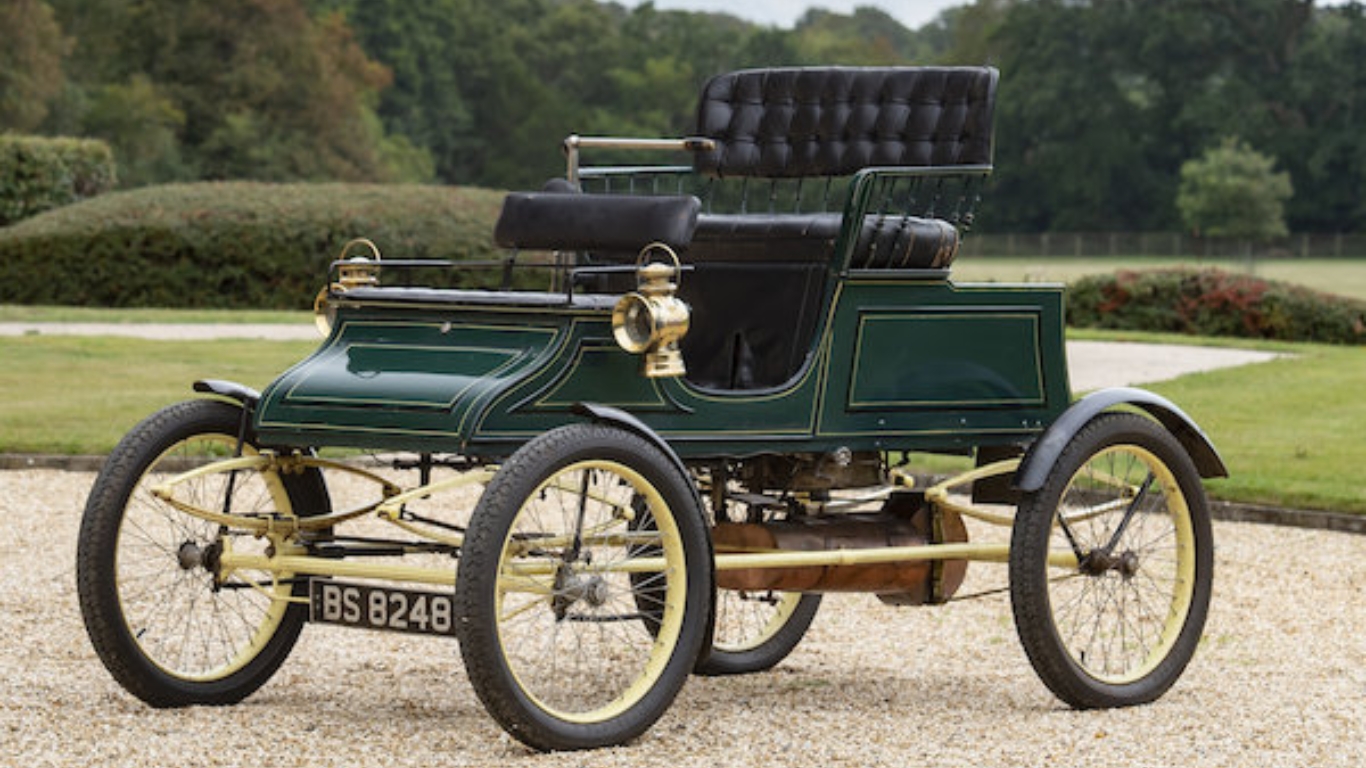
The first presidential automobile ride marked a turning point in executive mobility.
In 1899, President William McKinley took his first motor vehicle ride in a Stanley Steamer, driven by founder Freelan Oscar Stanley in Washington, D.C. This marked the first time a U.S. President rode in an automobile, a decisive shift from literal horsepower to mechanical power.
The Stanley Motor Carriage Company, founded by identical twins Francis Edgar Stanley and Freelan Oscar Stanley, commercialized steam-powered passenger cars from the late 1890s into the 1920s. Their machines operated at about 600 psi, delivering strong torque with near-silent dignity compared to the era’s rattling gasoline cars.
Steam power required specific planning, however. A 15–20 minute warm-up was standard, and frequent water stops (roughly every 10–12 miles per gallon of water) meant routes had to be carefully mapped. The Stanley Steamer demonstrated the monumental shift in transportation technology, even as it demanded patience from early motorists.
2. White Steamer Model M
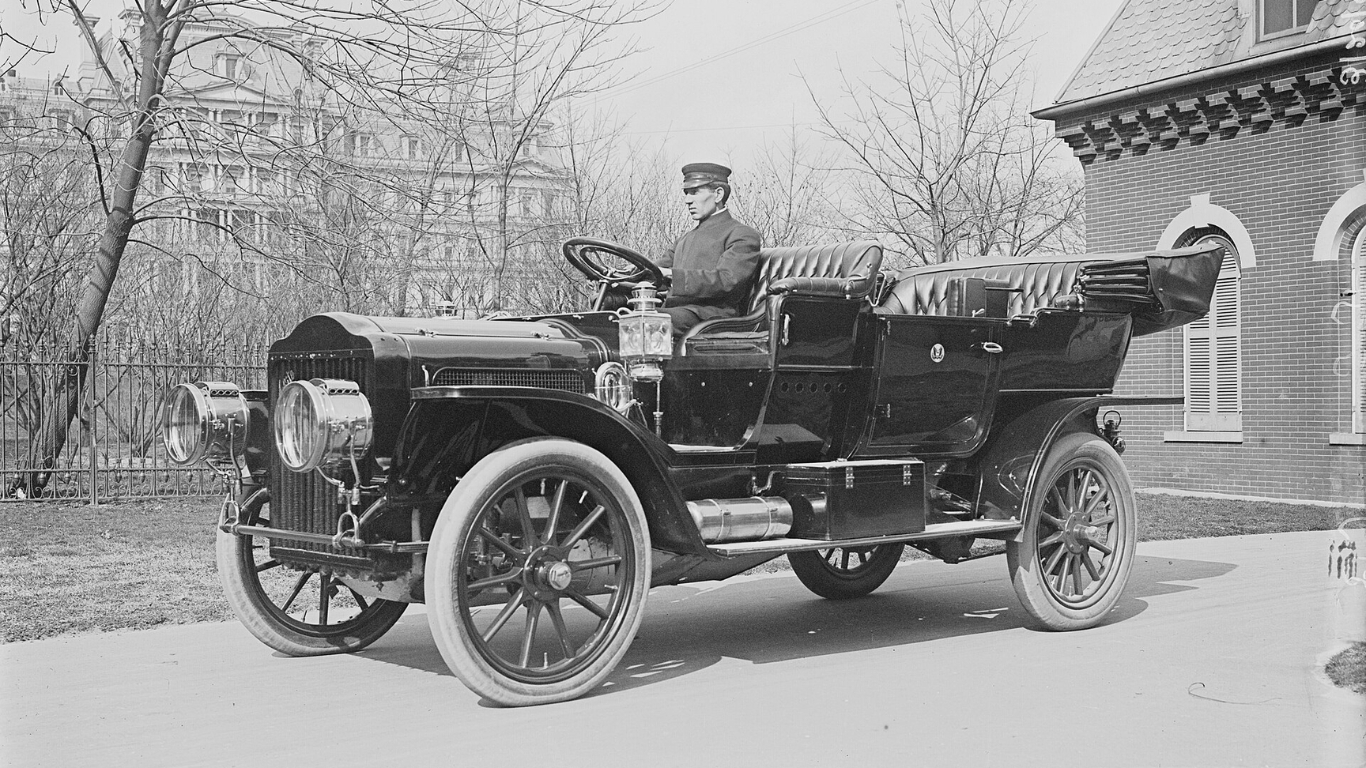
Taft’s favorite car doubled as an early security tool against aggressive press.
In 1909, President William Howard Taft converted the White House stables to a garage and ordered four official automobiles: two Pierce-Arrows, a Baker electric, and a White Model M Steamer. This fleet became the first official White House motor pool, permanently establishing automobiles in presidential service.
Taft favored the White Model M, a Cleveland-built steam car rated at about 40 hp on a substantial 122-inch wheelbase. Contemporary accounts note he reportedly instructed the chauffeur to use bursts of steam from the undercarriage to drive off aggressive photographers, turning executive transport into a defensive tool.
The Model M’s engine featured a double-acting cross-compound steam unit with a 3-inch high-pressure cylinder, 5-inch low-pressure cylinder, and 4½-inch stroke. The car survives today at Heritage Museums & Gardens in Massachusetts and has been entered in the U.S. National Historic Vehicle Register as a historically significant presidential vehicle.
3. Baker Electric
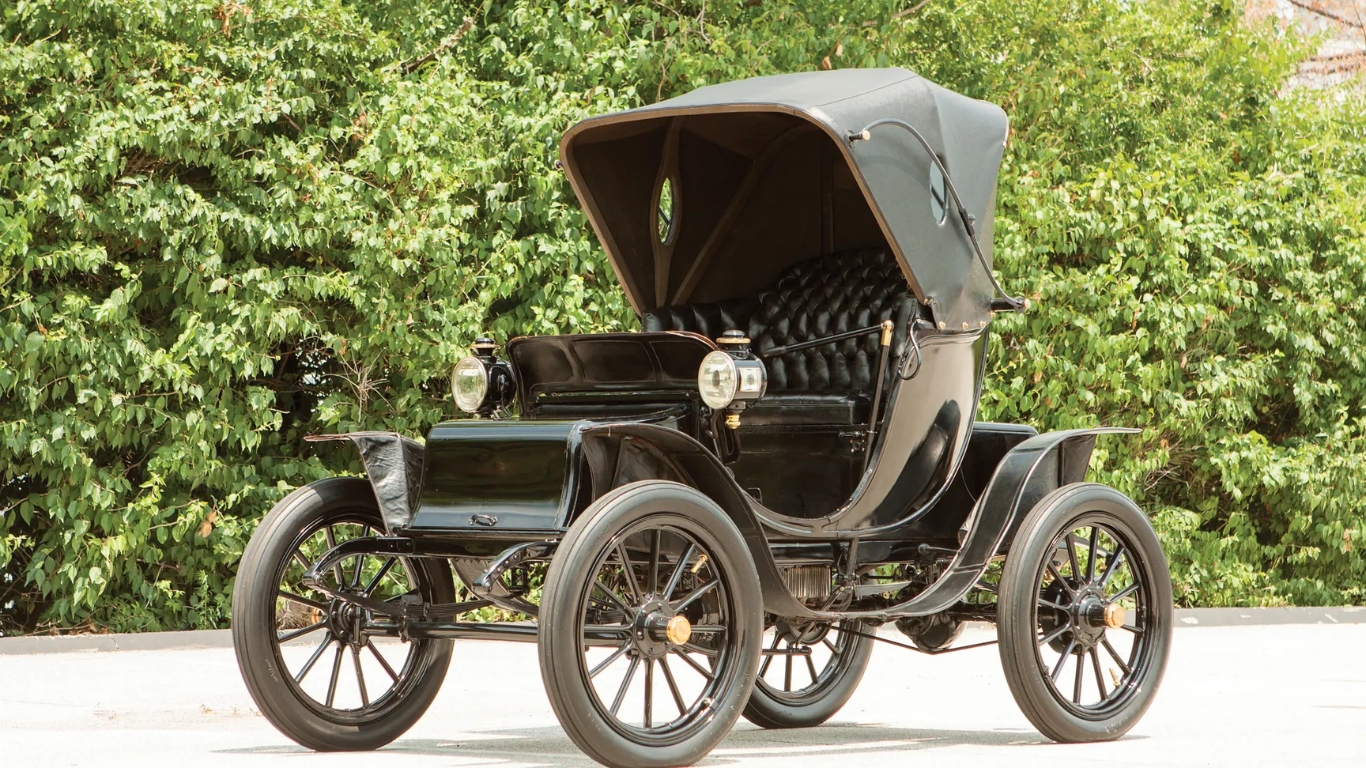
Helen Taft’s preferred vehicle served five First Ladies across two decades.
Acquired in 1909, the Baker Electric offered a serene escape for First Lady Helen Taft, cutting through the mechanical chaos of early gasoline and steam cars. This battery-powered runabout eliminated the wrestling match of hand cranks, hot engine exhaust, and oily grease that defined its contemporaries.
Helen Taft embraced this quiet, clean machine, driving it herself for easy trips across Washington, D.C. Baker Motor Vehicle Company of Cleveland built high-end electric cars marketed heavily to affluent urban drivers, especially women, as clean, quiet, and easy to operate.
The Tafts replaced the 1909 Baker with a 1912 Baker Electric Victoria. That model, with a gracefully curved closed body, had a top speed of about 30 mph and an electric range near 50 miles per charge. This 1912 Baker remained in White House use until 1928, serving five First Ladies (Helen Taft, Ellen Wilson, Edith Wilson, Florence Harding, and Grace Coolidge) and is preserved today at The Henry Ford museum.
4. Pierce-Arrow Model 36
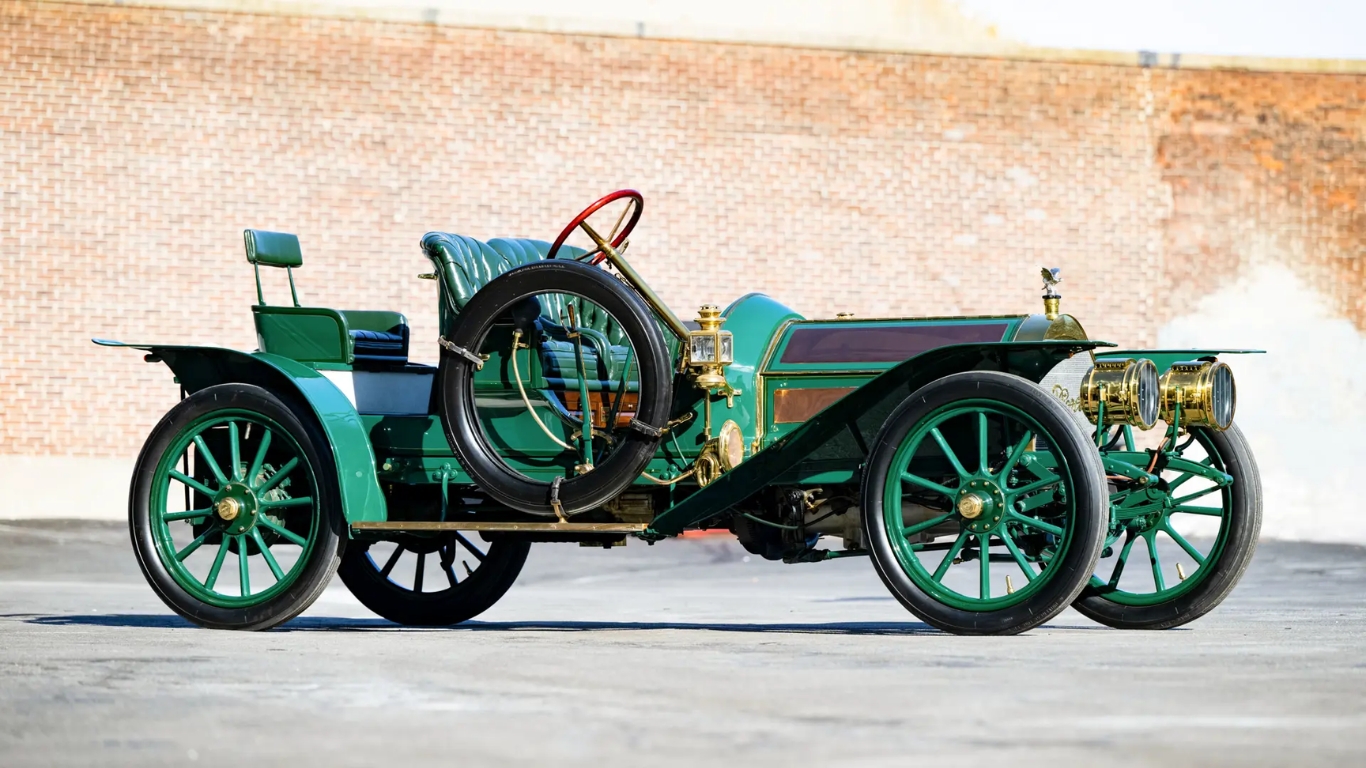
Buffalo’s luxury automaker became synonymous with presidential prestige.
When President William Howard Taft established the first official White House motor fleet in 1909, Pierce-Arrow immediately secured its place as a symbol of prestige in presidential transport. The Buffalo-based Pierce-Arrow Motor Car Company was one of America’s premier luxury automakers, and its large six-cylinder cars became symbols of prestige in the 1900s–1920s.
The Pierce-Arrow Model 36 was a six-cylinder car of about 36 hp, with a large displacement engine (approximately 11.7-liter straight-six) and high price, reflecting its status as a top-tier luxury chassis. A 1909 Model 36 brougham in presidential service reportedly had a special paint scheme (blue body, russet door panels, and U.S. Great Seal on the doors) and was primarily used by First Lady Helen Taft and high-ranking officials.
This presence initiated a long-standing government tradition, ensuring Pierce-Arrow vehicles became the standard for formal arrivals. Rolling up in this car was less about the drive and more about the message, a subtle assertion of national prestige.
5. Pierce-Arrow Model 48

Wilson’s attachment to his state car led friends to purchase it as a retirement gift.
The bond between a driver and their machine can run surprisingly deep, as President Woodrow Wilson demonstrated with his Pierce-Arrow Model 48. This luxury limousine served as his principal state car during his presidency (1913–1921), reliably ferrying him for official transport and ensuring ceremonial visibility across Washington, D.C.
A typical 1920 Model 48 used a T-head inline six of about 525 cu in displacement and could reach around 70 mph, riding on a 142-inch wheelbase. Wilson became very attached to his Pierce-Arrow; when he left office in 1921, friends purchased his presidential Pierce-Arrow from the government and presented it to him as a personal car.
The car, with presidential seals on the rear doors and an AAA insignia on the radiator, is preserved today at the Woodrow Wilson Presidential Library & Museum in Staunton, Virginia, and remains operable.
6. Pierce-Arrow Series 51
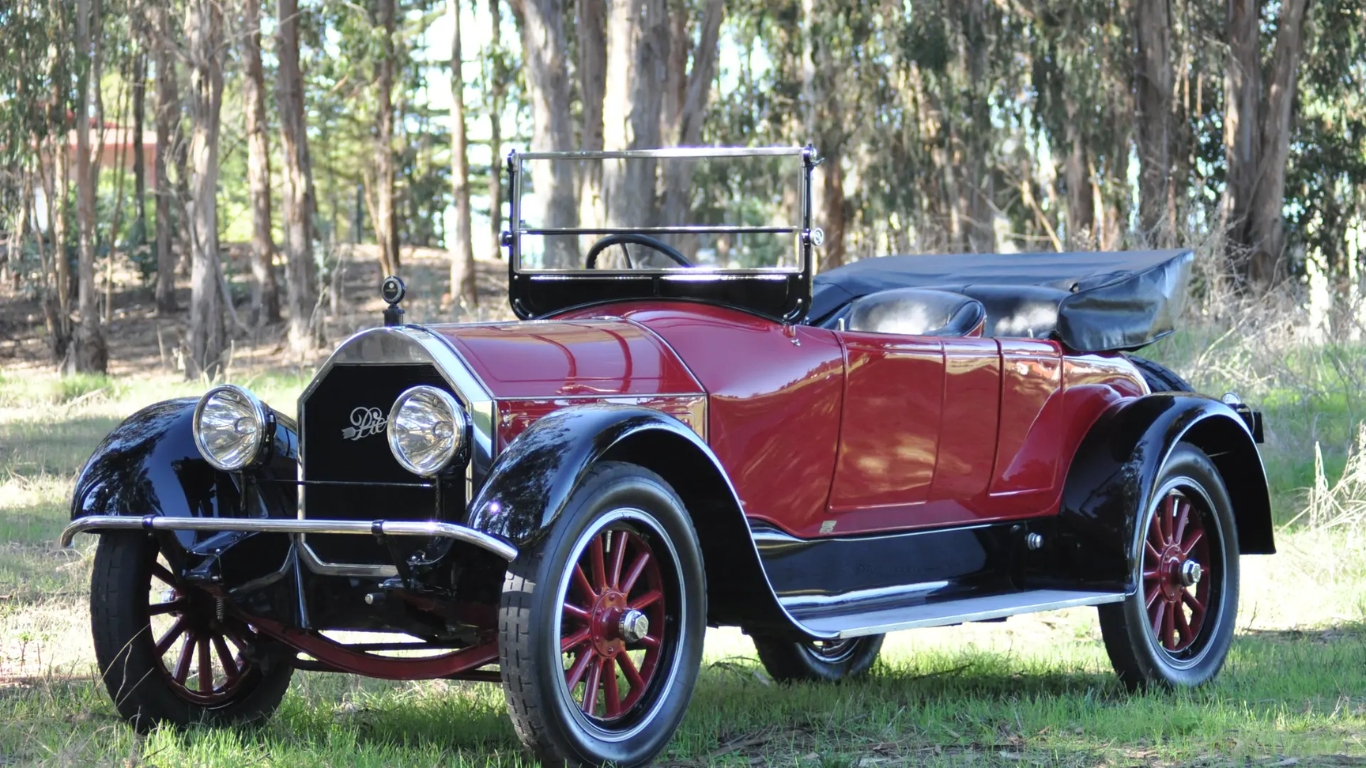
Wilson’s post-Versailles limousine projected American diplomatic strength.
Around 1919, Pierce-Arrow rationalized its range to the Model 31 and larger Model 51; the Model 51 used a big dual-valve inline-six of about 524–525 cu in that produced roughly 90–92 hp. Technical descriptions note a bore and stroke of 4½ × 5½ in and “dual-valve” layout with two spark plugs per cylinder, giving high torque and smoothness for heavy formal bodies.
A Pierce-Arrow Model 51 “Vestibule Suburban” body style was supplied to the White House during the Wilson administration, used for trips between the city and country homes and for formal engagements. The vestibule design featured a partially enclosed rear compartment with additional weather protection, suited to long-distance or intercity runs for officials and dignitaries.
Following President Woodrow Wilson’s return from Europe after negotiating the Treaty of Versailles, this stately limousine carried him through Washington, symbolizing American prestige on parade routes and at official ceremonies.
7. Pierce-Arrow Model 66 (A-4-66 / 66-A-4)
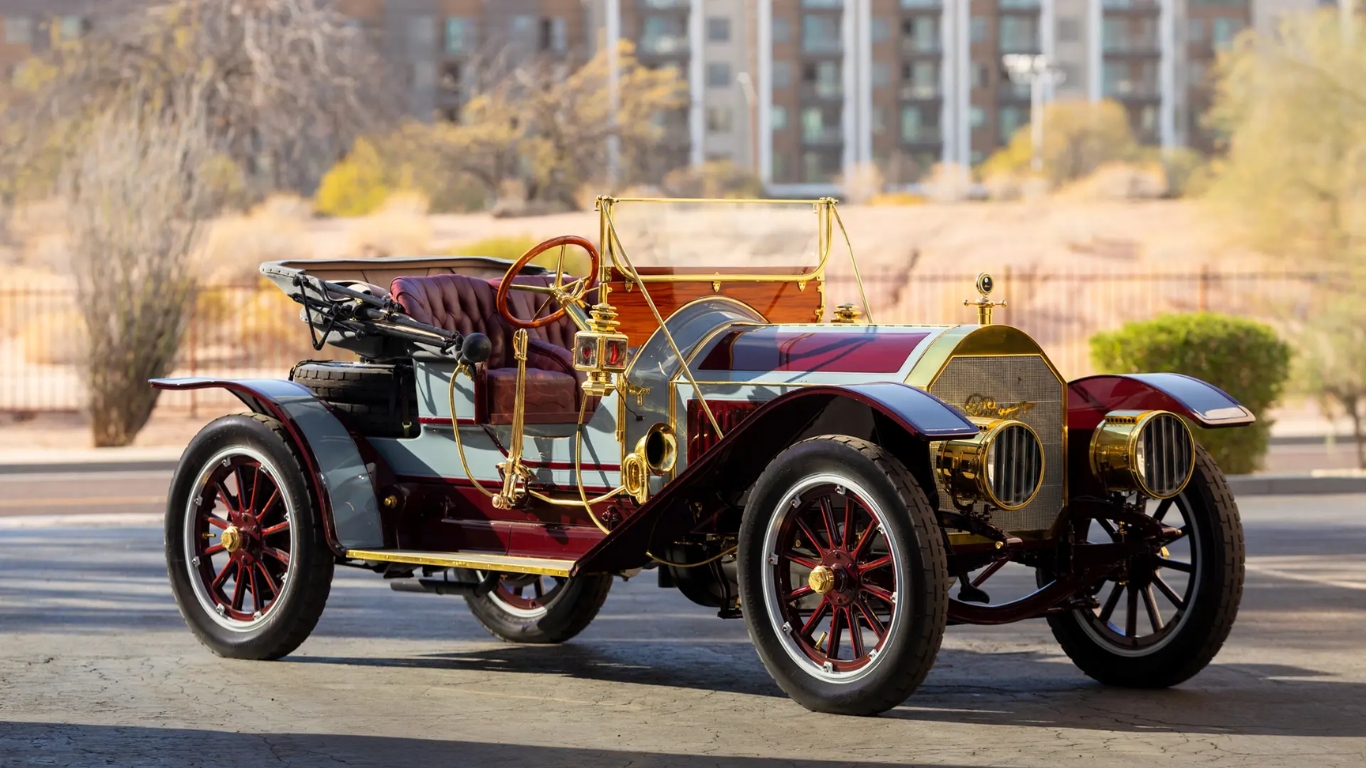
The largest cars of their era served presidential entourages and Secret Service details.
The Pierce-Arrow Model 66 line was the company’s top-of-the-line chassis from about 1910–1918, using an enormous 825 cu in T-head six-cylinder engine developing around 92–100 hp. Model 66 cars rode on a roughly 145–147.5 inch wheelbase and were among the largest and most expensive American cars of their time; surviving examples are extremely rare (fewer than 15 known).
In 1916, the White House acquired two Pierce-Arrow Model A4-66 touring cars along with a Model 48 vestibule sedan; the Model 66 tourers were used for transporting cabinet officers, visiting dignitaries, and Secret Service details. The massive displacement and dual-ignition engine gave the 66 series both high torque and relatively high top speed (around 80 mph) for such large luxury cars, which was valuable for fast, heavily loaded government travel on primitive roads.
Model 66 chassis underpinned a variety of large open touring and formal bodies, all priced at the very top of the market.
8. Milburn Light Electric
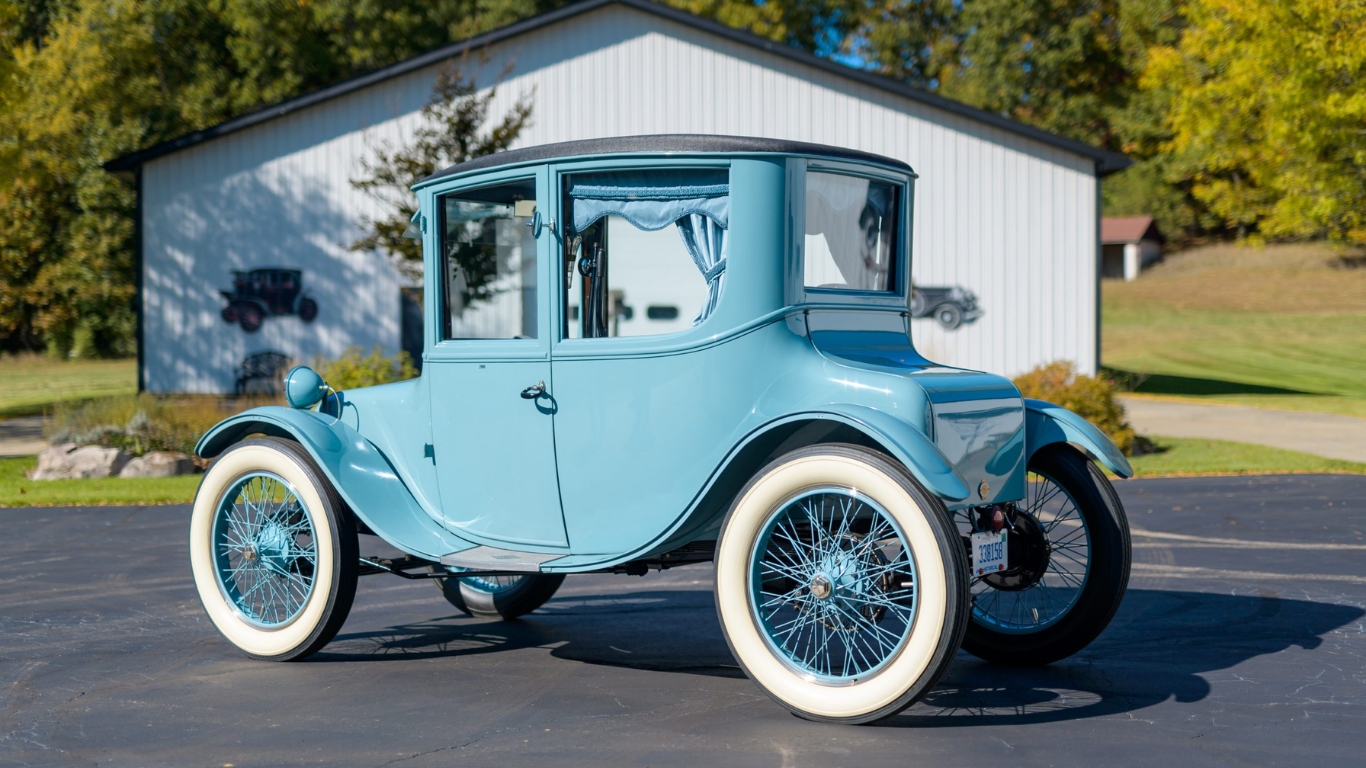
The Secret Service adopted silent electric cars for discreet escort duty.
The Milburn Wagon Company of Toledo, Ohio built the Milburn Light Electric from 1915–1923, producing over 4,000 electric cars targeted at upscale urban buyers. President Woodrow Wilson personally owned a 1918 Milburn Light Electric, and the U.S. Secret Service also operated several Milburns; they were used around Washington because their quiet operation suited escort and “tail” work behind the president’s carriage or car.
First Lady Edith Wilson was particularly fond of Milburn electrics and reportedly persuaded the Secret Service to adopt a Milburn fleet; Wilson himself drove his Milburn around the White House grounds. A typical Model 27L Milburn Light Electric used a General Electric DC motor powered by about 40–42 cells (approximately 84 V), with four forward and two reverse speeds, top speeds around 25–30 mph, and range anywhere from 50–100 miles depending on speed and configuration.
Milburn electrics featured enclosed coupe or brougham bodies with large glass areas, coal-fired or electric cabin heaters, and battery packs on rollers to facilitate swapping—advanced convenience features for the time.
9. Packard Twin Six
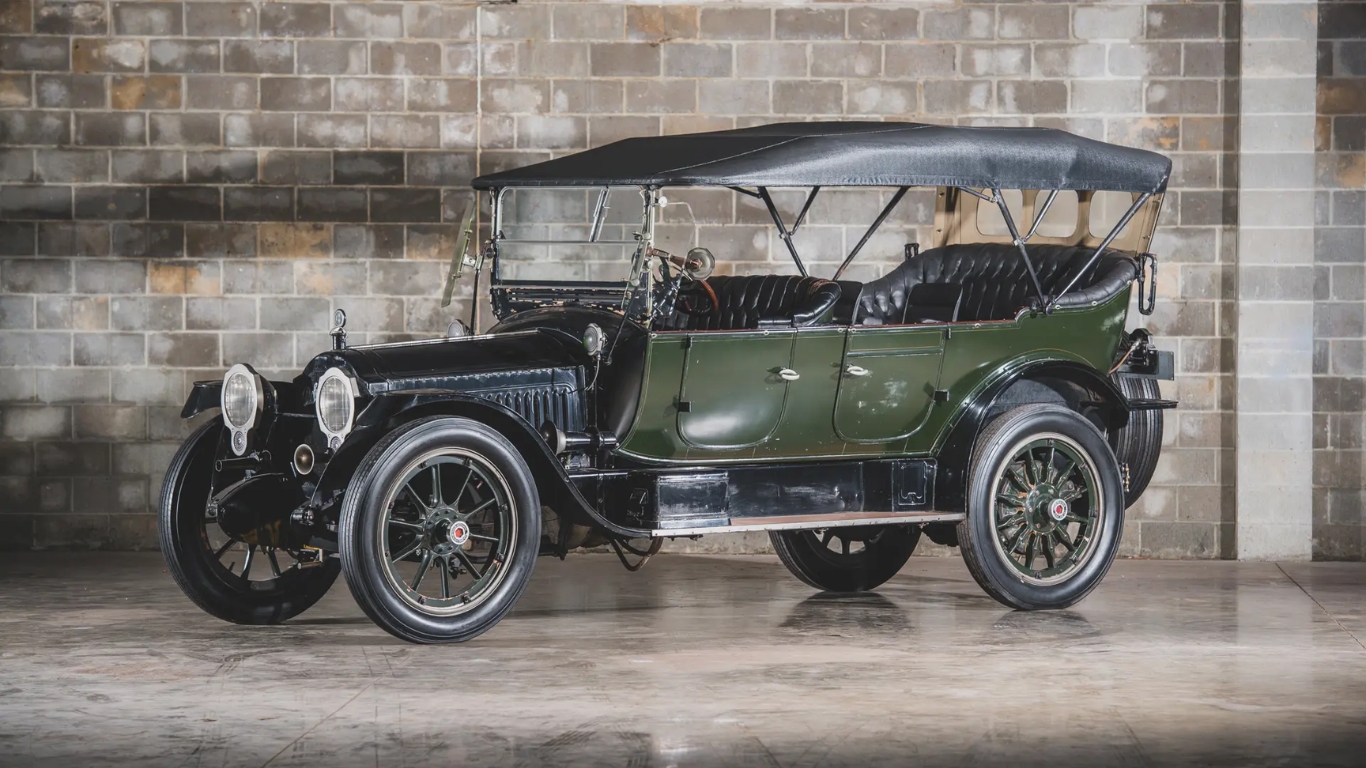
Harding became the first president to ride to his inauguration in an automobile.
On March 4, 1921, Warren G. Harding became the first U.S. president to ride to his inauguration in an automobile instead of a horse-drawn carriage, traveling in a Packard Twin Six supplied by the Republican National Committee. Contemporary and later accounts characterize this as a turning point that permanently shifted presidential inaugural transport from carriages to motorcars, underscoring Packard’s prestige.
Packard’s Twin Six was the company’s first V-12 production engine (introduced 1915), a 60-degree L-head V-12 of about 424 cu in (approximately 6.95 L) producing around 85–88 hp, with smooth torque and a 70–75 mph top speed. The Twin Six chassis came in multiple wheelbases (roughly 125–135 inches, depending on series), with three series produced from 1915–1923.
The Twin Six’s smooth twelve-cylinder power and high speed made it a natural choice for presidential ceremonial use and for wealthy private owners worldwide.
10. Pierce-Arrow 7-Passenger Limousine (Coolidge Era)

Coolidge’s frugality led to leasing arrangements rather than purchases.
After its early Taft- and Wilson-era service, Pierce-Arrow continued supplying formal cars to the White House into the 1920s; Coolidge’s administration is noted for leasing Pierce-Arrow limousines rather than purchasing them. President Calvin Coolidge, known for personal frugality, extended the White House’s reliance on Pierce-Arrow by opting for cost-effective corporate leasing arrangements for official transport.
A typical early-1920s Pierce-Arrow 7-passenger limousine would have used a large inline-six (e.g., Model 32 or 48) of around 414–525 cu in, on a 138–142 inch wheelbase, with seating for seven and elaborate coachwork. These limousines were often leased from Pierce-Arrow to control costs, a practice that aligned with Coolidge’s reputation for personal frugality, and they were used for formal arrivals and daily official transport.
Pierce-Arrow’s continuing presence in the White House motor pool into the mid-1930s helped cement its image as a “presidential” marque even as the company’s finances declined.
11. Lincoln Model L
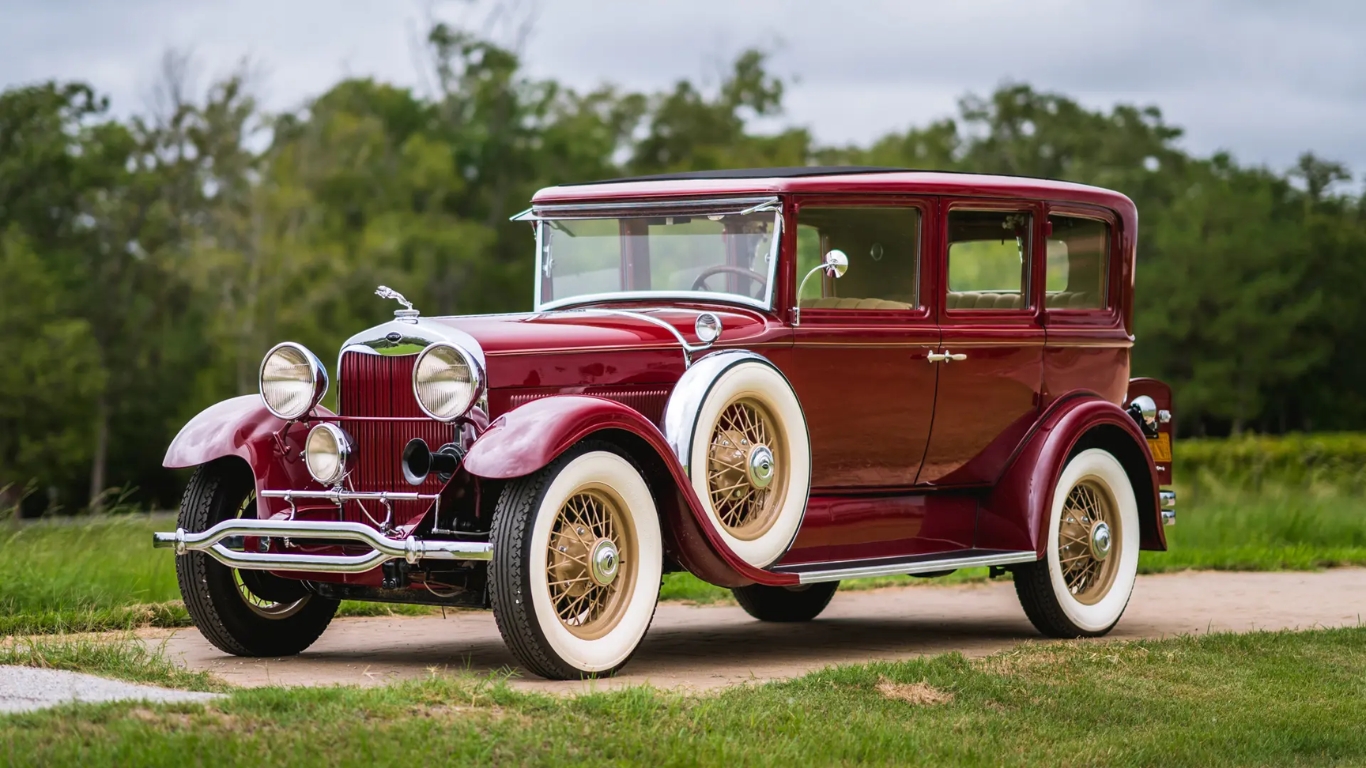
Ford’s acquisition of Lincoln launched decades of presidential service.
The Lincoln Model L was the first production Lincoln, introduced in 1920 and built through 1930; it used a 60-degree L-head V8 of about 357–385 cu in, producing roughly 81–90 hp, with a 3-speed manual transmission and rear-wheel drive. Model L chassis typically offered wheelbases around 130–136 inches, mechanical rear brakes, and luxury coachbuilt bodies priced from roughly $4,000–$7,000 at the time (a high luxury price bracket).
In 1924, two years after Ford Motor Company acquired Lincoln, a Lincoln Model L became the first Lincoln used by a U.S. president on an official basis, serving Calvin Coolidge; Lincoln and Ford highlight this as the brand’s entry into presidential service. Coolidge’s adoption of the Model L began Lincoln’s long association with U.S. presidential vehicles, which would intensify from the late 1930s onward.
This choice forged a lasting bond between Ford’s premier luxury marque and the nation’s highest office, setting a new benchmark for executive transport.
12. Cadillac Series 341 V8 (The Capone Car Myth)
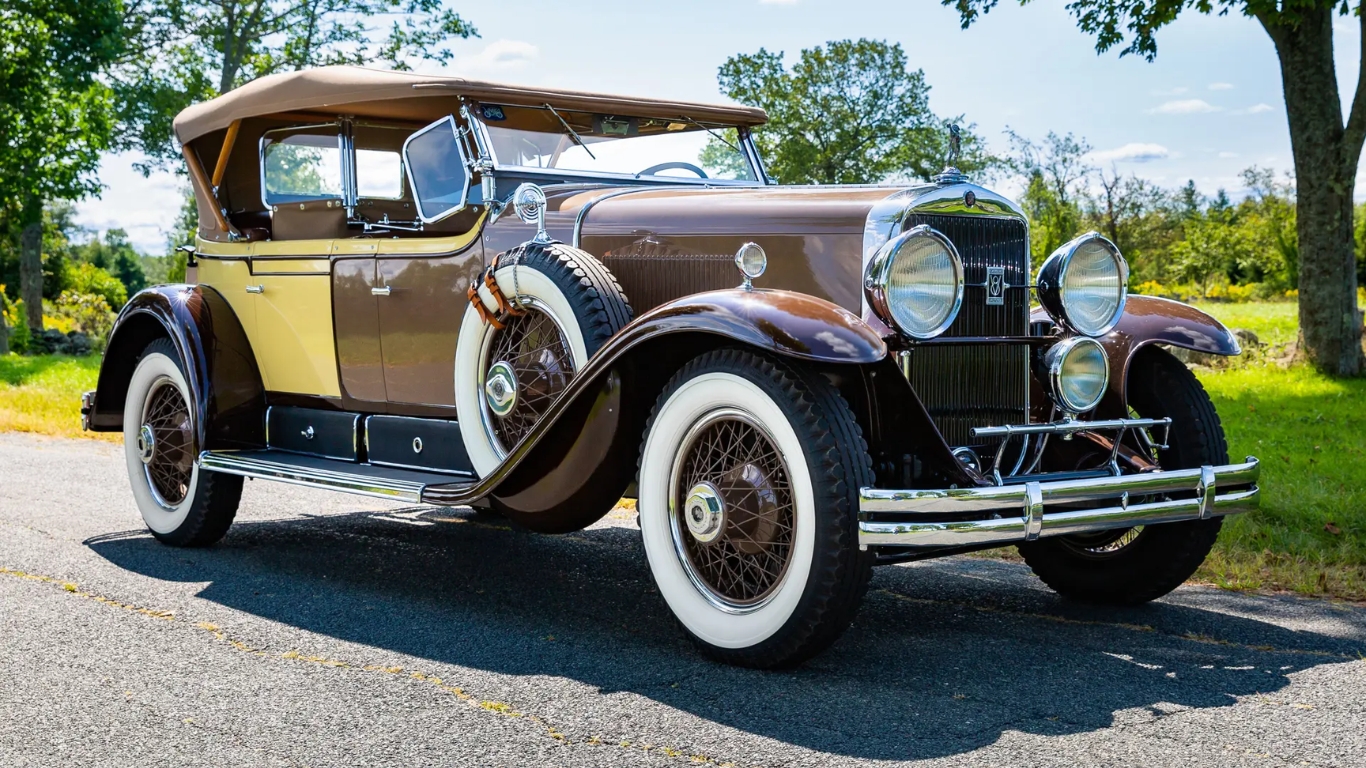
Post-Pearl Harbor security needs sparked an enduring legend about Al Capone’s car.
A widely circulated story claims that following the attack on Pearl Harbor in December 1941, a Cadillac Series 341 V8 originally impounded from gangster Al Capone was pressed into presidential service for Franklin D. Roosevelt. This tale originates from Secret Service Agent Michael Reilly’s memoir and has been repeated in numerous secondary sources.
However, the White House Historical Association explicitly states that photographs from December 8, 1941 show FDR riding in one of the semi-armored 1938 Cadillacs “Queen Mary/Queen Elizabeth,” and that there is no evidence he used Capone’s car. While the story persists in popular culture, it remains an unverified anecdote, not documented fact.
The legend illustrates how wartime urgency fueled creative solutions and dramatic narratives around presidential security, even if this particular tale doesn’t hold up to scrutiny.
13. Cadillac Series 452 V-16 Imperial Fleetwood (Hoover’s V-16)
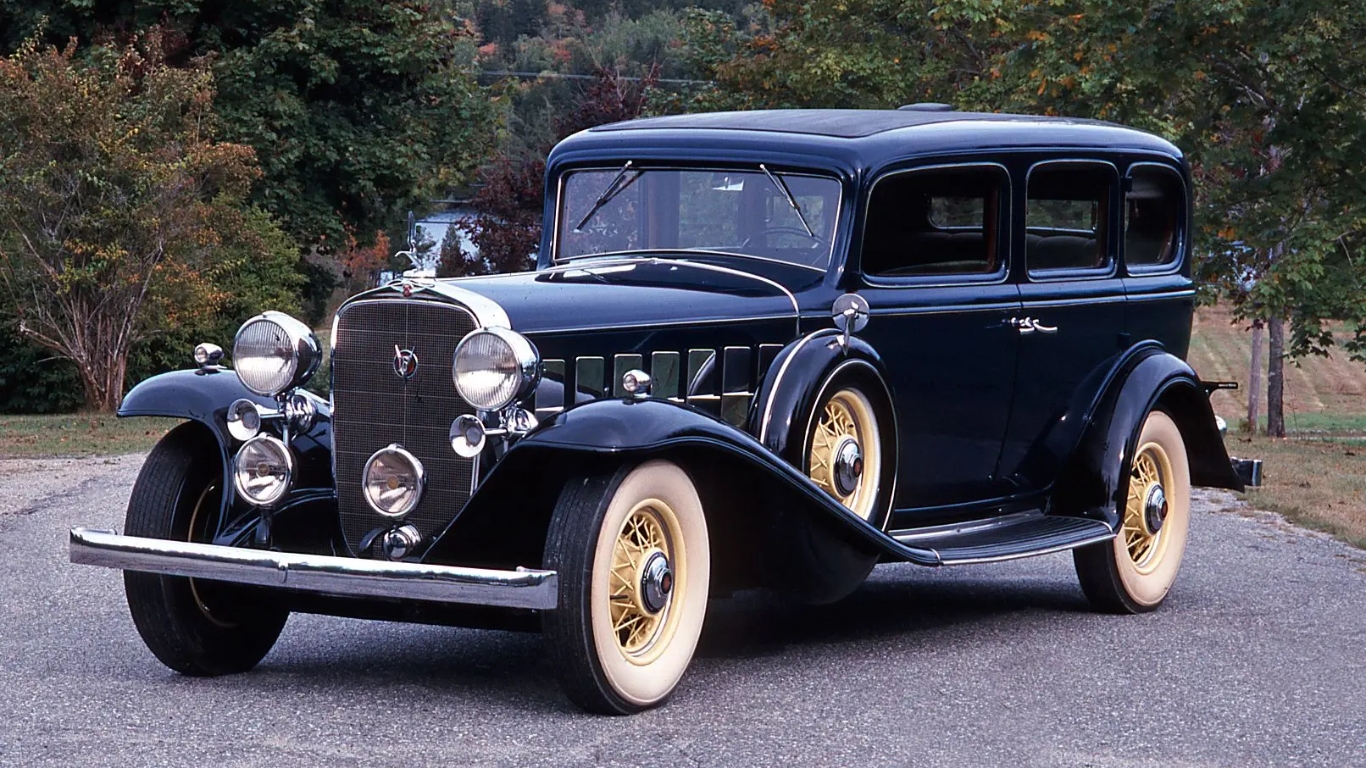
A sixteen-cylinder statement of resilience during the Great Depression.
Cadillac introduced its Series 452 V-16 in 1930; the engine was a 45-degree OHV V-16 with 452 cu in (approximately 7.4 L) displacement, initially rated around 165–185 hp, using two single-barrel carburetors and a 3-speed synchromesh transmission. The 1932 Cadillac Series 452B V-16 Imperial Limousine by Fleetwood (body style 5175) is documented as originally purchased by President Herbert Hoover during the final months of his presidency; he kept the car for many years after leaving office.
Series 452 V-16 cars rode on very long wheelbases (up to about 148 inches in early years), and the Fleetwood-bodied Imperial limousines featured formal seven-passenger coachwork intended for chauffeur operation and official use. The presence of a massive, ultra-smooth V-16 limousine at the White House during the Great Depression projected mechanical sophistication and industrial might, which contemporary commentary often framed as symbolic of American resilience.
This commanding vehicle made a tangible statement of national strength when optimism was in short supply.
14. Ford V-8 Convertibles with Hand Controls (FDR’s Personal Cars)
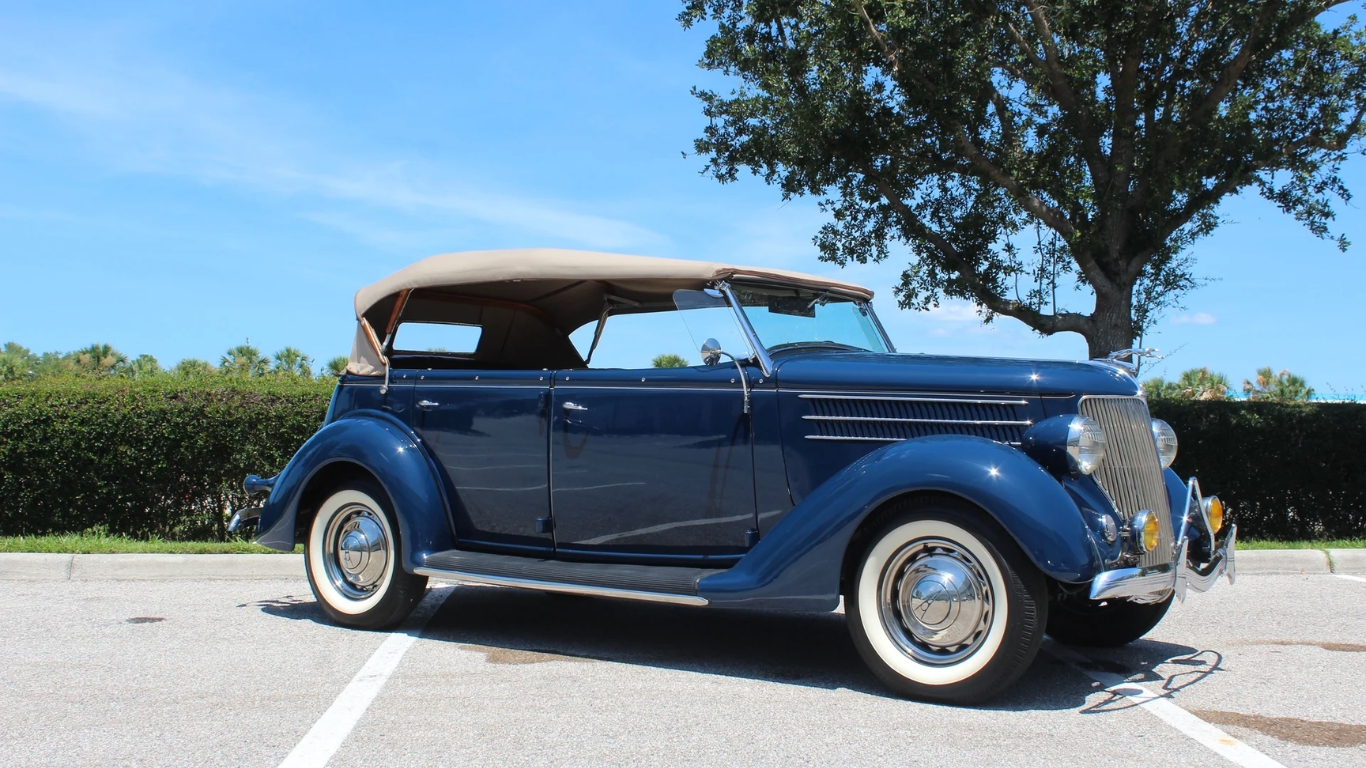
Custom hand controls gave FDR independence despite paralysis from polio.
Franklin D. Roosevelt, paralyzed from the waist down by polio, had several personal Ford V-8 convertibles modified with hand controls so he could drive himself at Hyde Park and Warm Springs despite being unable to use foot pedals. At his Hyde Park estate he used a 1936 Ford V-8 Phaeton convertible, specially fitted with hand-operated throttle, brake, and clutch; the controls were designed and installed by local mechanic Fred Relyea.
At the Little White House in Warm Springs, Georgia, FDR used a 1938 Ford V-8 convertible coupe/Phaeton similarly equipped with hand controls; local craftsmen adapted tractor parts to fabricate the mechanism, and he drove the car extensively on back roads. FDR’s hand-controlled Fords symbolized his determination to maintain independence and mobility; contemporaries and historians note that driving gave him a rare sense of freedom and direct contact with ordinary citizens.
The 1936 Ford Phaeton and 1938 Ford convertible survive in museum collections (FDR Library at Hyde Park and the Little White House museum in Georgia) and are displayed with the original control linkages.
15. Cadillac Series 90 V-16 “Queen Mary” and “Queen Elizabeth”
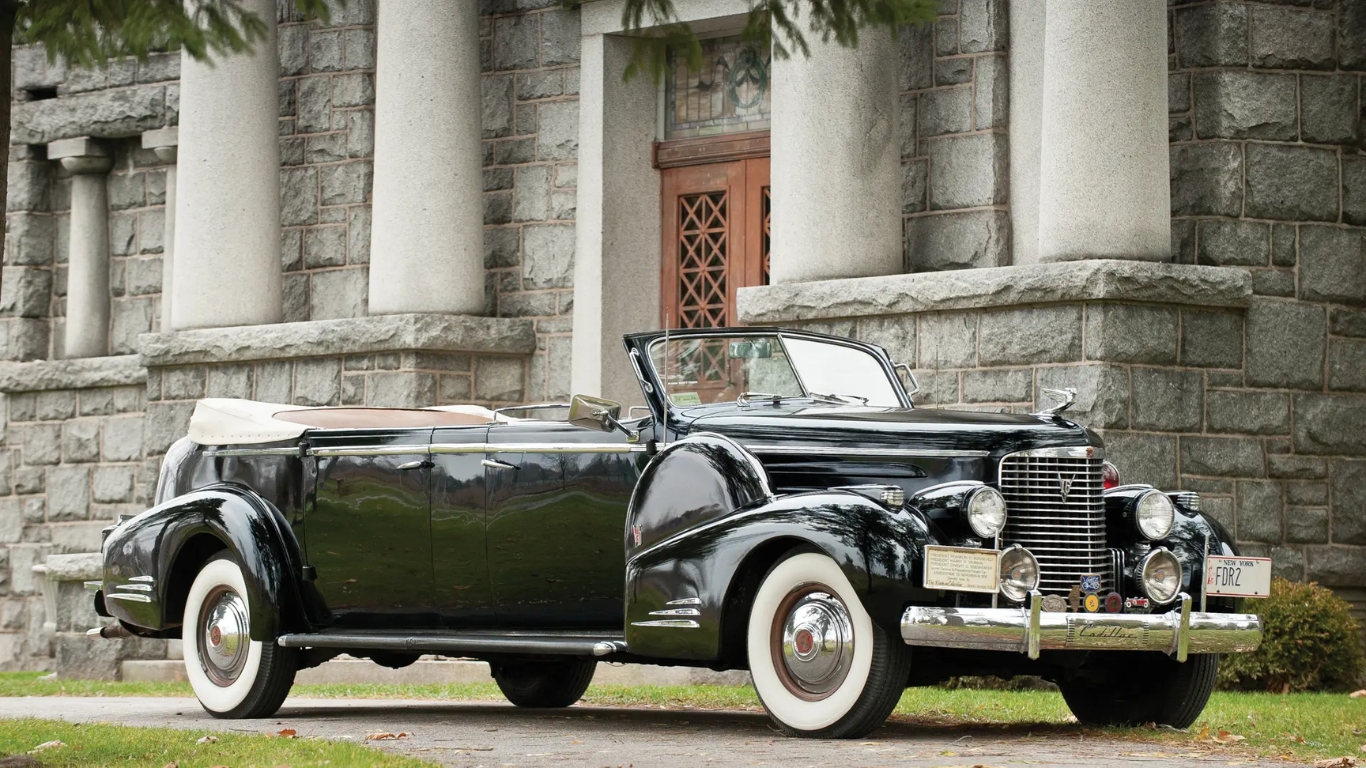
Two semi-armored escort vehicles protected three presidents over two decades.
In 1938, Cadillac and its coachbuilder Fleetwood built two special V-16 convertible parade limousines for White House use under special order job no. 9006, on a stretched 165-inch wheelbase, about 11 inches longer than a standard V-16. These cars, later nicknamed “Queen Mary” and “Queen Elizabeth” (after the famous ocean liners), were semi-armored, weighed around 8,000 lb, and carried the Series 90 V-16 engine; they were equipped with armoring, heavy-duty generators, two-way radios, firearms compartments, sirens, and exterior running boards and grab handles for Secret Service agents.
The pair served primarily as Secret Service and escort vehicles for Presidents Franklin D. Roosevelt, Harry Truman, and Dwight Eisenhower, often running immediately ahead of or behind the presidential car in motorcades. Cadillac’s second-generation V-16 of this era displaced about 431–452 cu in (depending on source) and produced around 185 hp, with revised high-compression design and lower overall chassis height compared with the 1930–32 engine.
Both original 1938 security cars survived; their V-16 engines were later replaced with V-8s post-war, and they eventually entered private collections after being retired from government service.
16. Packard Twelve
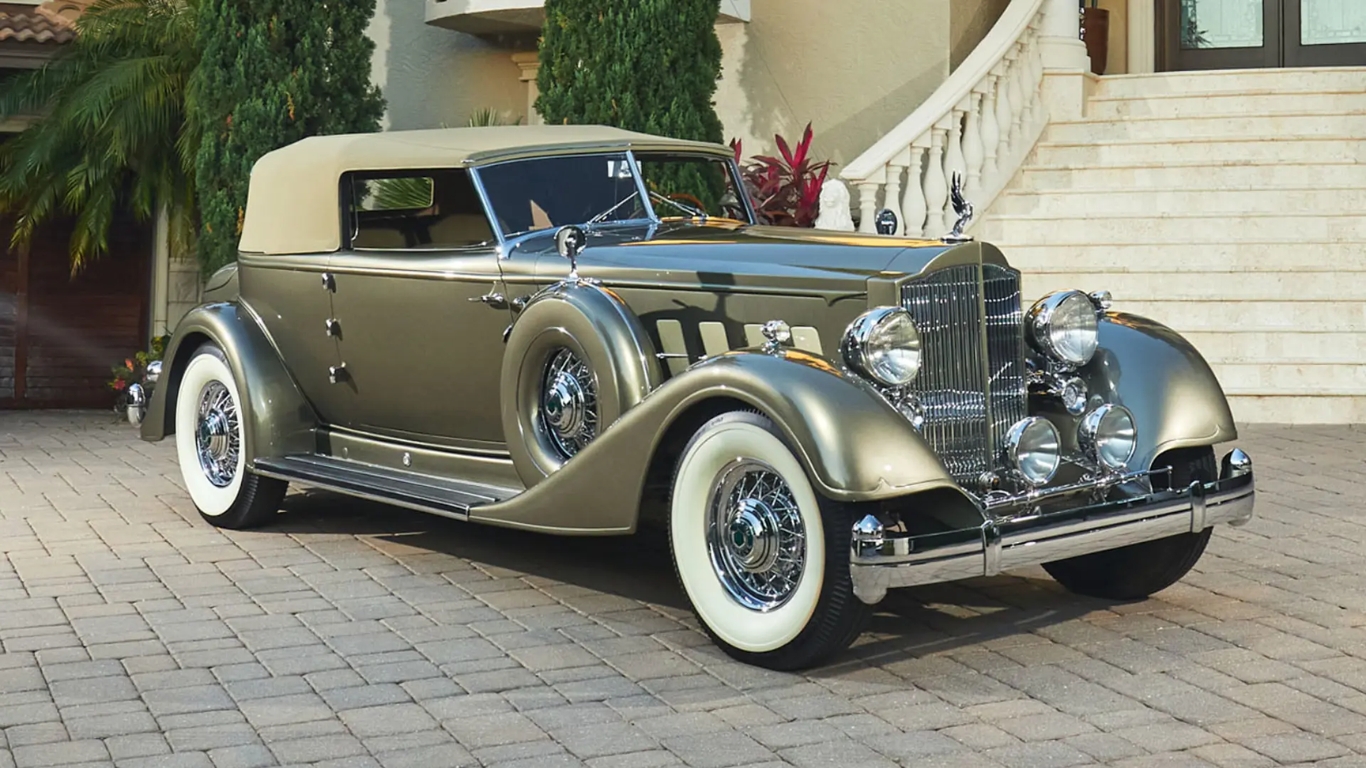
FDR’s 1939 armored Packard balanced luxury with discreet protection.
The Packard Twelve (successor to the earlier Twin Six) reintroduced Packard’s V-12 in the 1930s; early 1930s engines displaced about 445.5 cu in (7.3 L) and produced around 160 hp, later enlarged to about 473 cu in (7.8 L) with up to 175–186 hp. A Packard Twelve presidential car was built for Franklin D. Roosevelt in 1939, with an armored version also famously given by FDR to Joseph Stalin.
Typical Packard Twelve chassis in the mid- to late-1930s used a wheelbase of roughly 134–142 inches, four-wheel drum brakes, and massive curb weights around or above 5,000 lb before armor. The Twelve’s purpose was exceptionally smooth, quiet torque rather than high peak power; period tests cite about 175 hp and roughly 366 lb-ft of torque at low rpm, enabling effortless movement of heavy formal bodies and armor.
An armored Packard Twelve associated with FDR is often referenced in discussions of pre-war presidential and diplomatic security vehicles, particularly in the context of high-level summit transport.
17. Lincoln K Series “Sunshine Special”
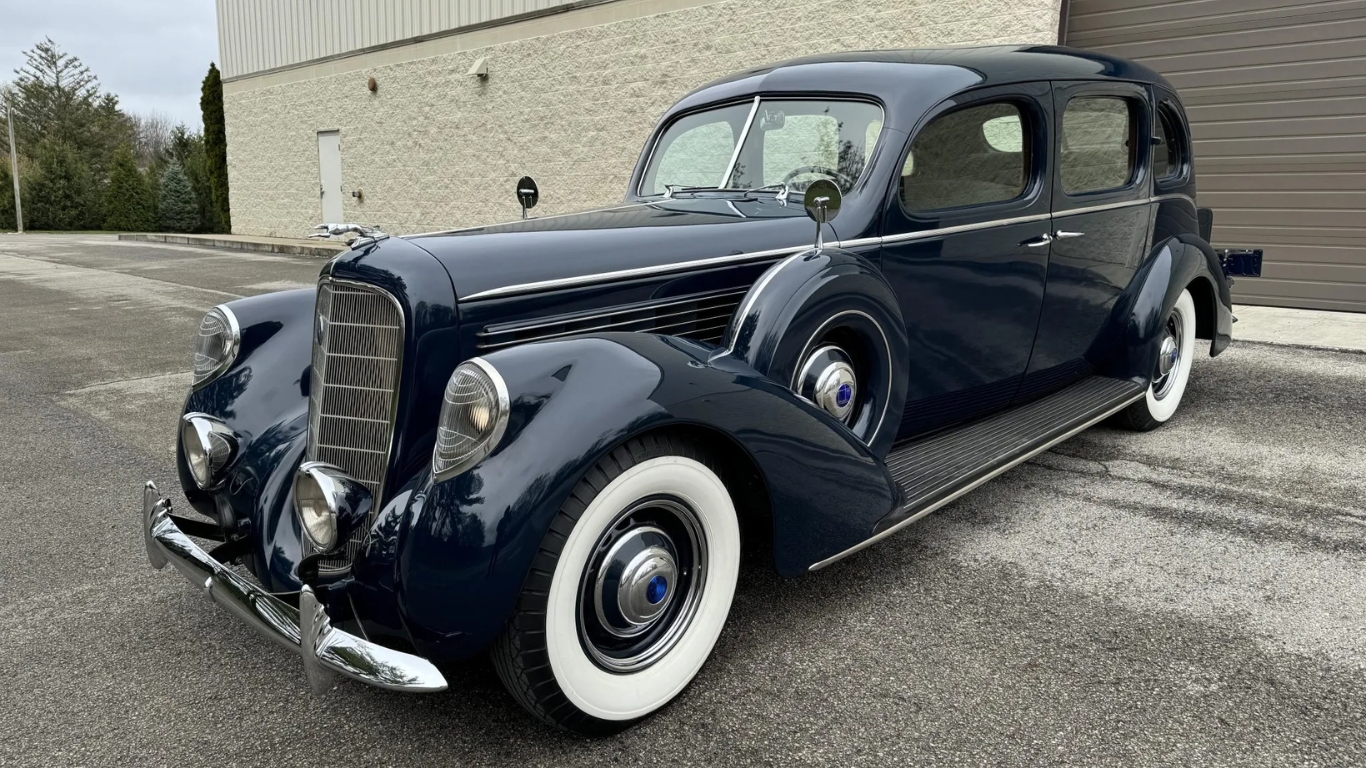
FDR’s convertible limousine was armored after Pearl Harbor and served two presidents.
The “Sunshine Special” was a custom 1939 Lincoln K-series four-door convertible limousine built for Franklin D. Roosevelt, constructed on a specially ordered K-series chassis by Brunn & Company to U.S. Secret Service specifications. The car used a 414 cu in V-12 L-head engine rated at about 150 hp, on a 160-inch wheelbase, and was unusually large and heavy; after later armor upgrades its weight reached about 9,300 lb (approximately 4,200 kg).
Original features included wide running boards and step plates, external grab handles for agents, forward-facing rear jump seats, wider rear doors, siren and red warning lights, flagstaffs, and a fully convertible open top, giving rise to the “Sunshine” nickname. After Pearl Harbor, the car returned to the factory (1942) for comprehensive armoring: steel armor plate in doors and body, 1+-inch bullet-resistant glass, flat-proof tire liners, upgraded cooling, and strengthened suspension; the modifications added several thousand pounds.
The Sunshine Special served both FDR and Harry Truman into the mid-1940s and is now preserved at The Henry Ford Museum, where it is a centerpiece of the presidential vehicles collection.
18. Lincoln Custom (1942 Armored)
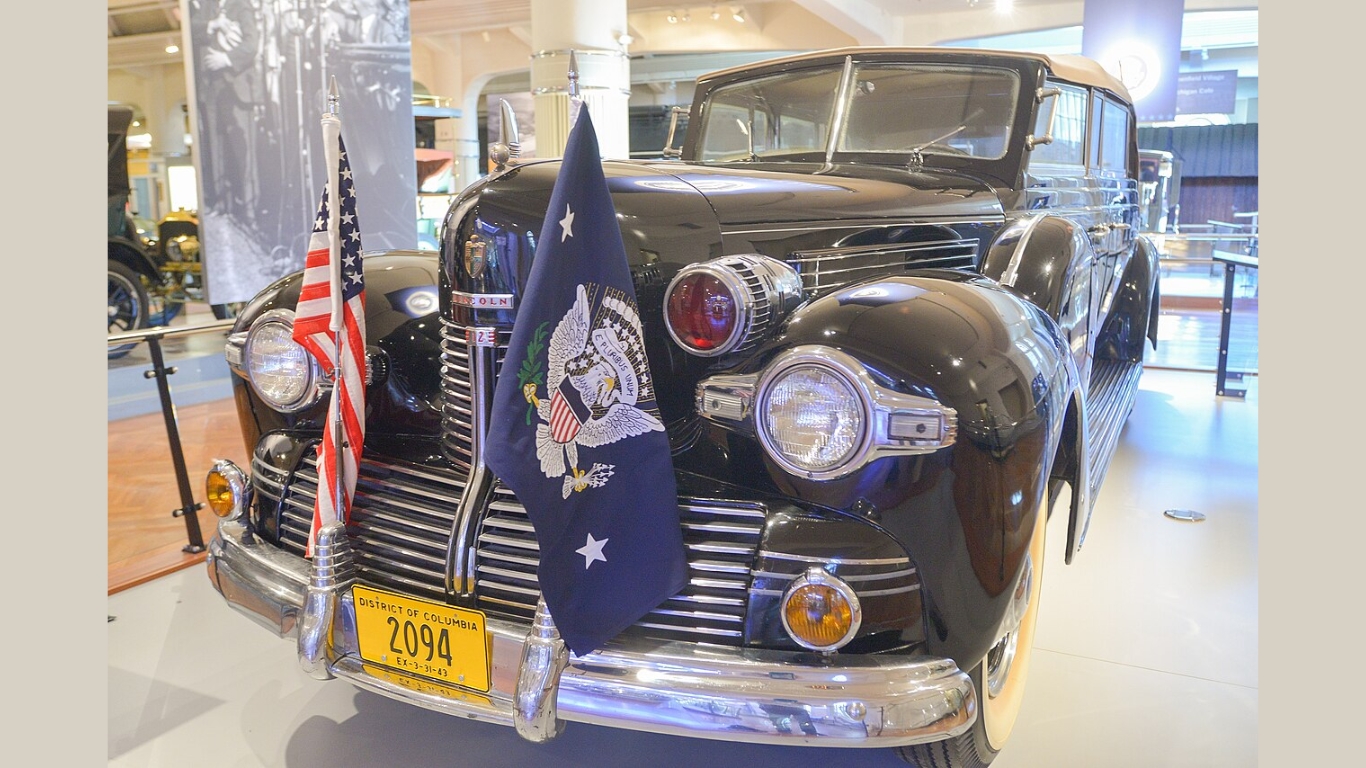
The first presidential car delivered new with full factory-integrated armor.
The Lincoln Custom was a long-wheelbase luxury sedan/limousine built in 1941–42 on an extended Lincoln Zephyr chassis, using a V-12 enlarged to 305 cu in with about 130 hp for 1942. A special 1942 Lincoln Custom limousine was fully armored and provided to the White House for Franklin D. Roosevelt’s use; it weighed over 7,000 lb, compared with about 4,400 lb for a standard Custom, due to heavy steel plating and bullet-resistant glass.
This 1942 armor-upfitted Custom is widely described as the first presidential car delivered new with full armor from the factory, rather than retrofitted after delivery. The car featured armor in doors, roof, firewall, gas tank, and floor, plus heavy wire mesh in the engine compartment to stop bullets while still allowing airflow; it also incorporated upgraded brakes and a “parade generator” to run lights for long periods.
FDR used the car extensively around Washington and for key wartime travel (including the Yalta Conference ground transport); it later also served Harry Truman.
19. Lincoln Cosmopolitan (“Bubble-Top”)
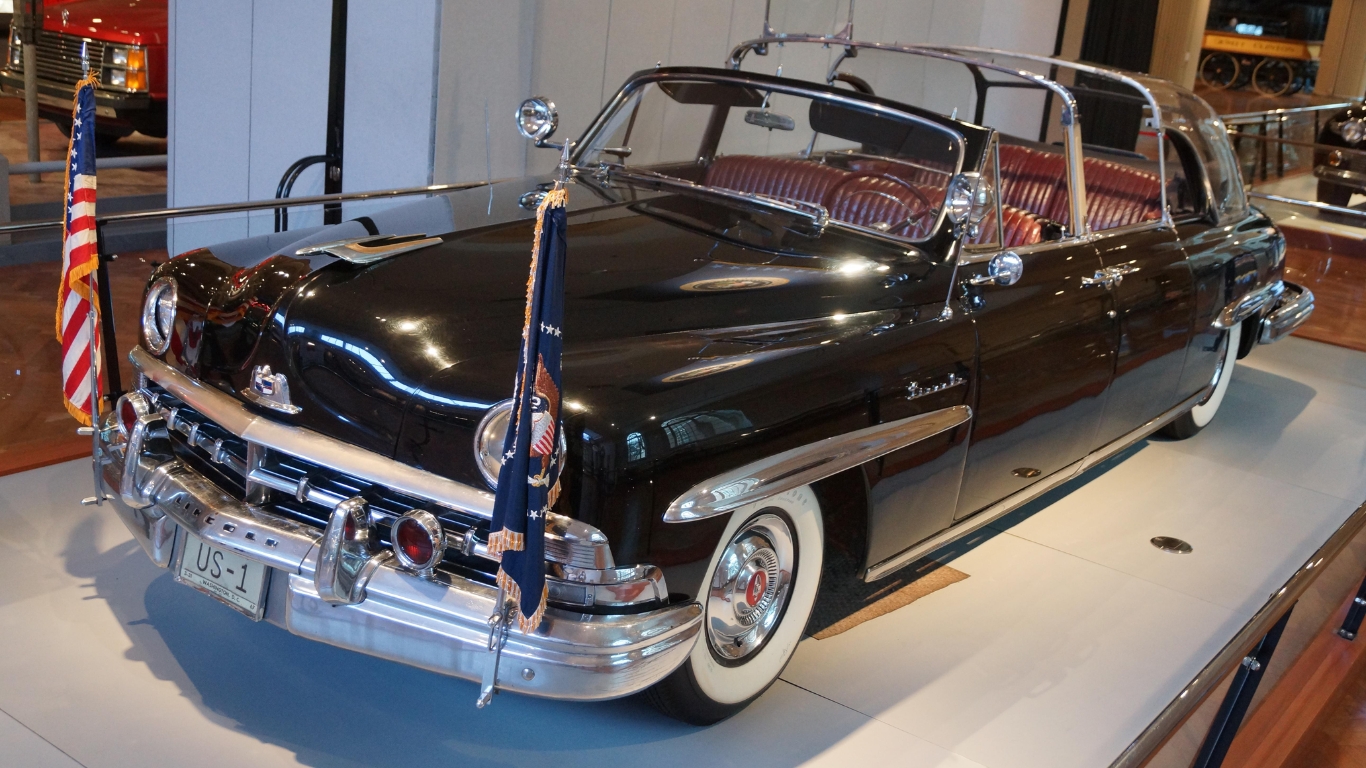
Eisenhower’s transparent dome allowed visibility in bad weather during parades.
Under Harry S. Truman, the White House leased ten 1950 Lincoln Cosmopolitans, customized by Henney Motor Company and further modified by Hess & Eisenhardt for presidential and official use. One car was an armored convertible specially reserved for the president; it was about 20 feet long, weighed roughly 6,500 lb (1,700 lb more than stock), and used a 337 cu in L-head V-8 rated at about 152 hp with a heavy-duty automatic transmission.
In 1954, President Dwight D. Eisenhower had the convertible Cosmopolitan fitted with a removable Plexiglas “bubble top,” enabling him to remain visible to crowds in bad weather; this feature became iconic, and the car is widely known as the “Bubble-Top Lincoln.” The Bubble-Top served multiple administrations—Truman, Eisenhower, Kennedy, and Johnson—primarily as a parade car, remaining in presidential service until the mid-1960s before being retired to the Henry Ford Museum.
Standard Cosmopolitan presidential cars were heavily reinforced and used as the main White House limousines, consolidating Lincoln’s role as primary supplier of presidential vehicles in the early Cold War era.
20. Cadillac Eldorado (1953 Eisenhower Inaugural)
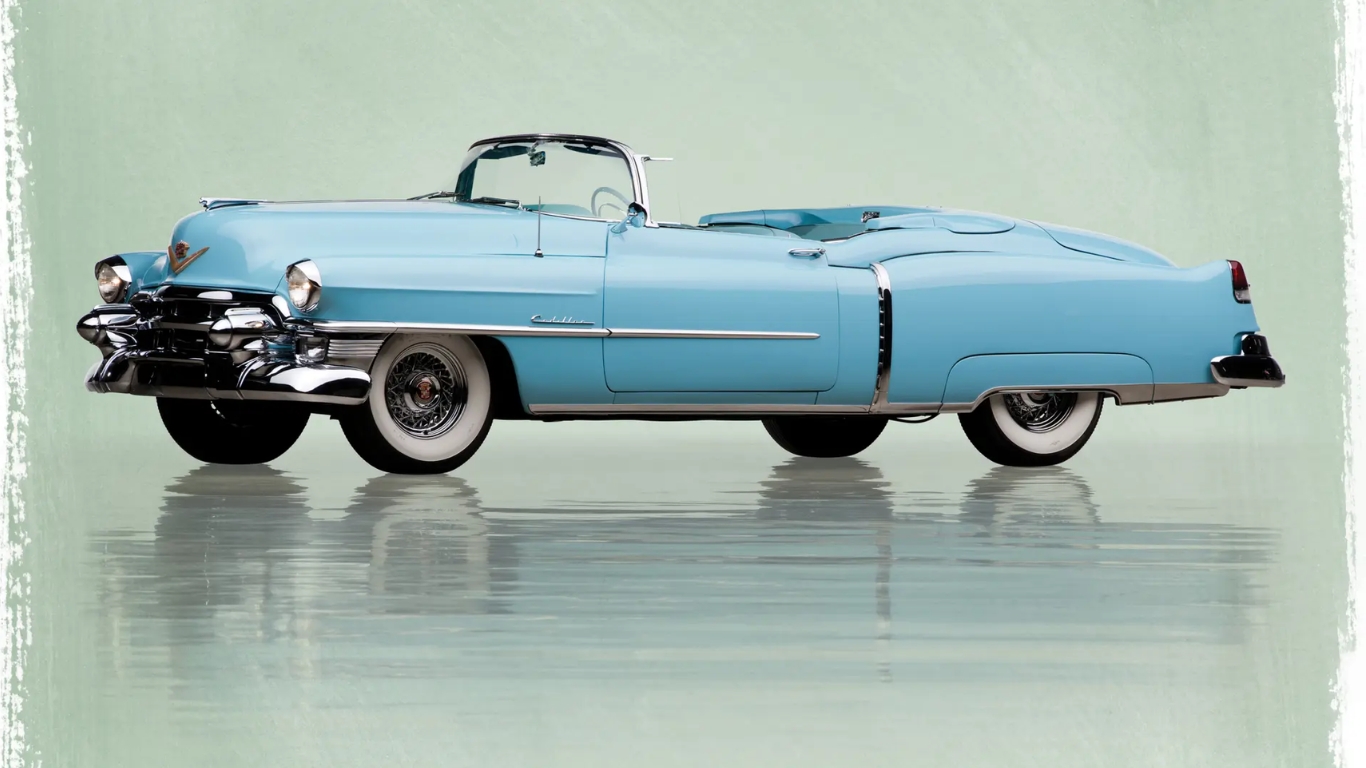
A white convertible showcased post-war prosperity in a nationally televised parade.
The Cadillac Eldorado debuted in 1953 as a limited-production, top-of-the-line Series 62 convertible; only about 532 cars were built, each powered by Cadillac’s 331 cu in OHV V-8 producing about 210 hp with a 4-speed Hydra-Matic automatic. A white 1953 Cadillac Eldorado was used to carry President-elect Dwight D. Eisenhower and his wife during his inaugural parade on January 20, 1953, in a highly publicized, nationally televised event that gave the new model huge exposure.
The 1953 Eldorado featured a low, sleek body with a wraparound windshield, wire wheels, and extensive chrome trim, showcasing GM’s post-war design prowess. This high-profile appearance generated massive public excitement for the luxury vehicle, cementing the Eldorado’s status as an icon of American automotive aspiration in the 1950s.
21. Cadillac Series 75 Limousine (1953 Eisenhower Fleet)
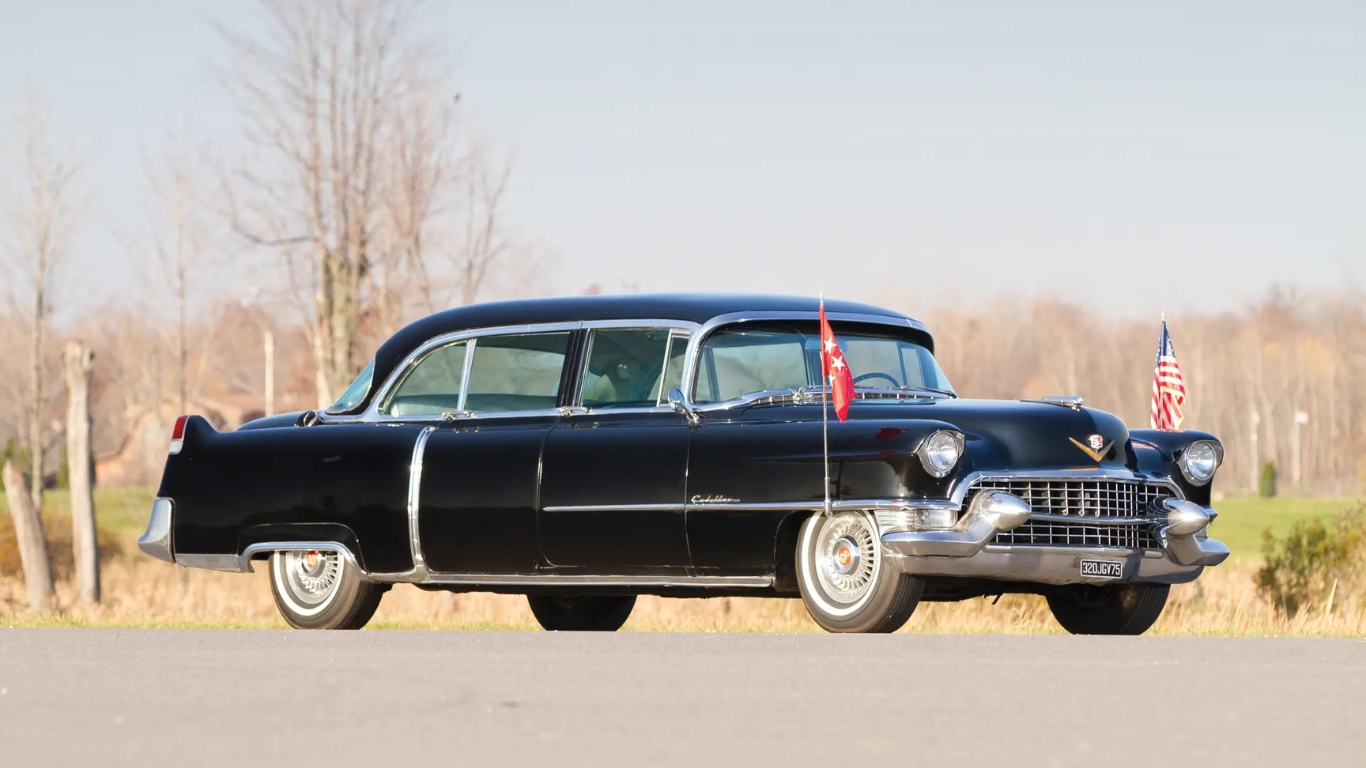
A workhorse limousine for daily executive transport and state visits.
For the daily executive transport needs of Dwight Eisenhower, the White House fleet received a significant addition in 1953: the Cadillac Series 75 Limousine, designed for dependable, high-level service. This machine delivered pure utility, moving high-ranking officials with quiet competence. Its raised rooflines offered generous headroom, and the division glass secured sensitive conversations. Heavy-duty air conditioning proved essential for maintaining composure during D.C