

Automotive archaeology rarely yields trophies as curious as the machines that vanished from public memory, only to resurface decades later with stories that challenge everything enthusiasts thought they knew. Some cars were locked in dusty warehouses, forgotten by the very companies that built them. Others disappeared into private collections, hidden from registries and rumor alike. The eight legends that follow aren’t just relics—they’re riddles wrapped in steel and glass, each one a testament to innovation that refused to die quietly. Whether you chase every backroad curve or simply appreciate the thrill of discovery, these forgotten icons will reignite curiosity about what else might be hiding in plain sight.
1. Tucker 48
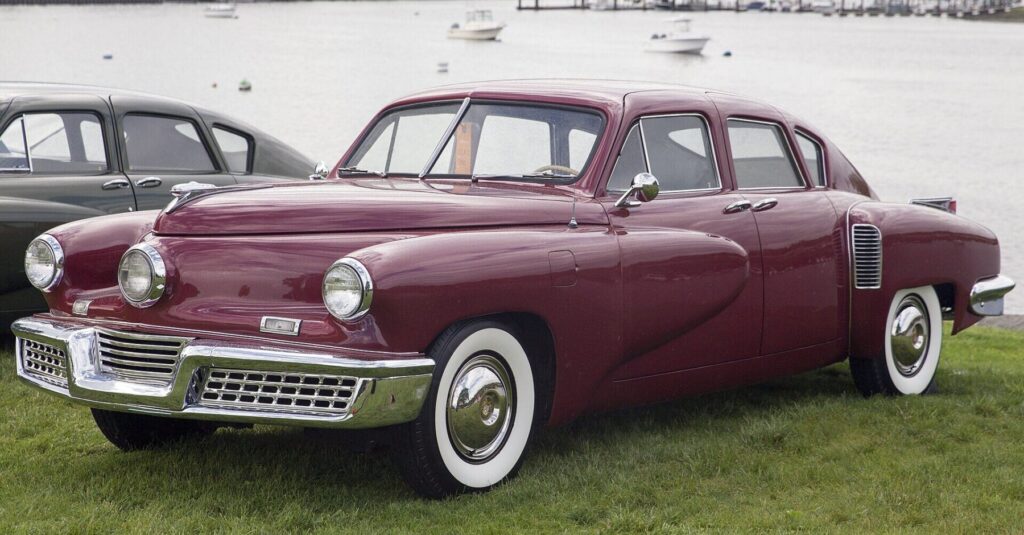
Preston Tucker’s rear-engine sedan packed revolutionary safety features into 51 units before SEC scrutiny and a stock fraud trial crushed the company in 1949.
According to the Tucker Automobile Club of America, only 51 units ever rolled off the line before external forces crushed Preston Tucker’s dream in 1949, making the Tucker 48 one of the rarest production cars in American history. This wasn’t a quiet fade into irrelevance—it was an active shutdown, driven by SEC scrutiny, hostile press coverage, and a stock fraud trial that ultimately acquitted Tucker but killed his company.
The car itself embodied audacious thinking: a rear-mounted flat-6 engine, the revolutionary “Cyclops Eye” center headlight that turned with the steering, four-wheel independent suspension, a padded dash, and a pop-out safety windshield. Features that wouldn’t become standard for decades. Anyone who’s seen one in person understands the uncompromising intention behind every line and mechanical choice—this was a machine built to rewrite the rulebook, not follow it.
The establishment saw Tucker as too ambitious, too disruptive, too early, and they made sure he stayed that way. What remains is an unresolved legacy and a reminder that sometimes the most dangerous thing you can do is prove the old guard wrong.
2. Phantom Corsair
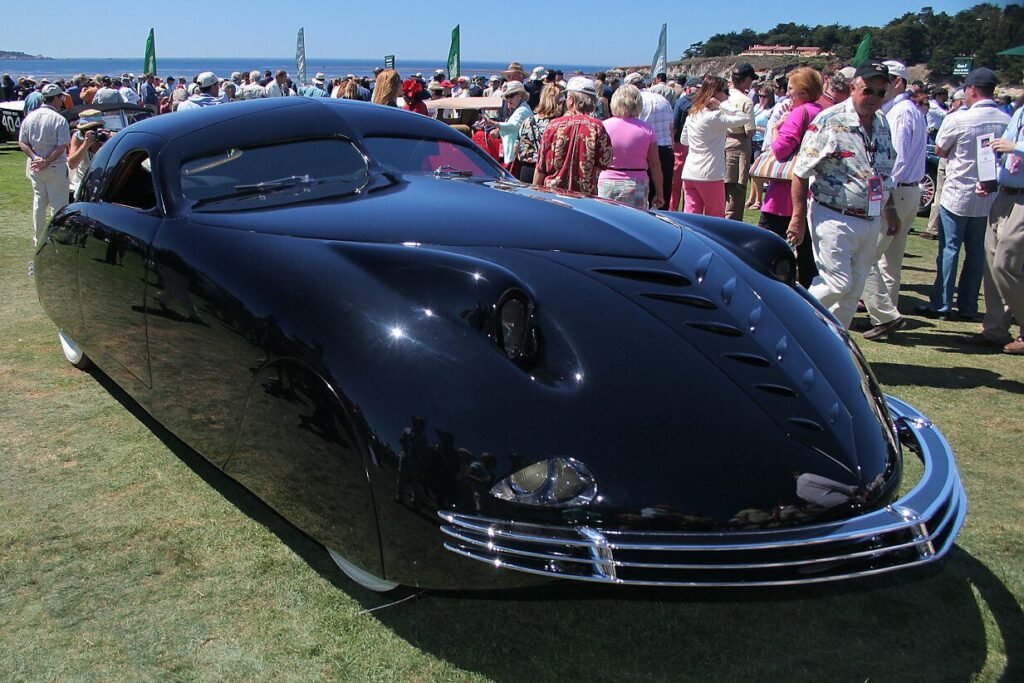
Rust Heinz’s streamlined one-off wrapped doors into the bodywork so seamlessly that entering felt like strapping into a fighter jet instead of a sedan.
Exactly one Phantom Corsair emerged from Bohman & Schwartz’s workshop between 1937 and 1938, a streamlined vision so low and integrated that entering it felt like strapping into a fighter jet instead of a car. Rust Heinz wanted a future without visible seams or protruding fenders, so he wrapped the body in black flowing steel that merged doors into the sides until they vanished from view.
Sitting inside the cockpit, you would have felt the illusion of flight as the low roofline and enveloping dash mimicked aeronautical control, a sensation no other sedan of the era dared attempt. Contemporary reports indicate the car never reached production after Heinz died in a crash around age 24, ending any hope of mass-market futurism.
The Phantom Corsair now stands as a monument to unrealized automotive ambition, a machine that imagined highways full of streamlined sedans gliding like shadows. Anyone who’s seen it in person knows the feeling of staring at a concept so radical it still looks otherworldly decades later, proof that the best ideas sometimes die before they get a fair shot at the open road.
3. Dymaxion Car
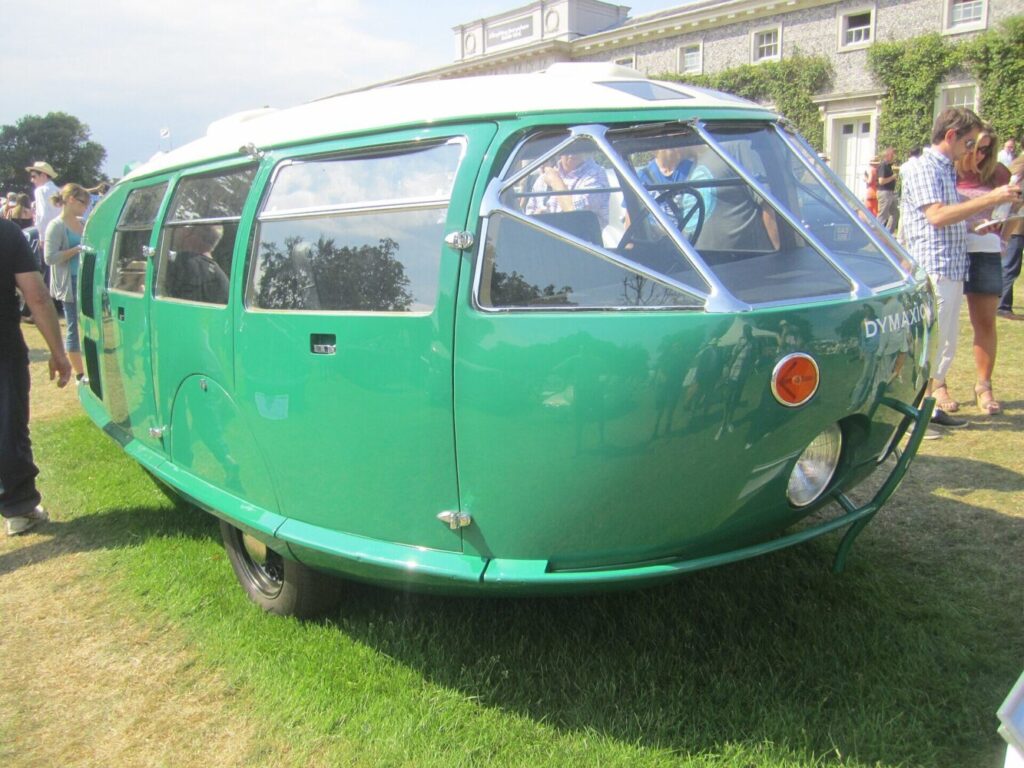
Buckminster Fuller’s three-wheeled, 11-passenger prototype chased aerodynamic efficiency decades before wind tunnels became standard—but rear-wheel pivot made high-speed cornering dangerously unstable.
Buckminster Fuller’s Dymaxion prototype packed 11 passengers into a cabin that looked like it had escaped from a science fiction serial, all while riding on just three wheels—two up front, one pivoting in the rear. The 1930s design stretched into a long, tapering teardrop that mimicked an airship’s profile, chasing aerodynamic efficiency decades before wind tunnels became standard practice.
Fuller envisioned a mobile lounge where occupants could recline in spacious comfort, turning the daily commute into something closer to a rolling living room. That single rear wheel turned the Dymaxion into a surprisingly nimble machine at low speeds, letting drivers whip through tight urban corners with a confidence that felt almost magical.
High-speed cornering told a darker story, though, as the rear-wheel pivot made the car dangerously unstable when pushed hard. A prototype crashed during testing, killing the driver and effectively ending further development. The Dymaxion remains a monument to audacious thinking, proof that brilliant concepts sometimes ignore the physics that separate visionary sketches from survivable reality.
4. Bugatti Type 57 SC Atlantic
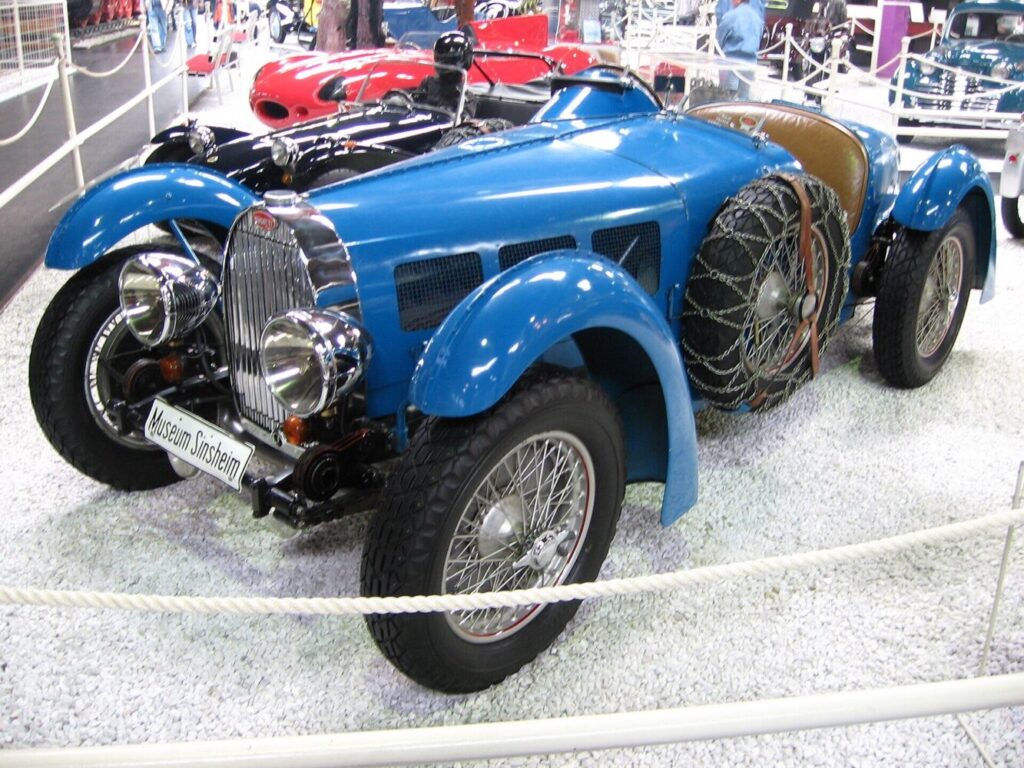
Jean Bugatti’s riveted masterpiece achieved 120 mph with supercharged straight-eight power—but one of only four examples vanished during World War II and never resurfaced.
Only four examples of this mechanical masterpiece ever left Jean Bugatti’s workshops, making the Type 57 SC Atlantic rarer than a parking spot at Le Mans. The Atlantic’s riveted center seam runs down the body like a spine, born from necessity when welding the lightweight electron magnesium alloy proved impossible.
Those sweeping teardrop fenders and the flowing silhouette weren’t just beautiful—they were functional art that pushed the supercharged straight-eight to speeds approaching 120 mph, performance that made contemporary race cars look pedestrian. You could argue it’s the automotive equivalent of a Stradivarius violin, except this one disappeared.
The legend of La Voiture Noire haunts collectors like a ghost story around a campfire. This particular Atlantic vanished during World War II and never resurfaced despite decades of searching and six-figure rewards. Some say it’s hidden in a barn somewhere in eastern France; others believe it was destroyed or dismantled for parts during the chaos.
The Atlantic’s mythic status only grows with time, blending engineering brilliance with wartime mystery in a way that turns grown collectors into treasure hunters. Anyone who’s ever chased a rare find at an estate sale knows that feeling—except experts estimate this prize could be worth north of $100 million.
5. Chrysler Turbine Car

Chrysler loaned 50 turbine-powered cars to families for real-world testing in the 1960s—then recalled and destroyed most of the fleet despite glowing feedback.
According to automotive historians, Chrysler built 50 fully functional turbine-powered cars in the early 1960s and handed them to ordinary families for real-world testing—an audacious experiment that still feels like science fiction. The gas turbine engine hummed with a deep, almost otherworldly whir, delivering smooth acceleration without the vibration or clatter of a piston motor.
Drivers could fill the tank with gasoline, diesel, or kerosene, thanks to the turbine’s fuel-agnostic design. Families praised the car’s whisper-quiet operation and effortless power delivery, comparing the experience to piloting a hovercraft rather than driving a sedan.
Despite glowing feedback, Chrysler recalled most of the fleet and destroyed the cars, citing emissions concerns and the complexities of turbine maintenance. The decision snuffed out a genuinely innovative path forward, leaving only a handful of survivors in museums as reminders of what might have been.
Anyone who’s ever wondered why cars still rely on pistons and cylinders can trace part of the answer back to this short-lived program. The Chrysler Turbine Car remains a whisper of possibility—a bold vision that corporate pragmatism quietly erased before it could reshape the automotive landscape.
6. Ferrari 512S Modulo

Pininfarina’s 1970 concept car wrapped a Ferrari racing chassis in a body so flat and wide that its low profile made conventional sports cars look portly by comparison.
Pininfarina’s 1970 concept car looked less like transportation and more like something that should be reverse-engineered at Area 51. The 512S Modulo took a Ferrari racing chassis and wrapped it in a body so flat and wide that its extremely low profile made conventional sports cars look portly by comparison. The gullwing canopy sealed the deal, transforming what could have been merely radical into genuinely extraterrestrial.
For decades, the Modulo sat frozen as a design study, an immobile sculpture that dared viewers to imagine what driving it might feel like. Then came the 2010s restoration that made it operable, turning static fantasy into rolling reality.
Watching the Modulo move after decades as a museum piece feels like seeing a concept sketch escape its frame. The car challenges every baseline assumption about proportion, visibility, and what qualifies as drivable versus purely decorative.
You realize Pininfarina wasn’t just pushing boundaries—they were erasing them entirely, treating automotive design as performance art with a V12 soundtrack. Anyone who thinks modern supercars look wild should study this wedge-shaped fever dream, proof that the line between engineering achievement and gallery installation depends entirely on whether someone bothers to turn the key.
7. Chevrolet Corvair
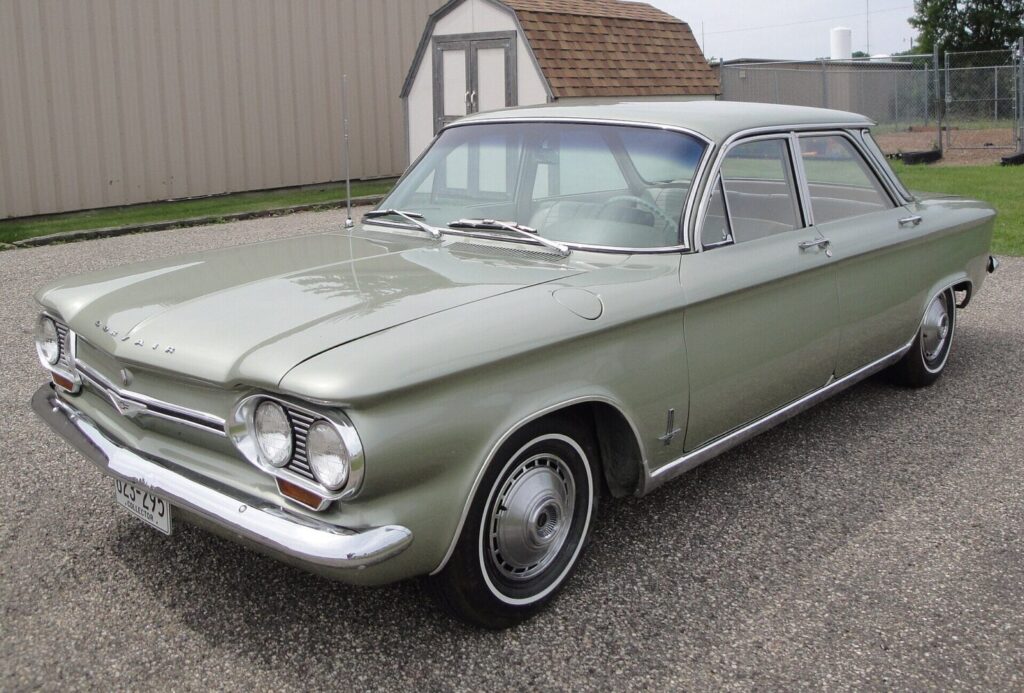
Ralph Nader’s 1965 book transformed a rear-engine compact into automotive regulation’s founding martyr—despite NHTSA later concluding its handling wasn’t uniquely dangerous.
Ralph Nader’s 1965 bestseller Unsafe at Any Speed turned a quirky compact into the automotive industry’s whipping boy, sparking a safety reckoning that still echoes today. The Corvair arrived for the 1960 model year with a rear-mounted, air-cooled flat-six engine and independent suspension—a bold departure from Detroit’s front-engine, live-axle orthodoxy.
Early models used a swing-axle rear setup that could snap into sudden oversteer if you lifted mid-corner, a trait shared by Volkswagen Beetles and early Porsches but rarely discussed in polite company. Nader’s book singled out the Corvair, igniting public outrage and congressional hearings that culminated in the National Traffic and Motor Vehicle Safety Act of 1966.
NHTSA testing in 1972 concluded the Corvair’s handling wasn’t uniquely dangerous compared to contemporaries, but the damage was done—sales collapsed, and Chevrolet quietly killed the model in 1969. The Corvair’s paradox is that it became automotive regulation’s founding martyr despite being exonerated years later.
Enthusiasts who mastered its tail-happy dynamics found a surprisingly engaging drive, rewarding smooth inputs and punishing ham-fisted corrections like a strict driving instructor. The car’s legacy isn’t its swing-axle quirks or Nader’s crusade—it’s the safety mandates that followed, from seat belts to crash testing, that now protect every driver on the road.
8. Stout Scarab
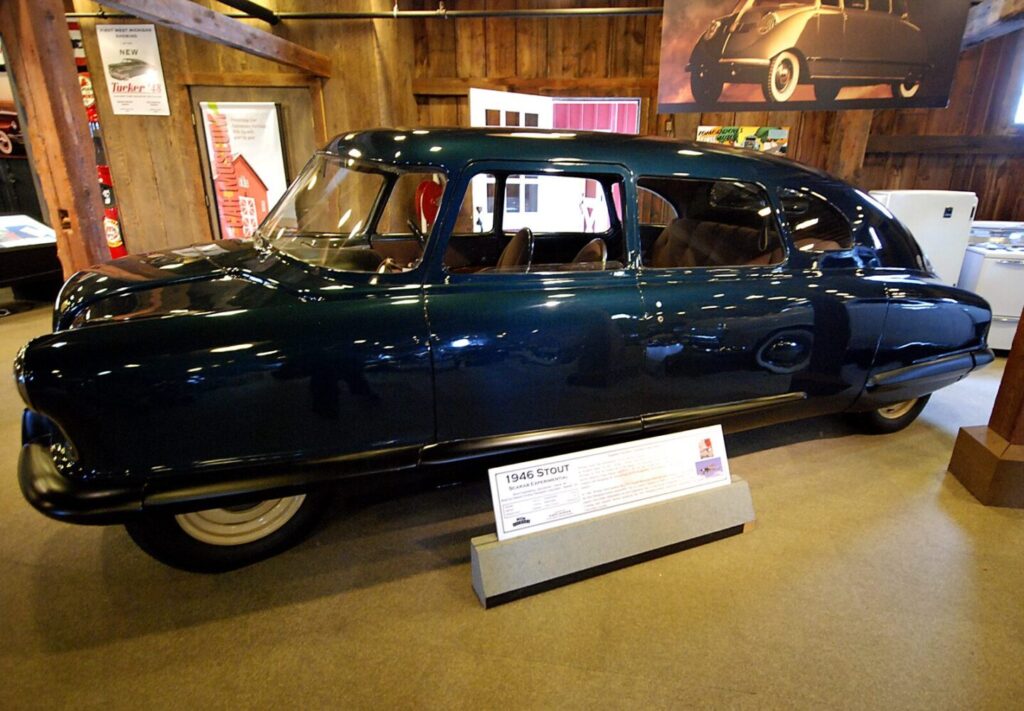
William Bushnell Stout’s 1930s aluminum oddball packed lounge-style seating and monocoque construction decades before minivans discovered the appeal of flexible space.
Decades before minivans discovered sliding doors, William Bushnell Stout sketched an aluminum-bodied oddball that dared to treat the cabin like your living room. The Stout Scarab hit the scene in the 1930s with a rear-mounted engine, monocoque construction that ditched traditional frame rails, and an interior you could reconfigure like modular furniture.
Lounge-style seating invited passengers to swivel chairs, face each other, and treat highway miles as social hours rather than cramped endurance tests. That lightweight body kept curb weight down while the streamlined shape sliced through air with surprising efficiency for an era obsessed with chrome-laden barges.
Commercial reality crushed Stout’s vision faster than a blowout on Route 66. High costs and a design language that looked more spaceship than sedan spooked buyers who wanted predictable sedans, not rolling apartments. The Scarab failed to gain traction, but its DNA quietly infiltrated later MPVs and minivans that finally understood the appeal of flexible space.
Anyone who’s ever tried to fit camping gear, kids, and road-trip snacks into a conventional trunk knows the genius Stout was chasing. The Scarab remains a reminder that the best ideas often arrive a generation too early, waiting for the world to catch up and realize comfort beats convention every time.