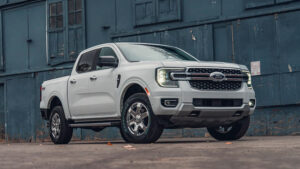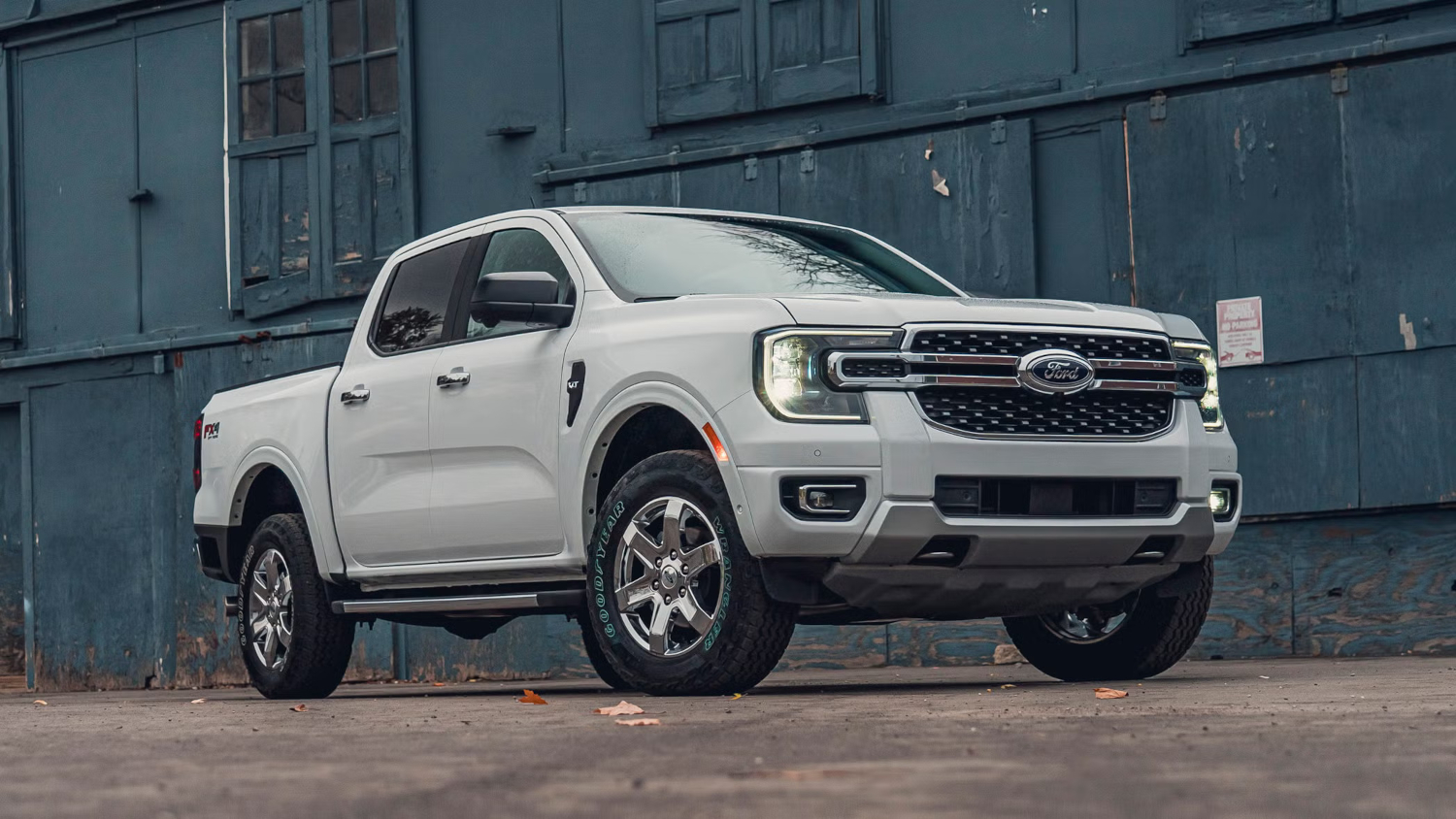
The 2.7-liter is reportedly on its way out. According to an order guide cited by Car and Driver, Ford appears set to replace the Ranger’s optional twin-turbo V-6 with a larger 3.0-liter twin-turbo unit. If Ford applies the same calibration used in the 2027 Bronco, that translates to 380 horsepower and 440 pound-feet of torque — up 65 horsepower and 40 pound-feet over what the current 2.7-liter produces. Ford has not confirmed any of this, and all figures should be treated as likely rather than final.
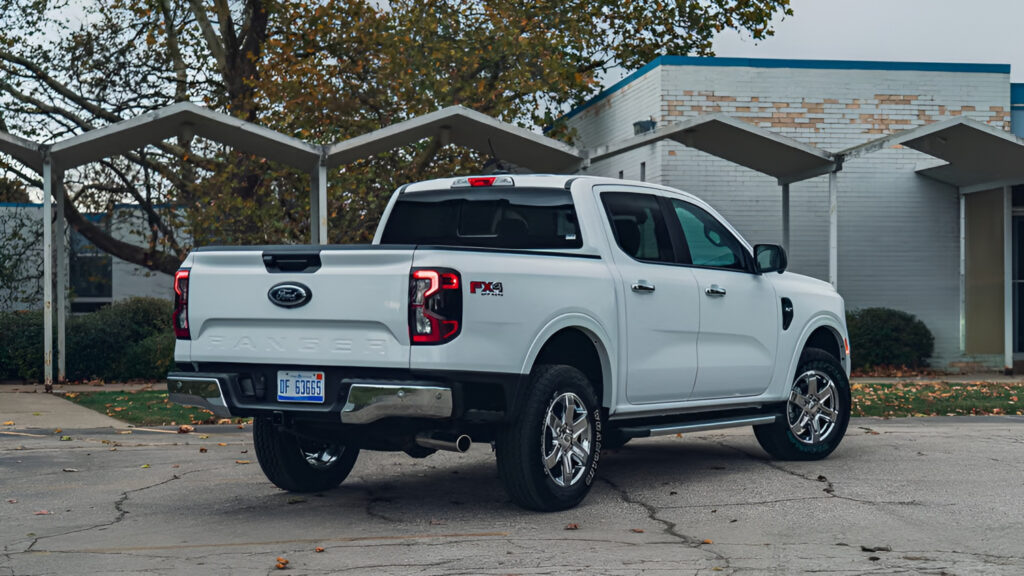
More Engine, Same Truck
Ford is extending its Raptor-derived 3.0-liter V-6 deeper into the mainstream lineup — and the Ranger appears to be next.
The 3.0-liter EcoBoost V-6 is already established across Ford’s portfolio. For 2027, the Bronco runs this engine on several non-Raptor trims — Outer Banks, Badlands, Heritage, and Filson — producing 380 horsepower and 440 pound-feet of torque. In Mexico, the 2027 Ranger Raptor uses a separate 3.0-liter variant rated at 392 horsepower and 430 pound-feet.
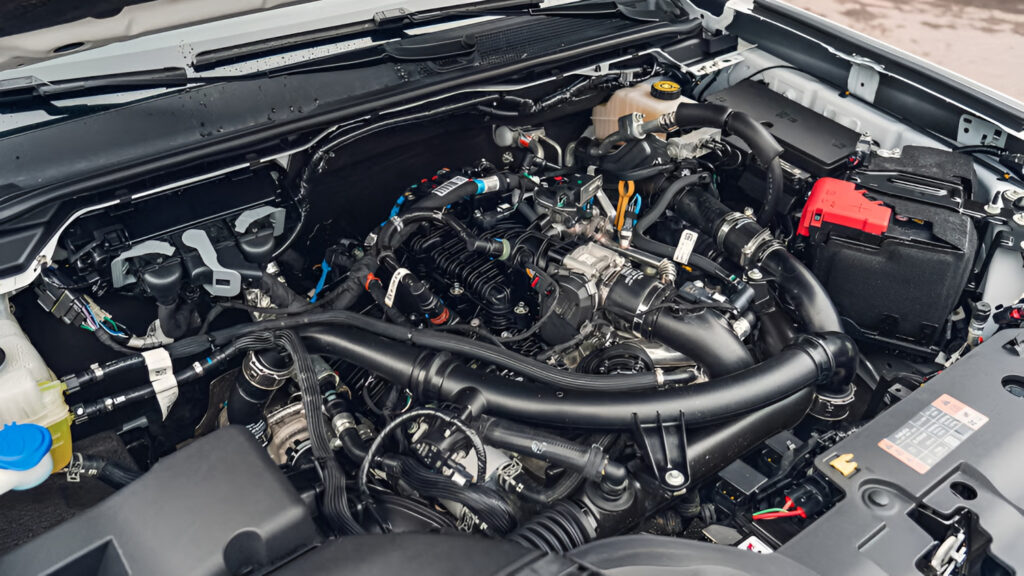
The mainstream Ranger’s exact output remains unconfirmed. Based on the reported order guide, the engine is expected to pair with Ford’s 10-speed automatic transmission and remain available only with four-wheel drive. XL trims are expected to continue with the four-cylinder base engine, while XLT and Lariat would retain the turbocharged 2.3-liter four-cylinder as standard — with the 3.0-liter as an option.
What the Order Guide Suggests
All figures below are drawn from an order guide reported by Car and Driver and remain subject to change pending official Ford release.
- Expected output: 380 hp / 440 lb-ft of torque — based on Bronco calibration; Ranger-specific figures unconfirmed
- Transmission and drivetrain: 10-speed automatic, four-wheel drive only
- Trim availability: Optional on XLT and Lariat; XL retains the four-cylinder base engine; XLT and Lariat keep the turbocharged 2.3-liter four-cylinder as standard
- Interior: XL reportedly gets a standard 12.0-inch infotainment display (up from 10.1 inches), with dual-zone climate control added; Space Gray replaces Sandstone interior color
- Exterior: Neptune Blue replaces Velocity Blue; Carbonized Gray is dropped; new wheel designs and revised grille finishes arrive on XLT and Lariat
- Pricing: Unknown. The current 2.7-liter upgrade runs $7,545 on the XLT and $5,795 on the Lariat; 2027 premiums were not included in the order guide
For Ranger buyers tracking Ford’s powertrain strategy, the direction is clear: performance-derived hardware is moving downstream. A stronger V-6 option would give the mainstream Ranger a meaningful step up without crossing into full Raptor territory — useful for buyers prioritizing highway passing capability or greater confidence on more demanding trails. The Raptor remains its own distinct product. This reported option targets everyone who wants more without the full Raptor price tag.
As Car and Driver notes from the order guide: “The order guide does not list final output, but the comparable 2027 Bronco version produces 380 horsepower and 440 pound-feet of torque.”
What Ford Hasn’t Said Yet
The details that matter most to buyers — towing capacity, payload, and pricing — remain entirely absent.
Towing capacity, payload ratings, fuel economy, final pricing, and order timing are all missing from the reported order guide. Those numbers carry more practical weight for most Ranger buyers than the horsepower figure alone. Until Ford releases official specifications, the 3.0-liter Ranger should be treated as likely — not locked in. Buyers comparing midsize truck options would do well to wait for Ford’s formal announcement before making any powertrain decisions.