

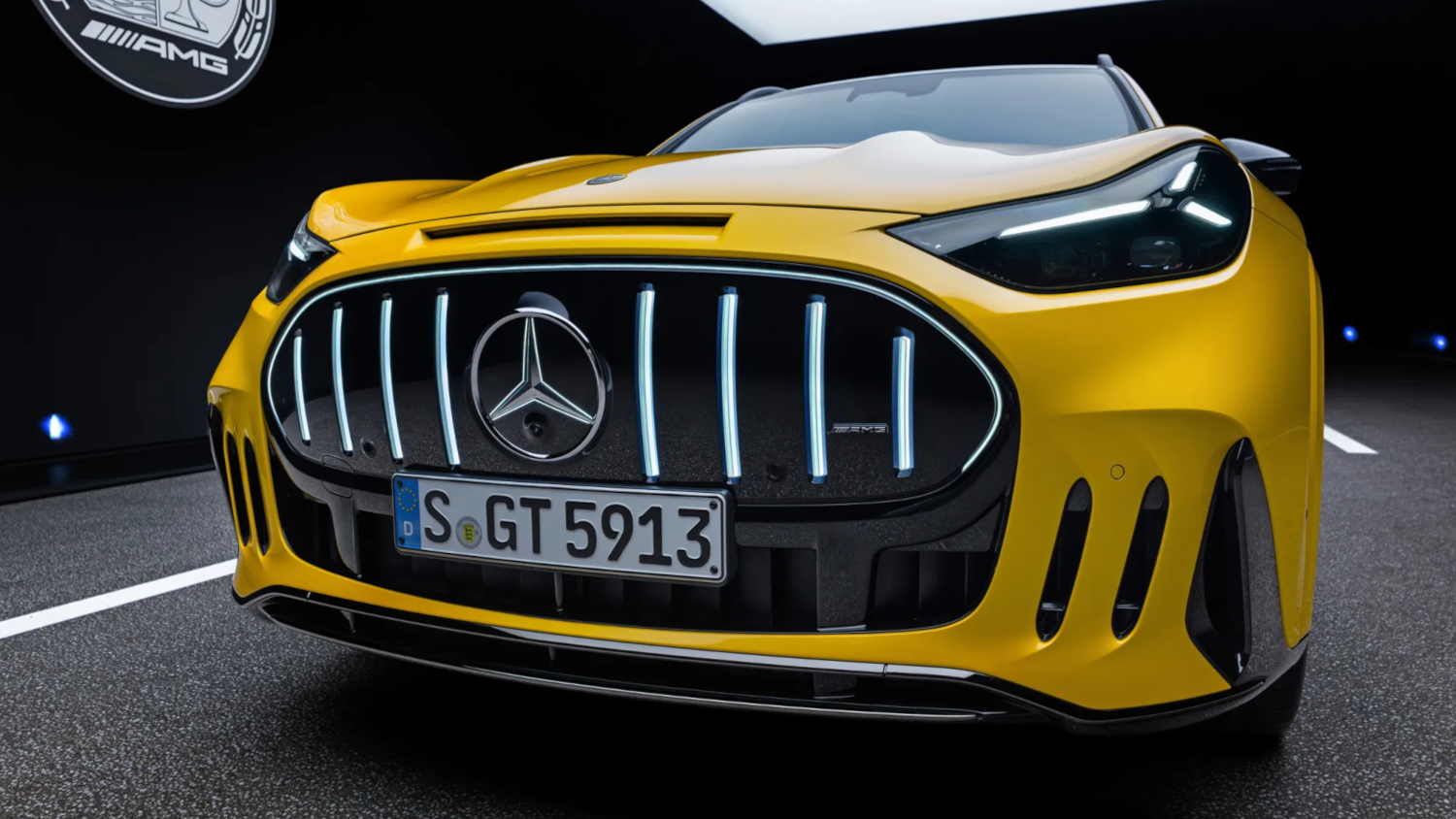
Five hundred and thirty-six horsepower, instant torque, and virtually no acoustic output from the drivetrain — and the sound coming through the speakers is simulating a six-cylinder engine. Move up to the GT 55 or GT 63, and that simulation shifts to a V8. Mercedes-AMG has turned combustion nostalgia into a tiered product feature with its new all-electric GT SUV lineup. That decision — quiet, almost bureaucratic in its logic — reveals exactly where performance car identity is headed.
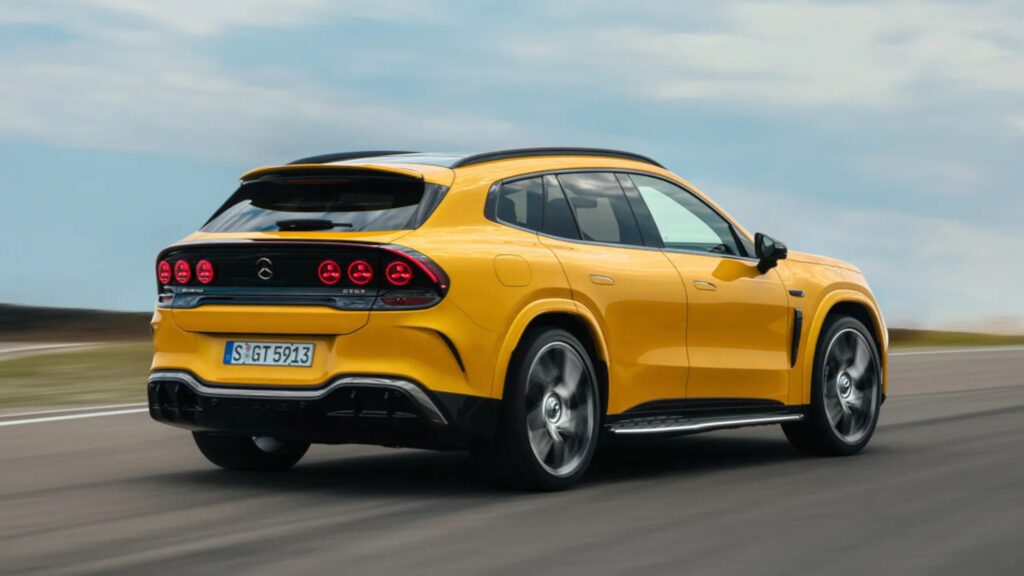
A Sound Hierarchy Built on Nothing
The AMGFORCE Sport+ system goes far beyond a looping audio track, using real-world recordings and dynamic hardware feedback to reconstruct the feeling of a combustion engine.
AMGFORCE Sport+ is not a fixed audio loop playing behind the dashboard. Engineers recorded an actual AMG GT R — internally designated the C 190 — using 16 microphones and more than 100 measurements. The system adapts dynamically to throttle input, driving mode, and driving style. Seat vibration and display responses sync with the audio to simulate mechanical feedback. Mercedes-AMG describes the results as “meticulously documented rather than synthetically generated.” The care is real. The mechanical source is not.
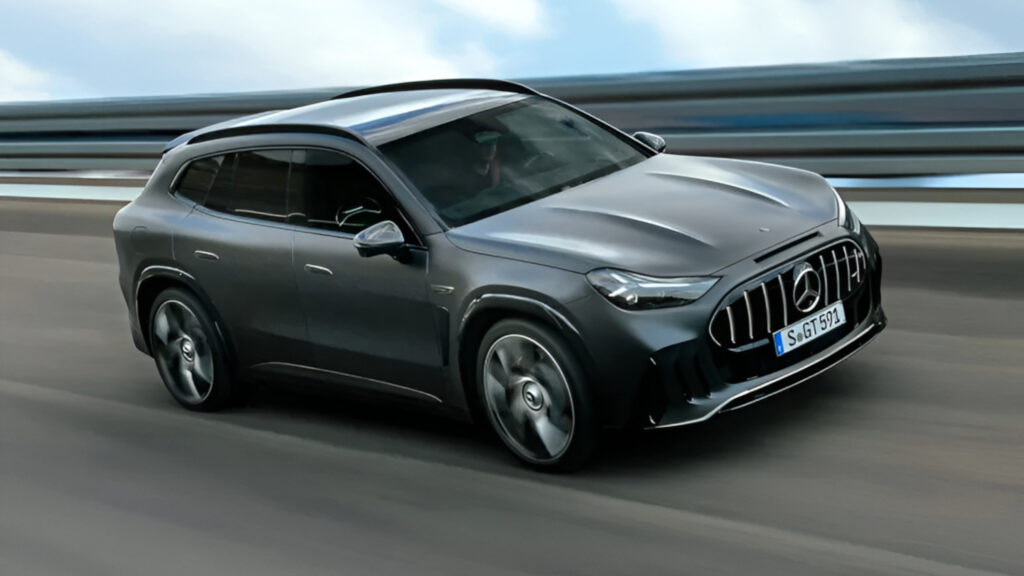
The three-tier lineup works as follows:
- GT 53 (536 hp, two permanently excited synchronous motors): simulated six-cylinder soundtrack
- GT 55 (805 hp) and GT 63 (1,153 hp, three axial-flux motors): simulated V8 soundtrack
- All variants: adaptive audio responds to acceleration, simulated gear changes, and driving mode
- Seat vibration and visual display responses reinforce the sensory experience across all trims
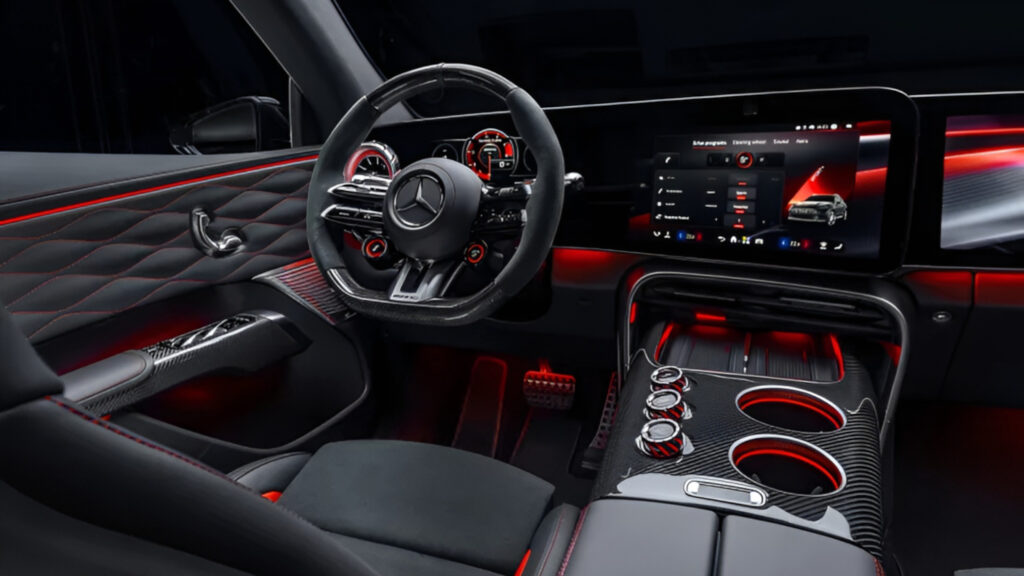
The Engine Sound Is Now a Trim Level
AMG has replicated its traditional product hierarchy — where a V8 badge once signified mechanical reality — in a vehicle with no cylinders, no exhaust system, and, in most configurations, no conventional gearbox.
AMG has rebuilt its traditional product ladder — where a V8 badge once meant pistons, exhaust, and mechanical reality — for a world largely without those things. Worth noting: the GT 53 reportedly retains a rear two-speed transmission, though the V8 and six-cylinder associations are now purely sonic rather than structural. The V8 persona is an aesthetic choice, not an engineering one. Think of it as playlist logic applied to performance car identity: different configurations, different sound tiers, each matched to a corresponding power level.
Whether that distinction matters depends entirely on what the buyer believes they are purchasing. The experience may feel convincing in practice. But the soundtrack is assigned by trim level, not derived from the hardware propelling the car.
AMG appears to be wagering that engineered sound functions as genuine luxury differentiation — an open question, and one worth watching. How buyers respond will say something pointed about what “performance” actually means when the drivetrain, on its own, generates almost no sound at all.