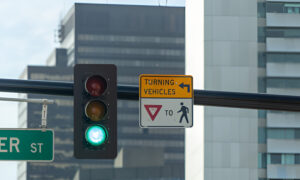


The street is empty, it’s late, and instead of gunning it the way every open arterial quietly invites, a driver holds the posted limit — and something unexpected happens. The lights ahead turn green, one after another, in sequence. No cameras. No officers. Just the road rewarding compliance in even the most dangerous states to drive in.
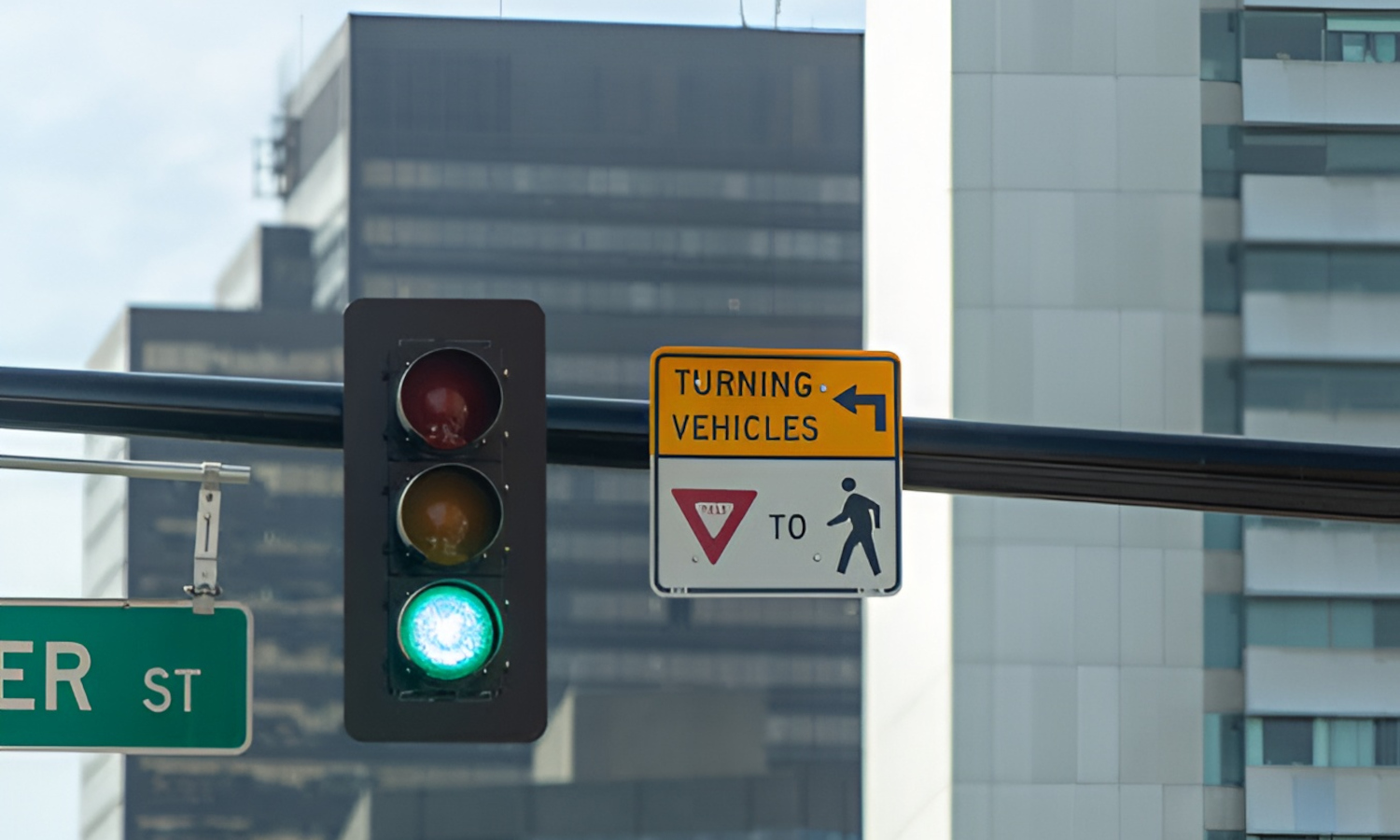
That’s Rest in Red — a signal-timing system that defaults intersections to red until a vehicle approaches, then uses vehicle-detection technology to read its speed. If you arrive at or under the posted limit and the signal turns green early. Arrive fast, and the light stays red, turning the intersection into a virtual speed bump without a pothole lawsuit attached. Portland, Oregon, and Albuquerque, New Mexico have deployed it on high-crash corridors, and the early numbers are hard to dismiss.
The Light That Knows How Fast You’re Going
The concept dates back decades, but modern sensors have sharpened the reward into something drivers actually feel.
The underlying idea isn’t new — a 1977 study in Public Works found early versions reduced speeds and accidents at treated intersections. What’s changed is detection technology precise enough to create a clear incentive: the speed limit becomes the fastest route through a corridor, not a handicap. Think of it as the video-game reward loop applied to urban infrastructure — behave, and the system opens up; don’t, and it stacks red lights. Cities are also exploring complementary tools, such as using municipal pothole detectors to gather granular road-condition data that informs where safety interventions are most needed.
On SE Powell Boulevard in Portland, the first pilot intersection saw average speeds fall from 39 mph to 30 mph, matching the posted limit, according to Portland Bureau of Transportation signal manager Peter Koonce, as reported by the Associated Press. Albuquerque launched “Rest on Red” on Lead and Coal avenues — connecting Nob Hill to Downtown — in April 2022, on corridors with a 30 mph limit. Before installation, city officials reported roughly half of drivers were speeding, many by 20 mph or more. Afterward, extreme speeders were “pretty much completely eliminated,” according to city officials via KRQE. City documents show measured speed reductions of 0.5 to 5 mph within 600 feet of treated intersections. Residents and officials credit the system with a dramatic decline in crashes and injuries along the stretch, though detailed multi-year crash counts have not been widely published.
Portland’s full crash and injury data remains under evaluation as of mid-2026. PBOT confirms nighttime speeding reductions but acknowledges no definitive safety-outcome numbers yet.
Honey Over Handcuffs
Rewarding safe driving may do what cameras and fines alone have struggled to achieve — change behavior continuously, at every approach.
Traditional enforcement faces political backlash and works only intermittently. Rest in Red changes the driving experience itself at every single approach. It follows the same behavioral logic behind how streaming platforms nudge listeners toward curated playlists: make the desired behavior frictionless, and most people take it.
Long Beach, California tried an early version on Wardlow Road in the early 2010s before pivoting toward automated camera enforcement — a sign that Rest in Red likely works best as part of a broader safety strategy rather than a standalone fix. Portland is expanding to additional Powell Boulevard intersections in 2026, with 82nd Avenue in the pipeline.
Speeding is normalized across the U.S. partly because it often goes unpunished and frequently saves time. Rest in Red challenges both assumptions simultaneously. IIHS data on driver death rates underscores how consequential speed-related crashes can be across vehicle types. In Portland and Albuquerque, the fastest way through a corridor at night is now also the safest. The city isn’t asking for civic virtue — it’s simply made speeding the slowest option available.