

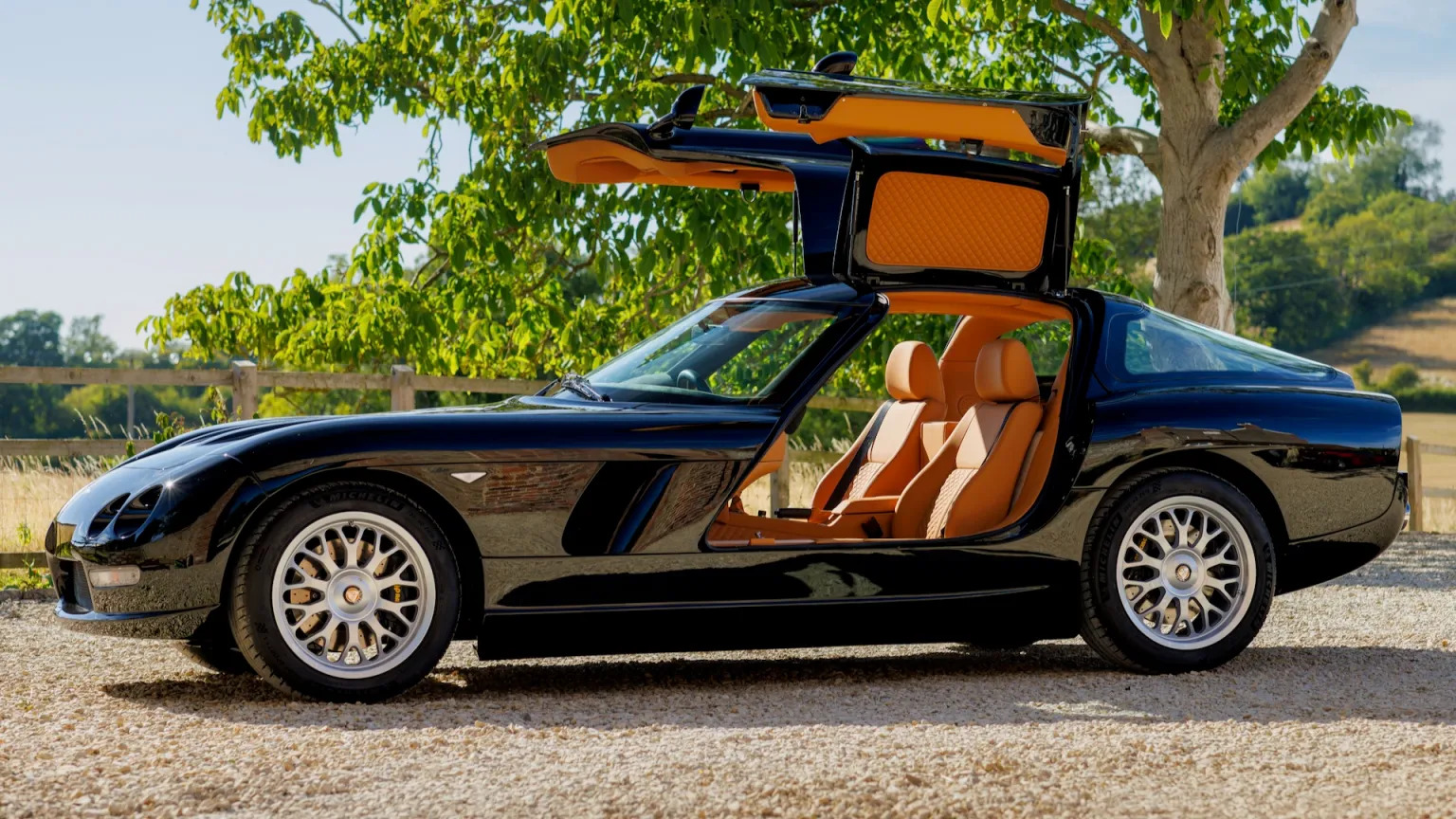
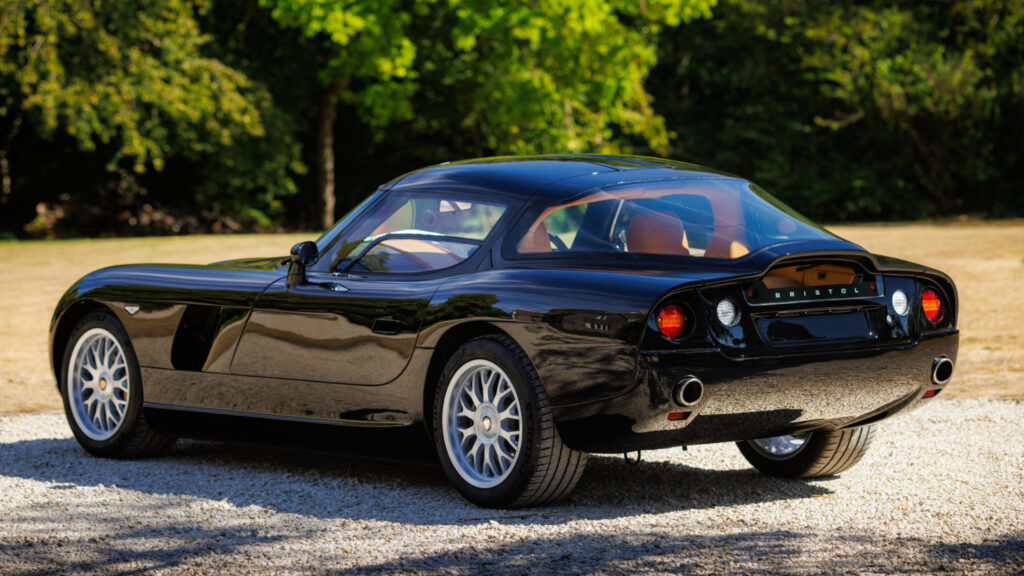
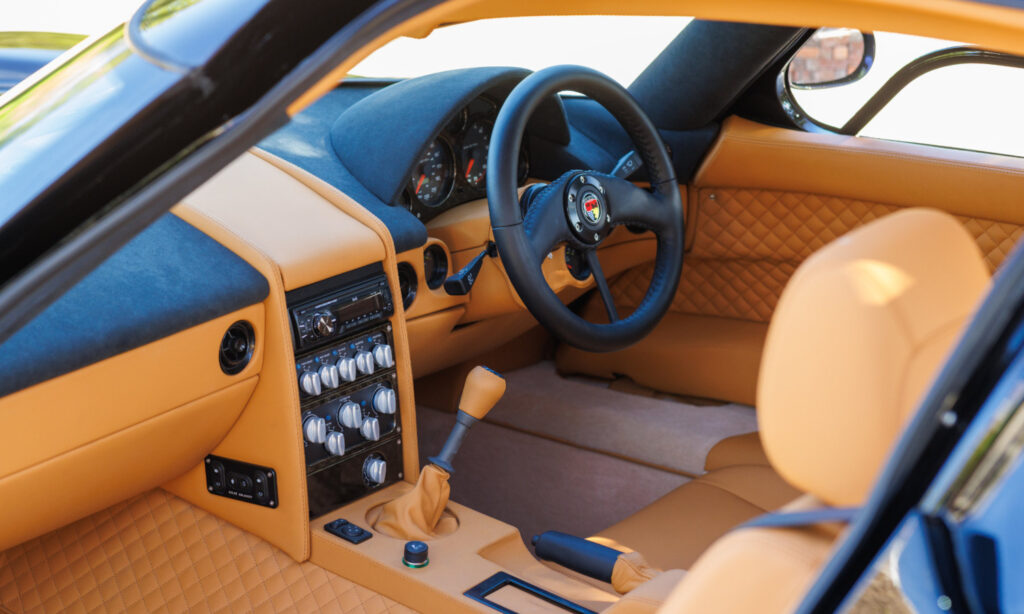
Stellantis killed the Dodge Viper in 2017 and has publicly confirmed no plans to resurrect it. Yet the 8.0-liter V10 just turned up in a new car—a gull-wing British coupe roughly Porsche 911-sized, unveiled at a palace. Bristol Cars Group Ltd is finishing five original Fighter chassis that sat in storage since the company went bankrupt in 2011. The first, finished in black over tan with a three-pedal manual gearbox, debuted at Salon Privé at Blenheim Palace in early September 2026, timed precisely to Bristol’s 80th anniversary.
A Supercar Built From Spare Parts and Borrowed Time
Five forgotten chassis, one orphaned engine, and the strangest supercar story of 2026.
The Fighter originally ran from roughly 2004 to 2011: aluminium-intensive body, drag coefficient of around 0.28, gull-wing doors, a Viper-sourced V10 producing 525 hp in standard trim or a factory 600 hp, 0–60 in approximately 4.0 seconds, and a top speed up to 210 mph. Fewer than 15 were built before Bristol collapsed, making any survivor extraordinarily rare.
The Fighter T pushed further still: twin-turbocharged, 1,012 hp, 1,036 lb-ft of torque. Bristol reportedly claimed top speeds between 225 and 270 mph, though those figures were estimates rather than independently verified road-test numbers.
What Bristol is building now:
- Five unused original chassis, completed as a final series using original drawings and components
- Engine: 8.0-liter Dodge Viper V10, 525 or 600 hp depending on spec; three-pedal manual gearbox
- Debut: black over tan, Salon Privé at Blenheim Palace, September 2026
- Buyer options: right- or left-hand drive, custom paint, trim, and output
- U.S. import route: Show or Display rules allow under 2,500 miles annually until the car turns 25
Bristol’s lineage reads like an accidental history of postwar motoring. Born from the Bristol Aeroplane Company in 1945, the brand started with BMW-derived engines, then switched to Chrysler V8s. It supplied AC Cars with inline-sixes until AC needed more power—a gap that pulled Carroll Shelby into the picture and produced the Cobra.
Now Bristol is finishing five original Fighter chassis that have waited over a decade, pairing them with engines the rest of the industry has moved on from. It feels less like a revival and more like discovering an unreleased pressing from a defunct label and actually putting it out. The company describes this final series as “the first step in a wider brand comeback,” and Bristol is taking commissions now.
The Last V10 You Can Legally Buy New
For collectors chasing a new V10, the options have quietly run out—except here.
Stellantis has confirmed no Viper successor is coming. Lamborghini’s Temerario just traded its V10 for a V8, continuing a broader industry retreat from large-displacement ten-cylinder engines. That leaves the last new V10 supercars American collectors can legally acquire. An 80-year-old British brand, a dead American engine, and a production run smaller than most people’s contact lists—that might just be the most quietly extraordinary supercar story of the year.