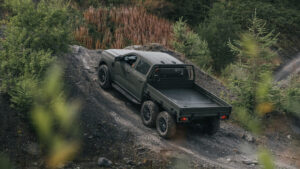


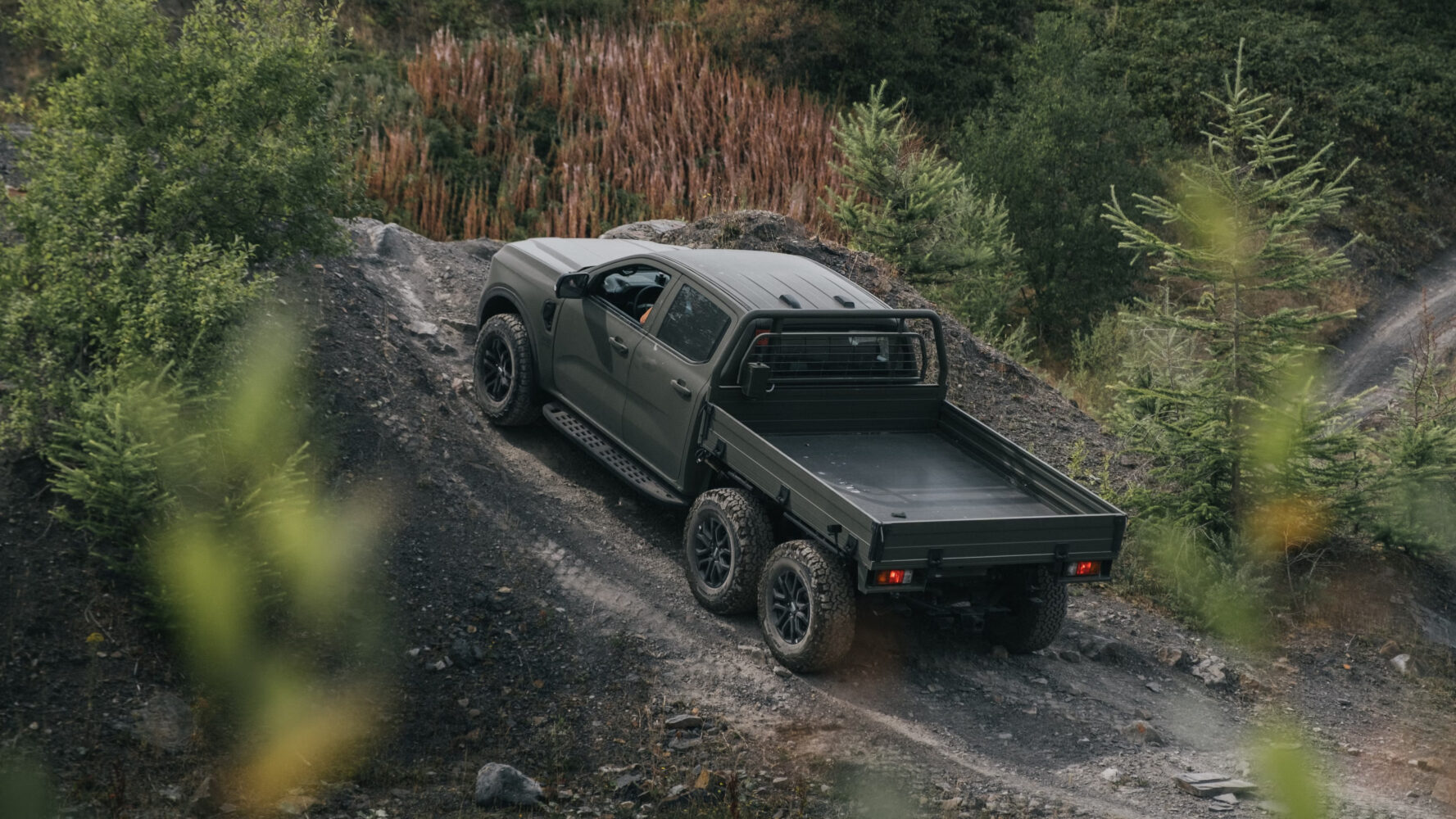
The truck American buyers will never see is now gunning for a £750 million British Army contract. Ford has formed a consortium with General Dynamics Land Systems–UK and Ricardo to bid on the U.K. Ministry of Defence’s Light Mobility Vehicle (LMV) programme — a competition to replace aging Land Rover and Pinzgauer fleets with something built for the next few decades of operations. Their pitch centers on the Ford Ranger Super Duty, including a six-wheeled variant that looks like something straight out of a military-spec fever dream.
Ricardo’s HEX 6×6 system is the engineering heart of the bid. It adds a second rear axle via a bolt-on overlay — no frame surgery required — plus a bogie-style pivoting suspension for better wheel articulation and permanent all-wheel drive. Payload climbs to approximately 8,377 lb (3,800 kg). The proposed body configurations cover the full military toolkit:
- troop carrier
- ambulance
- armored patrol variant
- light tactical truck
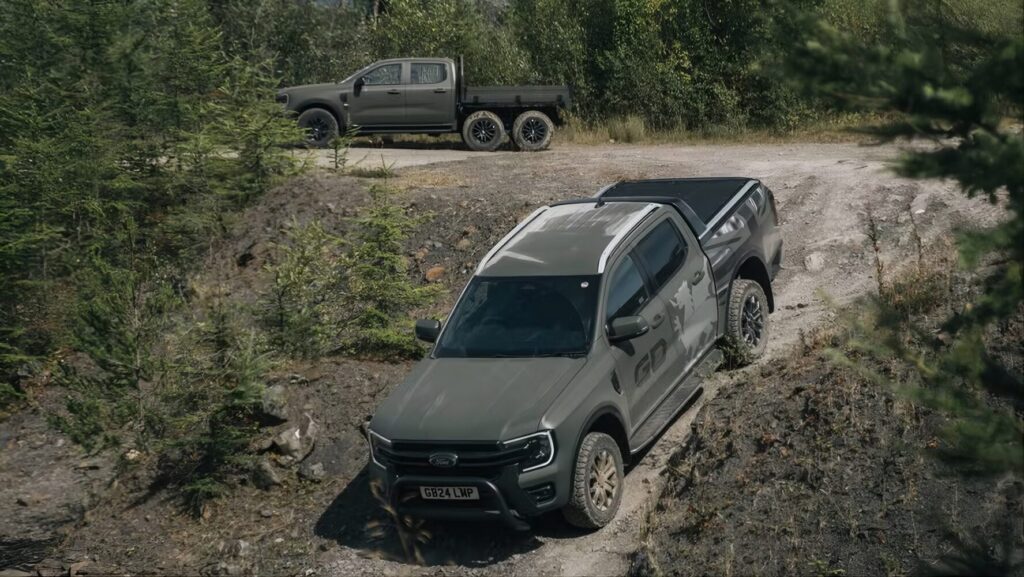
What Ford Is Putting on the Table
- The Ranger Super Duty runs a 3.0-liter turbodiesel V6 producing 600 Nm of torque, built at Ford’s Dagenham plant in England
- Civilian-spec payload already tops 4,370 lb — more than the U.S.-market F-150’s bed capacity
- The HEX 6×6 conversion pushes that to approximately 8,377 lb without structural frame changes
- Conversion work would be carried out at GDLS facilities in South Wales
- The Ranger sells in 180+ markets across five plants on four continents — a logistics argument as much as a sales pitch
Britain Is Also the Competition
The Defender Wolf Series II puts a British icon squarely in Ford’s path, on home soil, for British Army money.
The Ranger Super Duty won’t reach American dealerships — Ford has made that call deliberately, because its civilian payload already overlaps with the F-150’s core value proposition. That same commercial logic makes it compelling for defense planners. GM Defense ran a similar playbook with the previous-gen Chevy Colorado ZR2, turning it into the U.S. Army’s Infantry Squad Vehicle. Militarizing commercial pickups isn’t a workaround anymore. It’s the strategy.
Ford’s counter to skeptics is direct: “Not just an off-the-shelf vehicle, but a true through-life solution built on the Ford Ranger and Ranger Super Duty.” The 180-market footprint backs that up. Spare parts don’t become a crisis when your platform is sold everywhere from Auckland to Aberdeen.
The consortium’s direct competition is Jaguar Land Rover’s Defender Wolf Series II — bidding for the same contract on home turf. Ford’s response is to lean into its own British manufacturing credentials: engines from Dagenham, conversions from South Wales. A contract decision is expected sometime in 2027. The six-wheeled Ranger remains a demonstrator until then — win or lose, one of the more remarkable trucks most people will never drive.