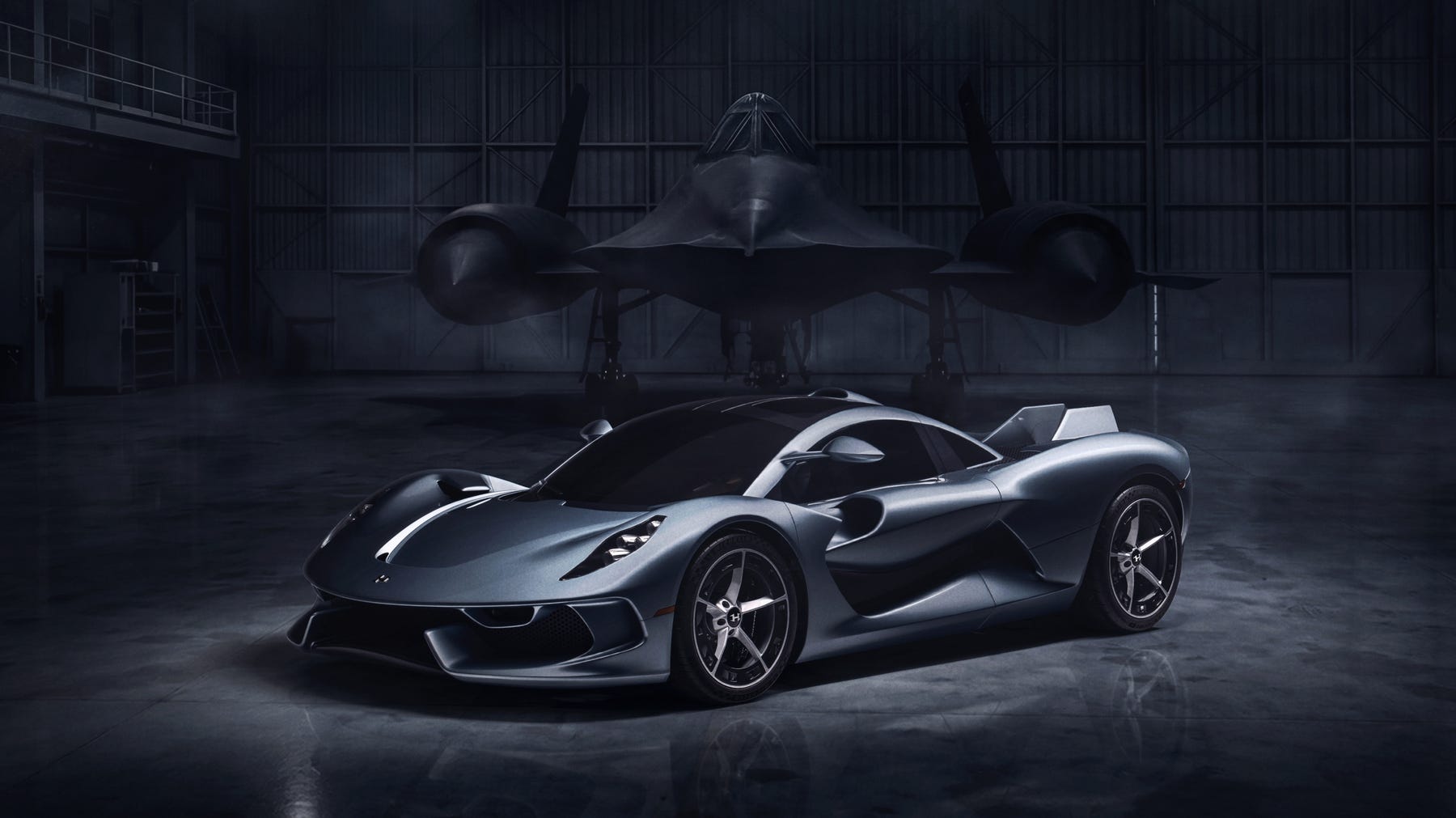


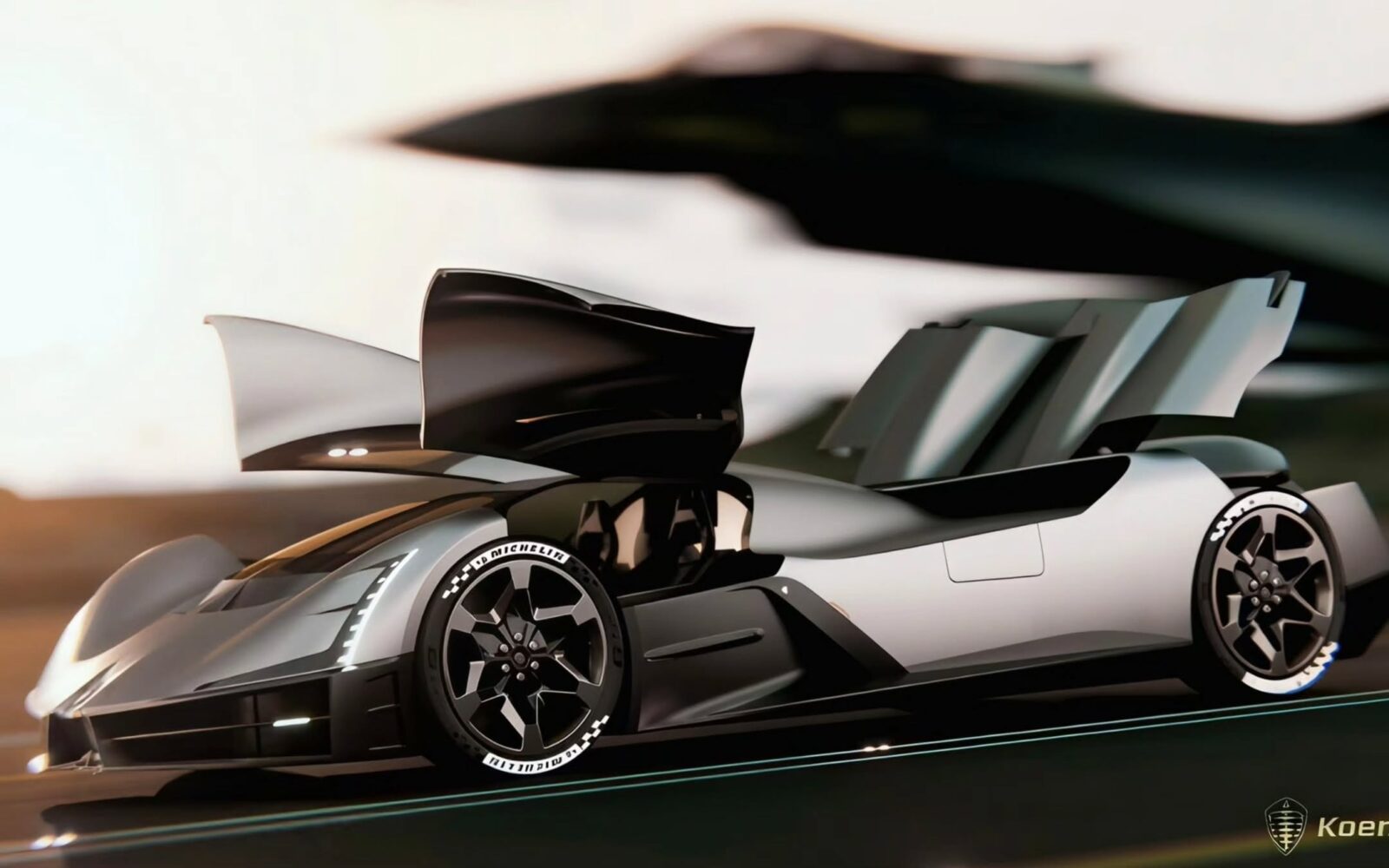
Digital designer Minseo Kim just unveiled the impossible. His CGI concept, dubbed the Koenigsegg Evolvera, promises 3,000 horsepower and a 1,000-kph top speed that would make actual Koenigsegg engineers laugh—then cry into their physics textbooks. The Korean design student from Kookmin University has created something that perfectly captures what happens when creative vision meets zero real-world constraints.
Fighter Jet DNA Goes Full Digital
Kim’s design pushes Koenigsegg’s aviation obsession into hyperdrive territory.
Kim’s creation reads like a love letter to fighter aircraft, compressed into automotive form. The forward-mounted cockpit, thinned greenhouse, and radical clamshell door system abandon Koenigsegg’s signature Dihedral Synchro-Helix doors for pure jet-inspired drama.
Yet the design retains Christian von Koenigsegg’s obsession with unbroken teardrop lines—that liquid aesthetic flowing from nose to tail that defines every model from the CC8S to today’s Jesko Absolut.
The aviation influence isn’t accidental. Koenigsegg builds their hypercars on a former Swedish Air Force airfield, where ghost symbols from departed Saab Viggens still haunt the factory walls. Real Koenigsegg models already borrow from F-15 Eagles—just check the twin rear fins on the Jesko Absolut.
Key Technical Reality Checks:
- Power Gap: 3,000 hp vs. Jesko’s actual 1,600 hp maximum output
- Speed Impossibility: 1,000 kph target would liquify tires at those rotational forces
- Drag Physics: Achieving such speeds requires jet engines, not pistons
- Design Departure: Clamshell doors abandon Koenigsegg’s 20-year door innovation
When Physics Gets in the Way of Fun
Real hypercars hit walls that CGI concepts can simply delete.
Here’s where Kim’s digital freedom becomes both a blessing and a curse. The Evolvera ignores inconvenient truths like tire disintegration—the Speed Demon hit 481 mph at Bonneville with 3,156 hp, but even purpose-built land-speed record tires can’t survive 1,000 kph. Drag scales quadratically with speed, meaning you’d need thrust vectoring, not just more horsepower.
The real Jesko Absolut represents actual engineering excellence with its 0.278 drag coefficient and streamlined silhouette targeting theoretical top speeds around 330 mph. That’s physics working within the possible. Kim’s concept showcases design school ambition working within Photoshop’s infinite playground.
The automotive design community has embraced the Evolvera precisely because it does what CGI concepts should: inspire without pretending feasibility. Kim’s portfolio just gained serious attention, even if his hypercar will never need actual tires.
Virtual concepts like the Evolvera illuminate the vast gulf between automotive imagination and engineering reality—while proving that sometimes, the most valuable designs are the ones physics won’t allow.