

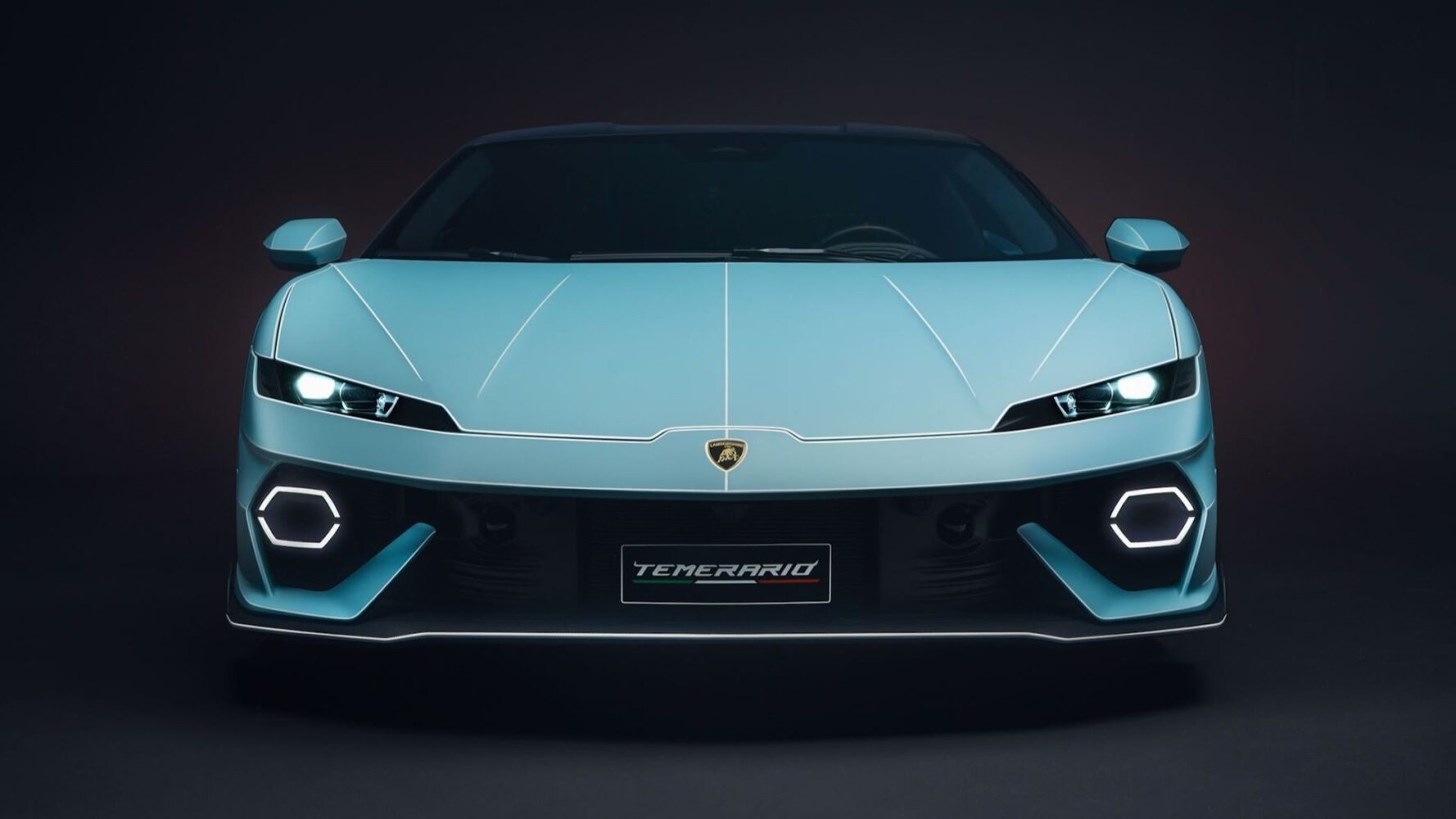
Most special editions are just paint jobs with a press release attached. Lamborghini’s latest pair of bespoke Temerarios, unveiled in mid-July 2026, are something genuinely stranger and more interesting than that. Working through Ad Personam — the brand’s personalization program — and Centro Stile, Lamborghini built two one-off examples that borrow their visual logic from Italian alta moda: fashion-forward tailoring, construction sketches, and, for the first time in any Lamborghini production car interior, wool.
These Cars Look Like They Haven’t Been Finished Yet
The exterior graphics mimic a designer’s construction marks — on purpose.
Fine graphic lines run across both bodyworks, referencing the construction strokes a designer draws before a form is finalized. Think of a couture pattern laid flat before the fabric arrives — structure exposed before the polish. One car wears Grigio Crater Matt with Grigio Artis contrast graphics. The second pairs Celeste Fedra with Bianco Phanes accents and a matt Alleggerita — the brand’s lightweight trim package — finish. If you’re tracking new models worth waiting for, the Temerario belongs on that list.
Key details at a glance:
- Powertrain: Approximately 907 hp / 920 CV hybrid V8 (regional rating variance applies)
- Car one exterior: Grigio Crater Matt / Grigio Artis graphics
- Car two exterior: Celeste Fedra / Bianco Phanes/matt Alleggerita package
- Interior: First-ever production-car use of Gessato pinstripe wool inserts
- Materials split: One cabin in virgin wool; the other in Corsa-Tex by Dinamica
The Most Surprising Thing Is What Lines the Headliner
Wool pinstripes inside a supercar is a sentence that deserves a moment.
Gessato — a classic Milanese suiting pinstripe — uses a black base crossed by a silver stripe, drawn from Italian bespoke tailoring tradition. Lamborghini’s interpretation deliberately breaks the pattern continuity across door panels, rear wall, and headliner. The effect is visual movement rather than static repetition. It is the sartorial equivalent of a pattern-matched jacket cut slightly off-grain to catch the eye.
One cabin uses virgin wool. The other substitutes Corsa-Tex by Dinamica, a lighter technical fabric with a more track-focused character. Neither choice outranks the other; they are simply different arguments about what a supercar interior should feel like.

Ad Personam Is No Longer a Color-and-Trim Program
Lamborghini’s bespoke department is becoming a material research lab with a fashion brief.
The broader implication is hard to miss. Luxury automakers have long used bespoke programs to sell identity, but most stay safely within paint swatches and leather hides. Lamborghini’s Sant’Agata Bolognese design team is treating fashion as legitimate structural language rather than a marketing veneer. These Temerario builds may foreshadow more material-led, theme-driven one-offs ahead — cars defined by craft concept first, color second.
When the most interesting detail on an approximately 907-hp supercar is the fabric in the headliner, something has genuinely shifted in how Lamborghini thinks about what a car can be. Prospective buyers should also weigh the long-term costs — exotic cars at this level of customization rarely come without financial surprises down the road.