

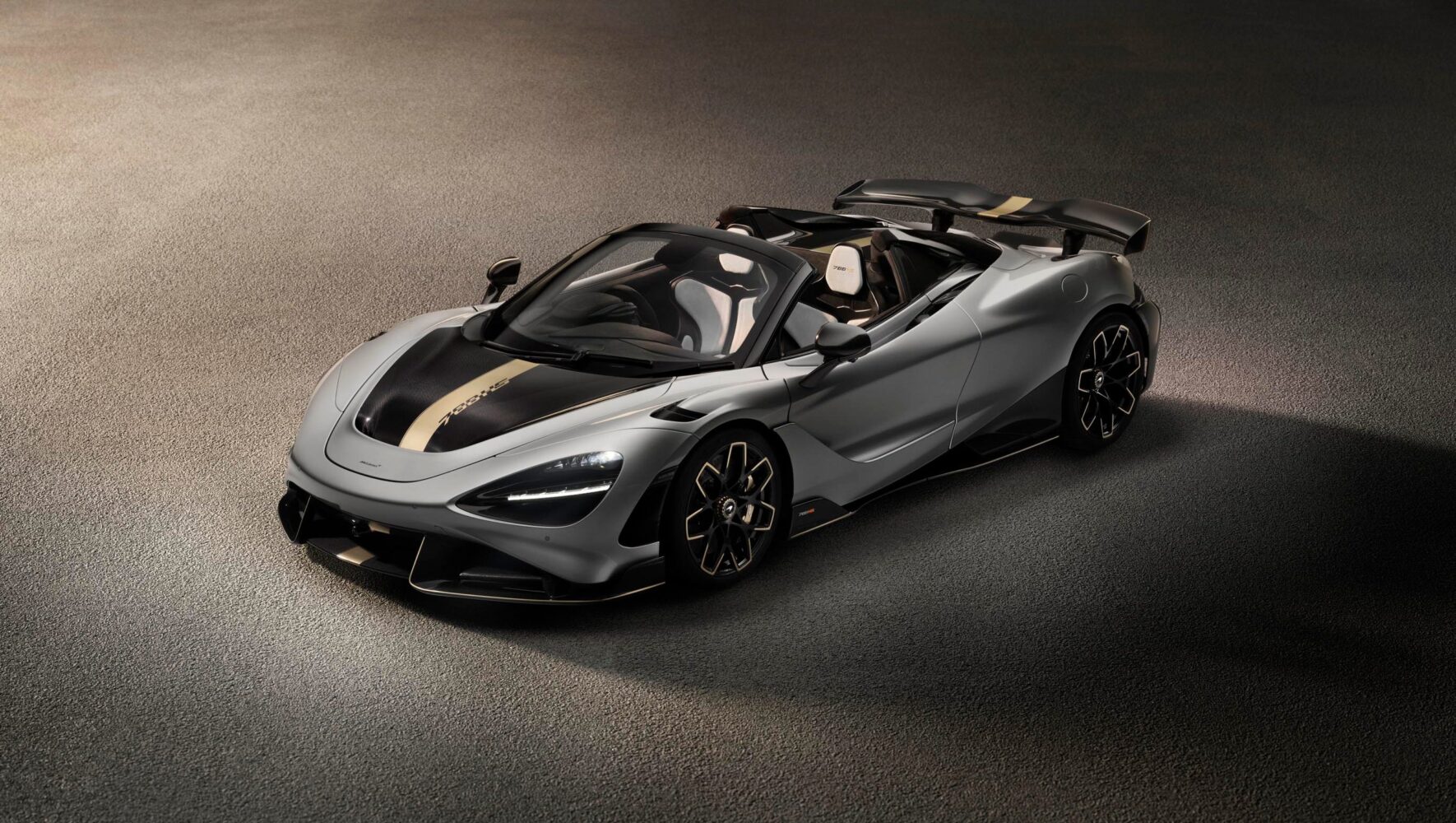
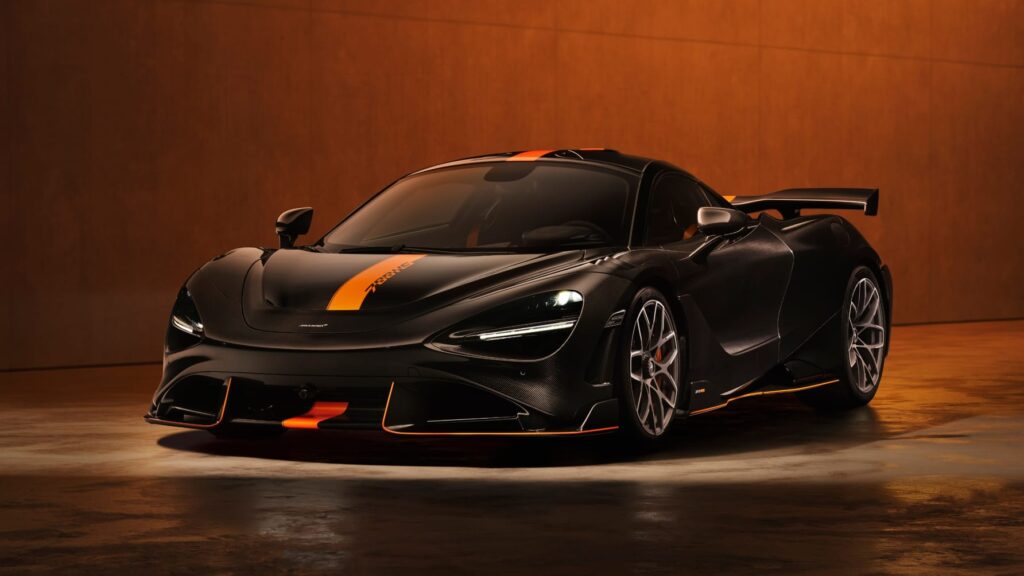
McLaren isn’t launching a new model. The 788HS is what happens when engineers spend years wringing every last horsepower, gram, and aero trick from a platform that began with the 720S, continued through the 765LT, and matured into the 750S. The result is 788 PS — 777 hp — from the same 4.0-liter twin-turbo V-8, now producing 800 Nm of torque and a 205 mph top speed.
McLaren calls it the “definitive and final evolution” of the Super Series. Industry reporting suggests a next-generation successor arrives around 2028. That’s not a contradiction. That’s the supercar business working exactly as designed.
What Makes the 788HS More Extreme Than the 750S
Every change here has a measurable purpose — none of it is cosmetic.
The aero package produces 10 percent more downforce than the 765LT. That’s the benchmark McLaren is measuring itself against, not the 750S it replaces. It includes:
- S-duct hood
- New front splitter
- Redesigned diffuser
- Raised active rear wing
The braking hardware is derived from the Senna:
- Carbon-ceramic discs
- Six-piston forged aluminum monoblock calipers
- F1-inspired cooling ducts
The chassis sits 5 mm lower than the 750S, runs Proactive Chassis Control III, and gets retuned engine mounts for sharper driver feedback. A quad-exit titanium exhaust completes the package.
On paper, this isn’t an evolution so much as a compression of everything McLaren learned from the Super Series into one deliberate exit statement.
Collector Logic, Spelled Out
Two hundred units, split evenly between coupe and Spider, each handled individually by McLaren Special Operations.
The name does real work here. “788” reflects the metric PS figure directly — no rounding, no marketing inflation. “HS,” standing for High Sport, has appeared only three times in McLaren’s history. Each appearance has signaled something genuinely extreme, not a trim-level upgrade dressed up with a badge.
McLaren describes the 788HS as the “definitive and final evolution” of the Super Series path begun with the 720S. For collectors, scarcity and naming heritage aren’t footnotes — they’re the investment thesis.
An Ending That Isn’t Quite an Ending
Every great band has a farewell tour. The collector car market has simply formalized the business model.
Industry reporting — not McLaren’s official line — points to a next-generation successor model arriving around 2028. So what exactly closes here? This specific V-8 Super Series lineage, in this form. The concept itself survives.
That’s worth acknowledging without cynicism: the collector car market runs on exactly this kind of structured scarcity and ceremonial closure. Two hundred people will own a 788HS. Everyone else will be watching the auction results around 2030 — and recalibrating accordingly.