

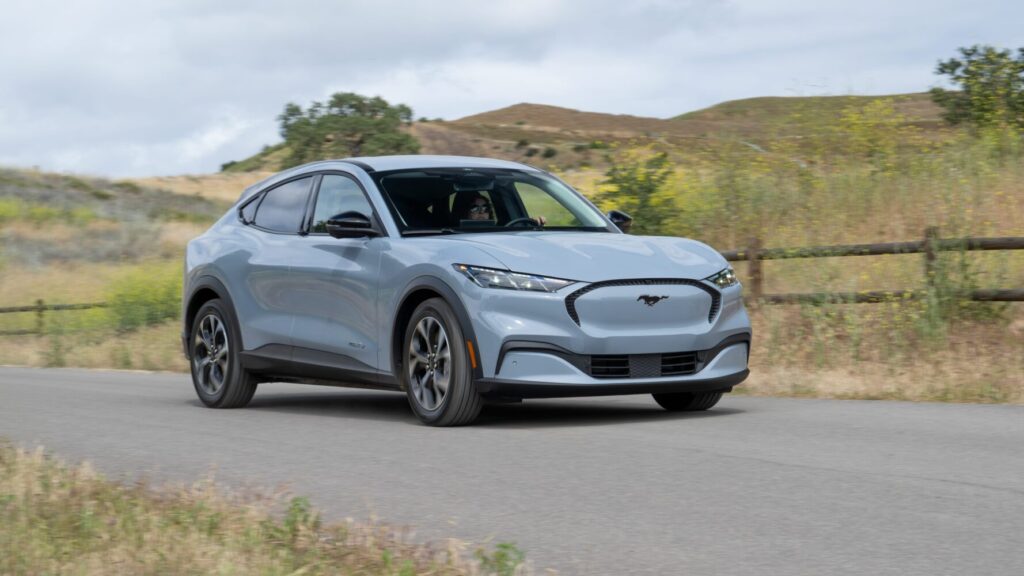
A San Diego man named Jason Bullock purchased a Ford Mustang Mach-E and, according to his attorneys, paid a price inflated by tariffs the federal government has since declared illegal. Now Ford expects roughly $1.3 billion in refunds on those duties — and reportedly has no plans to pass any of it back to customers like him. Bullock filed a proposed class-action lawsuit against Ford Motor Company in Michigan federal court on July 9, 2026, and the central question is blunt: if consumers absorbed the affordable new-car costs on the way in, does the law require companies to return anything on the way out?
Ford Got Paid Twice. The Lawsuit Says That’s the Problem.
The complaint rests on a straightforward chain of events that, if proven, would leave Ford holding both the refund and the original price increase.
Ford paid tariffs under the International Economic Emergency Powers Act (IEEPA) on vehicles imported from Mexico, including the Mustang Mach-E. Ford then raised base prices and destination charges to offset those costs, and customers paid the inflated amounts. In February 2026, the Supreme Court ruled 6-3 in Learning Resources Inc. v. Trump that IEEPA does not authorize the president to impose tariffs — that power belongs to Congress. The government is now refunding the duties directly to Ford. According to the complaint, keeping both the refunds and the earlier price increases amounts to “a double recovery and unjust windfall.”
Here is what the record shows:
- The Supreme Court’s ruling covers IEEPA duties collected from approximately March 2025 through February 2026; Ford has already booked the $1.3 billion expected refund as a one-time earnings benefit
- Retail customers cannot file refund claims directly with U.S. Customs — only Ford, as importer of record, receives those funds
- Ford has reportedly signaled it will not issue retroactive price adjustments or customer rebates
- Nike, Amazon, and Costco face similar lawsuits; observers note that the first court to issue a substantive ruling on consumer entitlements could influence how these cases develop across retail sectors
“If Ford retains the [tariff refunds] while also retaining the tariff-related price increases paid by consumers, Ford will receive a double recovery and unjust windfall.” — Bullock lawsuit complaint
What Affected Customers Can Realistically Expect
The Supreme Court ruling established that the tariffs were illegal — but it left the question of consumer compensation entirely to future litigation.
The ruling says nothing about downstream buyers. Bullock’s legal team must still prove that specific price increases were directly caused by IEEPA tariffs rather than other cost factors such as materials or logistics, then quantify the overcharge per customer, and survive class certification. No court has ordered Ford to share a dollar of the refund.
The scale of what is at stake extends well beyond one automaker. Automakers collectively anticipate approximately $2.3 billion in refunds, according to Reuters, and importers across the broader economy could seek refunds on up to $166 billion in IEEPA duties. Ford’s $1.3 billion is one of the largest single figures disclosed.
That money currently sits on corporate balance sheets as an earnings gain. If you purchased a Mexico-built Ford during the IEEPA tariff window, this lawsuit may be the only legal avenue available to recover any portion of what you paid — and its outcome is far from certain. For those reconsidering their next vehicle purchase, checking the latest EV value options may be worth exploring. Meanwhile, the broader pattern of rising monthly costs is reflected in how the car payment has evolved for American consumers in recent years.