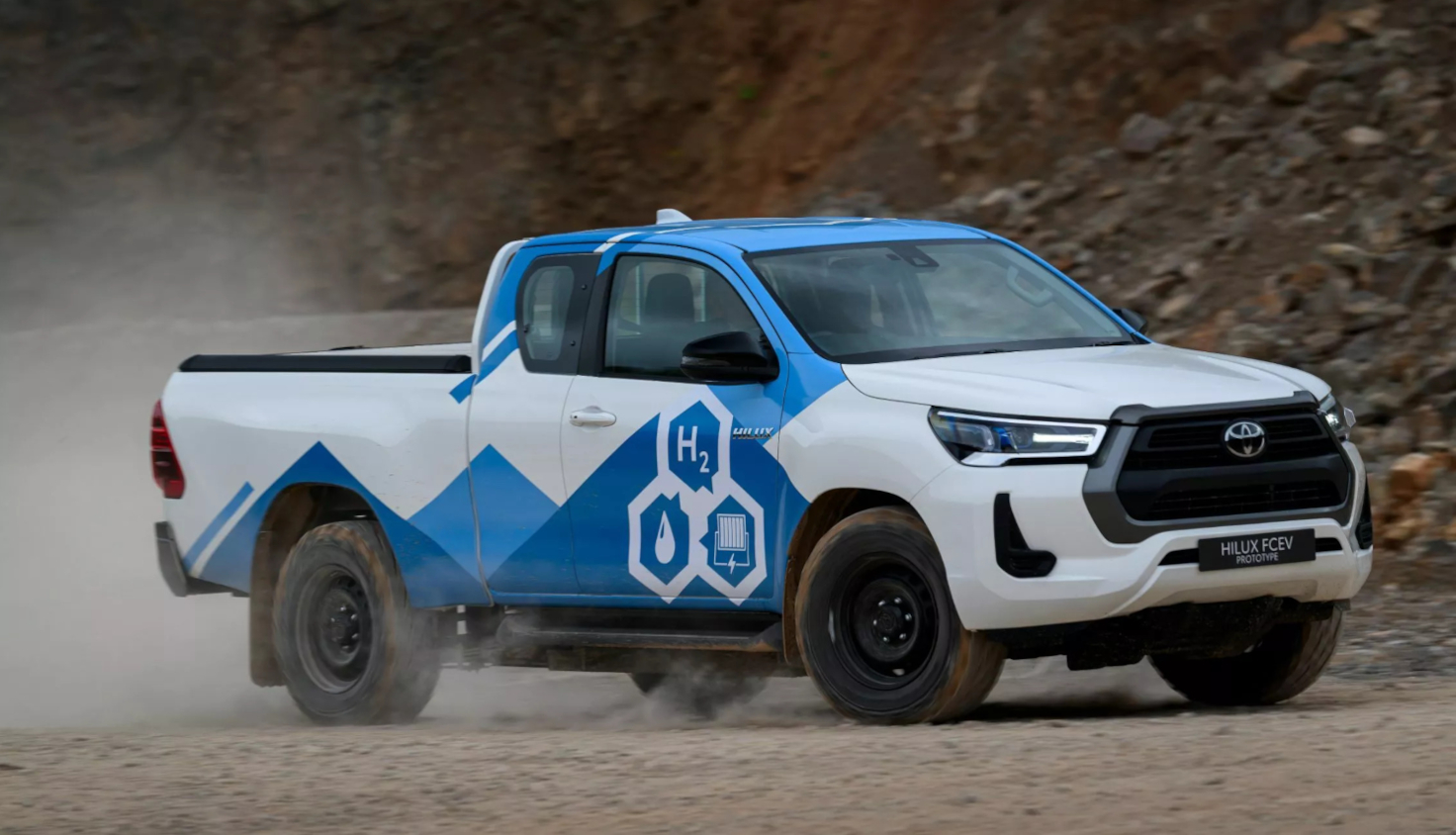


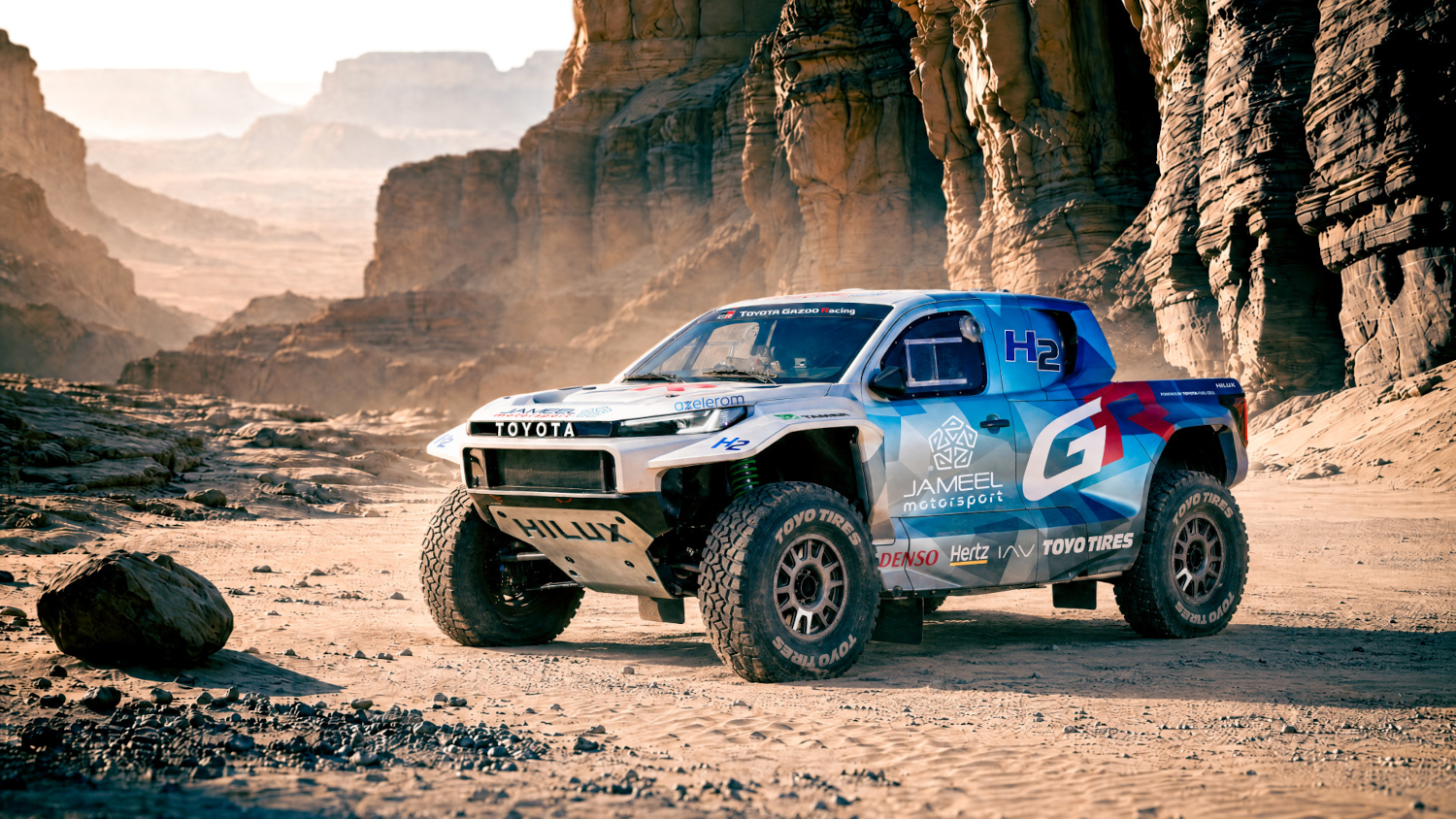
Toyota Gazoo Racing isn’t entering the 2027 Dakar Rally to win. It’s entering to find out if a hydrogen fuel-cell truck can survive one of the most punishing motorsport environments on earth — 13 stages, 1,000 competitive kilometres across Saudi Arabia, January 1–15. The vehicle is the DKR GR FC Hilux, built on Toyota’s proven GR DKR Hilux EVO T1+ platform with the petrol V6 pulled out and a fuel-cell electric powertrain installed in its place. It runs in the Future Mission 1000 category — Dakar’s experimental class, where the point isn’t podiums. It’s data.
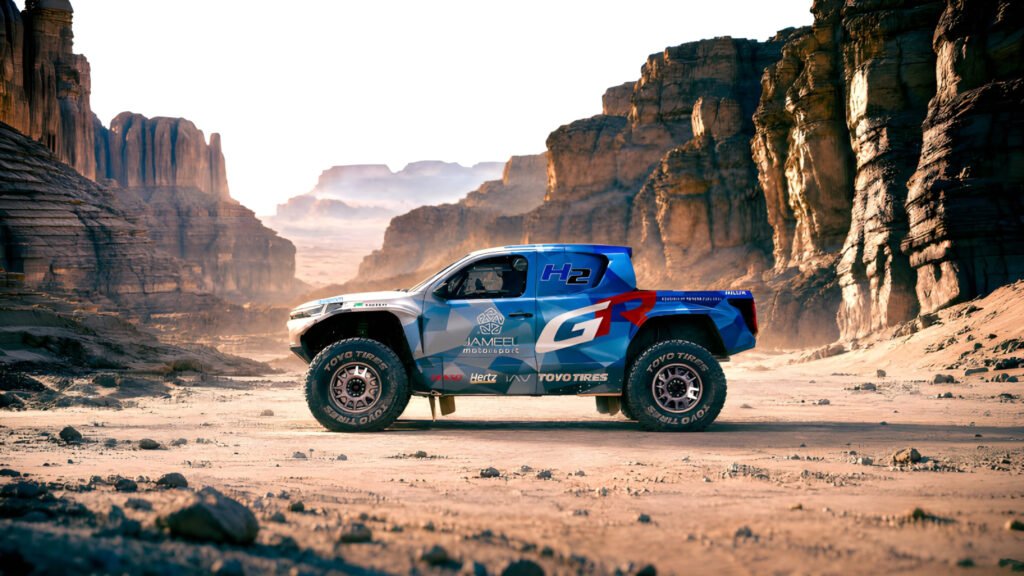
A Rolling Lab That Happens to Look Like a Race Truck
Beneath familiar bodywork, Toyota has engineered a fundamentally different machine — one built to generate answers, not trophies.
The platform is familiar. The powertrain is not. Toyota’s engineers in Brussels fitted what reporting describes as a “2.5-generation” fuel-cell system — a blend of current-production and next-generation components — with development focused on making the stack smaller, keeping it cool under extreme heat, and stopping dust from killing it before the finish line. Toyota Motor Europe’s headquarters in Zaventem handled development and assembly. Partner DENSO took on cooling and power electronics, IAV manages software and controls, and Toyo Tires supplies the rally rubber. Jameel Motorsport rounds out the consortium.
Key confirmed details:
- Only tailpipe emission is water; zero CO₂ while driving
- Hydrogen storage reportedly uses a 540-litre gas cell, according to sector reporting
- Same body and frame as the combustion-powered Hilux
- Competing in Future Mission 1000, not Dakar’s main class
- Development and assembly completed at Toyota Motor Europe, Belgium
Toyota has not publicly disclosed horsepower, range, or full performance specifications — and those are precisely the numbers this Dakar campaign is designed to generate.
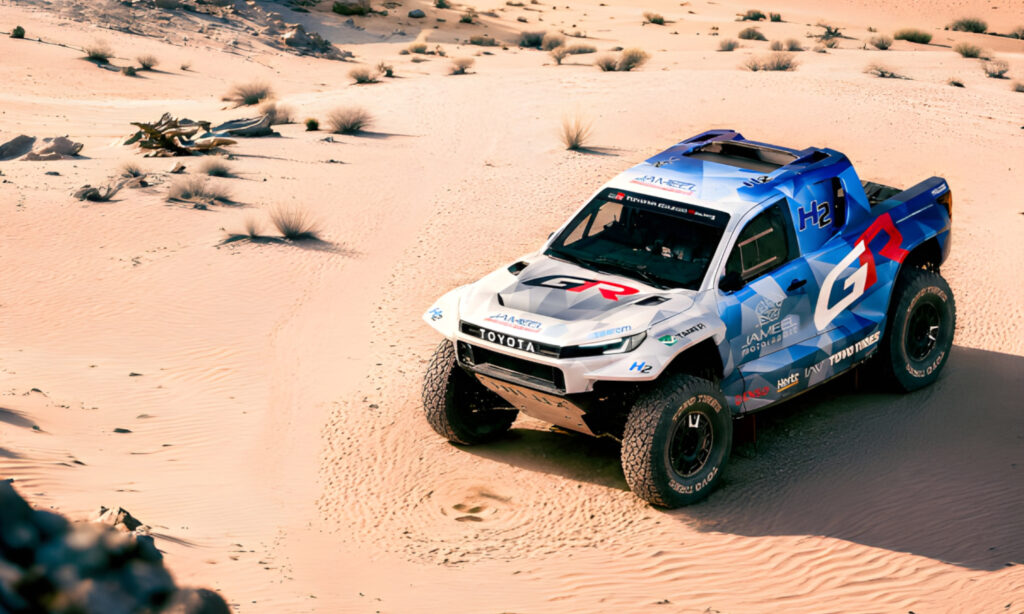
The Desert Is the Testing Protocol
Saudi Arabia’s heat, dust, and relentless vibration make it the ideal — and brutal — laboratory for proving hydrogen fuel-cell durability.
Dakar is the right place to break a fuel-cell system, or prove it doesn’t break. Heat warps thermal management while fine Saudi dust finds every seal it shouldn’t, and vibration stress-tests every connection across 13 consecutive stages. These aren’t edge cases — they’re Tuesday. Solving them in rally conditions directly informs the road-going fuel-cell Hilux Toyota is targeting for 2028, reportedly with around 400 km of range and 2.5-ton towing capacity — among the worth waiting for vehicles on the horizon. How hydrogen storage, energy management, and refueling logistics actually perform across the full race schedule remains an open question. That’s the experiment.
A truck that emits only water, racing through one of the driest landscapes on earth — that’s not irony. That’s the most honest stress test hydrogen technology has ever signed up for.