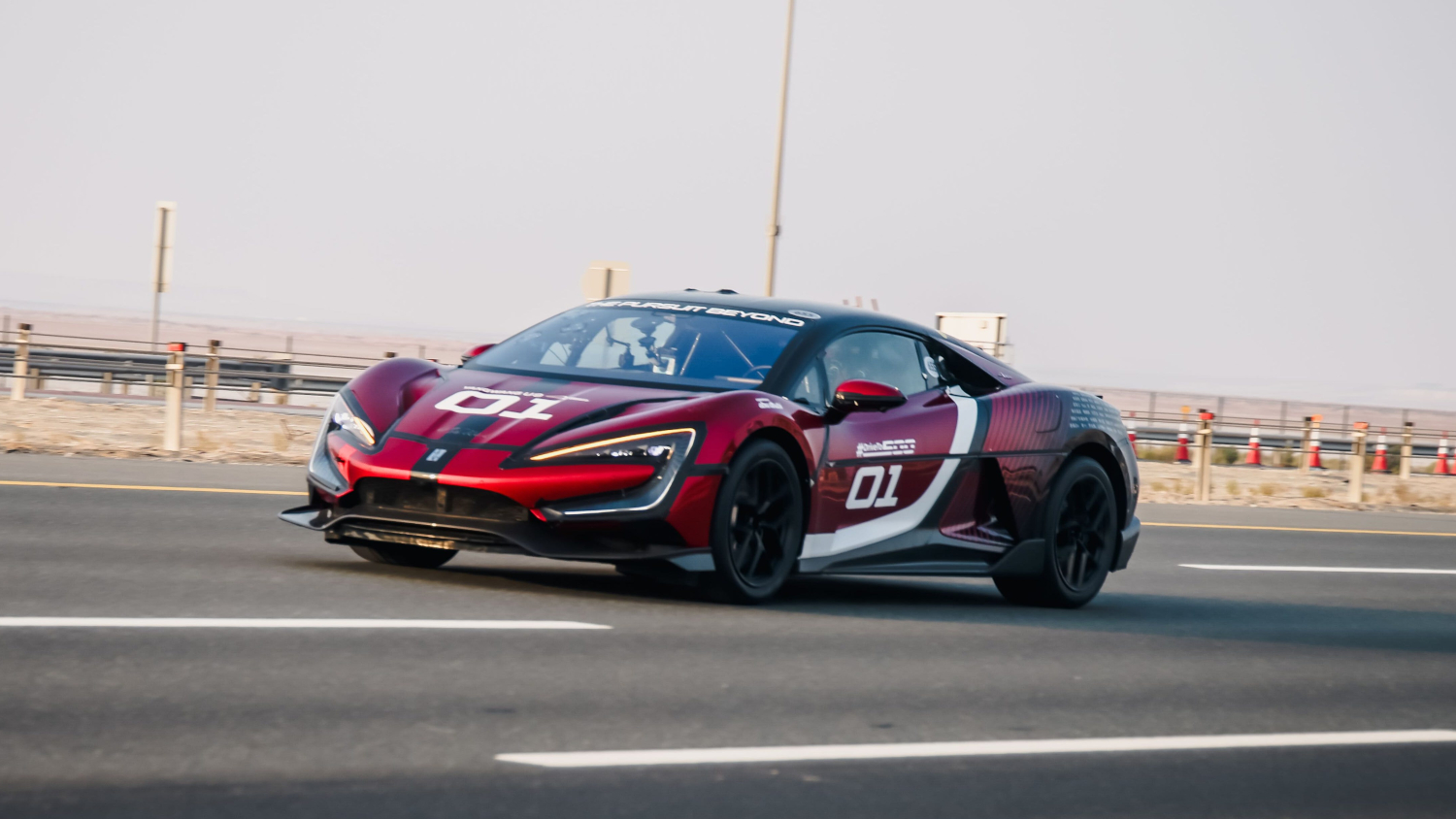


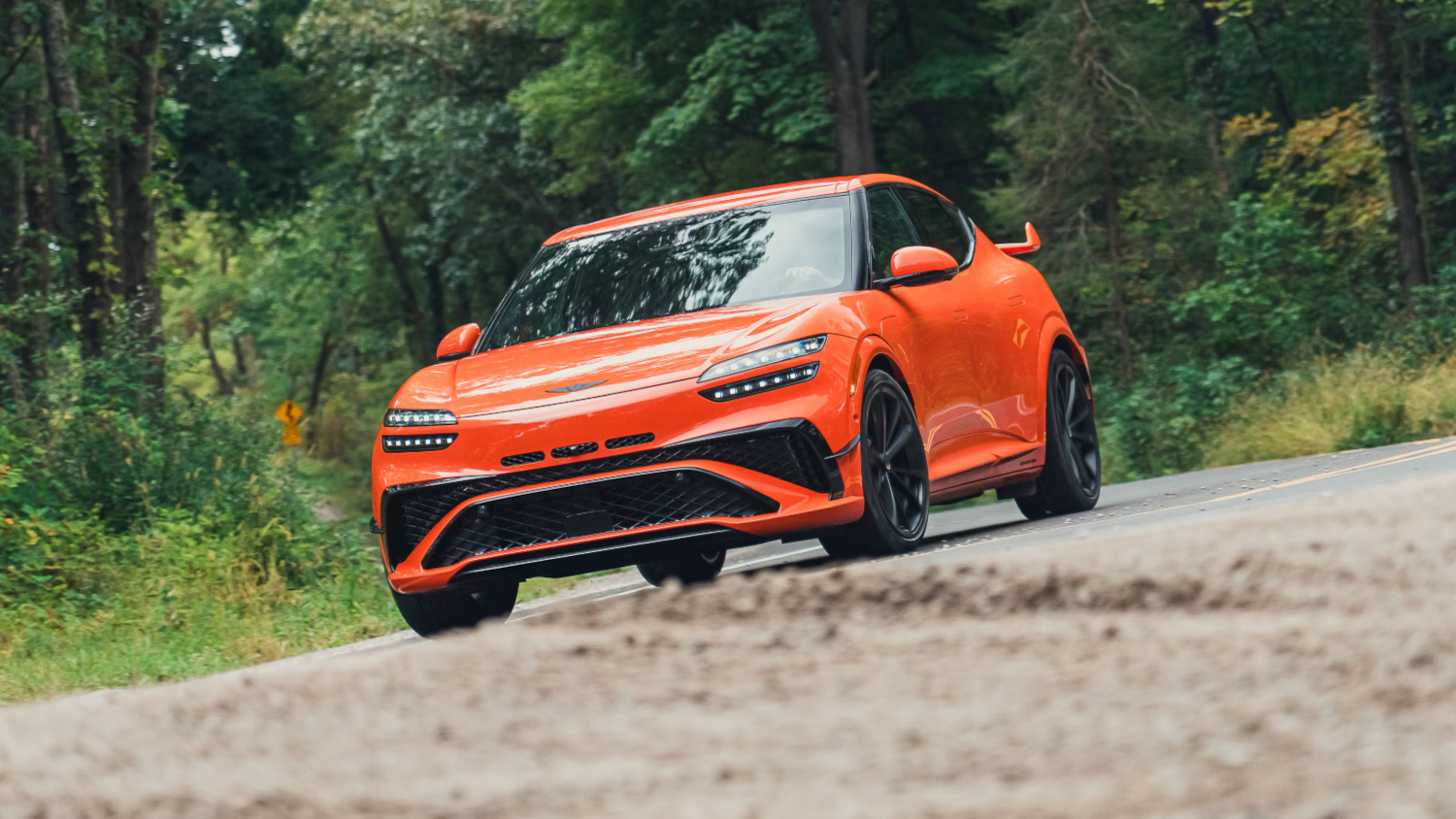
Louder than a Corvette Stingray — and not by a rounding error. Car and Driver‘s instrumented testing recorded the Genesis GV60 Magma at 102 dBA during full-throttle acceleration with Virtual Gear Shift engaged. A 2027 Chevrolet Corvette Stingray running Track mode with the optional quad center-exit exhaust reached 97 dBA in the same publication’s testing. The electric crossover was louder. On the logarithmic scale used to measure sound pressure, that 5-dBA gap is a perceptible, meaningful difference. The Magma pairs that acoustic presence with up to 641 horsepower and a Genesis-claimed 3.4-second 0–60-mph time.
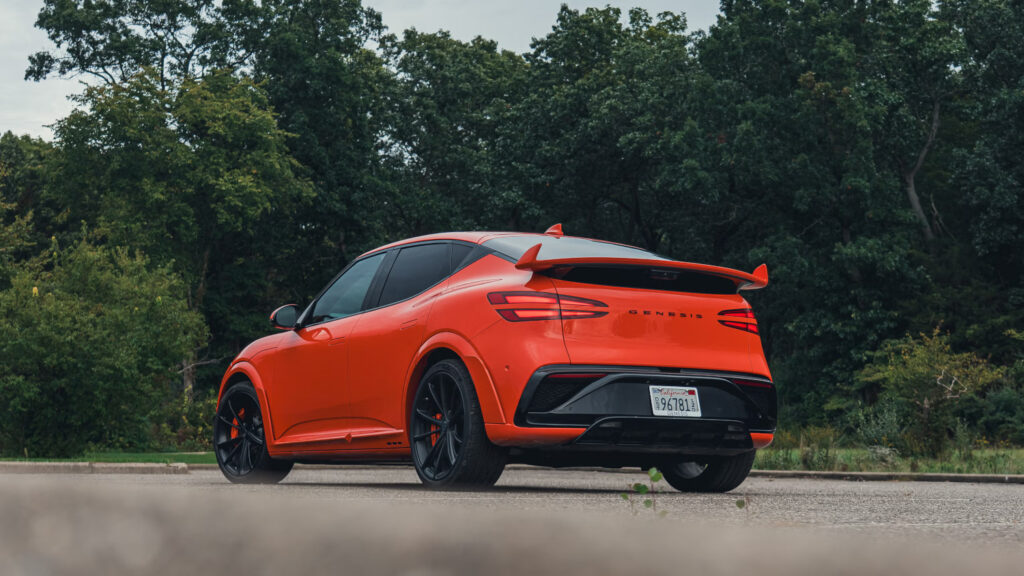
What’s Making All That Noise
The GV60 Magma’s roar comes from code, not combustion.
The Magma’s sound is entirely constructed. Virtual Gear Shift simulates an eight-speed dual-clutch transmission with a high-revving V-6 soundtrack, delivered through cabin speakers via Active Sound Design software — no intake, no exhaust, no combustion hardware of any kind. The Corvette’s Nürburgring record may loom large in track-performance conversations, but its 97 dBA here comes from a 6.7-liter naturally aspirated LS6 V-8 producing 535 horsepower and 520 pound-feet of torque, according to Chevrolet. That is a real engine moving real air. The source of each vehicle’s noise could not be more different, even if one of the resulting numbers is smaller.
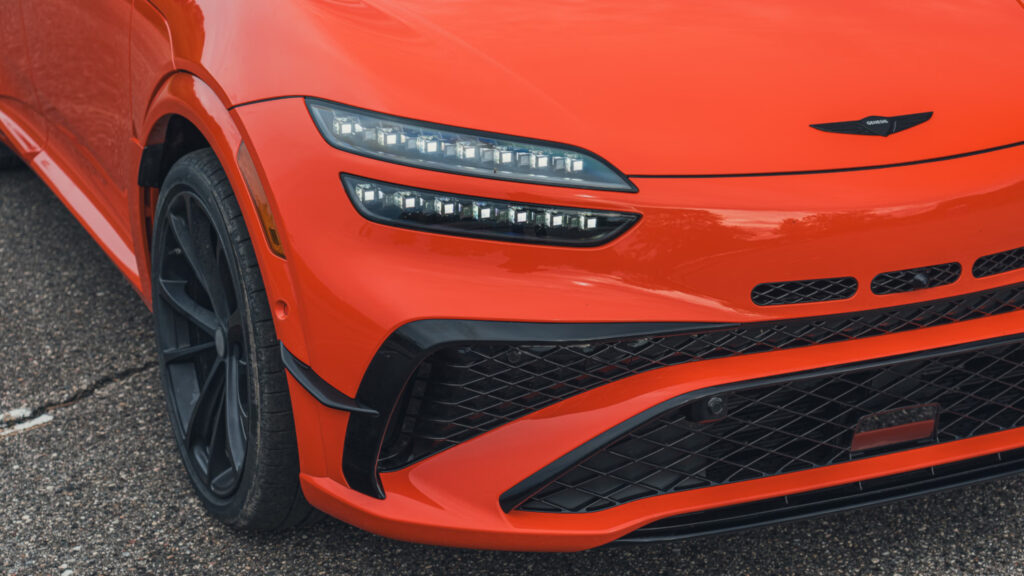
Here is what Car and Driver’s figures actually show:
- GV60 Magma: 102 dBA, full-throttle with Virtual Gear Shift enabled
- 2027 Corvette Stingray: 97 dBA, Track mode with optional quad center-exit exhaust
- Hyundai Ioniq 5 N: 71 dBA — 31 dBA below the Magma in the same publication’s testing
- Genesis claims 641 hp and a 3.4-second 0–60-mph sprint
- Corvette LS6 V-8: 535 hp and 520 lb-ft of torque, naturally aspirated
These are separate tests conducted in each vehicle’s loudest available configuration, not a controlled side-by-side showdown. The dBA measurement captures sound pressure. It says nothing about character, texture, or whether the experience feels earned.
That distinction matters. Buyers chasing performance drama may find the Magma’s constructed soundtrack completely convincing — it is, measurably, louder than a Corvette. Those who value mechanical provenance will likely recognize it as a highly sophisticated impression. The test establishes a measurable volume advantage. Realism and emotional impact remain stubbornly subjective.
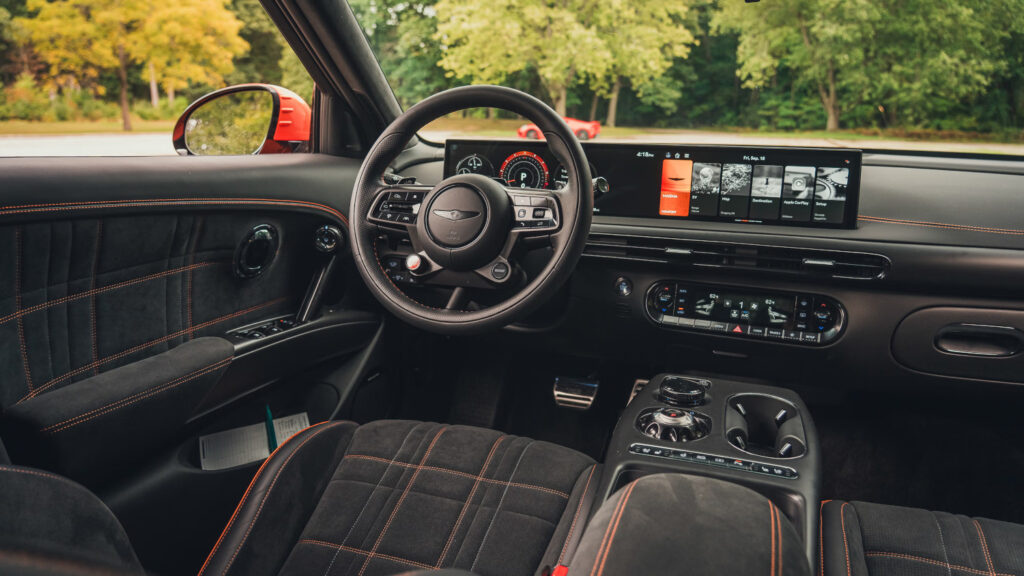
Loud Is Easy. Convincing Is Harder.
The number is real — whether it satisfies is a different question entirely.
The GV60 Magma demonstrates that software can out-shout a V-8 on a sound-pressure meter. What no decibel reading can settle is whether the sound’s origin stops mattering once the acceleration pins you to your seat. For drivers weighing high-impact upcoming models worth waiting for, the Magma’s numbers make a compelling case on paper.