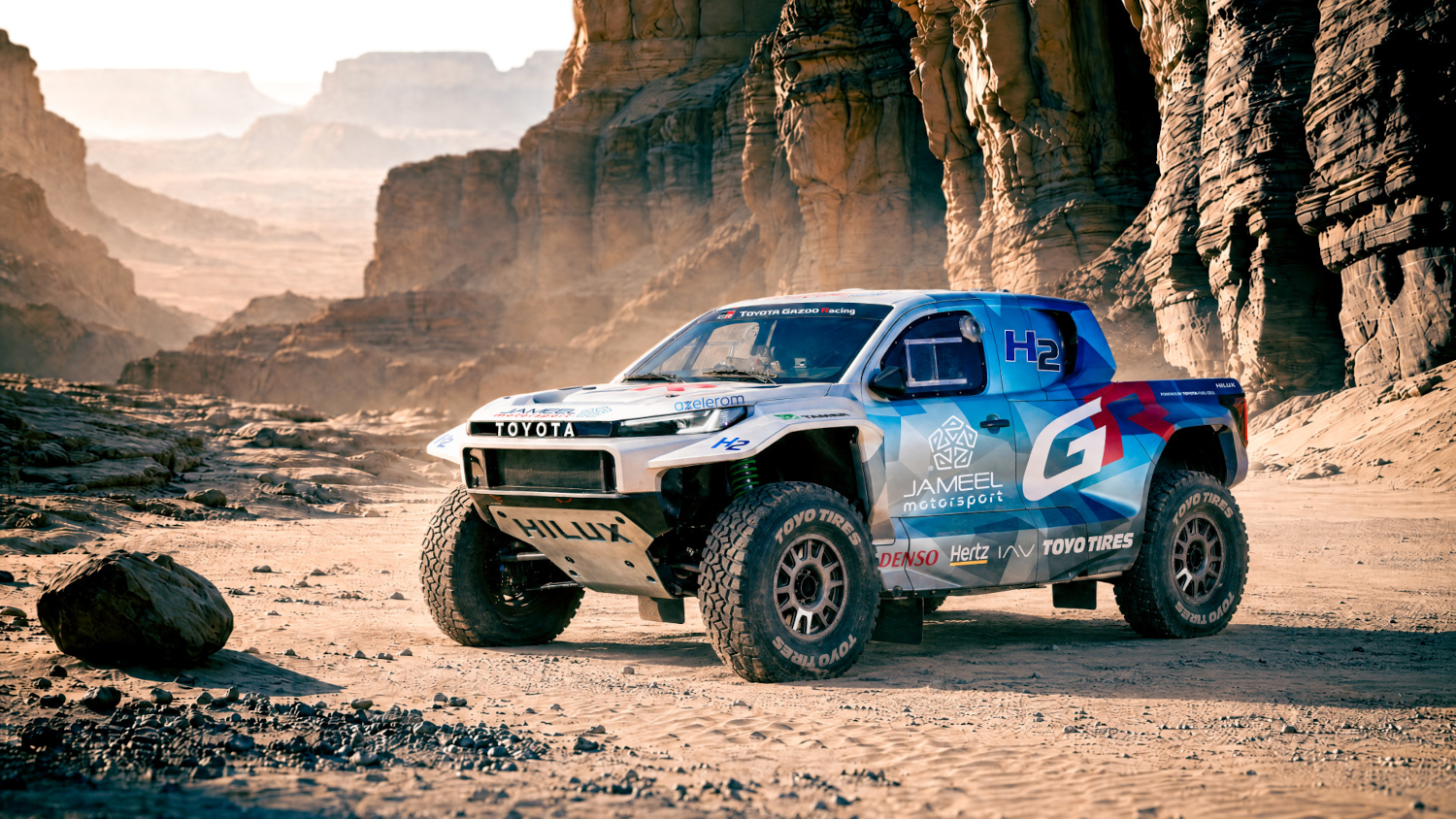


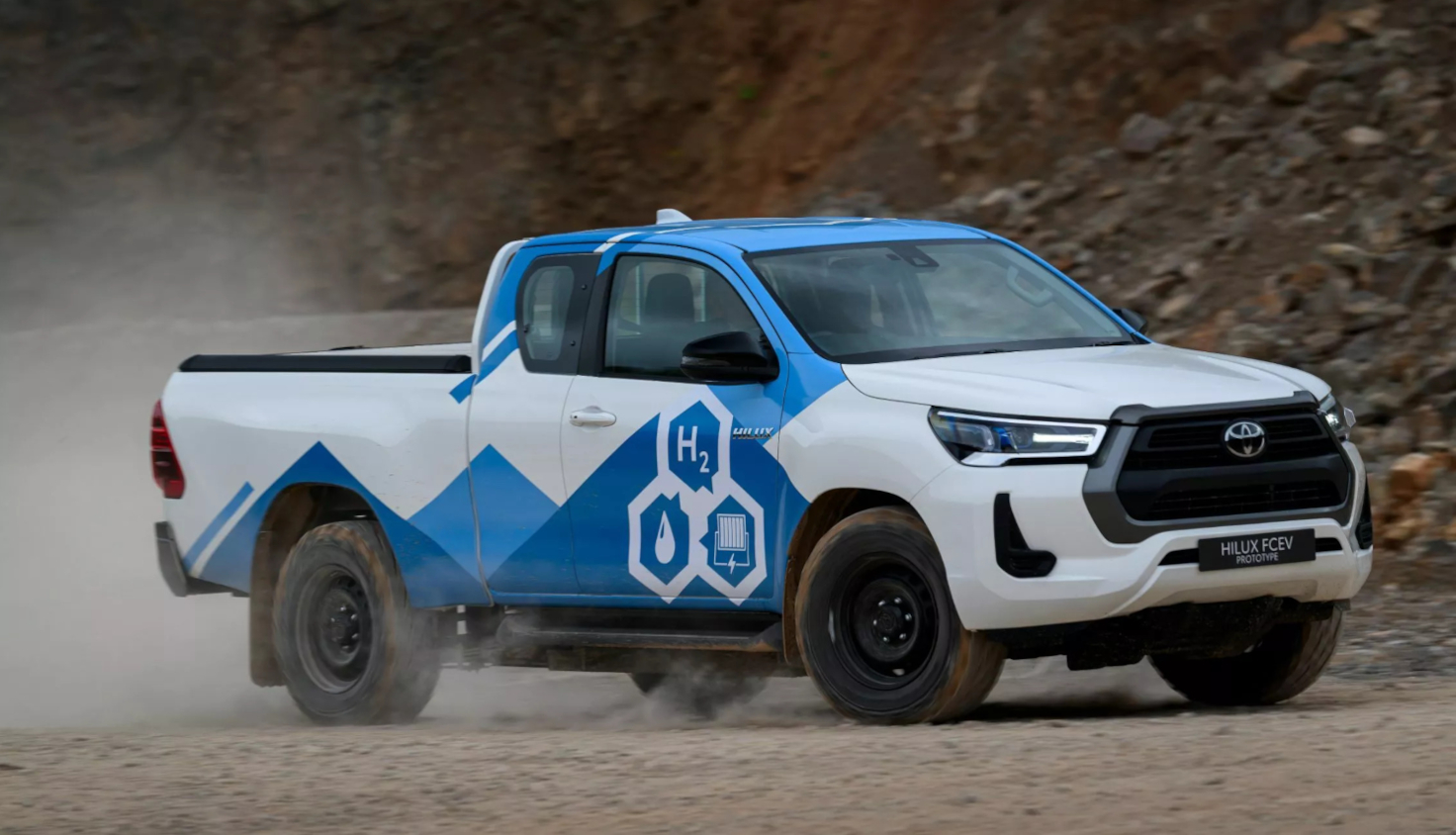
Toyota has confirmed a hydrogen fuel cell version of the Hilux pickup for Europe in 2028 — and the specs beat its electric sibling on range, towing, and refueling speed. The catch isn’t the truck. Europe has roughly 179 operational hydrogen refueling stations, as of the latest European Hydrogen Observatory data. The EU, by comparison, has approximately 1.16 million public EV chargers. For European drivers curious about hydrogen, that contrast is the whole story — and it matters now, with a confirmed launch date approaching and a network that is, at best, standing still.
What the Hydrogen Hilux Actually Delivers
On paper, the numbers are hard to argue with — which makes the infrastructure problem sting that much more.
The Hilux FCEV (fuel cell electric vehicle — hydrogen powers the electric motor instead of a battery) targets a WLTP range of 248 miles (400 km). WLTP is Europe’s standardized vehicle range-testing method. The towing capacity target sits at 2,500 kg. Refueling takes roughly five minutes, comparable to a conventional diesel stop.
Compare that to the Hilux BEV: approximately 159 miles (257 km) WLTP range, 1,600–2,000 kg towing depending on configuration, and around 30 minutes to charge from 10–80% on a fast charger. The hydrogen truck leads that comparison on every metric.
One detail worth watching: Toyota’s 10 Derby-built prototypes reportedly achieved 373 miles between refuels during field testing. The current production target is 248 miles. Toyota may be taking a conservative public position, or the production spec has been retuned — either way, details remain unclear.
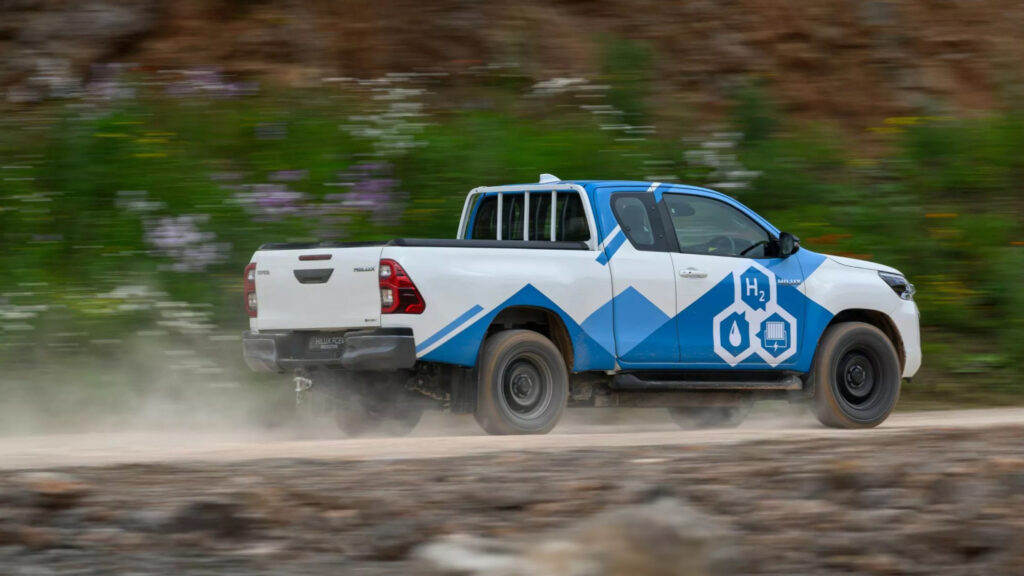
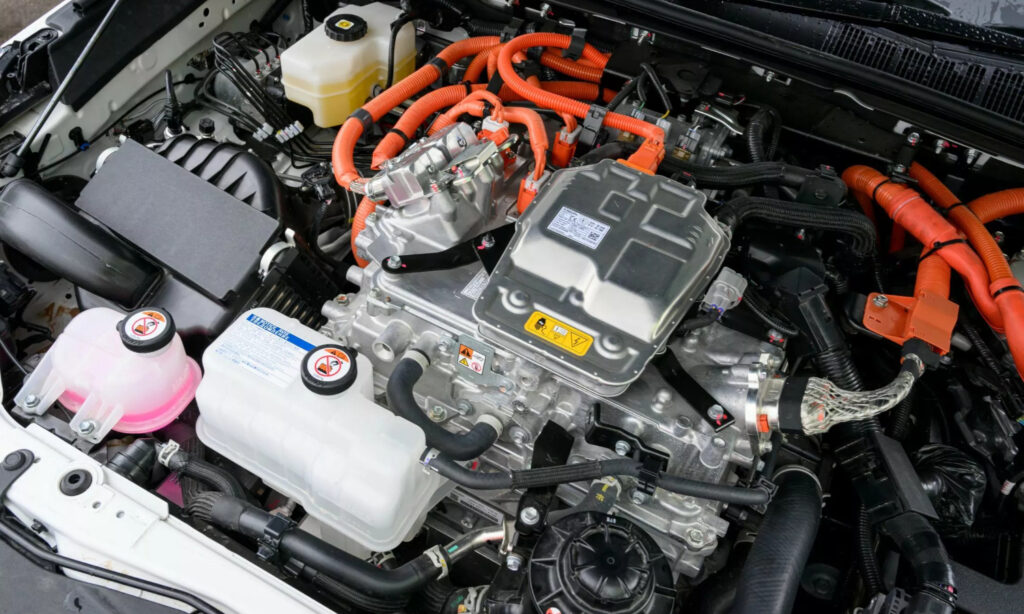
The powertrain borrows directly from the Mirai sedan: three hydrogen tanks integrated into the ladder frame, a fuel cell stack, and a lithium-ion battery housed under the bed.
- Range: FCEV targets 248 miles (400 km) vs. BEV’s 159 miles (257 km) WLTP
- Towing: FCEV targets 2,500 kg vs. BEV’s 1,600–2,000 kg
- Refuel/recharge: FCEV ~5 minutes vs. BEV ~30 minutes (10–80%)
- Emissions: Both produce zero tailpipe emissions; the FCEV’s only byproduct is water
- Availability: Europe only; pricing not yet announced
Europe has roughly 179 hydrogen stations. The EU has 1.16 million public EV chargers. That is not a gap — that is a chasm.
Toyota’s Real Target Isn’t the Road Tripper
Fleet operators and tradespeople, not leisure travelers, are the practical audience for this truck right now.
Europe’s hydrogen network grew from 38 stations in 2015 to a peak of around 187 by summer 2024, according to the European Hydrogen Observatory — then stalled. Closures in Germany and Austria pulled the count back to an estimated 172 by late 2025. Those stations tend to cluster near logistics corridors and industrial zones, not the mountain villages, coastal markets, or rural food routes that many European travelers actually want to reach.
Toyota positions the Hilux FCEV as part of a deliberate multi-pathway strategy — diesel, BEV, and hydrogen under one nameplate — targeting fleet managers and commercial operators who can route around depot-based refueling infrastructure. The strategy gives Toyota flexibility across regions and use cases without betting the Hilux nameplate on a single technology. Drivetrain options (rear-wheel drive vs. all-wheel drive), final payload specs, and pricing all remain unconfirmed; FCEVs have historically cost more than comparable EVs or diesel equivalents, so buyers should factor that in when the numbers eventually arrive.
Around two years remain before the 2028 launch. Toyota’s engineers have done their part — the truck is real, the specs are credible, and the production timeline is confirmed. Whether the Hilux FCEV is genuinely useful to everyday drivers depends far more on where Europe’s hydrogen network stands by then, and that answer belongs to infrastructure operators and policymakers, not to Toyota.