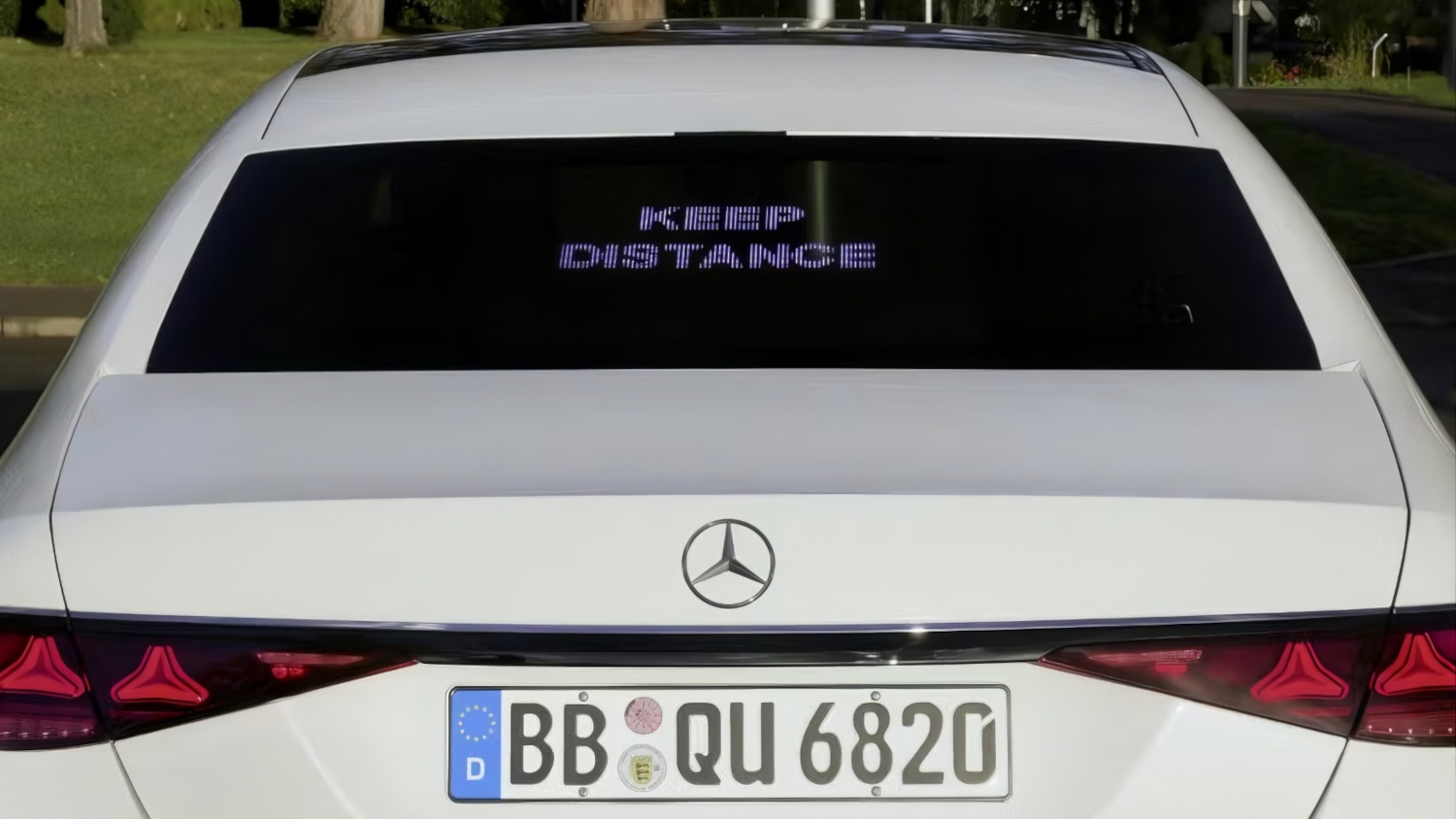
You see the car ahead flashing “KEEP DISTANCE” from inside its rear window. No sticker. No hand gesture. Just clean, laminated light embedded directly in the glass, gone the moment it’s no longer needed. That’s the core idea behind Mercedes-Benz’s “Intelligent Display in Glass” concept — a prototype system that embeds mini LEDs into vehicle windows to communicate safety information to surrounding drivers.
Forest P. Gill is widely credited with creating the modern adhesive bumper sticker in 1946, combining adhesive-backed paper with wartime fluorescent paint. Nearly eighty years later, Mercedes is proposing the same basic impulse — car as messenger — reimagined in glass.
How the Glass Actually Talks
Mini LEDs laminated invisibly into the rear window activate on demand, turning a passive pane of glass into a selective safety display.
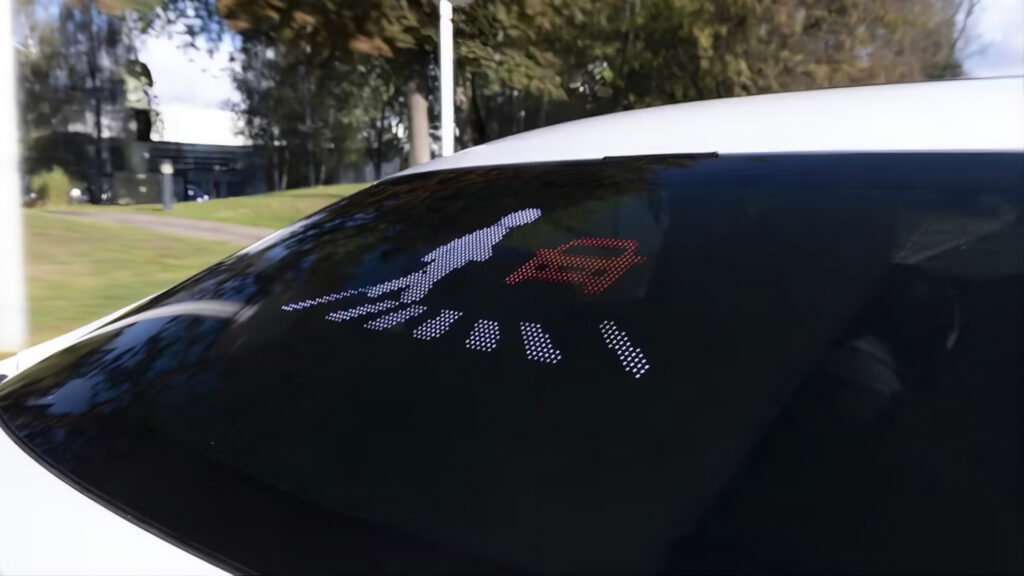
Mini LEDs laminated into the rear window are nearly invisible at rest, activating on demand to display warning symbols or safety messages to drivers behind — a format Mercedes identifies as particularly suited to large surfaces like rear windows. Micro LEDs, by contrast, are intended for higher-resolution animations on smaller display areas, though both technologies remain under development.
What the system can reportedly display, according to Mercedes and secondary reporting:
- “KEEP DISTANCE” warning for tailgaters
- A crossed-out headlight symbol for drivers using high beams
- Pedestrian-crossing alerts
- Crash and hazard warnings
- A signal indicating the vehicle ahead is reversing into a parking space
Mercedes frames this primarily as a safety and traffic-communication tool — not a customizable digital billboard. No confirmed capability exists for user-generated or custom messages; any claims about drivers composing their own text should be treated as speculation rather than established product functionality.
Safety Tool or Digital Road Rage Accelerant?
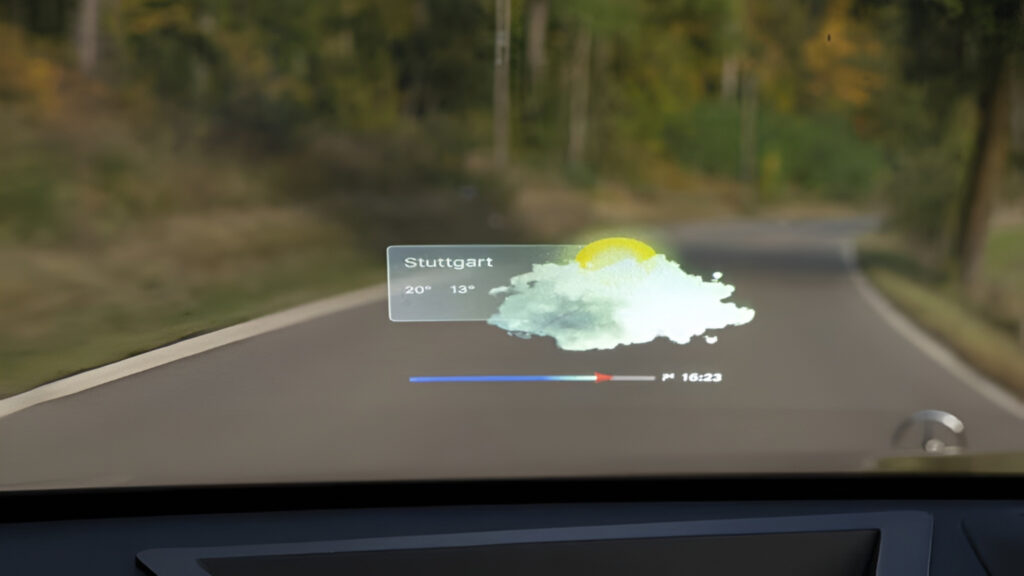
A companion holographic windshield concept adds another layer of angle-dependent display technology, hinting at how broadly Mercedes envisions in-glass communication.
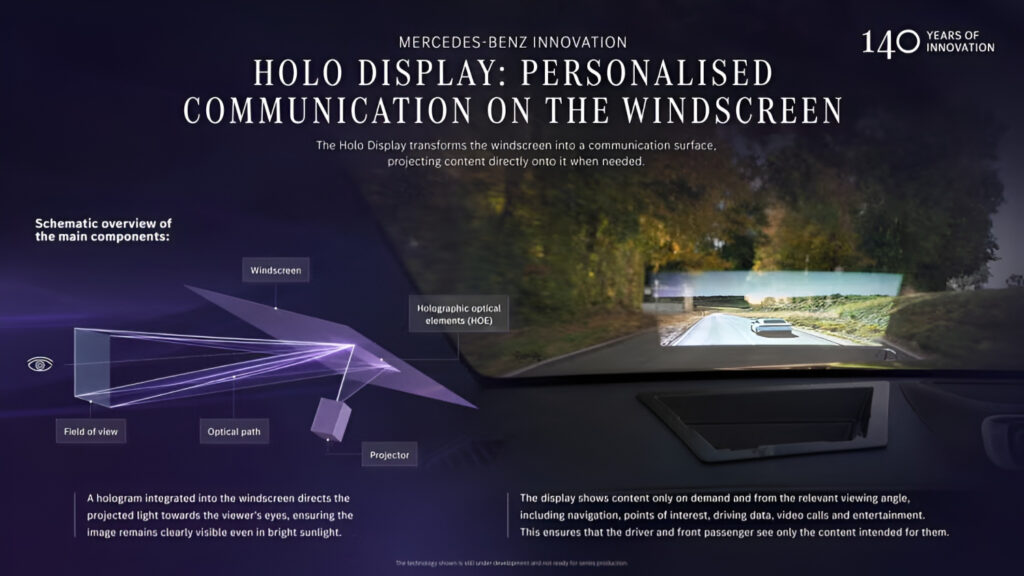
Alongside the rear-window system, Mercedes is separately developing a holographic windshield concept. A dashboard-mounted projector sends light toward a transparent film laminated into the glass; holographic optical elements within that film selectively reflect specific wavelengths, keeping the image visible even in bright conditions. Because visibility depends on viewing angle, the driver and passenger can see different content simultaneously — navigation or driving data on one side, a film or video call on the other.
Both systems remain under development. In its announcement, Mercedes provided no production timeline, no confirmed vehicle model, and no regulatory approval details. No independent safety body has yet assessed either system’s real-world impact.
The honest question sitting underneath all of this: does digital car-to-car communication make roads meaningfully safer, or does it hand the already-agitated tailgater one more thing to be furious about? That answer won’t come from a prototype demonstration. It’ll come from traffic.