

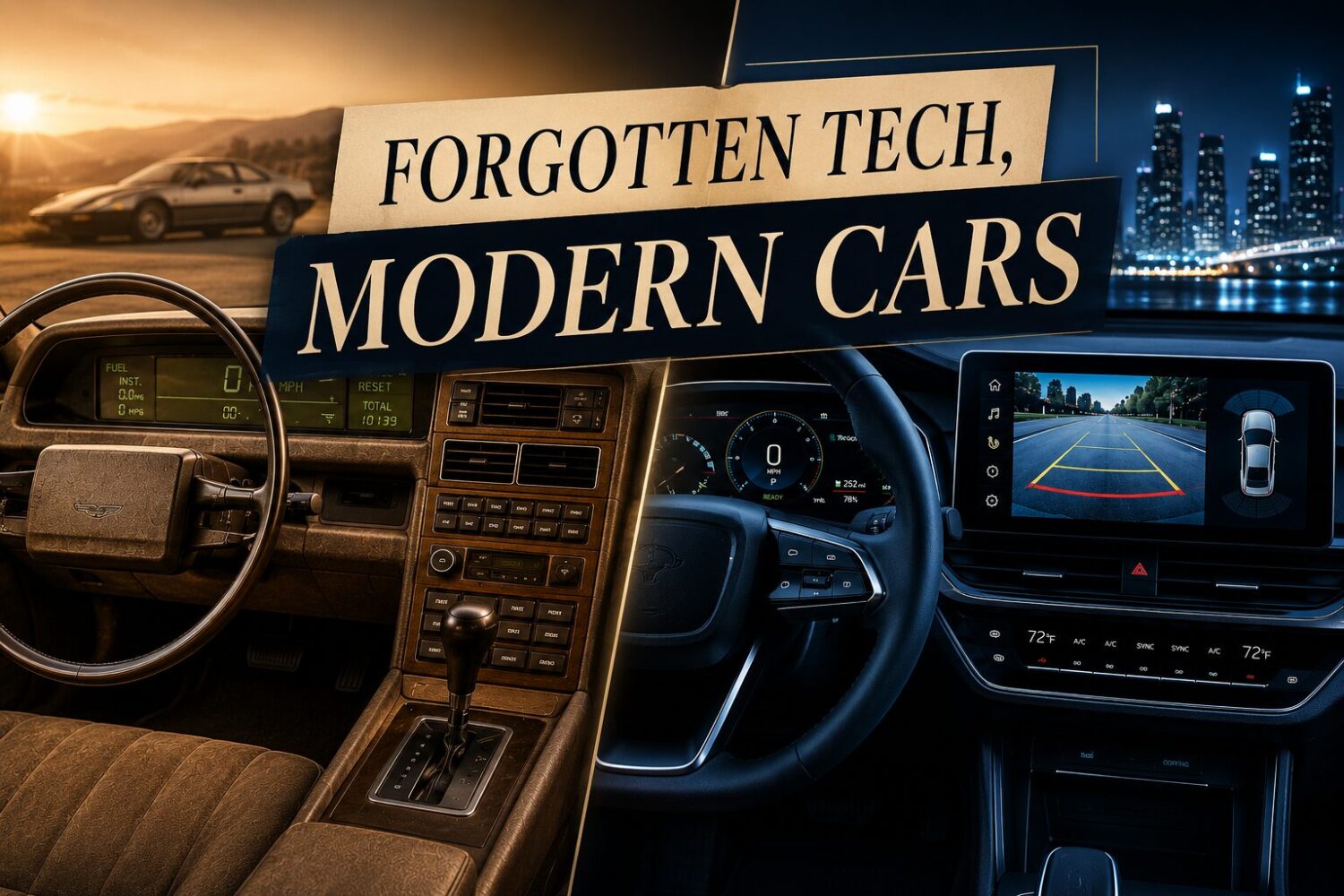
Automotive history is full of technologies that arrived decades before the market, manufacturing costs, or consumer readiness could support them. The Buick Centurion put a rearview camera in a concept car in 1956. Tucker built adaptive headlights in 1948 and watched them get banned. GM built a purpose-built electric vehicle in the 1990s and then recalled and destroyed most of them. Each of these innovations was correct about what drivers needed — the timing was simply wrong. The technologies that survived long enough to return are now standard equipment on virtually every new vehicle sold.
11. Aston Martin Lagonda’s Digital Dashboard

The wedge-shaped Aston Martin Lagonda introduced the first fully digital dashboard in 1976 — a touch-sensitive display with digital readouts replacing every analog gauge, at a moment when digital consumer electronics barely existed. The system failed constantly and cost more than a new economy car to repair. The concept itself — replacing conventional gauges with customizable digital displays — was precisely what Tesla made standard 40 years later. The Lagonda’s engineering ambition was not the problem. The manufacturing technology available to support it in 1976 was.
10. General Motors EV1

GM built the EV1 20 years before Tesla made electric vehicles commercially viable — a purpose-built electric vehicle with a 70-100 mile range, regenerative braking, and an aerodynamic coefficient that remains competitive today. GM recalled and destroyed most EV1s, citing limited battery technology and market considerations. The controversy produced the documentary “Who Killed the Electric Car?“ and left a generation of engineers and advocates convinced the technology had been suppressed. Tesla’s success two decades later confirmed that the EV1’s core concept was sound — the battery technology of the 1990s was the constraint, not the idea itself.
9. Volkswagen Type 3’s Electronic Fuel Injection (EFI)

Volkswagen partnered with Bosch to introduce the first mass-produced electronic fuel injection system on the 1968 Type 3. The D-Jetronic system used sensors to monitor engine conditions and precisely meter fuel — technology standard in every gasoline engine today. It improved fuel economy by 15% and reduced emissions significantly compared to carburetors. Despite those measurable advantages, carburetors remained dominant in mass-market vehicles for another 20 years because they were cheaper and simpler to service. The cost-versus-performance equation eventually resolved itself, and electronic fuel injection became universal.
8. Cadillac Fleetwood’s Heated Seats

Cadillac offered heated seats in the 1966 Fleetwood using resistive wires embedded in the seat cushions controlled by a dashboard dial — essentially identical to today’s technology. The feature was dropped after a few years due to low customer interest. Heated seats are now standard across vehicle categories from entry-level to ultra-luxury, and their absence from a vehicle is a genuine point of comparison in buyer decisions. The technology was right in 1966. The market needed another four decades to recognize it.
7. Honda Prelude’s Four-Wheel Steering (1987)

The 1987 Prelude’s mechanical 4WS system reduced turning radius from 5.3m to 4.8m — a 10% improvement that produced measurable handling benefits at both parking speeds and highway speeds through a secondary shaft that adjusted rear wheel angle in relation to front steering input. Honda dropped it after consumers declined to pay an extra $1,300 for a benefit they could not immediately see or feel during a test drive. Porsche, Mercedes, and BMW now charge significantly more for the same fundamental technology as a premium feature, having convinced the market of its value through decades of high-performance positioning.
6. Tucker 48’s Cyclops Eye (1948)

Preston Tucker built a center headlight that turned with the steering wheel into the 1948 Tucker 48 — illuminating corners before the car reached them. The feature was immediately banned in many states whose regulations required exactly two headlights in fixed positions. The adaptive lighting concept sat dormant until the early 2000s when luxury manufacturers reintroduced steering-responsive headlights. Modern adaptive headlights reduce nighttime accidents measurably, vindicating Tucker’s specific idea across a gap of more than 50 years.
5. Ford’s Keypad Entry (1980)

Ford introduced door-mounted keypad entry on the 1980 Thunderbird and Mark VI — a straightforward mechanism that let drivers unlock their vehicles without a physical key. Other manufacturers eventually abandoned mechanical keypads when wireless fobs became standard. Ford kept both systems simultaneously because customers consistently valued the keypad as a backup when fobs were dead, lost, or forgotten. Ford still offers this 43-year-old technology on current vehicles, making it one of the longest-surviving automotive features in production — retained not through inertia but because it continues to solve the same problem it solved in 1980.
4. Citroen DS Hydropneumatic Suspension (1955)
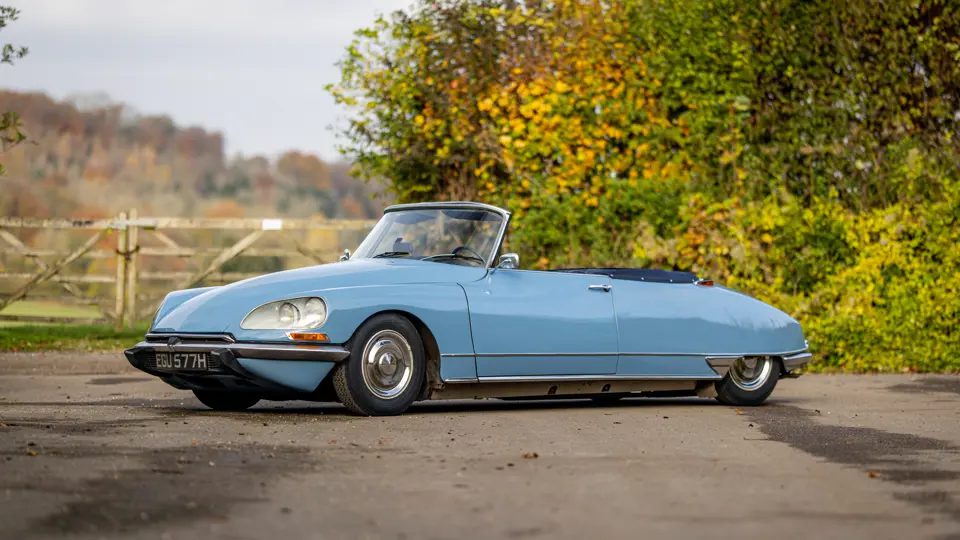
The Citroen DS used pressurized nitrogen spheres instead of conventional springs, producing a suspension that could self-level, adjust ride height, and maintain composure over rough surfaces with a quality that exceeded what conventional spring systems could achieve at any price point. The system could maintain level ride height on three wheels — a demonstration of capability that no conventional suspension could replicate. Rolls-Royce licensed the technology from Citroen rather than developing an alternative. Modern air suspension systems in luxury vehicles are technically more sophisticated, but Citroen established what the target looked like in 1955.
3. Buick Centurion’s Rearview Camera (1956)
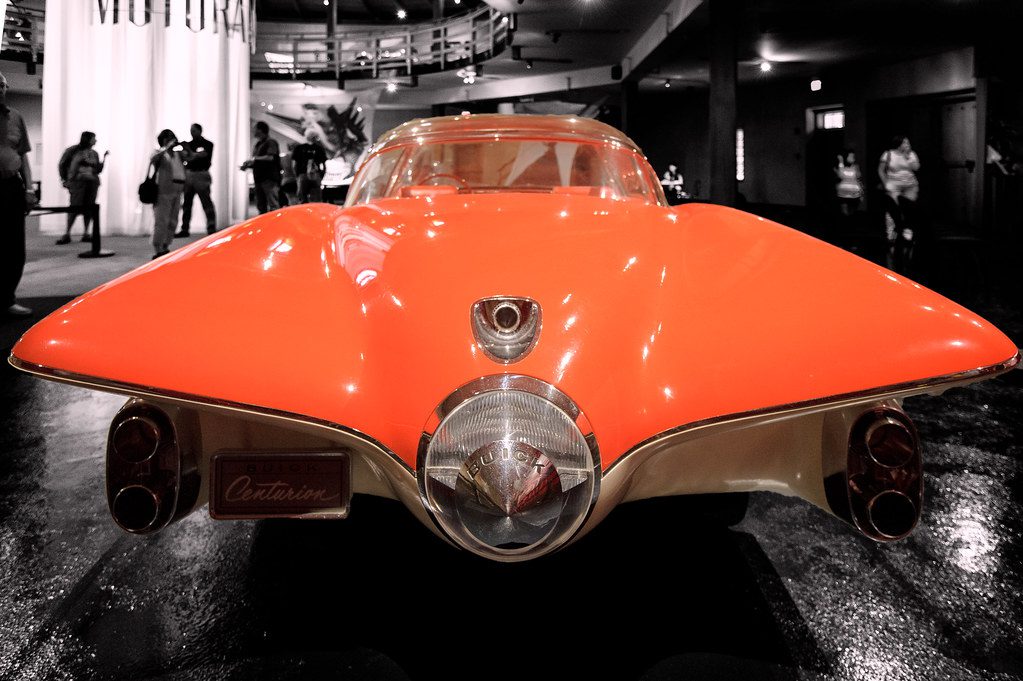
The Buick Centurion concept car in 1956 replaced the rearview mirror with a rear-mounted television camera feeding to a dashboard screen — the direct conceptual predecessor of the backup camera that became mandatory on all new US vehicles in 2018. The technology was prohibitively expensive and the black-and-white tube displays of the era provided inadequate image quality for production. It took 60+ years for camera and display technology to become cheap and clear enough for mass-market installation. Modern backup cameras have reduced backing crashes by 17%, confirming that the Centurion was addressing a real problem with the right solution at the wrong moment in manufacturing history.
2. Nissan’s Electronic Four-Wheel Steering (1985)

Nissan pioneered electronic four-wheel steering in the 1985 Skyline for the Japanese market before Honda’s mechanical system reached the US. The HICAS (High Capacity Actively Controlled Suspension) system used computer controls and hydraulics rather than mechanical linkages, allowing rear wheel angle to adjust based on multiple inputs including speed and steering rate. The electronic approach was more sophisticated but more expensive and complex than Honda’s mechanical solution. The technology evolved through multiple generations and remained available in Japan through 2002 — demonstrating sustained viability well before European luxury manufacturers positioned four-wheel steering as a cutting-edge premium feature decades later.
1. Oldsmobile Rocket V8 Engine (1949)
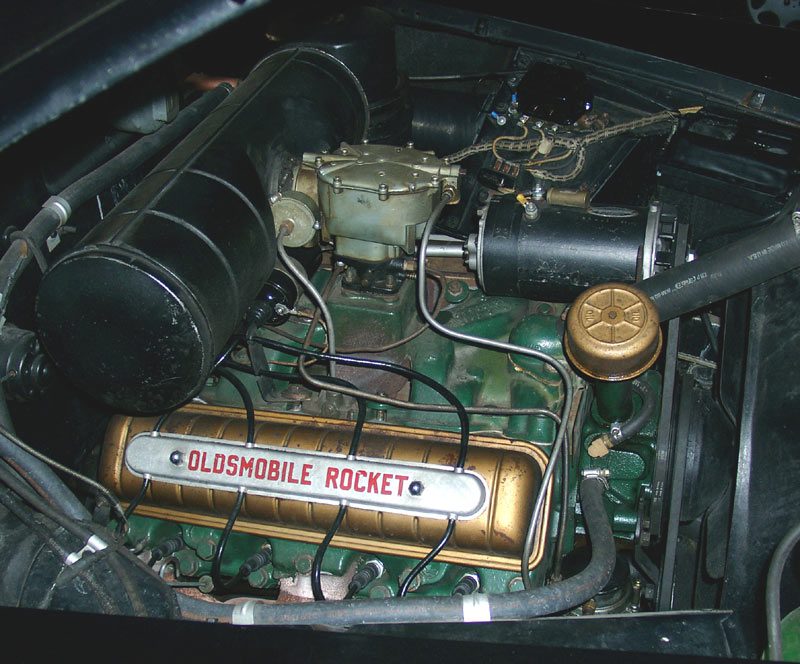
Oldsmobile’s 1949 Rocket V8 was the first mass-produced high-compression overhead valve V8 — delivering 135 horsepower from 303 cubic inches at a time when competitors were producing less than 100 hp from comparable displacement. Hot rodders abandoned their flathead Fords for Rocket V8 swaps at a rate that demonstrated the engine’s immediate competitive superiority. The Rocket’s basic architecture — high compression, overhead valves, short stroke — established the design template that American V8 engines followed for the next several decades, with improvements in materials and fuel delivery rather than fundamental redesign. Every modern V8 configuration traces its engineering lineage through what Oldsmobile introduced in 1949.