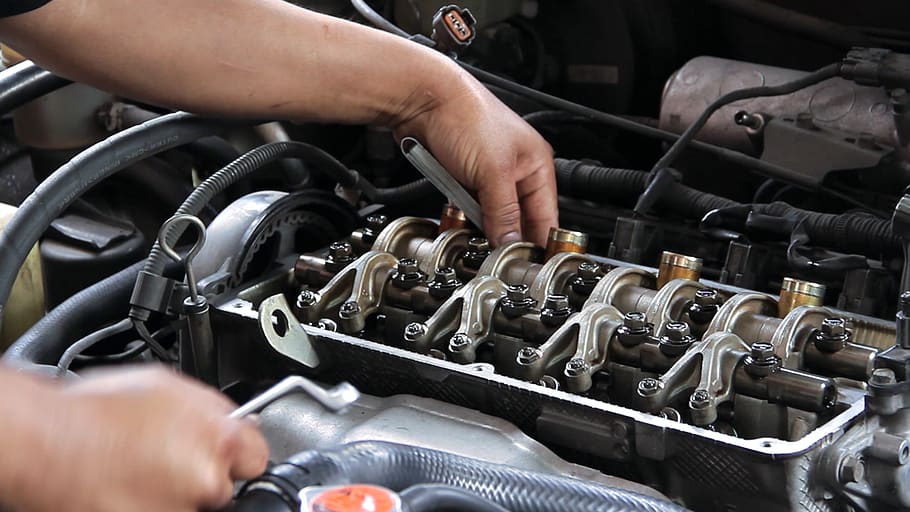


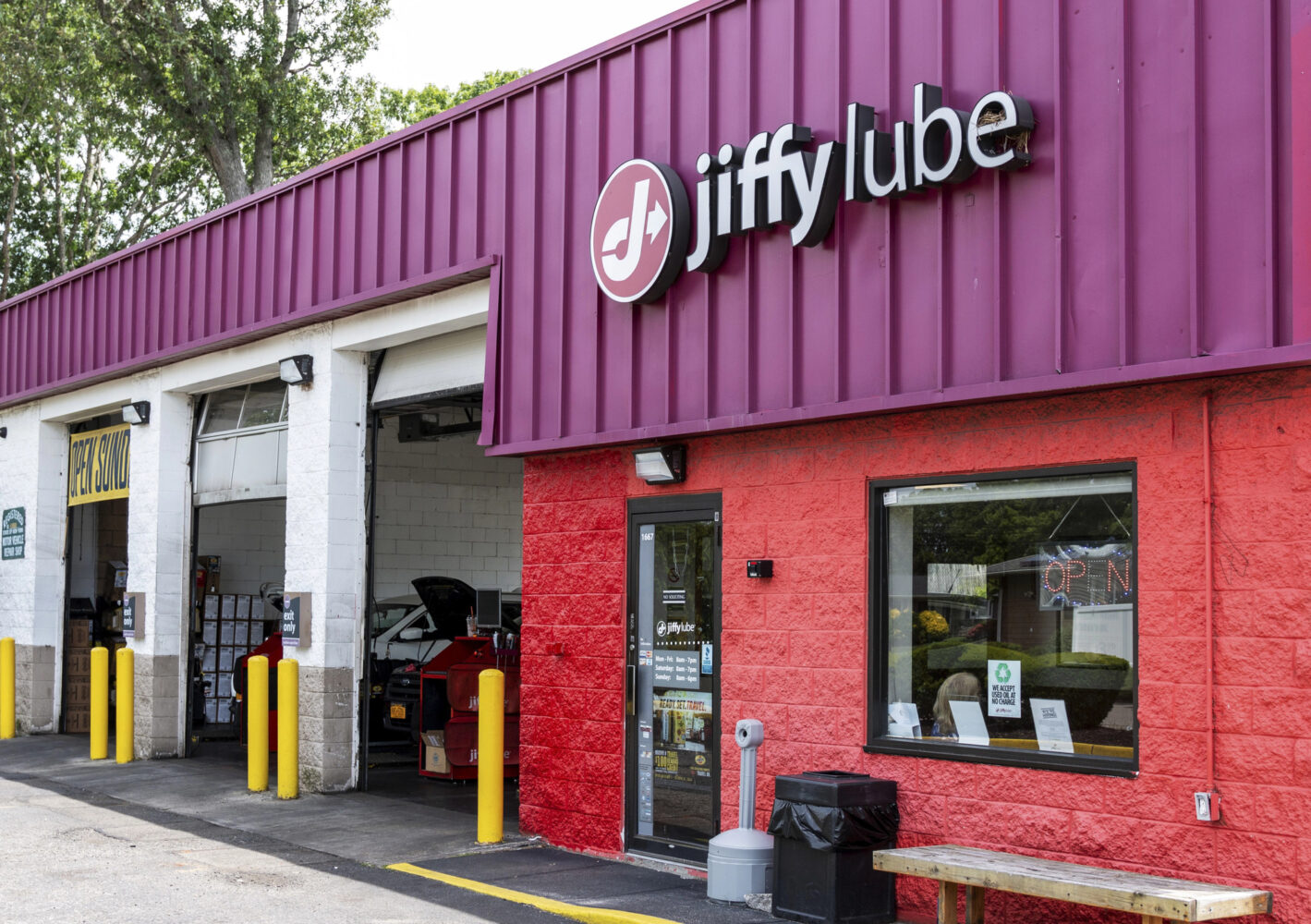
Drivers pull in, hand over their keys, and a short while later they’re back on the road. That’s the value proposition Jiffy Lube has built since pioneering the fast-oil-change category in 1979. Now the chain itself has changed hands — Shell offloaded Jiffy Lube International to private equity firm Monomoy Capital Partners on July 1, 2026, for approximately $1.3 billion. Monomoy didn’t just buy the brand; it also acquired Premium Velocity Auto, a major Jiffy Lube franchisee, giving the new owner simultaneous control over the franchisor and a significant slice of store-level operations.
Shell’s Exit, Monomoy’s Bet
Shell’s divestiture of Jiffy Lube reflects CEO Wael Sawan’s broader push to shed non-core assets and redirect capital toward higher-return opportunities.
Jiffy Lube accounted for roughly 6.5% of Shell’s U.S. and Canada lubricants volume — real business, but clearly not the core Shell wants to build around. Reuters has reported that Sawan’s strategy centers on divesting non-core assets in favor of higher-return opportunities, and Jiffy Lube fit the profile of a sellable asset rather than a strategic priority. The operational split isn’t clean, though. Shell’s Pennzoil Quaker State will continue supplying the chain following the sale, so the two companies remain commercially entangled even as ownership has changed hands. For context on broader industry cost shifts relevant to everyday drivers, data on the affordable new car market helps frame the pressures consumers increasingly face.
By the Numbers:
- Deal announced March 9, 2026; closed July 1, 2026
- Acquisition price: approximately $1.3 billion
- 2,000+ North American service centers
- ~19 million customers served annually
- Includes Premium Velocity Auto franchisee operations
- Jiffy Lube pioneered the fast-oil-change category in 1979
What Stays the Same (For Now)
Forty-seven years of brand identity doesn’t evaporate overnight — but private equity rarely acquires a $1.3 billion network with the intention of leaving it untouched.
On paper, Monomoy is acquiring a franchise-heavy network with recurring demand and relatively straightforward unit economics. Controlling both the franchisor and a major franchisee gives it unusual leverage over pricing, service mix, labor costs, and franchise terms — a lot of dials to turn, depending on the direction it chooses. As of closing, no announced changes have been made to Jiffy Lube’s service model, franchise structure, or its Pennzoil supply relationship with Shell.
Whether Monomoy invests meaningfully in the customer experience or focuses primarily on operational efficiencies is the story still being written. For drivers thinking long-term, cars built to last depend on consistent maintenance — making the direction of service-chain ownership more than an abstract financial question. For now, nothing at the counter has changed — but when the acquisition cost $1.3 billion and private equity ownership of consumer service brands tends to prioritize margin improvement, it’s a question worth watching. Keep your receipt.