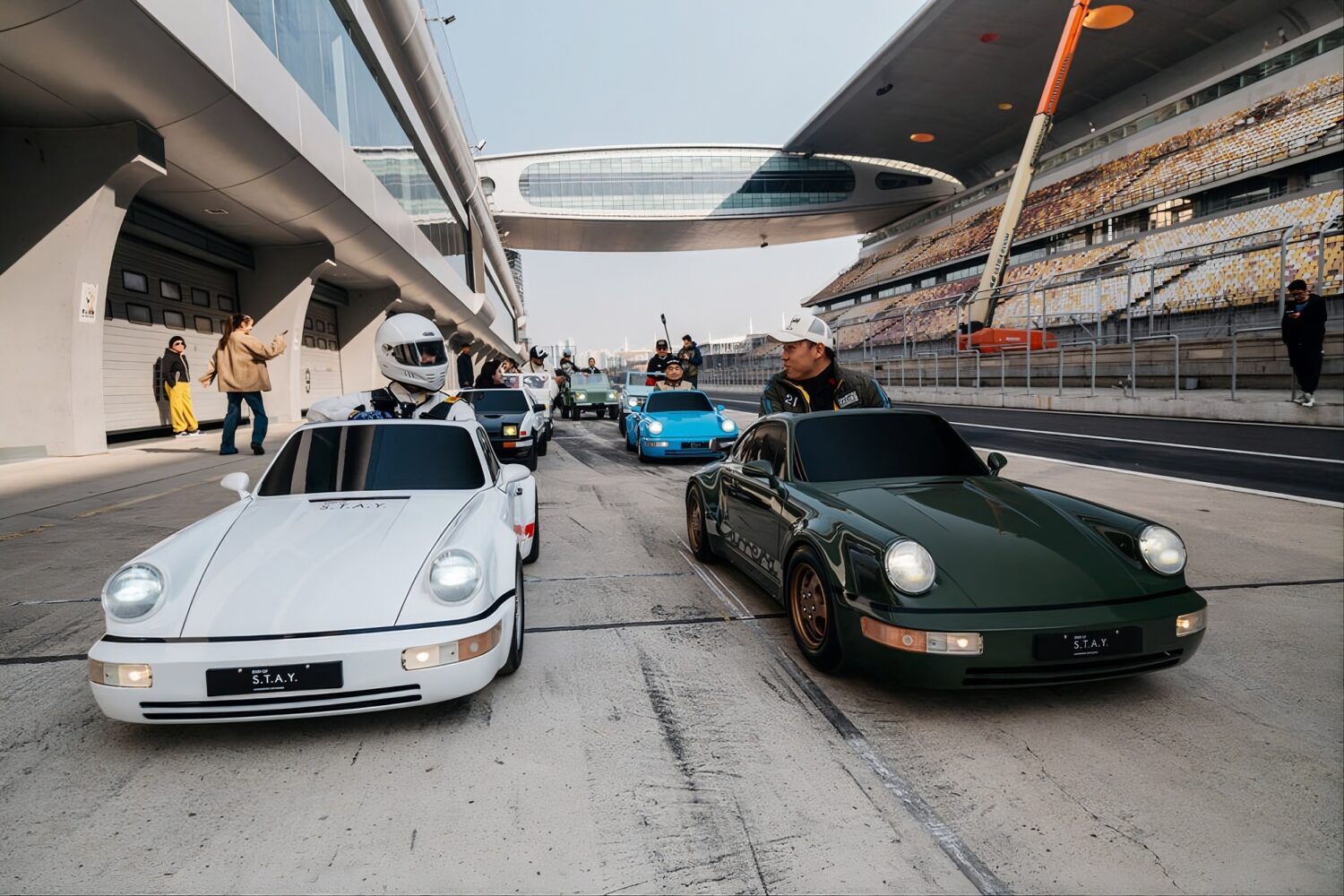


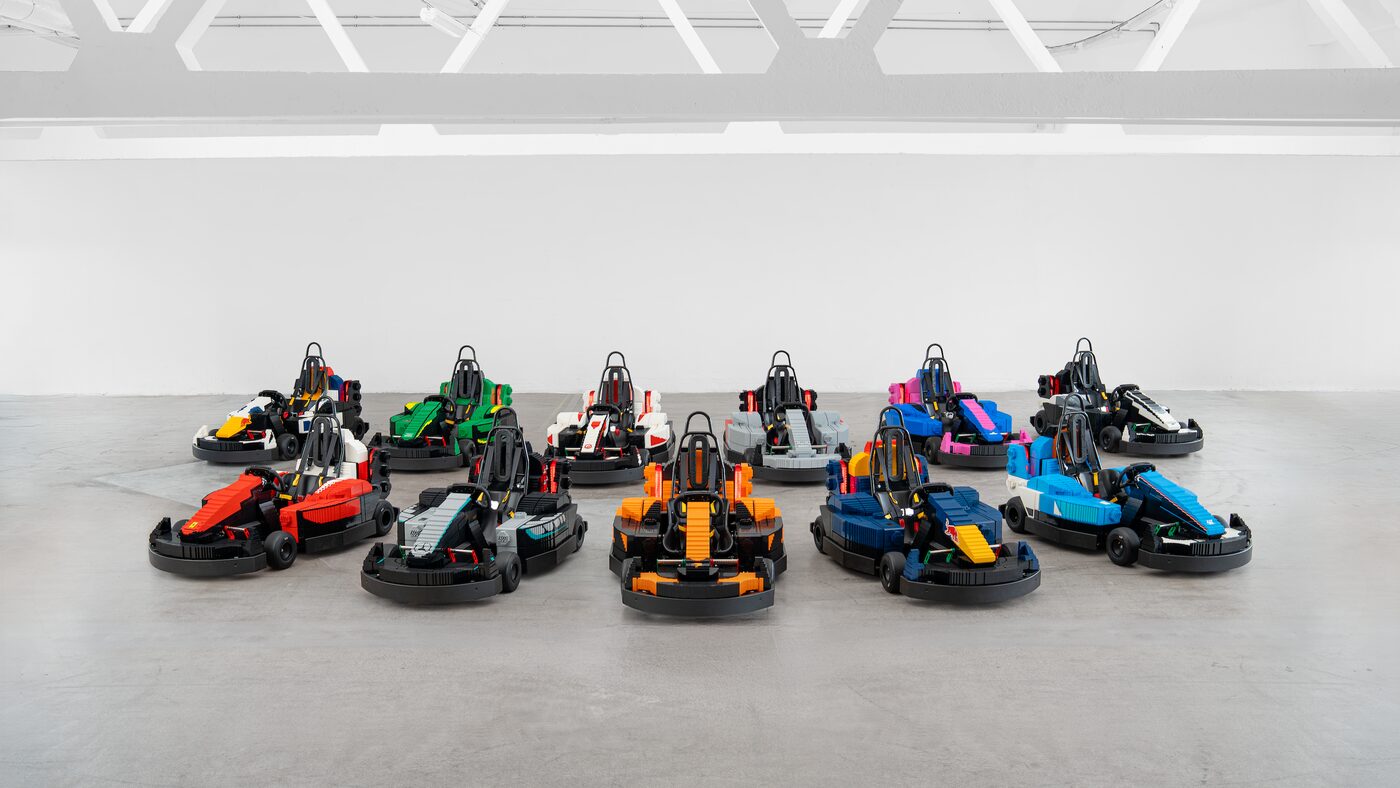
Miami 2025 gave the world ten near-full-scale LEGO F1 cars, two drivers crammed in each, lumbering around at 12.5 mph. Silverstone 2026 answered with 22 individual minicars — one per driver — doing 15.5 mph. More cars. More speed. Nobody sharing. That’s not iteration. That’s a statement. The LEGO–F1 partnership, running since 1998, has quietly evolved from logo placement into something that’s becoming inseparable from race weekend itself.
28,000 Bricks. One Driver. Pure Chaos.
The engineering beneath the spectacle is more serious than the flying bricks suggest.
Two hours before lights-out on race Sunday, the pre-race ceremony now resembles a bumper-car arena more than a ceremonial parade. Each 2026 minicar contains roughly 28,300 LEGO bricks and weighs about 617 pounds total — only 143 of those pounds are actual bricks; the rest is go-kart hardware, electric motors, roll hoops, and plastic bumpers. A team of 20 LEGO specialists at Kladno, Czechia, logged 6,400 combined hours building all 22. Every car wears its driver’s actual 2026 team livery. Builders glue and nail bricks together for durability. Contact still sends pieces skittering across the tarmac. That’s not a flaw. That’s the brief.

The numbers, side by side:
- Miami 2025: 10 cars, ~400,000 bricks each, ~3,306 lbs per car, 12.5 mph top speed
- Silverstone 2026: 22 minicars, ~28,300 bricks each, ~617 lbs per car, 15.5 mph top speed
- 6,400 combined build hours by 20 LEGO specialists in Kladno, Czechia
- Parade streams live on F1’s YouTube, approximately two hours before race start
- LEGO’s F1 product range runs from $12 Speed Champions sets to $220+ Technic models
Why F1 Lets LEGO Own the Pre-Race Moment
The fun is genuine — and so is the strategy behind it.
A LEGO Group spokesperson told Car and Driver: “We were blown away by the excitement generated by the 2025 Formula 1 Miami Drivers’ Parade. So, this year we wanted to go even bigger and better, producing 22 LEGO minicars, one for each driver on the grid.”
Traditional sponsorship puts a logo on a barrier. This puts the product on the actual grid. Those 22 minicars function as a moving retail catalog — LEGO sells Speed Champions sets for $12 and Technic F1 models north of $220, giving fans everything from an impulse buy to a display-worthy build. F1, meanwhile, needs families in seats and kids on screens. Both parties understood the assignment perfectly.
Neither brand has confirmed parade installations beyond Silverstone 2026. But consider the arc: viral Miami moment to full Silverstone expansion in twelve months. Last year’s British GP already featured LEGO brick-built Royal Automobile Club trophies on the podium. LEGO isn’t acting like a sponsor anymore. It’s acting like a fixture in motorsport — and if you’re watching on F1’s YouTube, that fixture now comes with bricks bouncing off tarmac at race speed.
Twenty-two drivers who race at 200 mph for a living, bumping around Silverstone at 15 mph, sending plastic bricks skittering across the asphalt. Sometimes the most honest thing about motorsport is the chaos that happens before the serious part starts.