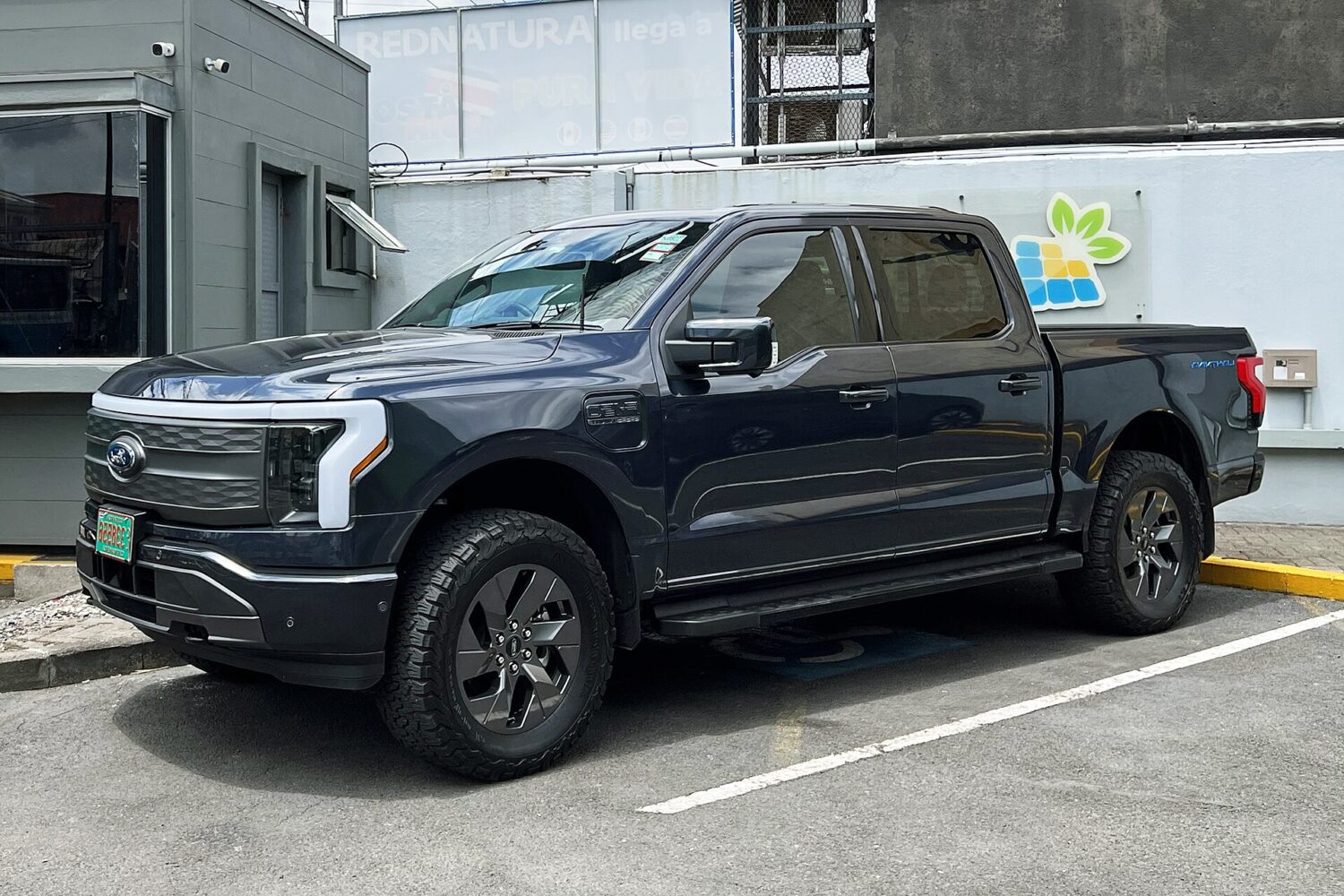


Electric pickup trucks had a disappointing year in 2025, falling 16% to just 90,000 units sold nationwide. That’s a concerning performance in a country where pickups dominate vehicle sales. Ford’s F-150 Lightning led the pack but still dropped 18.5% year-over-year, while Tesla’s Cybertruck plummeted 48% despite all that stainless steel swagger. Now Ford is killing the Lightning entirely—but doubling down on electric trucks with a radically different approach.
When Big Electric Trucks Hit Reality
The Lightning’s decline reveals everything wrong with early electric trucks. Ford promised a $40,000 starting price but delivered a $55,000 reality check. Buyers compared that premium to proven gas F-150s and walked away, especially when the Lightning couldn’t handle core truck duties like long-distance towing without frequent charging stops.
Weight became another problem. These vehicles need massive battery packs just to achieve an acceptable range, making them heavier and less efficient than their gas counterparts. Add reliability problems—the Lightning “struggled with reliability,” according to NPR—and you get expensive trucks that can’t reliably do truck stuff.
Why Electric Trucks Failed:
- Price creep: Lightning jumped from the promised $40K to the actual $55K
- Towing anxiety: Range plummets with heavy loads on highways
- Infrastructure gaps: Rural charging networks can’t support work trucks
- Weight penalties: Massive batteries hurt efficiency and handling
Ford’s Radical Reset Strategy
Ford isn’t abandoning electric trucks—it’s rethinking everything. The next Lightning becomes an Extended-Range Electric Vehicle (EREV) with electric motors but a gasoline generator providing 700+ mile range. Think of it as an EV that never needs charging anxiety, perfect for towing boats to remote lakes or hauling equipment to job sites.
Meanwhile, Ford’s developing a completely new $30,000 midsize electric pickup targeting lighter-duty users. Executive Alan Clarke argues that “big trucks are a tougher market than small trucks” because midsize owners typically tow jet skis, not fifth-wheel RVs. The cabin promises more space than a Toyota RAV4 while undercutting every electric truck competitor by tens of thousands.
Clarke insists this truck must “tug at your heartstrings” and be “good as a product that happens to be an EV.” Translation: Ford learned that green credentials don’t sell trucks—capability and value do.
Ford’s $20 billion writedown on its EV ambitions stings, but this reset could establish sustainable electric truck segments where the Lightning struggled.