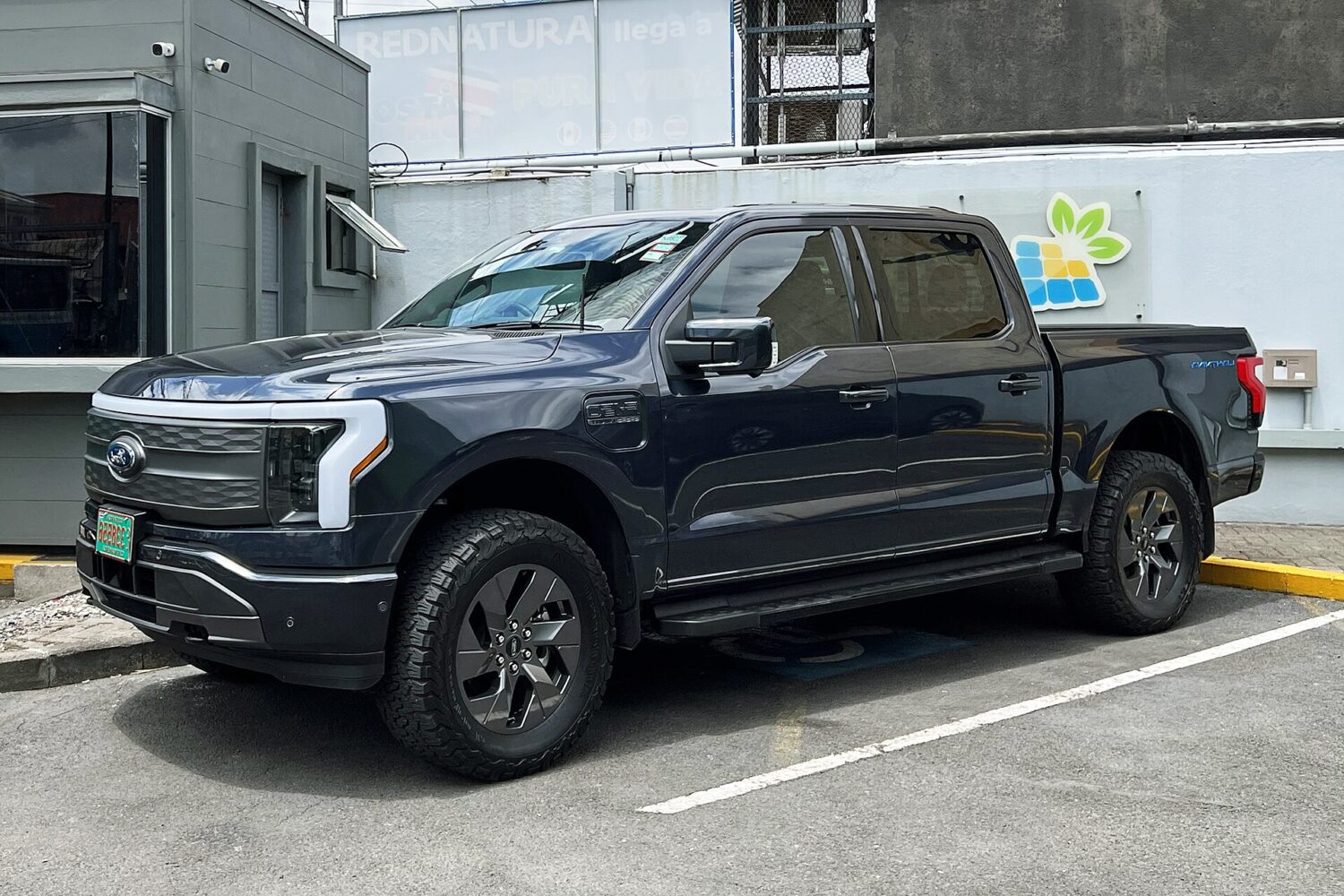



Dead EV batteries during work could kill your business. Ford’s answer arrives in 2027: a midsize electric pickup targeting $30,000 with a300-mile range, designed to make EVs accessible to working families priced out of today’s premium electric trucks.
This isn’t another Silicon Valley experiment. Ford’s skunkworks team in Long Beach, California, is reimagining truck manufacturing from the ground up, using its Universal Electric Vehicle platform to slash costs without sacrificing capability. The approach feels more Henry Ford than tech startup—revolutionary engineering serving everyday drivers.
Manufacturing Revolution Drives Down Costs
Ford’s new assembly method cuts parts by 20% while maintaining truck durability.
The magic happens in massive castings that replace hundreds of individual components. Ford’s UEV platform starts with large aluminum castings for front and rear sections, bolted to a battery pack that becomes the truck’s structural floor. A “top hat” body drops onto this rolling chassis, eliminating traditional frame construction.
This manufacturing overhaul reduces parts by 20%, fasteners by 25%, and assembly stations by 40%. Production speeds increase 15-40% compared to traditional methods. The truck maintains familiar pickup proportions—vertical cab, horizontal bed sides, reminiscent of the beloved 2004 F-150—while hiding radical engineering underneath.
Key Features:
- Cobalt-free lithium-iron-phosphate battery integrated as a structural floor
- 0-60 mph in 5.6 seconds (matching Mustang EcoBoost performance)
- BlueCruise hands-free driving with over-the-air updates
- Midsize dimensions similar to the Ford Maverick, with a longer cab, wider doors
Taking Aim at Chinese Competition
Ford targets mass-market buyers before affordable international EVs reach American roads.
The timing isn’t coincidental. Ford’s Long Beach facility recruited talent from Tesla, Rivian, and Lucid to ensure its affordable truck delivers premium features at Maverick pricing.
The development center opened specifically for this project, emphasizing repairability with “cutlines” in major castings and 48-volt systems that reduce wiring by 4,000 feet compared to previous EVs.
Whether Ford hits that $30K target remains the trillion-dollar question. But if they succeed, this truck could finally make electric pickups accessible to contractors, small business owners, and families who need capable, affordable EVs for real work.