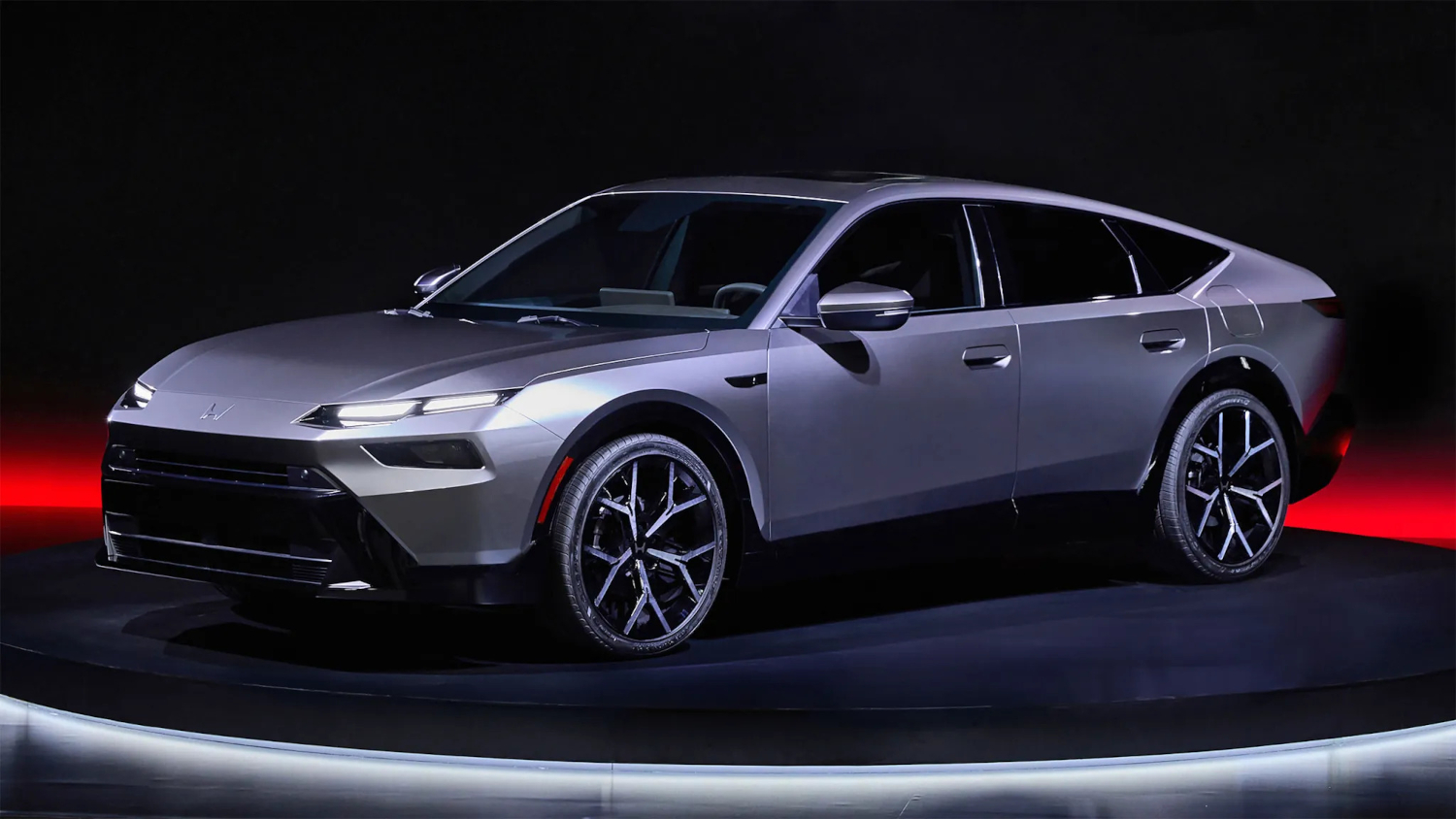


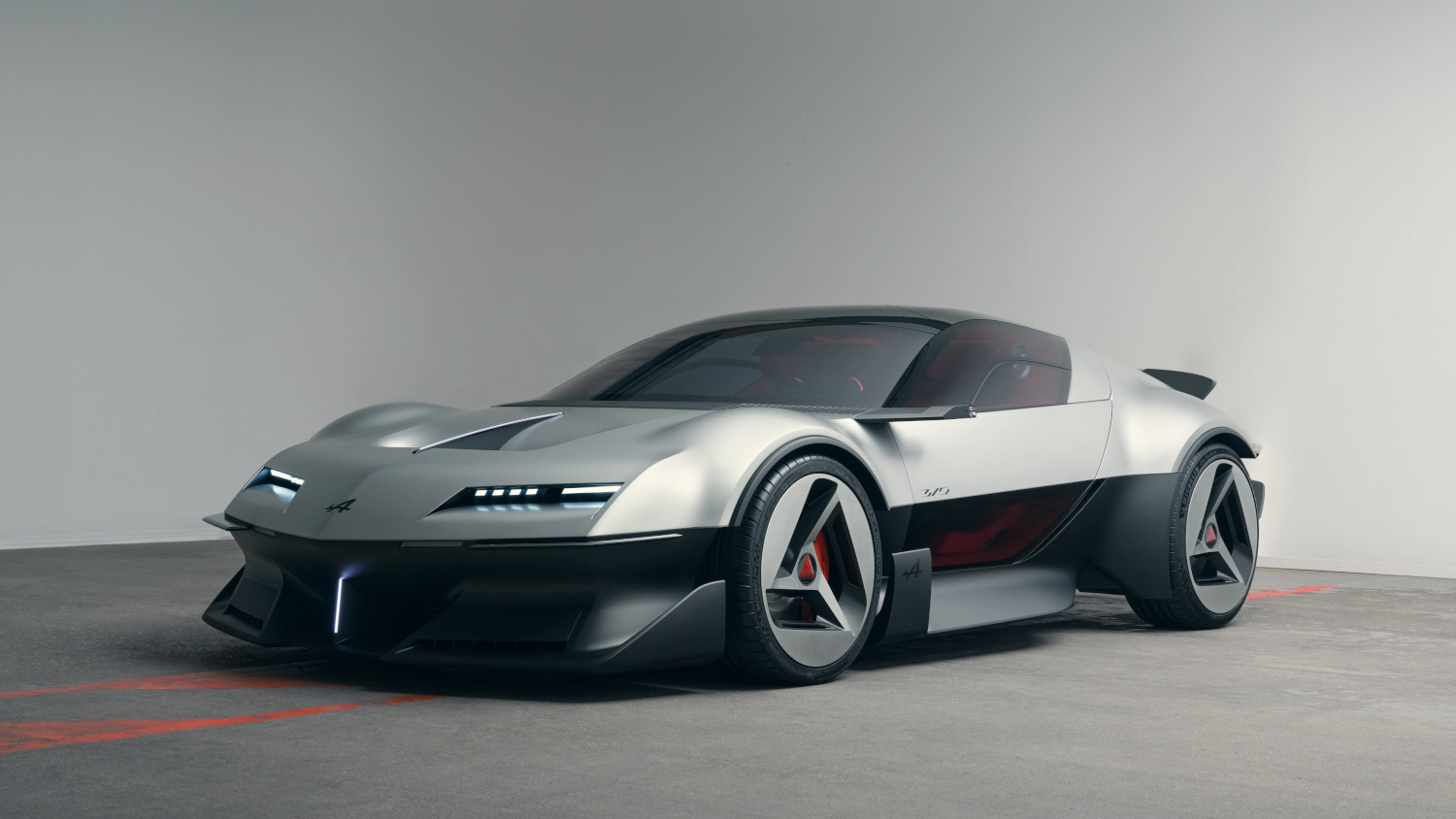
The headlights don’t pop up. They fold down. When the Alpine A310 Vision activates, slim lamp strips descend into position — equal parts theater and flex. It’s the first thing you notice about this low-slung electric concept, and probably the last thing you’d expect from a brand whose entire identity rests on keeping things light and simple. Alpine dropped this car into Paris without a horsepower figure, a range estimate, or a zero-to-60 claim — just shape, stance, and one very good lighting trick. Fans of cars coming to market in this era will find the timing significant.
From 1971’s Practical GT to a Cyberpunk Wedge
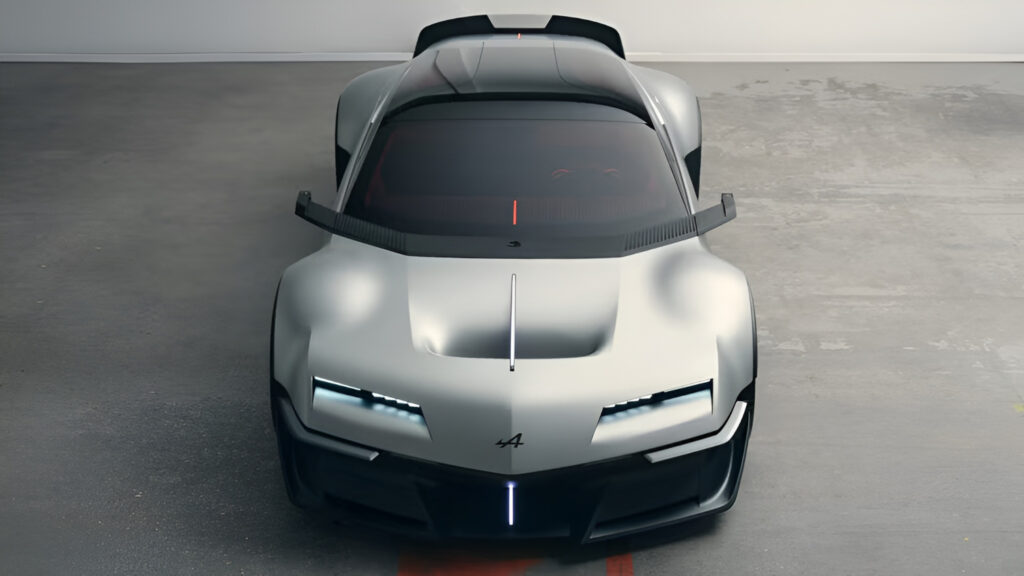
The original A310 was the A110’s roomier sibling — a 2+2 that gained a V6 in 1976 — and the Vision concept keeps the wedge silhouette while ditching everything else.
Where the A110 earned its reputation as a featherweight driver’s car, the A310 was the more livable choice — longer, wider, built for those who needed occasional rear seats. The original A310 gained a V6 in 1976, cementing its GT credentials. The Vision concept strips that practicality entirely. Two seats only. Official dimensions clock in at approximately 179 inches long, 46 inches tall, and 80 inches wide at the rear — a stance so low and broad it barely seems road-legal.
Notable exterior details include:
- Pronounced wheel arches
- An S-duct cut into the hood
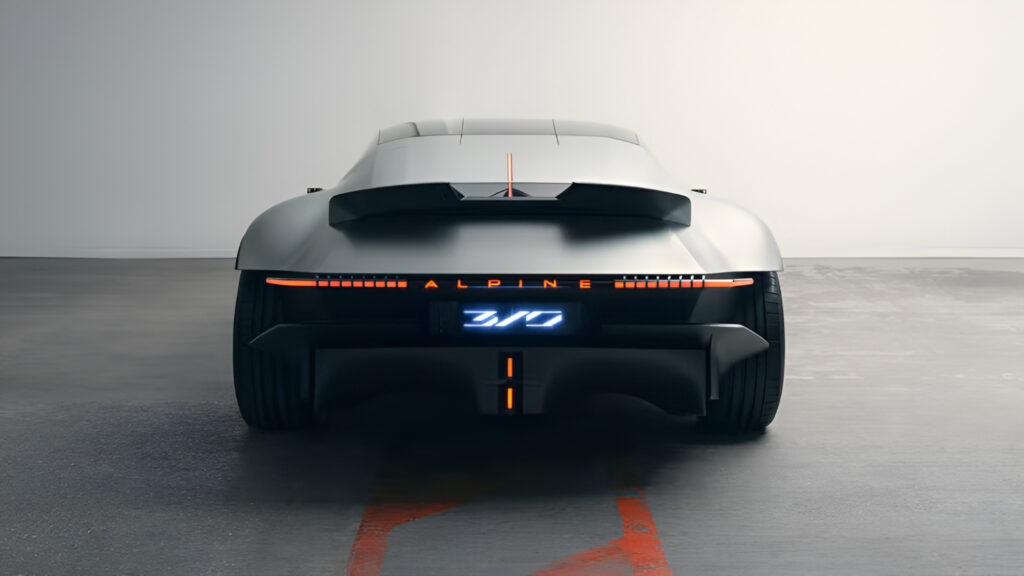
- Blade-style rear lighting
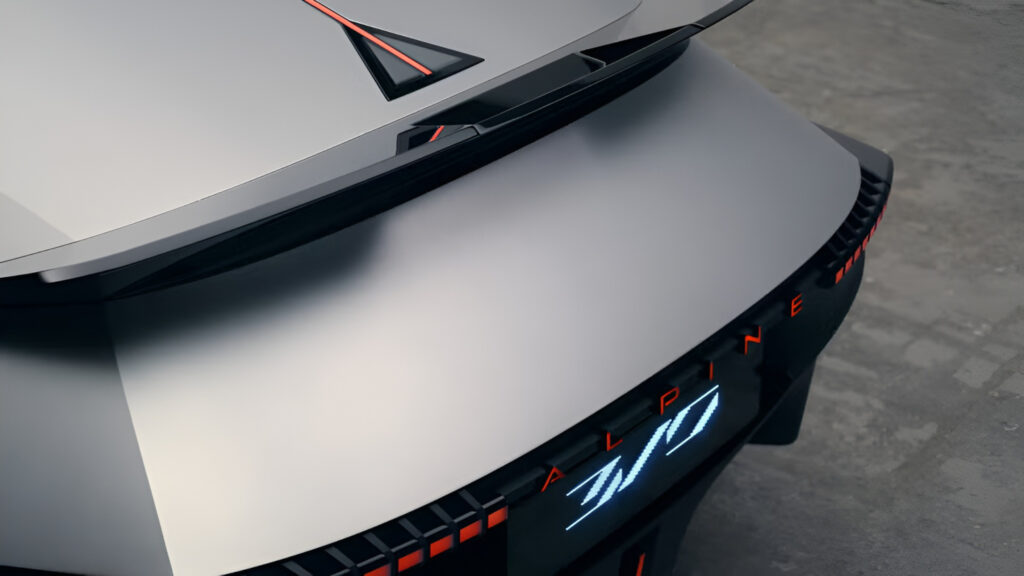
- A split rear wing with a transparent center section
The aesthetic lands somewhere between a 1976 Geneva show car and a Blade Runner prop — which, depending on your tolerance for maximalism, is either thrilling or exhausting.
A Platform With Potential, a Production Status That Remains Murky
If the A310 Vision ever reaches a showroom, the foundation will likely already be proven — Alpine’s Performance Platform supports variable wheelbase, battery layout, and powertrain configurations.
That modular flexibility is precisely how one architecture can credibly underpin both a compact A110 replacement and something as dramatic as this. Alpine has confirmed that the same platform also underpins the Renault 5 Turbo 3E, which produces more than 500 horsepower in that application — though no equivalent figures have been released for the A310 Vision itself. Alpine design chief Antony Villain has suggested, according to Car and Driver, that the platform’s flexibility could make a limited-production special project possible. That’s a long way from a green light. Alpine’s own release describes the car as a one-off design study, not a production announcement.
U.S. availability remains unclear. Alpine has reportedly discussed entering the American market before 2030, though tariffs and softer EV demand have clouded those plans. No U.S. launch has been confirmed for the A310 Vision.
Until Alpine publishes numbers and a production decision, this concept occupies familiar concept-car limbo — either the boldest design statement the brand has made in decades, or an extremely photogenic mood board. Both outcomes are possible. Only one actually puts cars in driveways.