

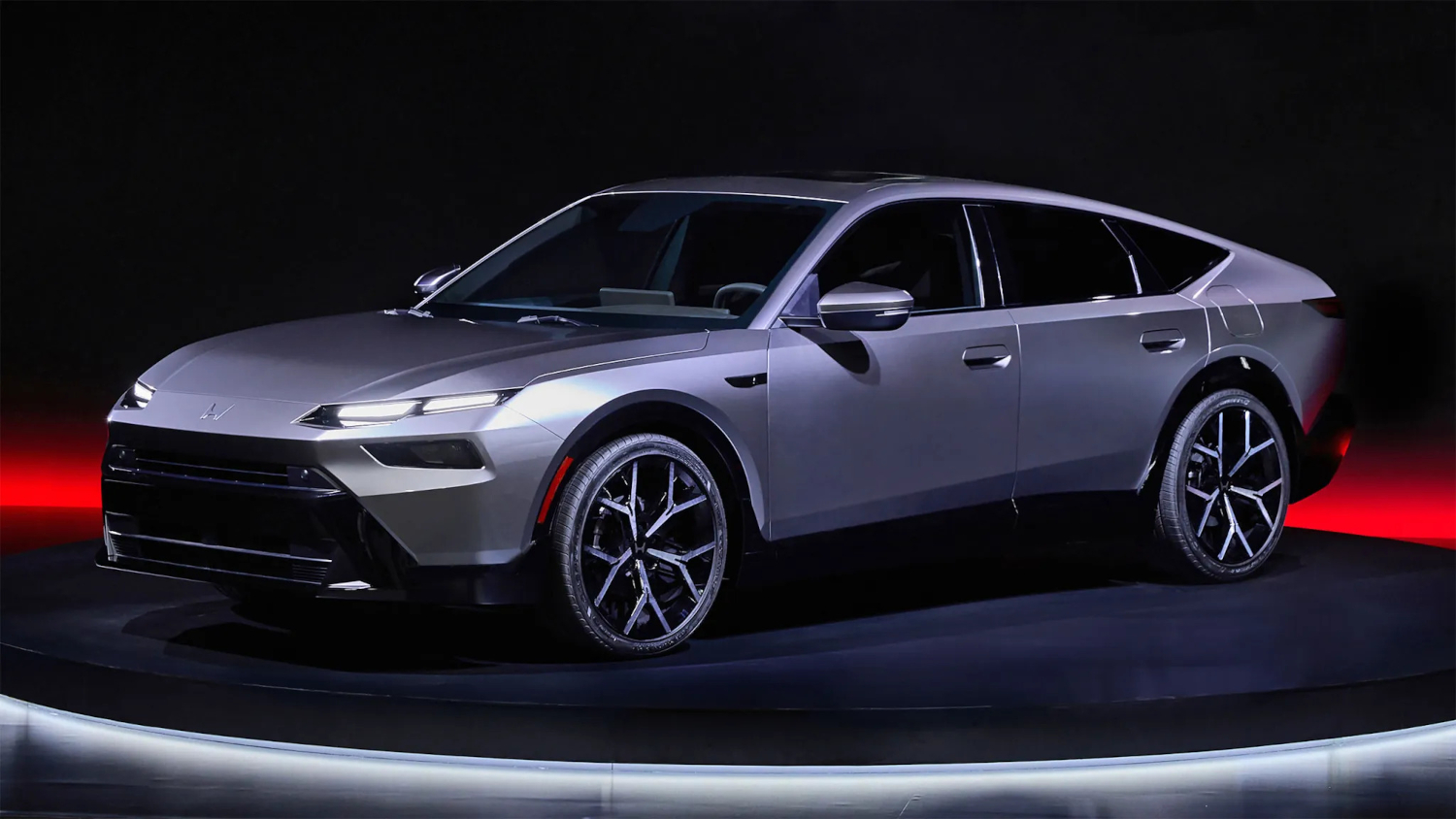
For buyers who have been watching Honda’s EV roadmap, the timeline just got significantly murkier. After absorbing a confirmed $1.7 billion write-down tied to its canceled 0 Series program — and what The Drive projects as up to $15 billion in broader EV-related losses — Honda announced on October 9, 2026, that it will deploy a new “Honda Hybrid” system across 15 global models by March 31, 2030, with North America as the primary target. The company framed the shift not as a retreat but as a deliberate reorientation — positioning hybrids as the primary path forward rather than a bridge it intends to cross quickly and forget.
What “Honda Hybrid” Actually Means
Honda’s renamed hybrid system brings meaningful efficiency gains and new all-wheel-drive capability — though the full model list remains unconfirmed.
The new system is an evolution of Honda’s existing two-motor e:HEV architecture, replacing the role of a conventional automatic transmission with a dual-motor hybrid setup. Honda’s official business briefing says the next-generation design aims to improve fuel economy by more than 10% while reducing hybrid system cost by more than 30% — two targets the company is treating as equally important to the rollout’s commercial success.
Honda is also developing a new electric all-wheel-drive system aimed at larger SUV applications, per Car and Driver and Honda’s own technical briefings. Global introduction begins in 2027 — among the worth waiting for additions to the broader new-car pipeline. Honda has not released a complete model-by-model list, but reporting from KBB cites vehicles like the CR-V, Pilot, Passport, Odyssey, and Ridgeline as potential candidates — none of which Honda has officially confirmed.
What’s confirmed versus what’s reported:
- 15 global models by March 31, 2030 — most aimed at North America (Honda official announcement, Oct. 9, 2026)
- System launches globally in 2027
- Fuel economy improvement of more than 10%; hybrid system cost reduction of more than 30% (Honda business briefing)
- Electric AWD system in development for larger SUV applications (Honda; Car and Driver)
- CR-V, Pilot, Passport, Odyssey, and Ridgeline cited in reporting as candidates — Honda has not confirmed the full list
The EV Reversal, Without Spin
Honda’s pivot away from its 0 Series EV program is a financial reality, not a rebranding exercise.
Honda described the strategy as an effort to “strengthen its automotive business” — a corporate framing that understates the scale of what changed. Much of the 0 Series EV program has been canceled, and the financial damage is documented: a confirmed $1.7 billion write-down, with The Drive projecting total EV-related costs reaching as much as $15 billion when broader projected losses from the canceled program are included. Those figures should not be read as a single finalized accounting total, but the direction is clear. Honda hasn’t eliminated EV development entirely — some activity continues — though the near-term emphasis has shifted decisively toward hybrids.
The Questions Honda Hasn’t Answered Yet
The 15-model target is confirmed; nearly everything else about it remains open.
Fifteen models is an ambitious commitment, and Honda has been transparent about what it has not yet disclosed: specific vehicles, pricing, battery specifications, and production locations all remain unconfirmed. Large-size North American hybrid models are planned, but the exact U.S. SUV lineup and launch schedule have not been published. The first vehicles are expected from 2027 onward — and whether North American buyers embrace the expanded hybrid lineup at the scale Honda is counting on is the question that plays out from there. Data on the fastest-selling cars in the U.S. market today underscores just how much Honda is betting on that answer being yes.