

Agents had the paperwork. A federal judge signed off the same day the application landed. Then they got to the car — and the car’s own vehicle security protocols were already active.
Court documents reviewed by 404 Media reveal that Homeland Security Investigations sought authorization in October 2025 to place a tracker on a white Tesla connected to Milwaukee landlord Sam Stair, whom investigators suspected of ties to a drug-trafficking organization. The warrant — a 60-plus-page application filed on Halloween — was approved that same day. A later court filing recorded the outcome in eight words: “Search warrant not executed due to security protocols active on Tesla.”
What the Warrant Was After
HSI had monitored Stair for months before seeking judicial authorization to track his vehicle’s movements.
Agents wanted geographic intelligence: map destinations linked to the alleged trafficking network, identify additional participants, and locate possible supply sources. The target vehicle was associated with Stair and his S2 Real Estate business.
Key facts from the court record:
- Warrant filed October 31, 2025; approved the same day
- Target: white Tesla associated with Stair and S2 Real Estate
- Goal: geographic intelligence on an alleged trafficking operation
- Court filing later confirmed: warrant not executed due to active vehicle security protocols
- The specific Tesla feature involved remains unconfirmed in available documents
“Search warrant not executed due to security protocols active on Tesla.” — court filing, as reported by 404 Media
What the Car May Have Been Doing
Tesla’s Sentry Mode is a consumer security feature — though its capabilities create real friction for covert physical surveillance.
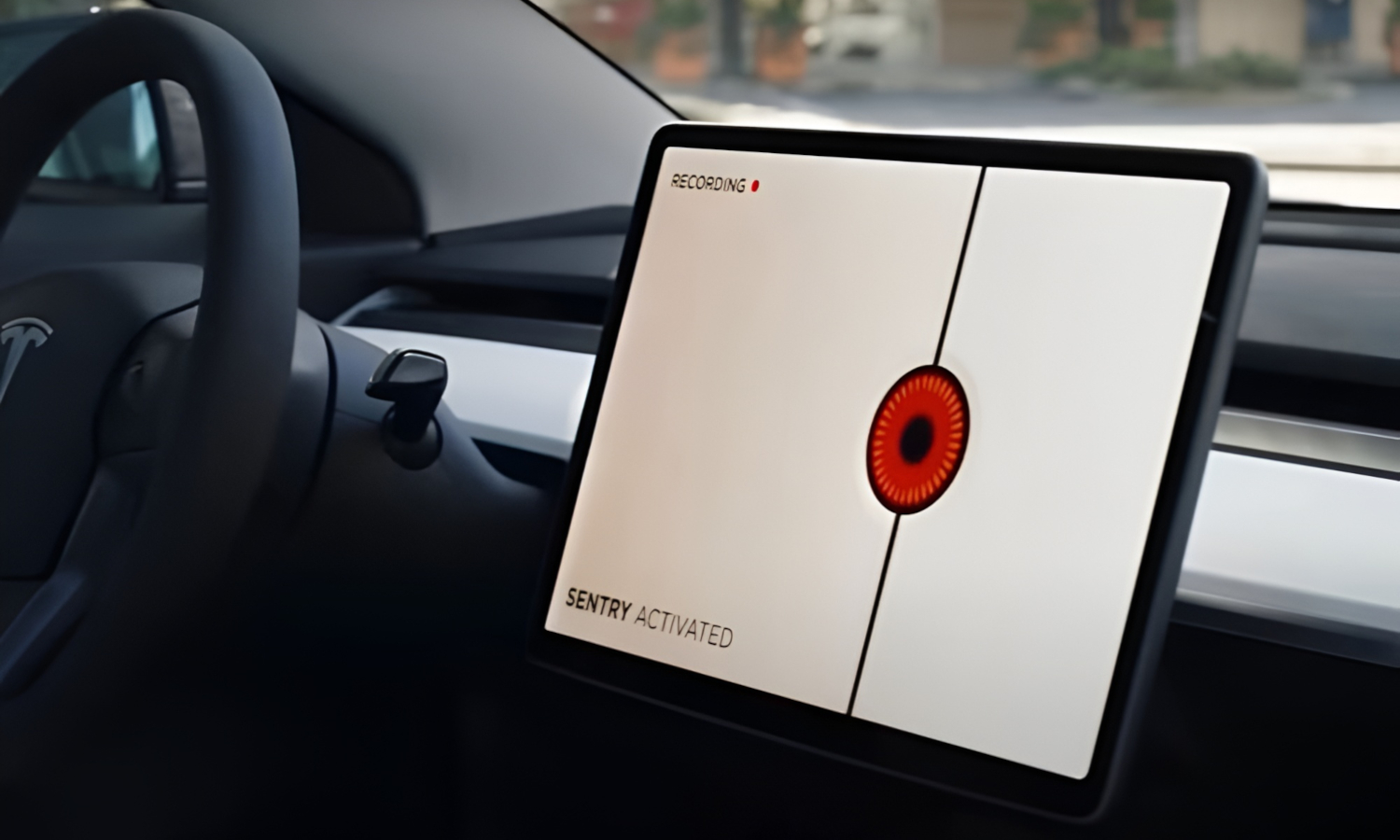
Sentry Mode is marketed and documented as a vehicle-security and recording feature, not as a law-enforcement countermeasure. When active on a locked, parked Tesla, it reportedly uses exterior cameras and sensors to detect nearby activity. Depending on what it registers, it can:
- pulse the headlights
- trigger an alarm
- display a recording warning on the touchscreen
- save footage to a USB drive
- send an alert to the owner’s phone app
Tesla’s documentation also describes a Live Camera function that may allow owners to view the area around a parked vehicle through the mobile app, subject to hardware, software, connectivity, and regional requirements.
Whether Sentry Mode specifically prevented the installation remains unconfirmed. The court documents do not name it. That identification comes from 404 Media’s reporting as a possibility — not an established fact.
The Case Didn’t End There
The broader investigation continued well past the failed tracker attempt, culminating in a sweeping federal indictment.
A federal grand jury indicted 18 defendants in May 2026, including Stair on six counts — among them drug-house and controlled-substance conspiracy charges. Prosecutors reported seizures of fentanyl, cocaine, cocaine base, methamphetamine, firearms, cash, securities, and vehicles across Milwaukee and Chicago. These are prosecutorial allegations. No findings of guilt have been made.
The specific security protocol that stopped the agents has not been confirmed in available documents. Somewhere between a signed warrant and a car whose security protocols were reportedly active sits an unresolved question: what does your vehicle know, what does it record, and who does it tell first?