

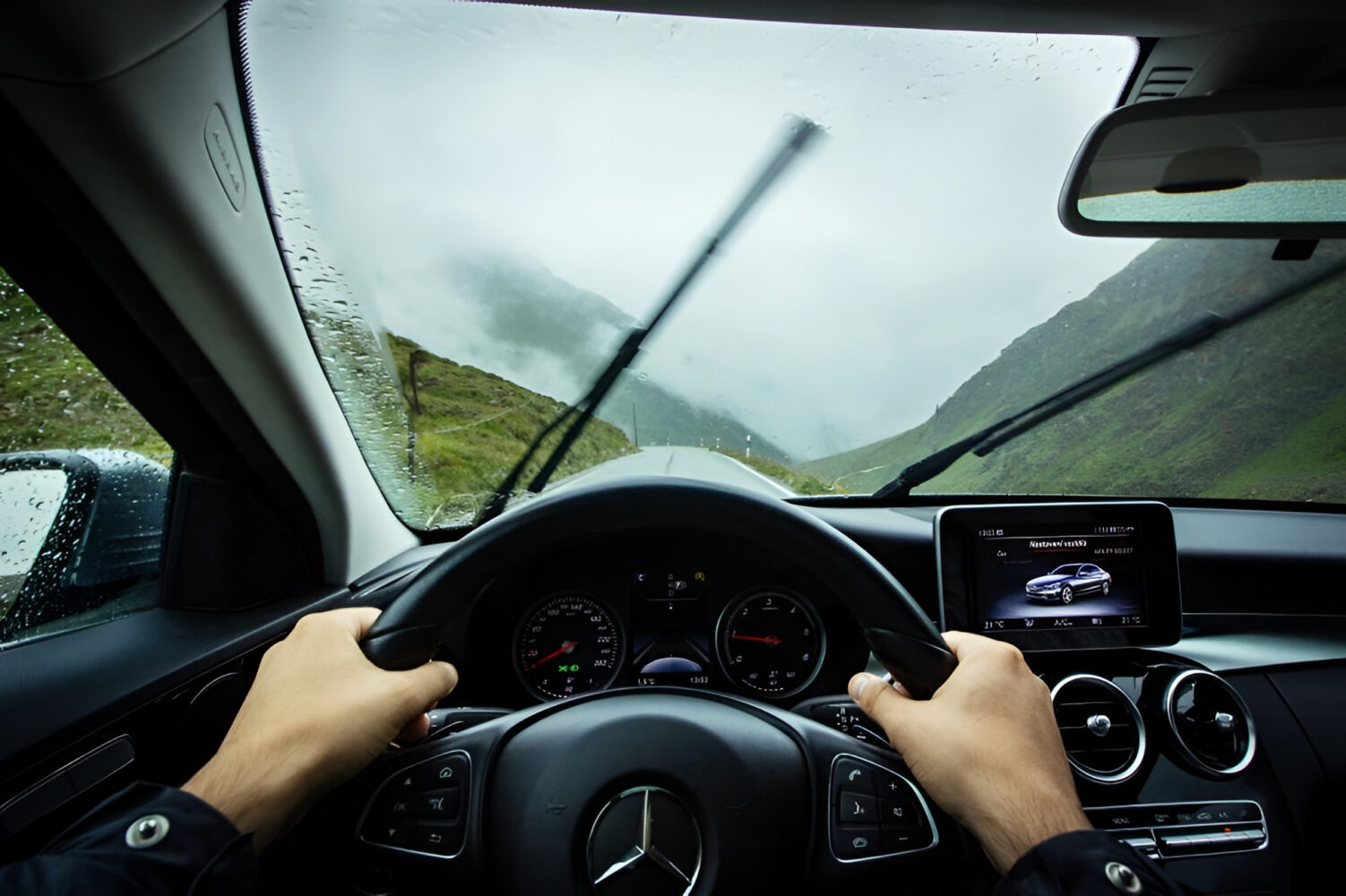
Getting pulled over for something you didn’t know was illegal feels worse than stepping on a Lego barefoot. Yet across America, drivers rack up fines for forgetting one simple rule: when your wipers are on, your headlights better be too. This “wipers on, lights on” law exists in more than half of US states, but the specifics vary wildly—and ignorance won’t save you from that citation.
The confusion stems from state-by-state variations that would make tax code writers jealous. Some states require headlights after just two wiper cycles per minute. Others demand low beams specifically, not just those wimpy daytime running lights your car automatically flips on.
The Patchwork of State Requirements Creates Compliance Headaches
Twenty-three to forty-two states explicitly tie headlight use to windshield wiper operation during precipitation.
States with confirmed “wipers on, lights on” laws include heavy hitters like California, New York, and Pennsylvania—plus Alabama, Arkansas, Delaware, Illinois, Kansas, Kentucky, Louisiana, Maine, Maryland, Massachusetts, Missouri, Nebraska, New Jersey, North Carolina, Ohio, Oklahoma, Rhode Island, South Carolina, Tennessee, and Virginia.
But here’s where it gets messy: additional states like Florida, Georgia, Michigan, Texas, and Washington require headlights during “reduced visibility” or “inclement weather” without explicitly mentioning wipers. You’ll still get tagged if caught driving through a downpour with lights off, but the legal language differs.
- Continuous vs. intermittent: Some states define “continuous” as more than two wiper cycles per minute
- Low beams required: New York specifically mandates low beams, not just daytime running lights
- Visibility thresholds: Requirements kick in when visibility drops below 200-1000 feet, depending on location
- Notable exceptions: According to automotive safety experts, Colorado doesn’t require headlights in rain alone; New Mexico only requires them when visibility drops below 500 feet
Enforcement Varies, But Fines Are Real Across State Lines
Cross-state travelers face the biggest compliance risks due to inconsistent regulations.
The enforcement reality depends heavily on local conditions and officer discretion. Pennsylvania covers intermittent wiper use in their law, while other states focus on sustained precipitation. Some jurisdictions use these violations as secondary offenses during traffic stops, while others actively patrol for compliance during storms.
Road trippers and professional drivers face the steepest learning curve. What’s legal in Colorado might earn you a citation in Kansas. The safest approach? Default to lights-on whenever precipitation hits your windshield, regardless of state. Modern cars make this painless with automatic headlight systems, but older vehicles require manual attention.
Your best defense against surprise tickets remains simple: when water hits the glass and wipers start moving, flip those headlights on. It’s cheaper than explaining to your insurance company why your rates just jumped.