

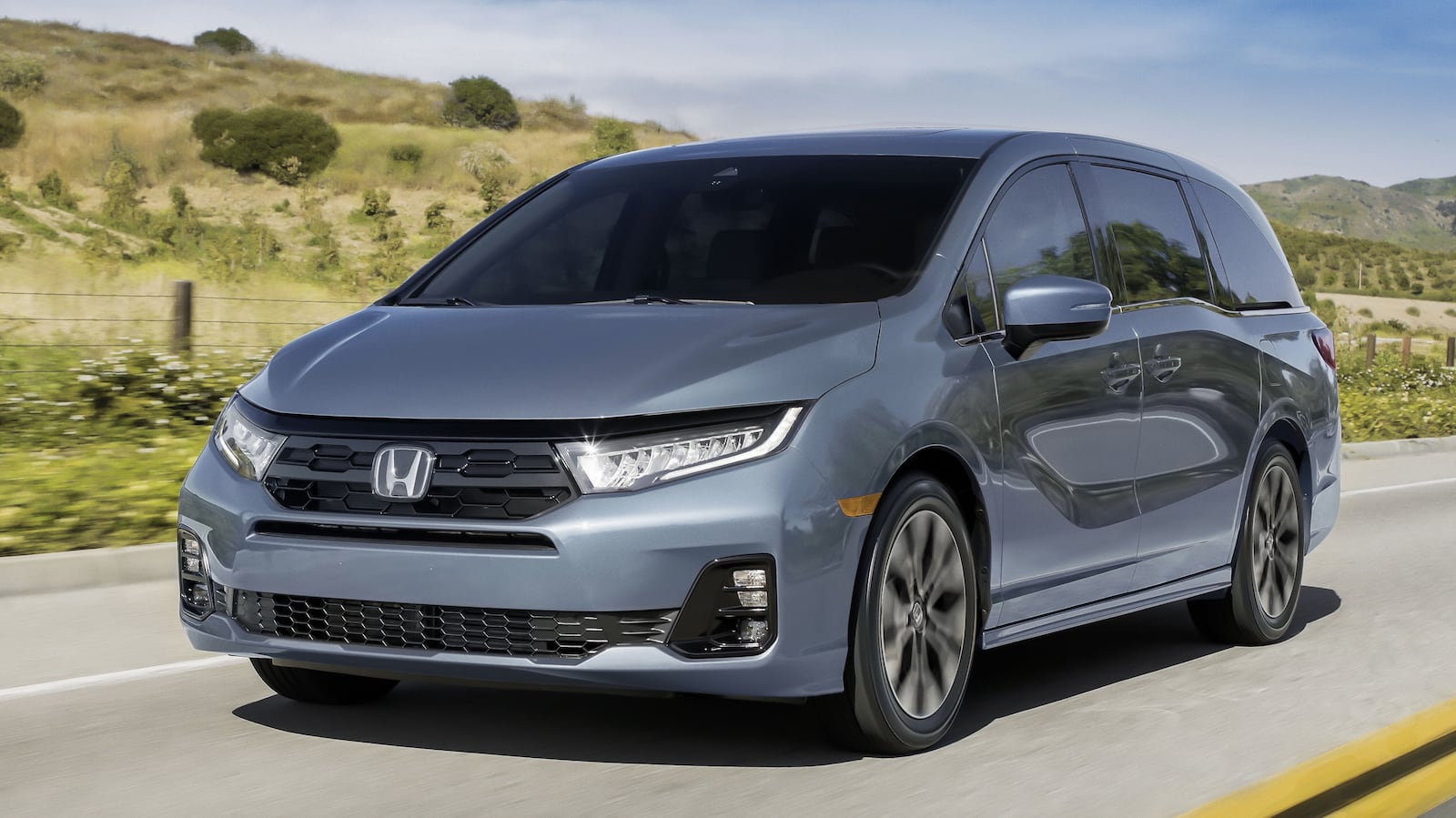
A $15.8 billion loss from canceled electric vehicles just reshaped Honda’s playbook. Rather than rush replacement models to market, the automaker is extending production of five current-generation vehicles well into the 2030s while prioritizing hybrid development.
The strategy affects some of Honda’s most popular models. A supplier memo reviewed by Automotive News reveals the Odyssey minivan will continue until at least spring 2030, making it 13 years old. The gas-powered Accord gets extended through March 2030, with hybrid-only versions likely following. The HR-V compact SUV and Acura’s Integra sedan both stretch to early 2032, while the MDX luxury SUV continues until early 2031.
Extended Lifespans
Honda’s decision makes financial sense after canceling three planned EVs: the 0-series SUV, 0-series Saloon, and Acura RSX, which cost billions in Ohio facility retooling. The move keeps proven vehicles in production while the company develops advanced hybrid powertrains.
Extended production timeline:
- Odyssey: Spring 2030 (13 years total, sales up 10% in 2025)
- Accord: March 2030 for gas version, hybrid transition following
- HR-V and Integra: Early 2032 (15+ year runs)
- Acura MDX: Early 2031
- RDX: Unaffected, next-generation timing not yet announced
Hybrid Pivot
Honda is prioritizing hybrid development as pure EV adoption stalls. The company plans 13 new hybrid models starting in 2027, targeting 2.2 million hybrid sales by 2030. This mirrors Toyota’s successful strategy—the Camry went hybrid-only and dominated midsize sedan sales.
The centerpiece is a new hybrid V6 engine arriving in 2027 for larger models like the Pilot, Odyssey, and Ridgeline pickup. Honda promises 30% better fuel economy and 10% faster acceleration compared to the current 3.5-liter V6. The Accord will likely follow Toyota’s hybrid-only path for its next generation.
This strategy keeps Honda competitive while avoiding the EV infrastructure headaches plaguing competitors. Extended production runs improve parts availability, which may support resale values when combined with good maintenance records. Hybrids eliminate range-anxiety concerns tied to EV charging infrastructure limitations while offering improved fuel efficiency.