

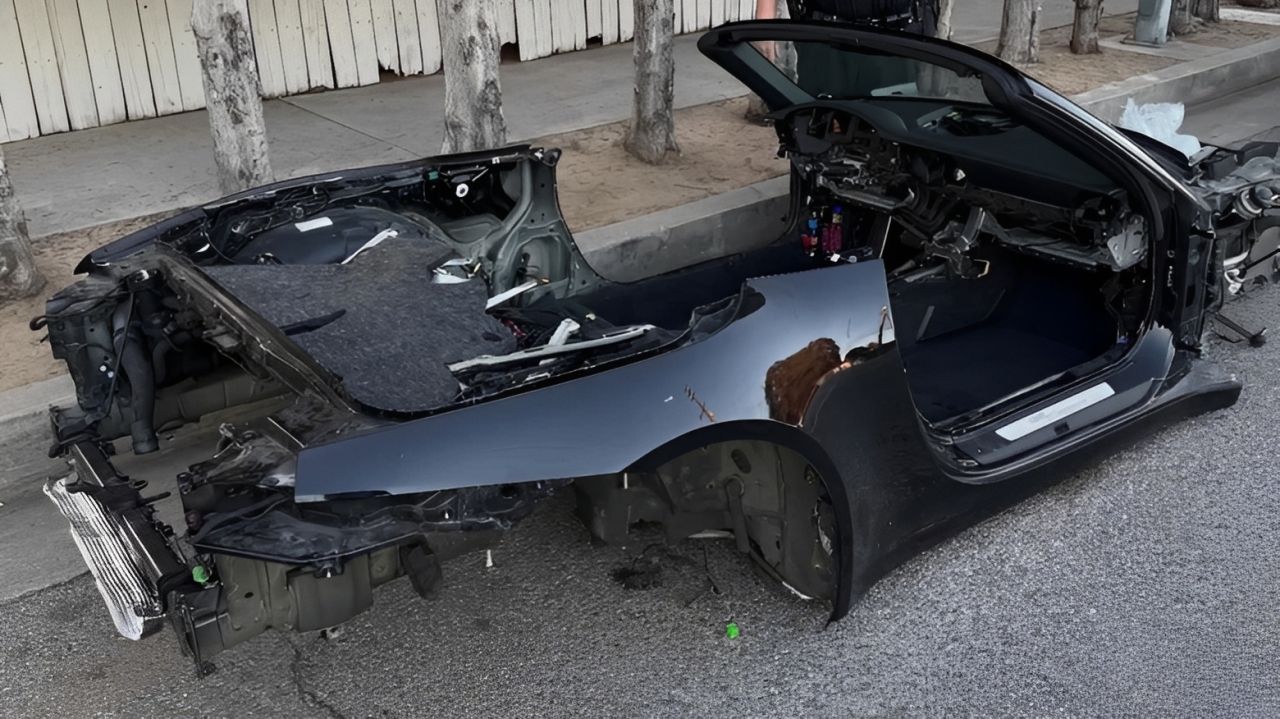
Professional thieves didn’t just steal a Porsche 911—they performed automotive surgery. LAPD Central Traffic Division officers discovered what remained of a black 992-generation Carrera Cabriolet on a Los Angeles street last week: a bare unibody shell stripped with surgical precision. Everything removable had vanished.
The thoroughness of the operation reveals this wasn’t amateur hour. These thieves understood exactly what they were taking and how much each component would fetch on underground markets.
The Anatomy of Professional Theft
Thieves left only the VIN-bearing chassis and some basic wiring behind.
The missing inventory reads like a Porsche parts catalog. Gone were:
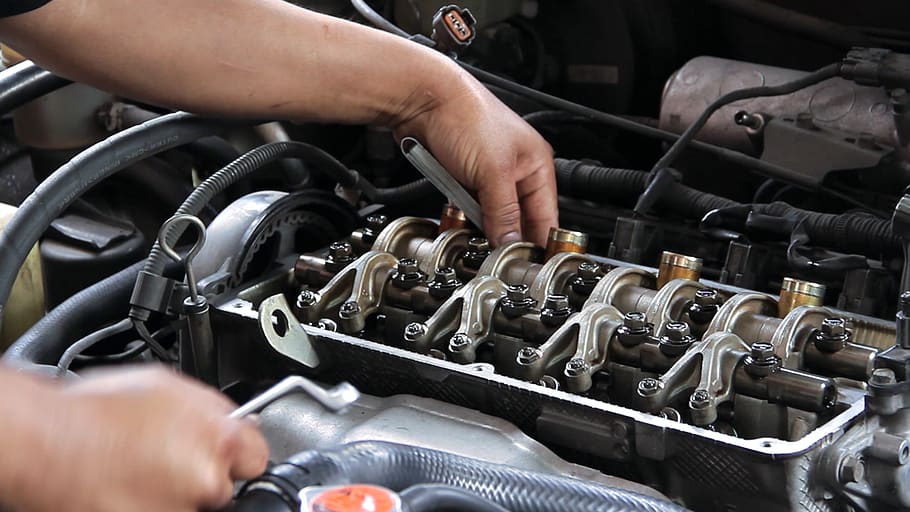
- The flat-six engine
- PDK transaxle
- All four wheels
- Suspension components
- Bumpers, lights, doors, hood, fenders
- The retractable roof mechanism
Inside, nothing survived—seats, steering wheel, dashboard, center console, audio system, even the airbags.
What remained resembled an automotive skeleton: the unibody shell, scattered wiring harnesses, a fuse box, and pedal assembly. The precision suggests thieves who knew exactly where every bolt belonged and which tools would make quick work of German engineering.
Following the Money Trail
Individual components fetch more money on black markets than complete stolen vehicles.
This wasn’t random vandalism—it was calculated economics. High-end Porsche components command premium prices on underground markets, often exceeding the value of a complete stolen car. A 992-generation flat-six engine alone can bring five figures to the right buyer.
The thieves likely moved the 911 to a private location, systematically removed everything valuable, then dumped the VIN-traceable chassis publicly to avoid detection. This disposal method allows criminals to maximize profit while minimizing their exposure to law enforcement tracking.
Investigation and Insurance Reality
LAPD detectives are pursuing leads while the owner faces insurance paperwork.
The vehicle’s owner has been notified, and detectives are investigating the case. The car represents a total loss—rebuilding costs would far exceed the vehicle’s value, even assuming replacement parts could be sourced legitimately.
This incident highlights a growing trend in luxury vehicle theft, where professional operations target high-end sports cars not for transportation, but for their valuable components that feed hungry aftermarket demand. For Porsche owners in Los Angeles and beyond, it’s a stark reminder that their prized vehicles have become parts catalogs with wheels to sophisticated criminal enterprises.