

Some engines earn their place in history through displacement records or horsepower figures. Others earn it by winning the same race 27 consecutive times, or by being an aircraft engine stuffed into a rear-wheel-drive sedan, or by starting life as a portable fire pump before winning a Formula 1 World Championship. These 25 engines span military hardware, pre-war luxury, motorsport history, and everyday performance cars — each one significant for reasons that go beyond whatever the specification sheet says.
25. Toyota 4A-GE: The People’s Performance Engine

The Toyota 4A-GE is a 1.6-liter inline-four with dual overhead cams and 16 valves — a specification that put genuine motorsport-derived engineering into the hands of buyers who could afford an AE86 Corolla rather than an exotic. Toyota built this engine for high-revving, responsive performance and priced it into the mainstream, which created an entire generation of enthusiasts who otherwise would not have had an entry point to the performance car world. Its prominence in drifting, circuit racing, and tuning culture was not engineered into a marketing plan — it happened because the engine was genuinely good and genuinely accessible. An engine’s significance is measured by what it makes possible for the people who own it.
24. Mercedes-Benz M100 6.3L V8: The Banker’s Hot Rod
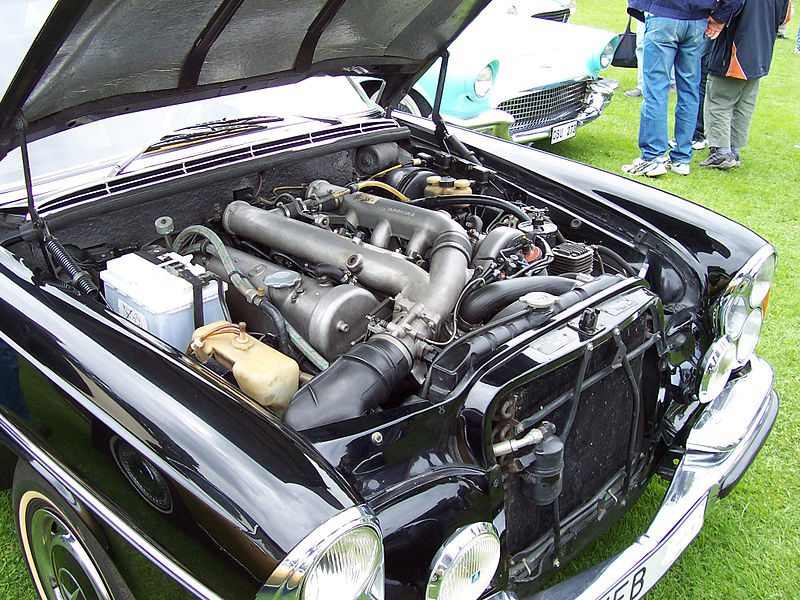
Mercedes installed a 6.3-liter V8 producing 250 horsepower into the 300SEL — a stately luxury sedan — and created the original Q-ship: the kind of car that could run with muscle cars while looking like it was heading to a board meeting. The M100’s mechanical fuel injection system was precise by any standard of the period, and the hydraulic system that powered suspension, windows, and ancillaries ran with notable refinement. American performance cars of the era announced themselves with hood scoops and graphics. The M100-powered Mercedes communicated nothing through its exterior about what was underneath, which was exactly the point.
23. BRM H16: The Magnificent Failure That Defined an Era
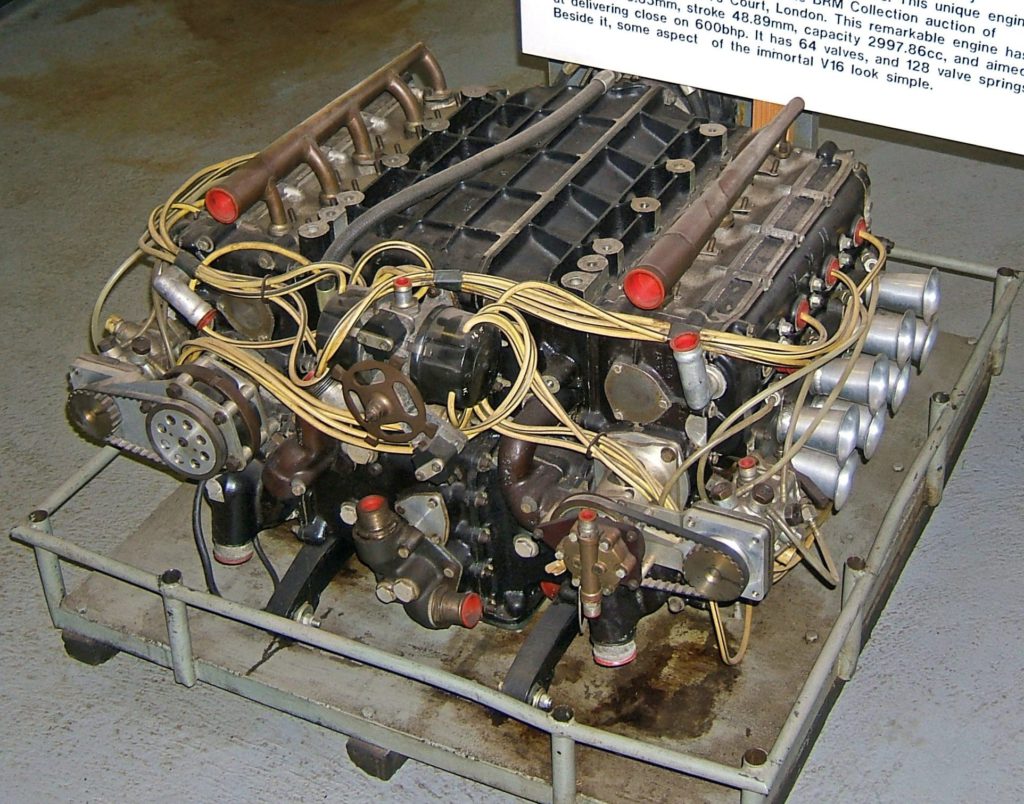
The BRM H16 stacked two flat-eight engines in an H-configuration to pursue the 400+ horsepower that Formula 1 required, and revved to 10,500 rpm at a time when most road cars peaked at half that speed. For those who prioritize reliability over ambition, there are better engines to consider. The H16 helped Jim Clark win the 1966 US Grand Prix — one moment of confirmed genius from a configuration that proved catastrophically unreliable in competition. Its significance is not its race record but what it demonstrates: the H-configuration was structurally coherent and theoretically sound, and its failure came from complexity that outpaced the manufacturing technology available to build it properly. Modern F1 engineers study it as a case study in the gap between engineering ambition and practical execution.
22. Porsche Type 912 Flat 4: The People’s Porsche

The 1.6-liter flat-four in the Porsche 912 produced just 90 horsepower, but weighed significantly less than the 911’s six-cylinder unit — particularly over the rear axle, where weight management is critical in a rear-engine car. The reduced mass improved balance and made the 912 more forgiving to drive than its more powerful sibling, which made Porsche ownership attainable for buyers whose budgets did not reach 911 territory without sacrificing the character that defined the brand. The commercial success of the 912 validated the strategy of offering the Porsche driving experience at multiple price points — a structure that continues today with the Cayman positioned alongside the 911.
21. Offenhauser (Offy) 4-Cylinder: The Engine That Owned Indianapolis
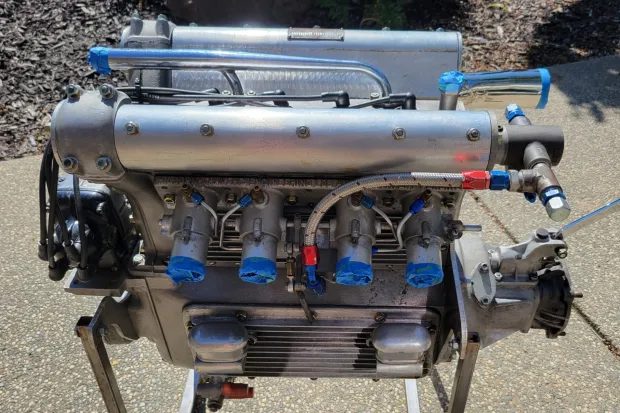
The Offenhauser 4.2-liter four-cylinder powered Indianapolis 500 winners 27 times between 1934 and 1976. Power output ranged from 300 horsepower in naturally aspirated form to over 1,000 horsepower in turbocharged specification. The dual overhead camshaft, four-valve design gave it strong breathing characteristics, and the construction prioritized the kind of reliability that oval racing demands from an engine running at sustained high load for hours rather than sprinting between pit stops. That combination of durability and adaptability across four decades of technical change at Indianapolis is what makes the Offenhauser’s record genuinely extraordinary — the engine evolved as the regulations and technology evolved, and it kept winning.
20. Volkswagen 5.0L V10 TDI: Germany’s Exercise in Delightful Overkill

Volkswagen’s 5.0-liter twin-turbocharged diesel produced 310 horsepower and 553 lb-ft of torque — figures that made the Touareg and Phaeton capable of towing loads that would embarrass most dedicated work trucks while passengers sat in leather comfort. The twin turbos delivered power with the linear momentum of a large displacement diesel at its best. The trade-offs were significant: complex maintenance, substantial weight, and fuel consumption that made operational costs a real consideration. This engine represents the brief period in diesel development when engineers maximized what the technology could do without regard for the consequences, which is exactly what makes it historically interesting.
19. Cizeta-Moroder V16T: The Italian Opera Singer That Bankrupted Its Composers

Former Lamborghini engineer Claudio Zampolli and music producer Giorgio Moroder built the Cizeta V16T around a 6.0-liter V16 mounted transversely — two flat-plane V8s joined together with four camshafts and 64 valves producing 540 horsepower. Approximately 12 to 20 cars were completed before financial reality ended the project. The engine is significant not because of its production volume but because of what it represents: an attempt by a small independent manufacturer to build something that the established supercar makers had not attempted. The Cizeta V16T existed at the boundary between genuine engineering achievement and financial unsustainability, which is exactly where the most interesting cars in history tend to live.
18. Blower Bentley: The Supercharged Gentleman’s Express

W.O. Bentley opposed supercharging his 4.5-liter engines, considering forced induction an engineering compromise. Race driver Sir Henry “Tim” Birkin pursued it anyway, adding a Roots-type supercharger that pushed output to between 175 and 240 horsepower and created a pre-war motorsport reputation that the naturally aspirated cars had not achieved. The supercharger added front-end weight that changed the handling balance and required more driver input than the standard car — a characteristic that separated its most capable drivers from occasional competitors. The Blower Bentley stands as one of the clearest examples in automotive history of an innovation that succeeded precisely because someone ignored the founder’s objection.
17. Alfa Romeo 2.5L V6 (Busso V6): The Engine That Makes Grown Men Weep

The Alfa Romeo Busso V6 produces 150 to 160 horsepower from 2.5 liters — figures that tell you almost nothing useful about the engine. The intake manifolds are machined to a standard that belongs in a museum, and the exhaust note builds through the rev range in a way that distinguishes it from every other production six-cylinder of its era. The Busso is not on this list because of its power output or its technical specifications — it is here because it represents what an engine can accomplish when the engineers treat sound and mechanical character as design objectives equal to horsepower and fuel consumption. Modern engines are more powerful and more efficient. They are not this.
16. BMW S70/2 V12 (McLaren F1)

The BMW S70/2 is a 6.1-liter naturally aspirated V12 producing 627 horsepower with individual throttle bodies for each cylinder — a specification that gave it throttle response closer to a racing engine than any contemporary road car. It pushed the McLaren F1 to a documented 240.1 mph in 1998 without turbocharging or hybrid assistance. The engineering brief was straightforward: build the best naturally aspirated V12 possible with no compromises. BMW’s response to that brief has not been surpassed. Modern supercars with forced induction and hybrid systems produce more power, but the S70/2 at full throttle remains a reference point for what naturally aspirated engineering can accomplish.
15. Honda RA302: When Innovation Turns Tragic

Honda’s RA302 used an experimental air-cooled V8 with magnesium alloy components — a configuration chosen to reduce weight and improve power-to-weight ratio for Formula 1. The theoretical engineering case was sound. During the 1968 French Grand Prix, driver Jo Schlesser died when his RA302 crashed and ignited, the magnesium components burning at a temperature that could not be suppressed by available firefighting equipment. Honda terminated the program immediately. The RA302 engine is on this list because it marks the specific point where a legitimate engineering objective — weight reduction through materials science — produced a safety consequence that the engineers had not fully accounted for. Every subsequent motorsport safety regulation carries some trace of what happened at Rouen in 1968.
14. Duesenberg Model J Inline 8: Depression-Era Excess on Eight Cylinders

The Duesenberg Model J used a 6.9-liter straight-eight producing 265 horsepower, with the supercharged SJ version reaching 320 horsepower at a time when most cars managed a fraction of that. Dual overhead camshafts and four valves per cylinder gave it a technical specification that would not appear in mainstream engineering for decades. Each engine was hand-assembled to tolerances that belonged to precision instrument manufacturing rather than production automotive work. The Duesenberg was bought by movie stars and industrialists during the Depression, and the phrase “It’s a Doozy” entered the American language because of what the Model J represented — engineering so far beyond ordinary that it became a figure of speech for anything exceptional.
13. Bugatti 8.0L W16: The Engine That Laughed at Physics

The Bugatti W16 combines two V8 banks in a W configuration with quad turbocharging and 64 valves to produce 1,577 horsepower in the Chiron Super Sport 300+ — with some variants reaching higher outputs. That engine pushed the car to a documented 304 mph. The cooling system required to manage the thermal output of this configuration presented engineering challenges at a scale most automotive programs do not encounter. The W16 exists at the absolute limit of what internal combustion engineering has produced in a road car, and it was designed and built at a time when the regulatory and commercial environment was already moving against the configuration it represents. Future engineers will study it the way current engineers study the BRM H16 — as an example of what was possible when someone decided the constraints did not apply to them.
12. Chrysler A57 Multibank: When Five Engines Are Better Than One

The Chrysler A57 Multibank is a 21-liter, 30-cylinder engine built from five inline-six engines arranged in a star pattern around a central crankshaft, producing 470 horsepower to power Sherman tanks. The design rationale was military: if combat damage disabled one of the five engines, the tank continued operating on the remaining four. Maintenance was a significant challenge requiring specialized knowledge and tools. The A57 succeeded at what it was built for — keeping Allied armor moving across Europe — which is the only criterion that mattered in the context of its development. It demonstrates that engineering solutions are judged by the problems they solve, and the problem this solved was significant enough to justify the complexity.
11. Miller 122: America’s First Engineering Masterpiece

Harry Miller’s 122 engine delivered approximately 200 horsepower from a 2.0-liter inline-eight in the 1920s, using hemispherical combustion chambers and four valves per cylinder — engineering features that the mainstream automotive industry would not reach for decades. The manufacturing precision required to produce these engines was closer to scientific instrument work than automotive production of the era. The Miller 122 dominated American racing circuits through the combination of power and durability that most contemporary race engines treated as mutually exclusive. Its design principles shaped American motorsport engineering for the following century — which is the measure of an engine’s true significance.
10. Buick 215 V8: The American Engine That Found Its True Home Across the Pond
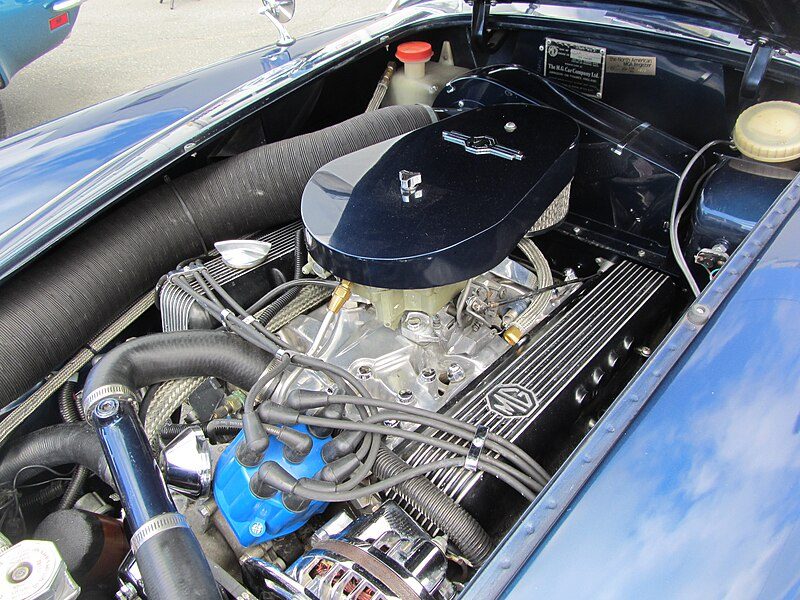
The Buick 215 V8 is a 3.5-liter all-aluminum engine producing 155 horsepower and 220 lb-ft of torque at a weight comparable to a modern four-cylinder. General Motors sold the design to Rover, who renamed it the Rover V8 and used it to power everything from Land Rovers to TVRs for nearly four decades — a production lifespan that exceeded anything GM achieved with the original design. The engine’s compact dimensions, light weight, and tunability made it ideal for British sports cars and SUVs in a way that heavier American alternatives could not replicate. The Buick 215 V8 is the clearest example in automotive history of a manufacturer selling a design that turned out to be worth significantly more to the buyer than the seller understood at the time of the transaction.
9. Lancia Ferrari D50 V8: The Engine That Changed Racing’s Architecture

The Lancia D50’s 2.5-liter V8 produced 260 horsepower and introduced “pontoon” side tanks that made the engine an integral structural element of the chassis rather than a component mounted within it — a fundamental rethinking of how a Formula 1 car’s weight should be distributed. Ferrari acquired the Lancia racing program after Lancia’s financial difficulties and refined the design. Juan Manuel Fangio drove the D50 to the 1956 World Championship. The pontoon concept forced competitors to reconsider chassis architecture in ways that influenced Formula 1 design for years after. The D50 engine matters not just because of what it produced in horsepower, but because of what it changed in how racing cars were built.
8. BMW 507 V8: The Beautiful Financial Disaster

The BMW 507’s 3.2-liter all-aluminum V8 produced 150 horsepower and 173 lb-ft of torque — figures that prioritized refinement and character over outright power. BMW lost money on every one of the 252 examples built because production costs exceeded the car’s market price. The V8’s lightweight construction contributed directly to the 507’s handling balance, and the engine’s responsive character established BMW’s approach to driver-focused engineering that the brand would build its identity around for subsequent decades. The 507 roadsters now sell for millions at auction. The engine that powered them at a loss for BMW is the reason.
7. Aston Martin 5.3L V8: The Gentleman Brawler
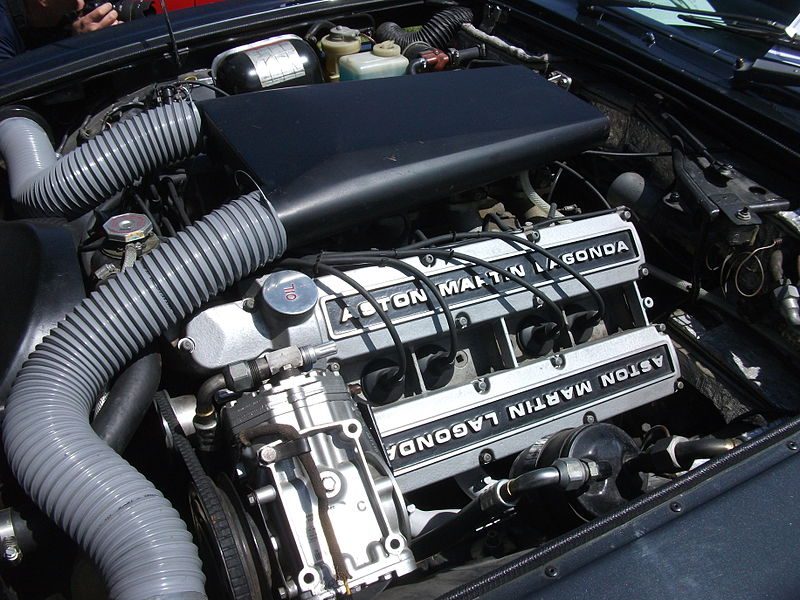
Aston Martin’s 5.3-liter V8 produced up to 390 horsepower and 406 lb-ft of torque through a quad-cam design in an aluminum block — a specification that gave the V8 Vantage the performance to compete with Ferrari while maintaining the character Aston Martin’s buyers expected. The exhaust note at full throttle is one of the most distinctive of any production V8 — a deep, authoritative sound that is not loud for its own sake but communicates mechanical confidence in a way that overly amplified exhaust systems do not. This engine delivered performance without aggression, which is the specific quality that Aston Martin required and that most competitors of the era did not achieve.
6. Tucker 589 Flat 6: The American Dream on Six Cylinders
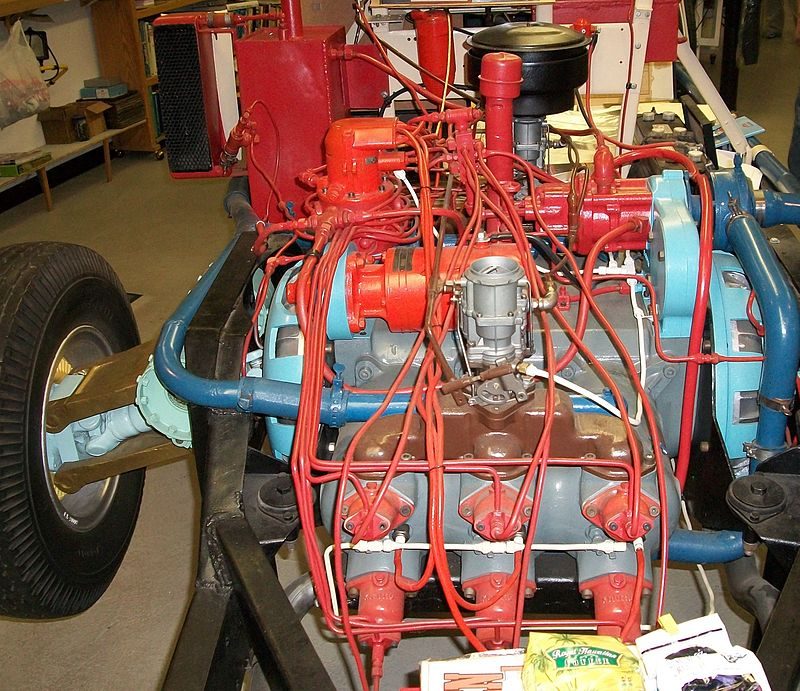
Preston Tucker’s 9.65-liter flat-six was aircraft-derived and produced 166 horsepower and 372 lb-ft of torque — modest output for one of the largest engines ever fitted to a passenger car. Tucker planned to pair it with fuel injection, a padded dashboard, and a center headlight that turned with the steering wheel — features mainstream manufacturers would not adopt for decades. Only 51 vehicles were completed before regulatory and financial pressures ended the company. The Tucker 589 is significant as evidence of what was technically possible in post-war American automotive engineering when the development constraints were ignored — which they were, because Tucker was building something he believed in rather than something he had been authorized to build.
5. Coventry Climax FPF: The Fire Pump That Became a Champion

The Coventry Climax FPF was originally developed for portable fire pumps. British racing teams recognized that its light weight and compact dimensions solved a packaging problem that the available purpose-built racing engines did not, and adapted it for competition use. The 2.5-liter version produced 240 horsepower at 6,750 rpm, powering Cooper, Lotus, and Brabham to Formula 1 World Championship victories. Its compact size enabled the mid-engine layout that fundamentally changed Formula 1 car architecture — putting the engine behind the driver improved weight distribution in ways that front-engine competitors could not match. The FPF’s significance is that it changed motorsport not because it was designed to, but because engineers recognized what it made possible.
4. Mazda 13B Wankel Rotary: The Little Engine That Could (Until Emissions Testing)
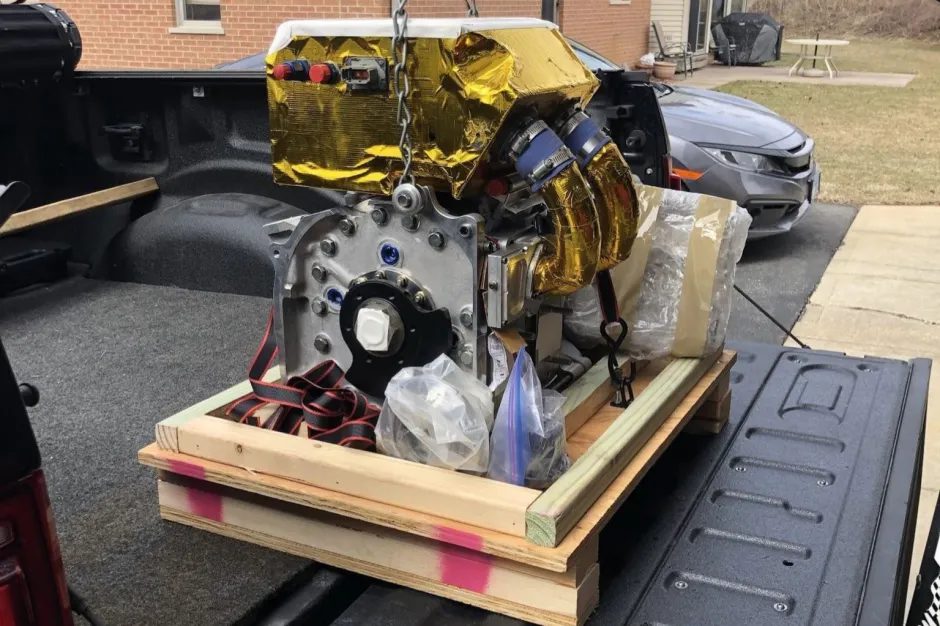
The Mazda 13B is a twin-rotor 1.3-liter engine that produced up to 276 horsepower in twin-turbocharged Japanese domestic specification — a power-to-displacement ratio that conventional piston engines of the era could not approach. The triangular rotors spin continuously rather than reciprocating, which eliminates the mechanical noise and vibration that piston engines produce and allows the engine to rev higher and more freely. Its compact size and low center of gravity made the RX-7 a handling reference for its era. Mazda took a four-rotor R26B rotary engine to overall victory at Le Mans in 1991. The 13B’s fuel and oil consumption were real ownership considerations, but the performance and character it produced at its displacement remain unmatched by any piston engine that has occupied the same physical space.
3. Porsche 917 Flat-12: The Flattener of Egos and Records

The Porsche 917’s flat-12 configuration kept the center of gravity low enough to give the car handling characteristics that competitors with conventional engine layouts could not match. The air-cooled design built on Porsche’s existing engineering knowledge base while saving weight over water-cooled alternatives. Drivers reported a broad power band and predictable delivery — qualities that matter at 240 mph on the Mulsanne Straight with the tire technology available in 1970. The 917 engine gave Porsche their first overall victory at Le Mans and established the engineering principles that defined their approach to endurance racing for the following decades. Before the 917, Porsche won classes. After it, they won races outright.
2. Maybach HL230 P30: The Beast That Powered German Tanks
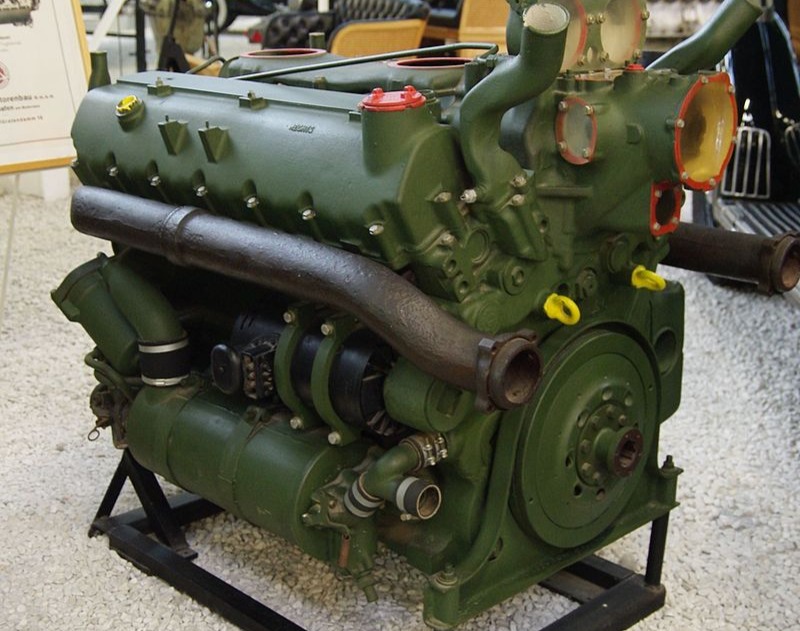
The Maybach HL230 is a 23-liter V12 producing 700 horsepower, developed to power German Panther and King Tiger tanks under sustained combat conditions. Starting procedure required multiple steps and specialized equipment, and the engine’s fuel consumption created logistical challenges for supply lines already operating at their limits. Maintenance demanded trained mechanics with tools that were not widely available in field conditions. The HL230 demonstrated genuine durability under combat loads, which was its primary engineering requirement. Its fuel consumption was ultimately more consequential to the war’s outcome than its mechanical reliability — an engine that performed its engineering function well while creating a strategic vulnerability that exceeded whatever tactical advantage it provided.
1. Yamaha Ford SHO V6: The Sleeper Hit That Gave Middle Managers Street Cred
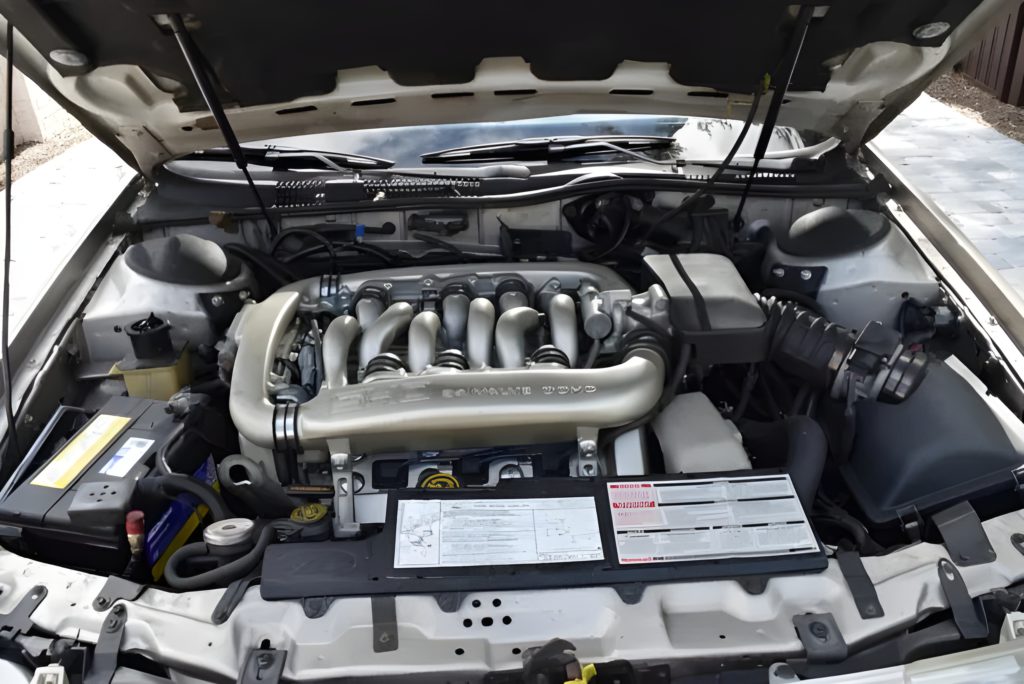
Yamaha designed a V6 producing 220 horsepower with a 7,000 rpm redline and installed it in a Ford Taurus. The dual overhead cams and multi-valve head were exotic specifications in an era when most family sedans treated engineering ambition as a liability. Over 100,000 Americans bought Taurus SHOs, many of them without fully understanding what Yamaha had put under the hood. The SHO V6 is the top entry on this list because it accomplished something that none of the other engines here managed: it delivered genuine performance engineering to ordinary buyers at ordinary prices in a car that looked completely unremarkable from the outside. The McLaren F1’s BMW V12 is extraordinary. The Taurus SHO’s Yamaha V6 is extraordinary and available to anyone. That distinction matters.