

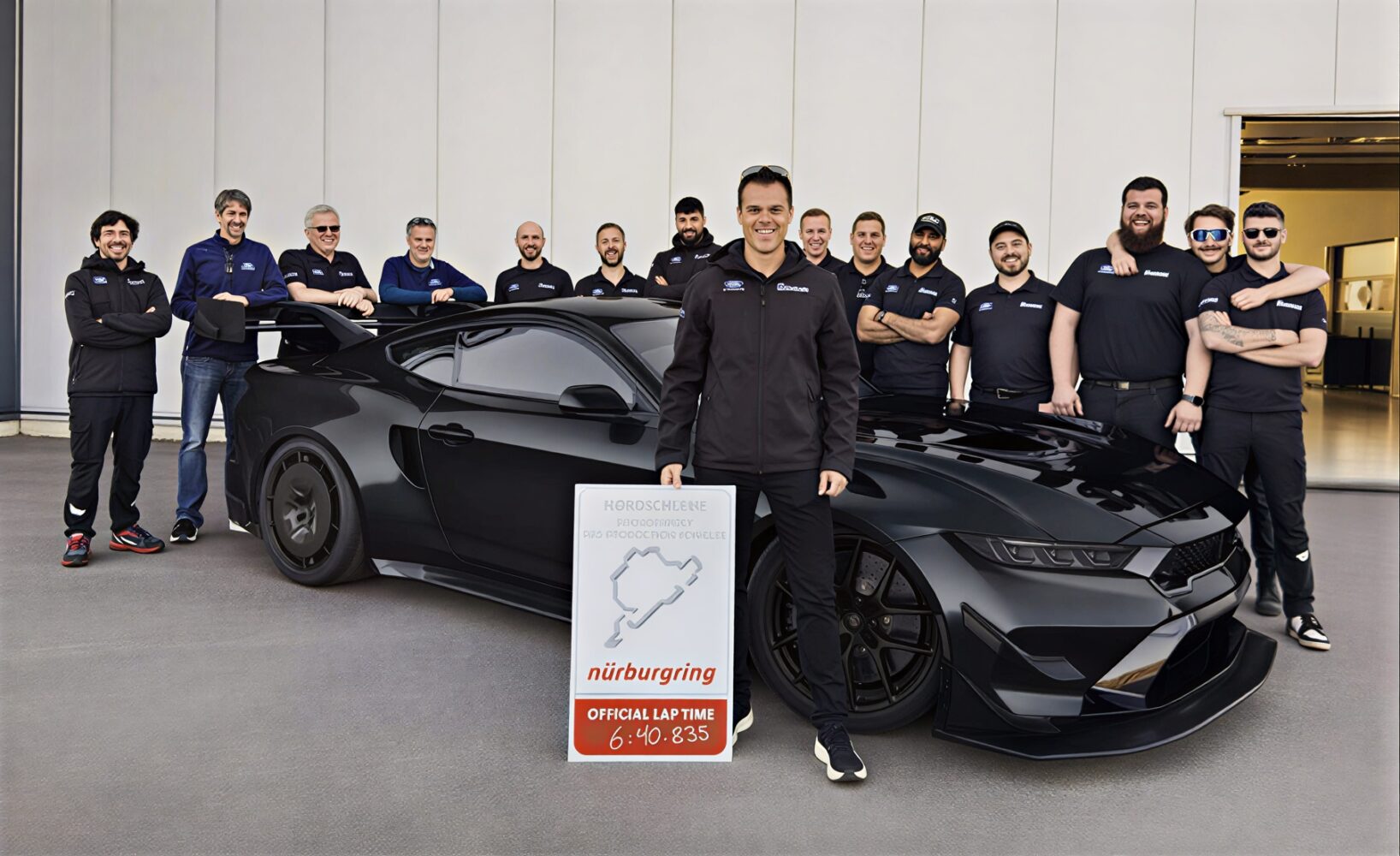
The GTD abandons traditional muscle car brutishness for surgical precision. Carbon fiber construction sheds weight while active aerodynamics generate legitimate downforce. This isn’t your grandfather’s Mustang—it’s Ford’s declaration that American engineering can match European sophistication.
Where muscle cars once relied purely on horsepower, the GTD demonstrates calculated engineering. Ford appears to have prioritized aerodynamic efficiency over straight-line bragging rights.
Engineering Behind the Breakthrough
Track-focused modifications transform the Mustang platform into a circuit weapon.
The GTD’s performance suggests serious engineering commitment. The supercharged V8 produces over 800 horsepower while advanced suspension components handle the Nürburgring’s 154 corners.
Active suspension systems and carbon-ceramic brakes enable the precision required for record-setting lap times. Ford studied German engineering methodologies seriously, abandoning traditional American approaches that emphasized power over finesse.
Industry Implications Run Deep
This achievement reshuffles American performance car hierarchy and European perceptions.
Ford’s ‘Ring triumph threatens Chevrolet’s performance crown while signaling broader shifts in American automotive engineering. This performance positions Ford alongside McLaren and Porsche in legitimate supercar territory—territory traditionally reserved for six-figure European exotics.
Competition benefits enthusiasts who’ve watched American manufacturers chase European benchmarks for years. Ford’s success proves American engineering can deliver precision alongside power, finally earning respect on circuits where finesse matters more than horsepower numbers.
Track records tell stories about engineering philosophy, national automotive pride, and the relentless pursuit of perfection. The GTD’s achievement rewrites those stories entirely.
Track records just shifted at the world’s most punishing circuit. Ford’s Mustang GTD posted a blistering Nürburgring lap time that eclipses previous American supremacy at the Green Hell.
American Muscle Redefines Itself
Ford’s most extreme Mustang targets supercar territory with German-tuned precision.
The GTD abandons traditional muscle car brutishness for surgical precision. Carbon fiber construction sheds weight while active aerodynamics generate legitimate downforce. This isn’t your grandfather’s Mustang—it’s Ford’s declaration that American engineering can match European sophistication.
Where muscle cars once relied purely on horsepower, the GTD demonstrates calculated engineering. Ford appears to have prioritized aerodynamic efficiency over straight-line bragging rights.
Engineering Behind the Breakthrough
Track-focused modifications transform the Mustang platform into a circuit weapon.
The GTD’s performance suggests serious engineering commitment. The supercharged V8 produces over 800 horsepower while advanced suspension components handle the Nürburgring’s 154 corners.
Active suspension systems and carbon-ceramic brakes enable the precision required for record-setting lap times. Ford studied German engineering methodologies seriously, abandoning traditional American approaches that emphasized power over finesse.
Industry Implications Run Deep
This achievement reshuffles American performance car hierarchy and European perceptions.
Ford’s ‘Ring triumph threatens Chevrolet’s performance crown while signaling broader shifts in American automotive engineering. This performance positions Ford alongside McLaren and Porsche in legitimate supercar territory—territory traditionally reserved for six-figure European exotics.
Competition benefits enthusiasts who’ve watched American manufacturers chase European benchmarks for years. Ford’s success proves American engineering can deliver precision alongside power, finally earning respect on circuits where finesse matters more than horsepower numbers.
Track records tell stories about engineering philosophy, national automotive pride, and the relentless pursuit of perfection. The GTD’s achievement rewrites those stories entirely.