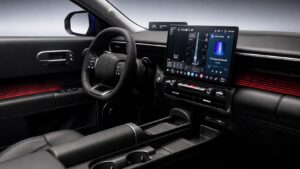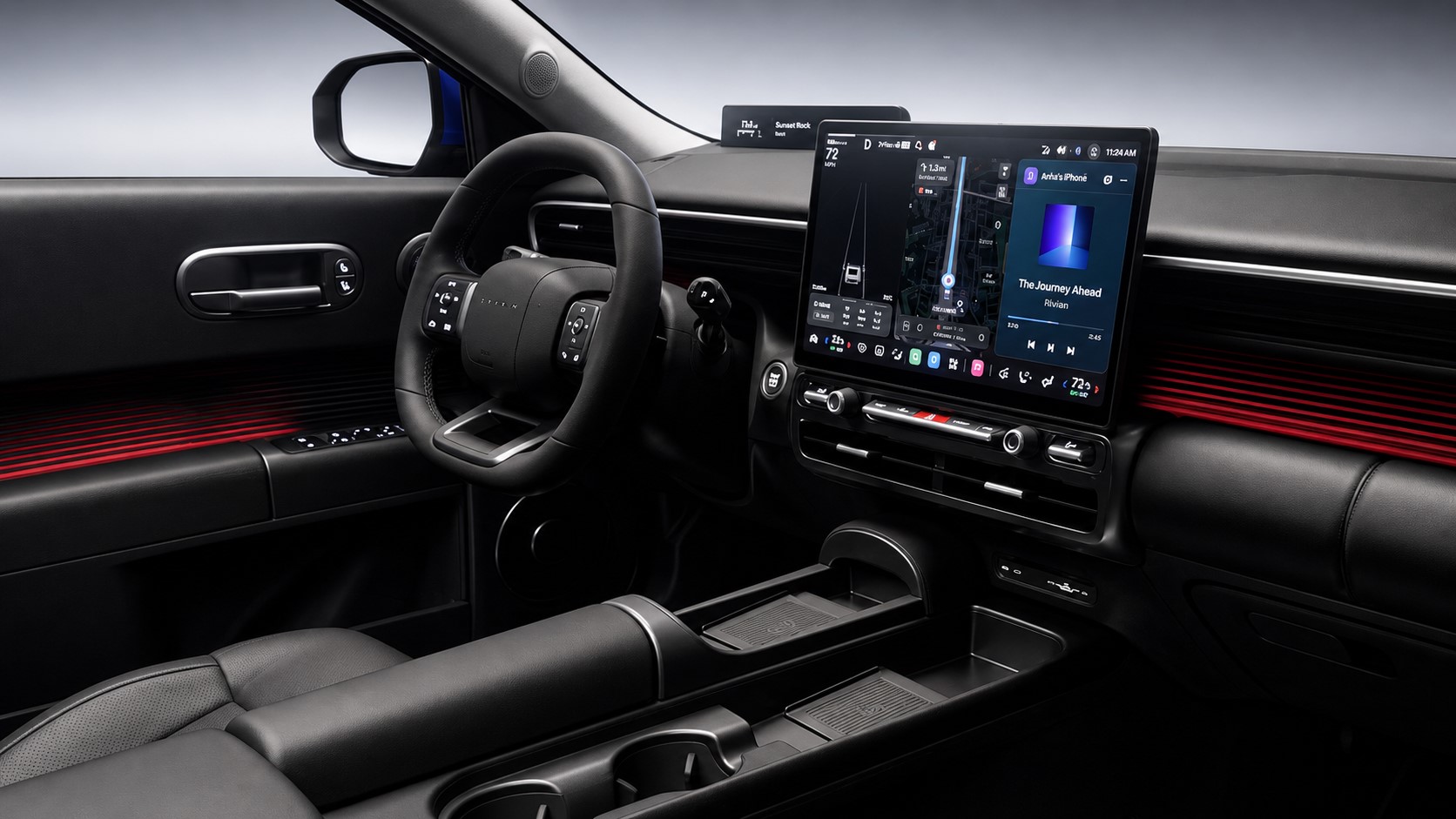


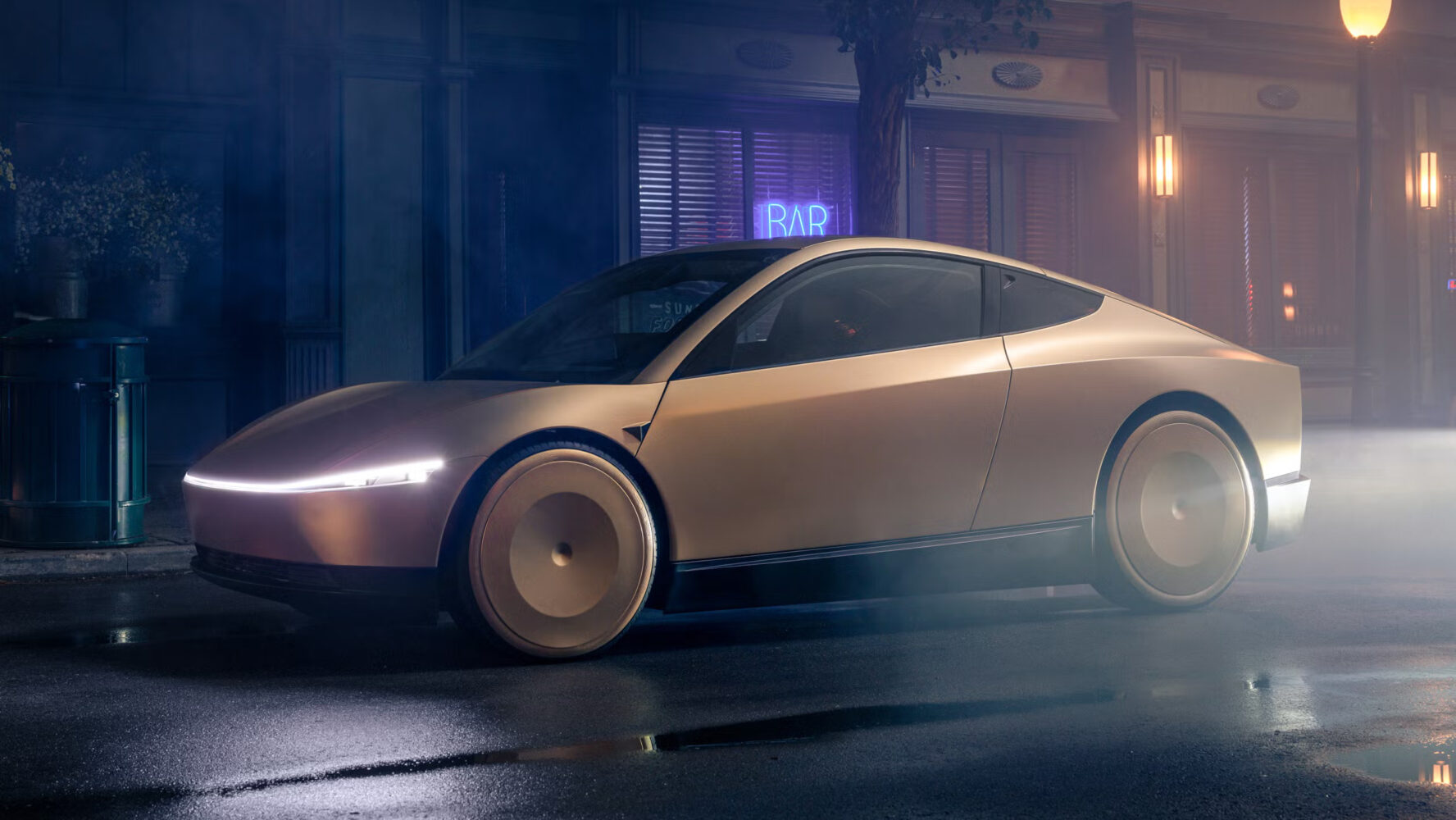
Board a Cybercab in Austin and you’ll notice what’s missing: no steering wheel, no pedals, no mirrors. Just butterfly doors, a two-seat cabin, and a 22-inch screen. Then the cabin display shows something unexpected — a circular joystick labeled “Hold,” Forward at the top, Reverse at the bottom, plus buttons for Stop, horn, and close cabin doors. That’s exactly what happened to at least two separate riders in early September 2026. One of them posted on X: “I have a feeling I wasn’t supposed to see this.”
They weren’t.
What the Joystick Actually Does
It’s a service interface — and it accidentally made it into the passenger cabin.
The interface splits the screen: virtual joystick on the left, live surround-camera feed on the right. Moving the joystick left or right controls steering angle; sliding up or down corresponds to forward and reverse acceleration, with a throttle percentage scale displayed alongside it.
Both riders could drag the control and watch it track their fingers in real time. The car didn’t move. A safety lockout appears to prevent passengers from engaging the drive motors — this is almost certainly a service or debug mode, used by Tesla staff to maneuver vehicles around depots, production lines, or Supercharger bays. One rider’s frozen camera view showed a bank of Superchargers, likely the last spot a technician used the interface before failing to close it out.
This isn’t unprecedented. NAVYA autonomous shuttles have reportedly used Xbox controllers for human takeover during edge cases — making game-style controls a real operational tool, not just a novelty. Tesla’s robotaxis version went public by accident.
“When I got in the vehicle, the display was in a different configuration with a virtual joystick for manual driving! I wasn’t supposed to see this… but I try to manually drive the vehicle anyway!” — Cybercab rider, posted on X
“Driverless” Has Always Had a Back Door
NHTSA wants to know how Tesla certified a car with no pedals, no wheel — and apparently, a hidden override.
On September 4, 2026, the National Highway Traffic Safety Administration opened a formal Audit Query into Tesla’s self-certification of the Cybercab under Federal Motor Vehicle Safety Standards — rules written for vehicles with steering wheels and brake pedals. The agency noted that Cybercabs “lack permanently attached, conventional manual controls, such as a brake pedal, gas pedal, steering wheel, and mirrors,” according to NHTSA’s audit documentation.
Regulators are not alleging a violation. They are asking whether Tesla‘s interpretation of which standards apply to this vehicle is legally defensible. Tesla did not file an exemption petition; according to reporting from Politico and NotATeslaApp, it self-certified under Texas’s Level 4 autonomy rules and relied on standard federal self-certification — a standard practice, but a contentious one for a vehicle this unconventional.
The hidden joystick also raises a harder practical question that regulators and first responders alike will want answered: if a Cybercab stalls mid-intersection or blocks an emergency scene, who moves it — and how? That interface may be part of the answer NHTSA is now demanding in writing.
The audit could force clearer rules for certifying vehicles without conventional controls, and determine whether hidden override systems must meet safety standards of their own. The driverless future, it turns out, has a joystick.