

The fastest cars at 1960s stoplights did not always look the part. Detroit’s factory hot rods hid NASCAR-derived engines inside station wagons, fleet sedans, and police cruisers that nobody looked at twice. A family man could check one box on an order form and drive home something that would embarrass purpose-built muscle cars. Most people drove past these things every day without knowing what was under the hood.
These eight sedans represent the secret performance history of 1960s American roads.
8. 1969 Chevrolet Kingswood 427 Wagon (Exterior)

A full-size family wagon with wood-grain paneling is not what most people picture when they think of a 427 V8. The 1969 Kingswood 427 hid its muscle car heart behind clean sides, subtle trim, and a two-way tailgate that communicated nothing except grocery-hauling competence. The massive engine compartment accommodated the 427 V8 without altering the wagon’s proportions, and neighbors had no reason to look twice at what appeared to be another suburban family vehicle. Extremely low production numbers with the 427 option make this one of the rarest sleepers from the entire muscle car era. The camouflage was essentially perfect.
1969 Chevrolet Kingswood 427 Wagon (Interior)

Front bench seats, massive cargo space, fold-down rear seating, and third-row seats facing backward gave the Kingswood full family wagon credentials with nothing in the cabin suggesting what 335 horsepower from the 427 V8 could do at a stoplight. Air conditioning and power steering were available, creating a genuinely comfortable daily driver that happened to embarrass muscle cars when the road opened up. Heavy-duty cooling systems kept the big-block running smoothly under a full load of family and gear. The interior made the wagon’s cover story completely convincing. The performance made the cover story completely irrelevant.
7. 1967 Chevrolet Biscayne 427 (Exterior)
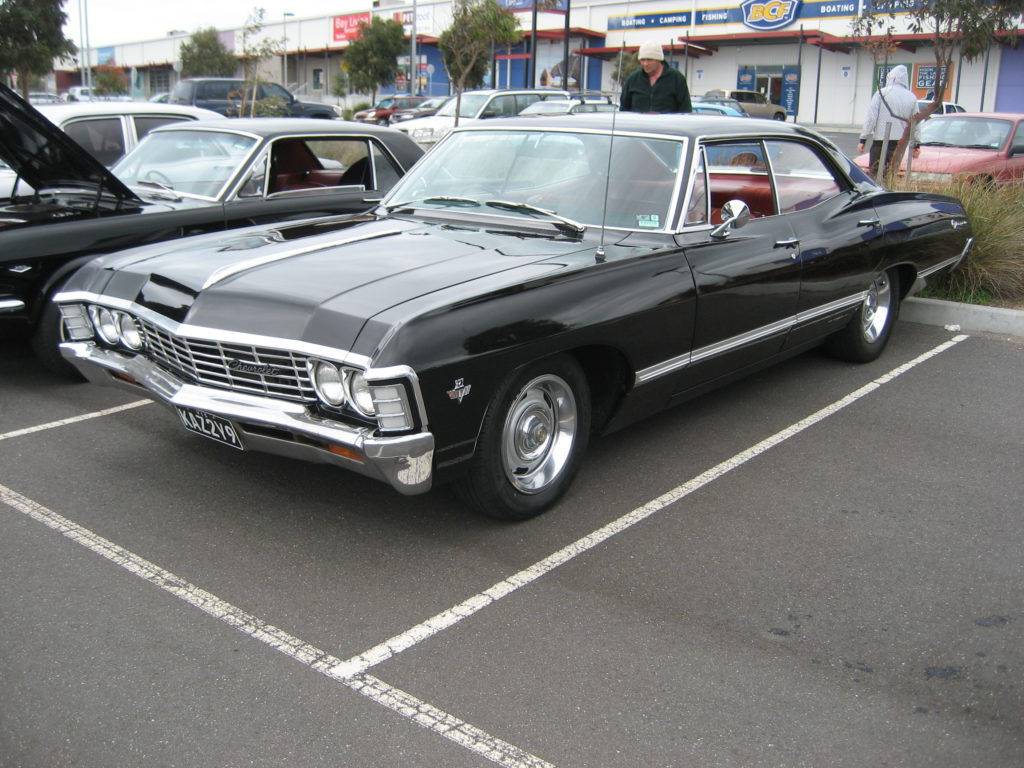
Dog-dish hubcaps, zero chrome, no badges — the 1967 Biscayne looked exactly like a fleet vehicle because it often was one. Police departments and budget buyers gravitated toward base models for precisely that reason, and speed enthusiasts checking the RPO L72 option box got 425 horsepower in a package that produced a 0-60 time of 6.1 seconds without announcing itself to anyone. The 427 cubic inch V8 sat under a hood that gave no visual indication of what it contained. Square rooflines and clean flanks communicated absolutely nothing about the Biscayne’s true performance potential. That was the entire point.
1967 Chevrolet Biscayne 427 (Interior)

Rubber floor mats, basic bench seats, minimal dash padding, and manual everything unless optioned otherwise — the Biscayne interior made no attempt to be anything other than functional transportation. Comfort features were stripped out in favor of raw performance and weight reduction, which kept the price accessible for street racers who cared about 14.6-second quarter-mile times more than creature comforts. The no-frills approach was a feature, not a compromise. Every dollar saved on interior trim was another dollar that justified the 427 option, and the combination produced one of the most effective sleepers Chevrolet ever built.
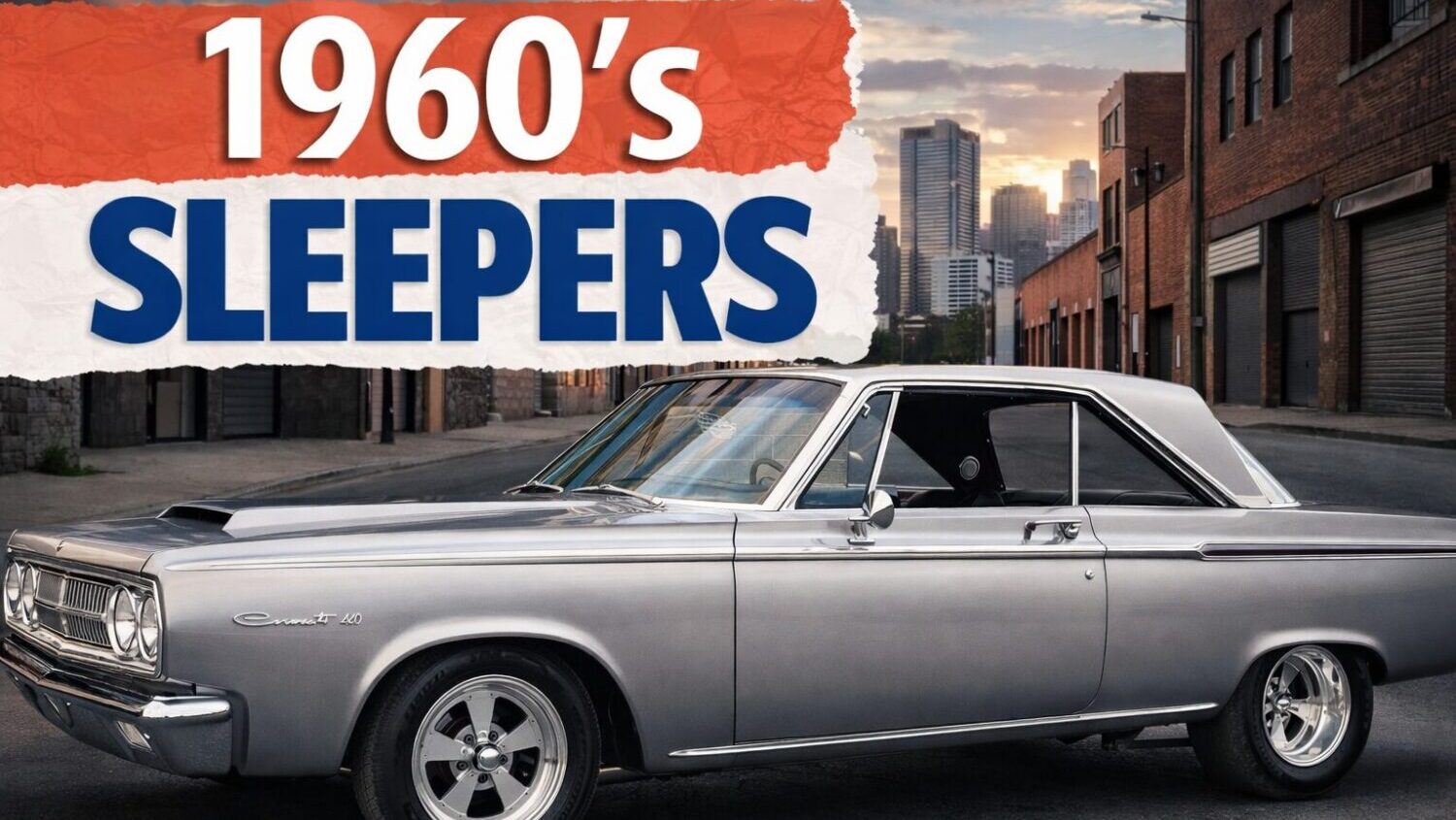
6. 1965 Dodge Coronet 426 Street Wedge (Exterior)

The Hemi Coronet got all the attention in 1965, which is exactly what made the 426 Street Wedge version such an effective sleeper. Simple grille work, straight body lines, and subtle wheel covers gave no indication of 365 horsepower hiding underneath, and similar-looking Coronets with six-cylinder engines filled fleet sales and dealership lots to reinforce the cover. Dual exhaust tips barely visible beneath the rear bumper were the only external clue available to anyone who knew to look for them. Most people didn’t. The Street Wedge flew under the radar precisely because Dodge let the Hemi take all the spotlight.
1965 Dodge Coronet 426 Street Wedge (Interior)

Plain vinyl bench seats, a simple dashboard, and minimal gauges provided just enough information to monitor the 426 cubic inch powerplant without distracting from the 470 lb-ft of torque waiting at the accelerator pedal. A floor-mounted shifter delivered better control during hard acceleration, and a large steering wheel provided leverage at low speeds. Minimal sound insulation in most examples let the big-block V8’s distinctive rumble into the cabin, which was the one interior detail that contradicted the Coronet’s sleeper image. Everything else about sitting inside one communicated ordinary family transportation. The exhaust note did not.
5. 1962 Ford Galaxie 500 XL 406 (Exterior)

Ford developed the 1962 Galaxie 500 XL 406 with NASCAR and drag strip domination in mind, then wrapped it in a slippery roofline with minimal ornamentation that looked like a standard full-size family car. Clean lines, modest chrome, and understated tail fins concealed a racing pedigree that produced mid-14-second quarter-mile times. Two versions of the 406 cubic inch V8 were available — a single four-barrel making 385 horsepower and a tri-power setup producing 405 horsepower. Nothing on the exterior communicated that the Galaxie had been engineered around track performance. That gap between appearance and capability is what made it one of the most effective factory sleepers Ford ever produced.
1962 Ford Galaxie 500 XL 406 (Interior)

Bucket seats, a center console, and sporty round gauges inside the XL package created a sharp contrast with the conservative exterior — a split personality that made the Galaxie 500 XL unlike anything else in the 1962 full-size segment. Luxury touches came with the XL trim without compromising the performance mission, and a floor-mounted shifter let drivers work through gears with authority during hard acceleration. The large steering wheel provided useful leverage in high-speed corners. The interior gave buyers an early preview of what Ford’s muscle car thinking would look like — before the Mustang existed to make it official.
4. 1968 Mercury Monterey 428 Police Interceptor (Exterior)

Dog-dish hubcaps, blackwall tires, zero external badging, and squared-off lines made the 1968 Monterey Police Interceptor indistinguishable from a taxi cab or government fleet vehicle — which was the specification law enforcement required. A 428 cubic inch V8 sat under the vast hood alongside heavy-duty suspension components that kept the car level despite its performance capability. Missouri State Highway Patrol ran these extensively, which contributed to both their rarity and their sleeper credentials today. Clean, minimal styling that communicated nothing unusual allowed the Monterey to blend into traffic completely. The 428 under the hood was the only part of this car that didn’t blend in.
1968 Mercury Monterey 428 Police Interceptor (Interior)

Firm vinyl bench seat, durable padding, and a column shifter that freed up space between seats for mounting police equipment defined an interior built entirely around long patrol shift durability rather than driver comfort. The heavy-duty cooling system sustained extended high-speed pursuit capability, upgraded brakes improved stopping power over standard Monterey specification, and 340 horsepower pushed the big sedan forward with authority. The upgraded electrical system handled police equipment loads without strain. Function was the only design brief here, and the interior reflected that completely — a working tool that happened to be one of the fastest full-size cars on American roads in 1968.
3. 1963 Pontiac Tempest LeMans 326 (Exterior)
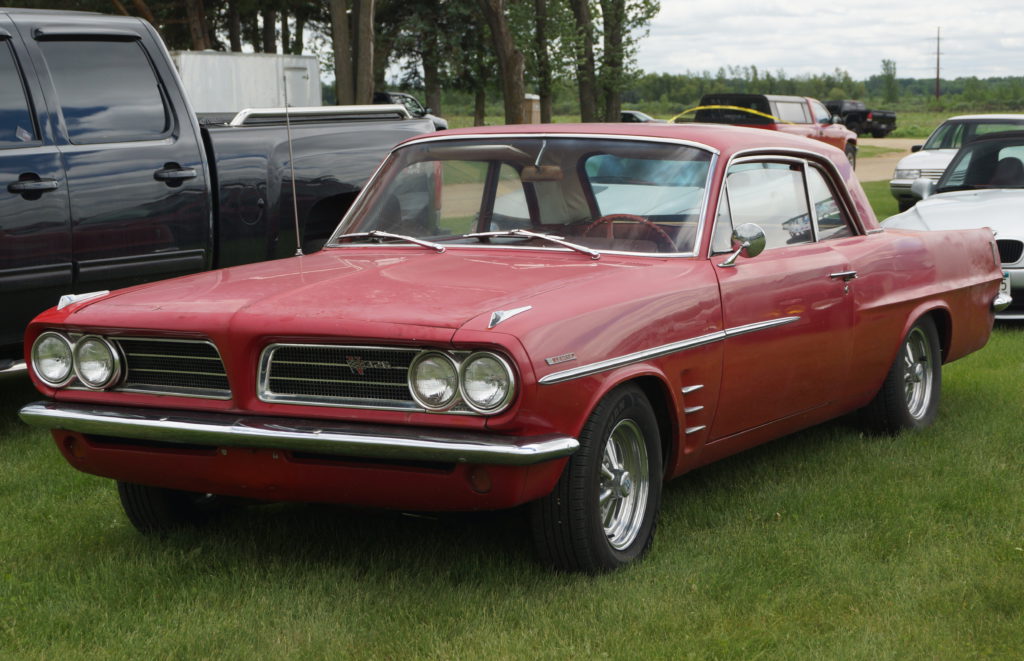
Pontiac engineers put 336 cubic inches into an engine badged as a “326” to stay within GM’s displacement rules, and then dressed the result in subtle body lines and understated badges that gave no indication of what the car could do. Stacked headlights and a clean grille defined the front end, minimal ornamentation covered the rear, and compact dimensions amplified the V8’s impact in a way the Tempest’s modest appearance never suggested. The LeMans was Pontiac testing the intermediate performance market before committing to it fully. The GTO arrived a year later and made the concept famous. The LeMans proved the concept was worth pursuing.
1963 Pontiac Tempest LeMans 326 (Interior)

Bucket seats, a floor shifter, and clean instrumentation elevated the LeMans cabin well beyond typical early 1960s fare, giving it a forward-looking quality that aligned with some of the futuristic design thinking coming out of Detroit at the time. The unique transaxle layout shifted weight rearward for better traction, eliminating the wheelspin that plagued other performance cars of the era. Basic vinyl upholstery and minimal sound deadening kept weight down and performance numbers up. The 326 V8 produced 260 horsepower through a misleading badge that understated both the displacement and the intent. Pontiac was learning what the performance market wanted, and the LeMans interior showed they were paying close attention.
2. 1966 Studebaker Daytona Sports Sedan (Exterior)

Front disc brakes on an American production car were rare in 1966, and Studebaker included them on the Daytona Sports Sedan as standard — a safety and performance specification most Detroit competitors wouldn’t match for years. Clean European-inspired styling with minimal chrome and a squared-off roofline gave no indication of sporting intentions, and extremely low production numbers turned these cars into instant rarities that disappeared from American roads almost as quickly as they arrived. This was Studebaker’s final performance statement before the company shut down entirely. For a last act, it was a genuinely capable one.
1966 Studebaker Daytona Sports Sedan (Interior)

Bucket seats, a floor shifter, and full instrumentation set the Daytona apart from American competitors still relying on bench seats and column shifters in 1966 — a driver-focused cabin that felt closer to a European sports sedan than anything else in Studebaker’s lineup. The 283 cubic inch V8 delivered respectable performance through either manual or automatic transmission, and excellent outward visibility made the car easy to place on winding roads. Build quality stayed surprisingly high despite Studebaker’s financial troubles, with materials that held up through years of daily use. The interior made a coherent performance argument on its own merits. The company ran out of time before enough buyers noticed.
1. 1964 Buick Skylark Gran Sport (Exterior)
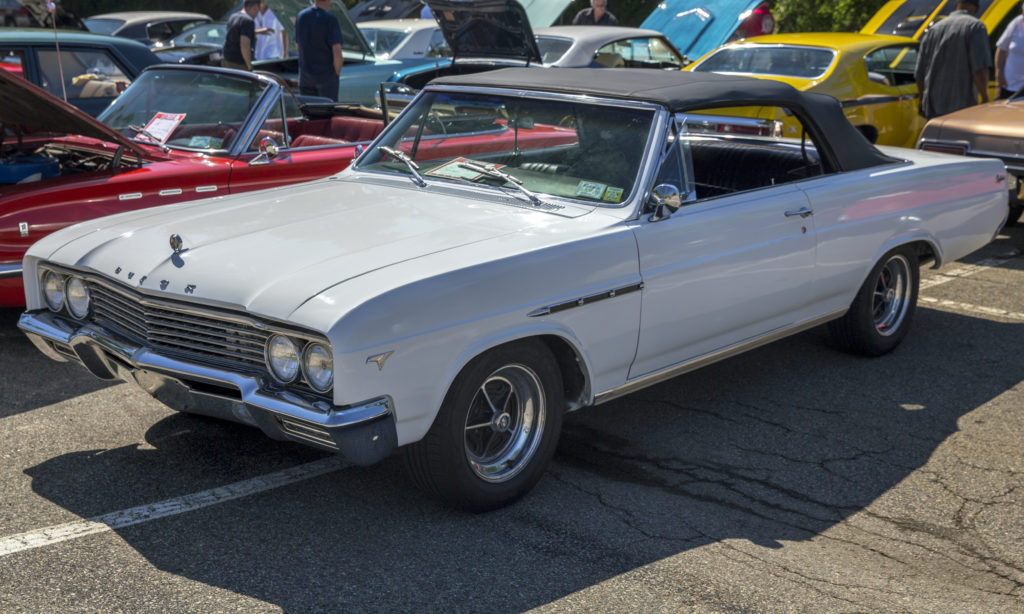
Signature sweepspear side trim, tasteful chrome, and clean Skylark proportions communicated upscale luxury rather than aggressive performance — which made the Gran Sport package’s 401 cubic inch V8 one of the most effective disguises in the 1964 lineup. Understated badges gave no indication of what the engine produced, and the elegant roofline spoke more of Buick’s traditional refinement than of the muscle car genre the Gran Sport was quietly entering. Many called it a gentleman’s muscle car, which was accurate. Buick buyers expected a certain level of dignity, and the Gran Sport delivered performance without sacrificing any of it.
1964 Buick Skylark Gran Sport (Interior)

Comfortable bucket seats, full instrumentation, and genuine wood trim put the Gran Sport’s interior closer to luxury car territory than anything the contemporary muscle car market offered at a comparable price. The nailhead V8 produced 325 horsepower and 445 lb-ft of torque through either manual or automatic transmission, delivering acceleration that felt effortless rather than violent — a refinement the Biscayne and Coronet buyers on this list never experienced. Upgraded handling components made the Gran Sport more agile than its size suggested. Mature buyers who wanted serious performance without giving up comfort found a genuinely unique proposition here. No other muscle car in 1964 made the same case quite as convincingly.