

The vehicles on this list represent specific engineering and business decisions that caused documented harm to drivers — fuel tanks positioned to rupture in minor rear-end collisions, suspension geometry that caused rollovers during normal cornering, and fuel systems that caught fire spontaneously. Several of these cases directly produced the safety regulations that now govern every vehicle sold in the United States. Understanding what went wrong with them is not just historical interest; it explains why modern cars are built the way they are.
9. Smart Fortwo (Exterior)

Early Smart Fortwo models faced an inherent physics problem — at barely 8.8 feet long, impact energy distribution in collisions is geometrically different from what larger vehicles experience. The Tridion safety cell visible in the two-tone exterior was a genuine engineering response to that constraint, but early versions had real limitations in occupant protection that the initial safety test results reflected. The design challenge was honest: protect two people from crash forces in a car shorter than most parking spots.
Smart Fortwo (Interior)

Early cabin occupant protection results were concerning, but Smart treated the feedback as an engineering problem rather than a PR problem. The 2014 model achieved an 82% adult-occupant protection score from Euro NCAP, and the redesigned 2016 Fortwo earned “Good” ratings — the highest possible — from IIHS in both moderate-overlap front and side crash tests. The Smart’s development arc demonstrates that microcar safety is an engineering solvable problem rather than an inherent size limitation. For how far overall vehicle safety has progressed, the best cars available today reflect decades of accumulated safety improvement.
8. Ford Pinto (Exterior)

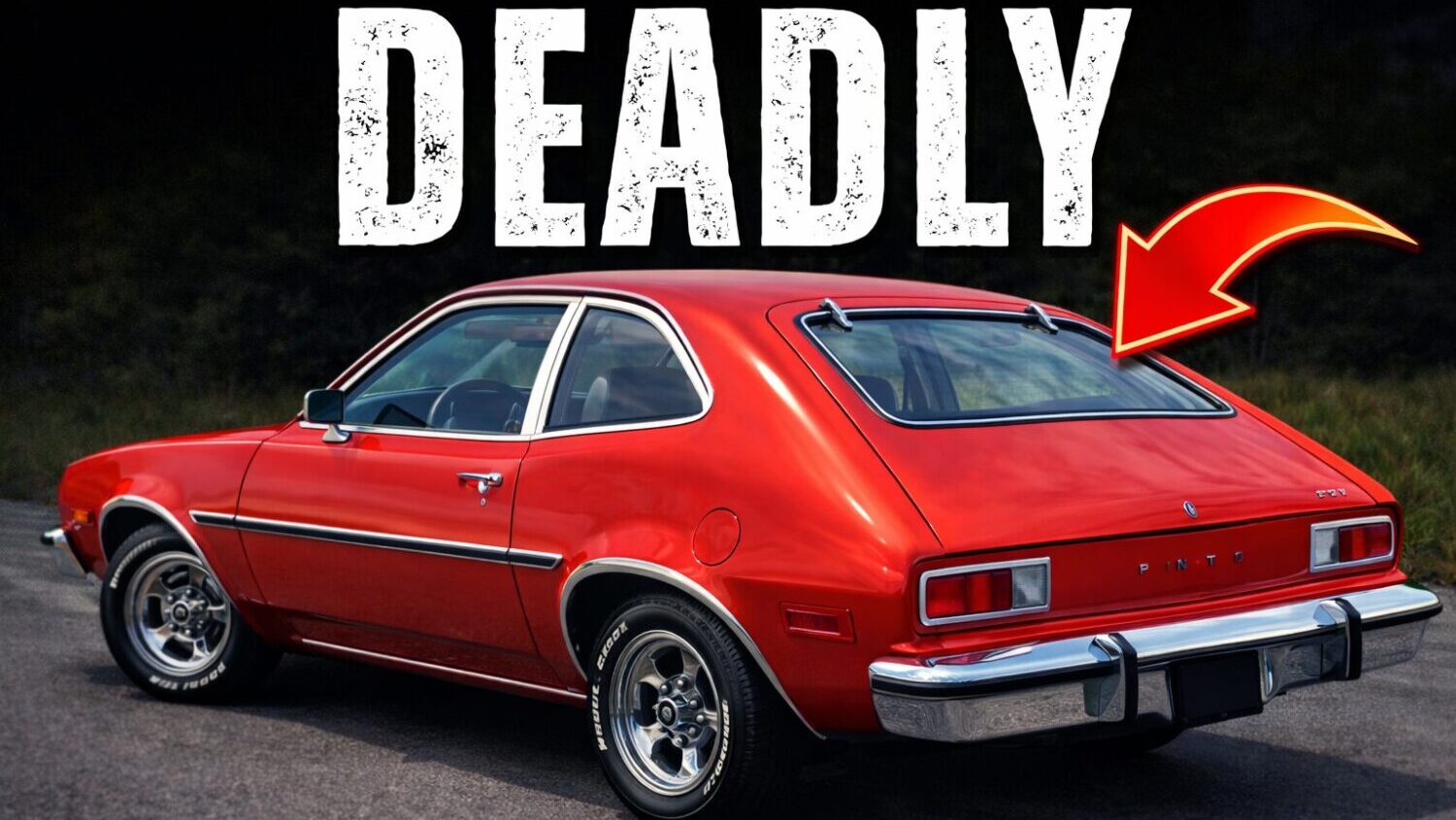
The Ford Pinto carried its fuel tank behind the rear axle with minimal structural protection between the tank and the bumper. This positioning meant the tank could rupture in rear-end collisions at speeds as low as 20 mph, with the resulting fuel exposure creating fire risk in crashes that should have been survivable. The absence of crumple zone protection and structural reinforcement around the tank was the specific engineering failure — a design that the company’s own engineers had identified.
Ford Pinto (Interior)

The cabin was a standard 1970s economy car interior — nothing unusual, with no indication to occupants of the fuel system vulnerability underneath them. Internal documents that surfaced in litigation revealed Ford had calculated that paying accident settlements would cost less than the $11-per-car fix that would have repositioned or protected the fuel tank. That calculation continued until the 1978 recall addressed the design after hundreds of burn deaths. The Pinto case became the foundational example of cost-benefit analysis applied to human life in product liability law, and directly influenced how manufacturers document safety decisions.
7. Chevrolet Vega (Exterior)
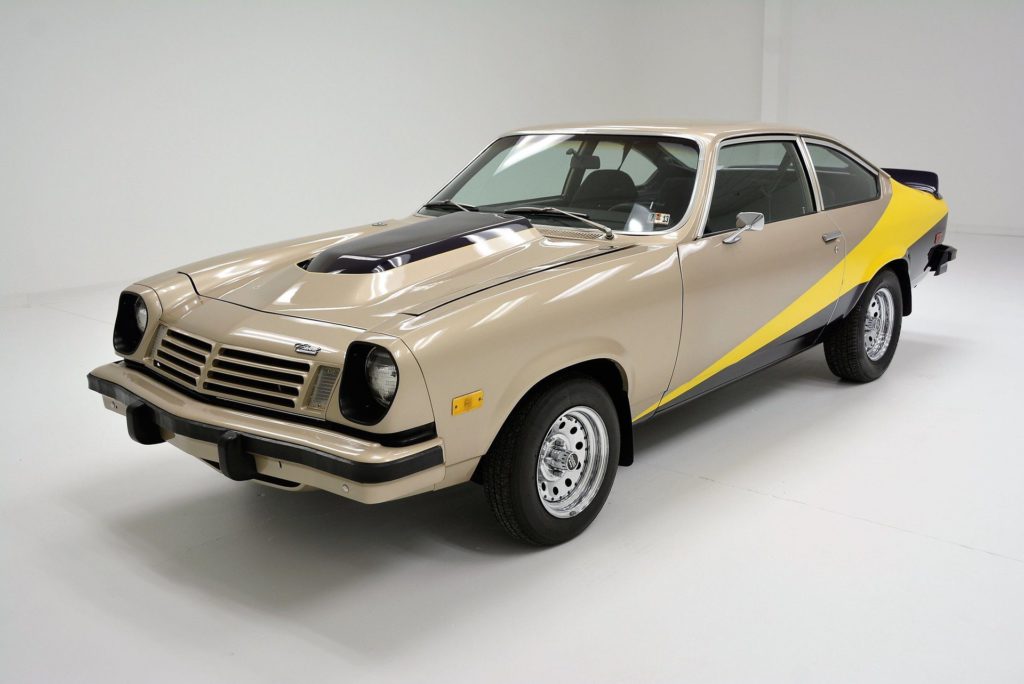
The Chevrolet Vega’s thin steel exterior began rusting within two years of delivery, with corrosion starting around the fenders and spreading structurally in ways that compromised the body’s integrity rather than just its appearance. Bodies rusted through within three years in mild climates — a failure rate that reflected production cost decisions made during development rather than unavoidable materials limitations. Basic corrosion protection technology existed; GM chose not to apply it to the Vega, then absorbed the warranty and reputation costs that followed.
Chevrolet Vega (Interior)

The aluminum block engine without proper cylinder liners warped under normal operating temperatures, leaking oil and coolant and often failing completely before buyers had finished paying off their loans. The cost-cutting extended throughout the vehicle’s engineering — the Vega was developed under aggressive timeline and budget pressure that left insufficient margin for the kind of real-world durability testing that would have identified these failures before production. The result was a generation of buyers who moved to Japanese imports and did not come back, a market shift that reshaped the domestic automotive industry for decades.
6. Suzuki Samurai (Exterior)

Consumer Reports issued a “Not Acceptable” rating for the Suzuki Samurai in 1988 after the vehicle repeatedly tipped during testing. The combination of a narrow track, short wheelbase, high center of gravity, and lightweight body created rollover dynamics during emergency maneuvers that any driver could encounter in normal road use. The vehicle’s genuine off-road capability was real, but the physics that made it effective on trails — high ground clearance, short wheelbase — created instability on roads that its buyers used it for daily.
Suzuki Samurai (Interior)

The spartan interior matched the budget price and the vehicle’s utilitarian purpose, but lacked side impact protection, adequate padding, and restraints proportional to the rollover risk the vehicle’s dynamics created. Sales collapsed after the Consumer Reports rating, and Suzuki pursued litigation against the publication rather than addressing the underlying stability problem. The controversy directly influenced how SUVs are tested for rollover resistance — stability testing protocols that now apply to every light truck and SUV sold in the American market exist in part because of what happened with the Samurai.
5. Corvair (Exterior)

The Corvair’s rear-engine, air-cooled design was genuinely innovative — it looked and drove like nothing else American manufacturers were producing. The problem was the swing-axle independent rear suspension on early models, which created a camber change under cornering that caused the rear wheels to tuck under the car. This geometry produced sudden, unpredictable oversteer during cornering that drivers had no meaningful warning of and no reliable way to correct. Ralph Nader’s “Unsafe at Any Speed” documented these dynamics in 1965 using Chevrolet’s own internal records.
Corvair (Interior)

The cabin was premium for its class — part of what made the car commercially successful, with over 1.8 million units sold before the handling concerns became public knowledge. GM defended the design and later improved the suspension on 1965 and later models, but the controversy produced consequences that extended well beyond the Corvair itself. The public outcry contributed directly to the establishment of the NHTSA in 1966 and the federal safety standards that created the framework for vehicle safety regulation that governs the industry today.
4. Chevrolet C/K Trucks (Exterior)

GM’s C/K pickups used a “side saddle” fuel tank design that positioned the tanks outside the frame rails, between the cab and the rear wheels. This placement left them directly exposed to side impact forces with no structural protection between the tank and the point of collision. The design was visible in the truck’s silhouette and documented in engineering drawings — a choice that prioritized cargo capacity over fuel system protection. The vulnerability led to over 1,800 fire deaths in crashes that the victims should have survived.
Chevrolet C/K Trucks (Interior)

The comfortable, capable cab gave truck owners no indication of the fuel tank vulnerability mounted just outside the door. Engineers estimated at the time that a safer tank design would cost a few dollars per vehicle. GM spent significantly more than that fighting the lawsuits that followed over more than a decade, while the death toll accumulated in crashes that better fuel system positioning would have made survivable. The eventual settlement and design changes came after years of litigation rather than proactive safety action.
3. Tata Nano (Exterior)

Tata’s $2,000 price target for the Nano was a genuine engineering and social mission — providing affordable four-wheeled transportation to Indian families who could not otherwise access it. The exterior communicated the budget reality directly: minimal bodywork, basic panels, and limited crash structure. The safety concerns were documented, and several reported engine fires reinforced public perception that the cost reductions had gone too far into components where failure consequences were serious.
Tata Nano (Interior)

Exposed metal, minimal padding, and a features list stripped to the absolute minimum defined the Nano’s cabin. The market response clarified something important about what budget buyers actually prioritize: the Nano’s target customers had motorcycles as the alternative, not higher-specification cars, and they were making a safety-conscious upgrade by switching to four wheels regardless of the Nano’s limitations. The commercial failure came partly from the perception of the car as a “poor person’s vehicle” — a positioning problem that overshadowed the genuine transportation need it was designed to address.
2. Yugo (Exterior)

The Yugo’s exterior communicated its origins honestly — boxy styling that looked dated at launch, thin sheet metal with panel gaps that reflected assembly quality rather than design intent, and paint that degraded quickly. Water leaks were a consistent ownership reality, with rust following shortly after. Exterior components including mirrors, trim pieces, and bumpers failed or detached from the vehicle with regularity, sometimes at speed — a reliability pattern that reflected build quality standards from a manufacturing context with no meaningful market accountability.
Yugo (Interior)

Interior materials failed at rates that made basic transportation unreliable rather than merely uncomfortable, with switches, controls, and climate systems producing consistent complaints across the ownership base. The Yugo found a market initially on price alone — it was genuinely among the cheapest new cars ever sold in America — but the failure rate demonstrated that the lowest possible price is only a value proposition when the product functions at a minimum reliable level. The Yugo’s cultural persistence as a punchline reflects how completely it failed to meet that threshold.
1. Hummer H2 (Exterior)

The Hummer H2 weighed 6,400 pounds and used military-inspired exterior proportions to communicate capability that the civilian platform did not fully deliver. The massive exterior dimensions made urban driving and parking genuinely difficult while providing less usable interior space than the exterior size implied. The aggressive off-road styling — approach angles, ground clearance cues, military aesthetic — was not fabricated, but the gap between the H1’s military performance and the H2’s civilian-platform reality was significant. If the H2’s safety issues concern you, our guide to essential car accessories covers upgrades that genuinely improve vehicle safety.
Hummer H2 (Interior)

The interior used plastic quality and build standards that did not match the vehicle’s price or its exterior’s implied premium positioning. Visibility was poor despite the elevated seating position — a combination of thick pillars and the vehicle’s dimensions that made lane changes and maneuvering genuinely difficult. Fuel economy reached approximately 10 mpg during a period when fuel costs were rising and environmental awareness was shifting consumer priorities. The H2 was discontinued in 2009. Its failure was not regulatory but commercial — the market stopped buying it when the cultural moment that had made it desirable passed.