

If a repair bill crosses 40% of your car’s market value, most mechanics will tell you the same thing: walk away. This threshold separates a smart fix from financial quicksand. Anyone who’s nursed a high-mileage sedan through one last winter knows the knot in the stomach when the shop calls with another four-figure estimate. The 40% Rule cuts through that panic with cold math—because emotion and depreciation schedules don’t negotiate. This guide translates repair quotes into actual financial consequences, using Kelley Blue Book and Edmunds to anchor decisions in data instead of wishful thinking. Factor in the ghost costs lurking three months down the road, and suddenly that cracked block stops looking like a problem worth solving.
1. The 40% Rule

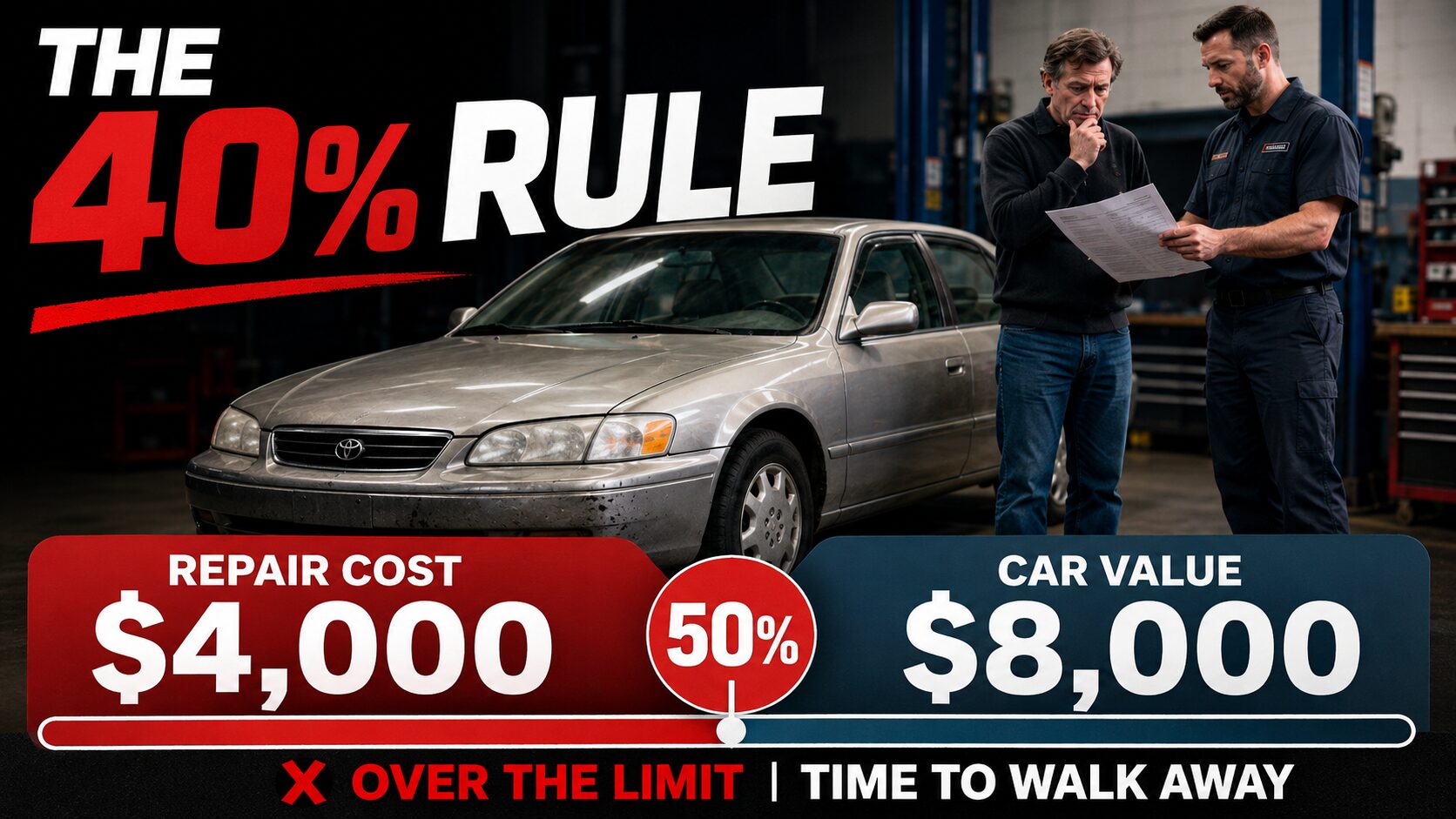
If the repair costs more than 40% of the car’s current value, selling beats fixing nearly every time.
The math is brutal but honest. A $4,000 engine replacement on a car worth $8,000 clears the threshold; at that point, buyers are better off redirecting cash toward something that won’t strand them mid-road trip. This guideline matters most for older, high-mileage vehicles where one repair telegraphs the next. The rule forces an essential question: will this fix deliver another five years and 60,000 miles of reliable service, or just delay the inevitable breakdown by a season?
Anyone facing a major repair needs to weigh future driving needs against current value. A transmission overhaul might make sense for someone planning cross-country moves in the next year; for a city commuter eyeing retirement, that same repair becomes dead money. The decision demands focus, not nostalgia—assessing whether the car will carry drivers down new roads or become a garage ornament demanding constant feeding.
2. Kelley Blue Book

KBB provides the hard numbers needed to separate sentimental attachment from financial reality.
Head to KBB.com and punch in the VIN or license plate. Within minutes, trade-in, private-party, and wholesale values appear—no guesswork, no dealer spin. These estimates cut through the emotional fog that surrounds aging vehicles, especially when a repair quote arrives. A $3,000 transmission job sounds abstract until KBB reveals the car is worth $6,500; suddenly the 40% threshold becomes visible.
This data acts like tire-pressure readings before a long highway run: objective, essential, and impossible to ignore. Anchoring repair decisions in actual market values prevents the all-too-common slide into a financial pit, where each fix promises to be the last but rarely is. Cross-reference the numbers, check condition adjustments, and understand what the market will actually pay—not what the car felt like when it rolled off the lot a decade ago.
3. Edmunds

Cross-referencing multiple valuation sources sharpens the financial picture like checking oil pressure and coolant temp simultaneously.
Edmunds delivers detailed market, trade-in, and private-party estimates, offering a second data point alongside KBB. Smart drivers treat valuation like navigation: one source might miss a detour; two sources confirm the route. Before committing to a $3,000 engine overhaul, Edmunds clarifies whether that spend makes sense against current worth. If the car appraises at $5,500, the repair crosses the 40% line—a clear signal to redirect that cash.
This cross-check matters because valuation tools weight condition, mileage, and regional demand differently. Running both gives a realistic range, not an optimistic outlier. The 40% Rule only works when the denominator—vehicle value—reflects actual market conditions, not hopeful thinking.
4. Ghost Repairs

The real danger isn’t the current repair bill; it’s the cascade of breakdowns waiting three to four months behind it.
Fix the transmission today, and the fuel pump fails next quarter. Replace the fuel pump, and corroded brake lines surface by summer. This pattern haunts aging vehicles, where one system’s failure telegraphs the next. Mechanics can only address the immediate problem; they can’t predict whether fixing it buys six months or six years. That uncertainty transforms each repair into a gamble with diminishing odds.
Budget for this hidden drain. The initial fix might clear the 40% threshold on its own; ghost repairs push total costs well past it. Anyone who’s watched a minor fix spiral into serial shop visits understands the frustration—and the wallet damage. The 40% Rule accounts for this risk by setting a hard ceiling, preventing good money from chasing inevitable collapse.
5. Used Car Replacement Strategy

Depreciation eats new-car buyers faster than a botched downshift strips gears; smart money buys proven metal with cash.
Hunt for vehicles under 100,000 miles—many models are just hitting stride at that odometer reading. A well-maintained 15- to 20-year-old car with 120,000–150,000 miles can deliver years of reliable service if prior owners handled maintenance. Avoid that brutal first-owner depreciation hit, the financial equivalent of lighting a stack of twenties on fire every time the garage door closes.
Reliable used vehicles under $10,000 redirect cash toward road trips, not interest payments. Anyone who’s bought smartly knows the satisfaction: more miles per dollar, less stress over door dings, and the freedom to rack up adventures instead of loan balances. Match the replacement to actual annual driving needs—don’t overbuy—and pocket the savings.