

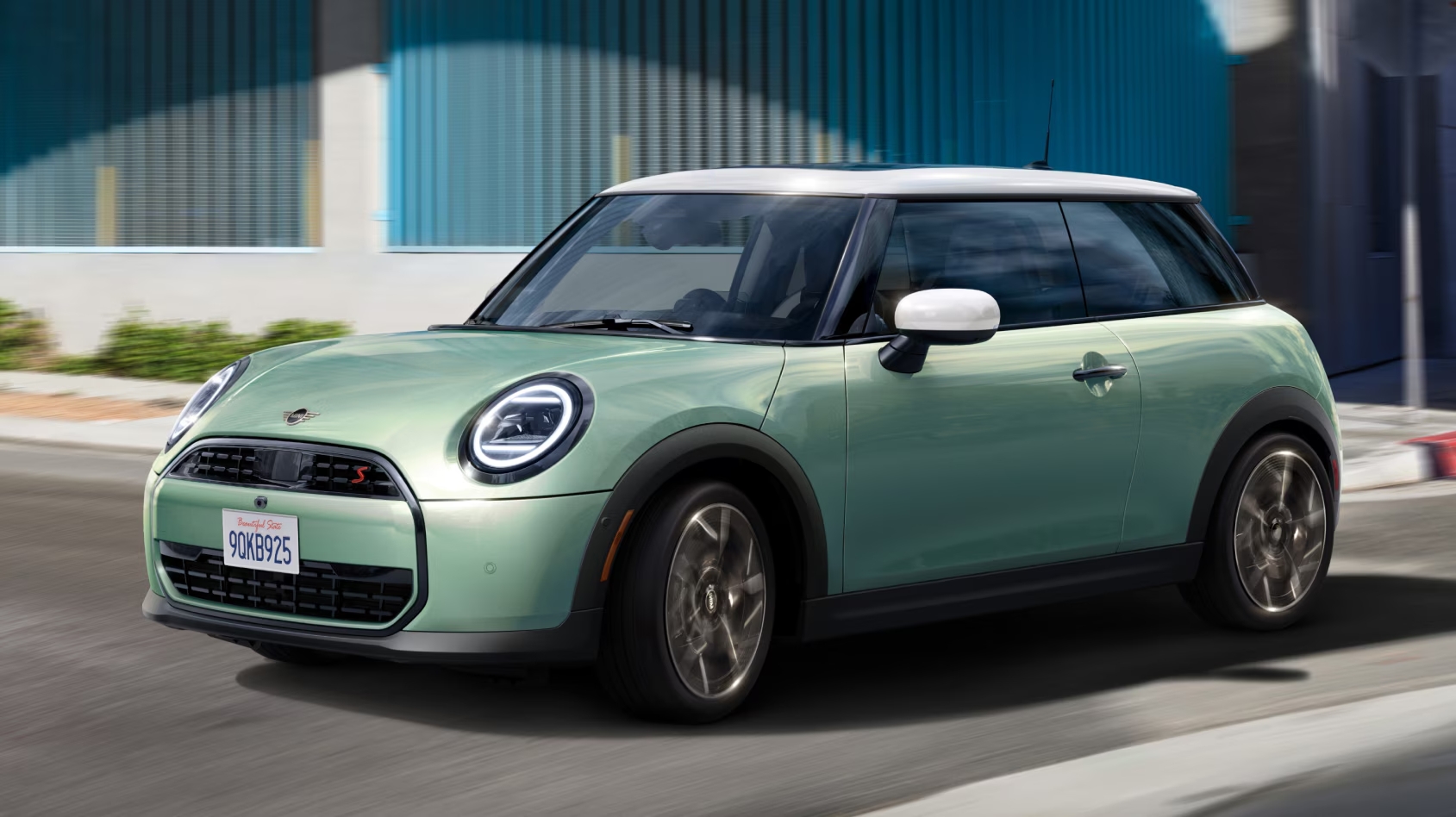
Nearly 70 years of front-wheel drive. That tradition may be ending. According to Autocar, reported by Car and Driver, the next-generation Mini Cooper Electric is likely switching to BMW’s Gen6 / Neue Klasse platform — the same architecture underpinning the Neue Klasse i3 and iX3. On Gen6, single-motor cars coming to market are rear-wheel drive by default, which means the next Cooper EV would almost certainly abandon the front-drive layout that has defined every Mini built under BMW’s ownership. Neither Mini nor BMW has officially confirmed the change, but the engineering path points firmly in one direction.
The Platform Made the Decision
The technical constraints of BMW’s Gen6 architecture effectively leave no room for a front-wheel-drive single-motor Mini.
BMW’s primary Gen6 motor — an electrically excited synchronous motor (EESM) — integrates directly with a gearbox and sits exclusively at the rear axle. The smaller front-axle motor used in AWD variants has no gearbox and cannot function as a standalone drive unit. According to BMW Blog, BMW engineers have stated there are no plans to develop a front-axle EESM for Neue Klasse, a decision pattern echoed by Honda’s move to cancel its futuristic EV line before production. On this platform, single-motor cars are rear-wheel drive — and that constraint applies to any future Mini built on it.
What We Know So Far:
- Current Cooper Electric uses a bespoke FWD platform developed with China’s Great Wall Motor; outputs top at around 215 hp
- Next-gen Cooper EV is reportedly switching to BMW Gen6 / Neue Klasse
- Gen6 single-motor configuration is rear-wheel drive only
- Platform supports dual-, tri-, and quad-motor AWD variants
- BMW 1-series is also expected to go rear-drive from around 2028
Power, Dynamics, and What You Actually Feel
The move to rear-wheel drive could mean sharper handling and substantially more power for the next Cooper Electric.
Autocar describes the shift as partly motivated by rear-wheel drive being “better for dynamics” — a detail that carries real weight for a brand that has spent two decades marketing go-kart handling as its core identity. Car and Driver suggests the platform switch could deliver a substantial power increase over current 215 hp ceiling, which is plausible given that Neue Klasse hardware is engineered to scale well beyond what a compact front-drive architecture can cleanly support.
Packaging advantages are also in play: freed front space, better weight distribution, and lower-mounted batteries that can improve cabin room — though precise specifications remain unconfirmed. BMW development boss Joachim Post has framed future model decisions around choosing “the optimum for the package,” with “sheer driving pleasure” as the stated priority, as reported by Focus. Those comments are widely read as opening the door to rear-wheel drive across BMW’s smaller car lineup, Mini included.
The Mini Still Has to Look Like a Mini
Even as the drivetrain shifts, Mini’s design chief insists the Cooper’s visual identity is non-negotiable.
Mini design chief Holger Hampf has told Autocar that preserving the Cooper’s proportions and stylistic character is “non-negotiable,” regardless of what happens beneath the floor. Subtle changes to wheelbase and interior packaging are likely as engineers adapt the rear-drive platform to a small hatchback body, but the expectation — reinforced by Hampf’s comments — is that the silhouette stays recognizably Mini.
Long-time enthusiasts may find the shift unsettling, but it’s worth noting that Minicars have always carried unique safety and handling tradeoffs — and BMW’s Mini has always been a reinterpretation of the 1959 original rather than a direct continuation — and a move to rear-wheel drive can be read as the brand staying competitive rather than walking away from its roots.
No drivetrain layout, power figures, or timing have been officially confirmed by Mini or BMW. What driving enthusiasts and prospective buyers should watch for is official platform confirmation and whether the next Cooper Electric’s real-world dynamics actually justify the change — not just on paper, but on the road.