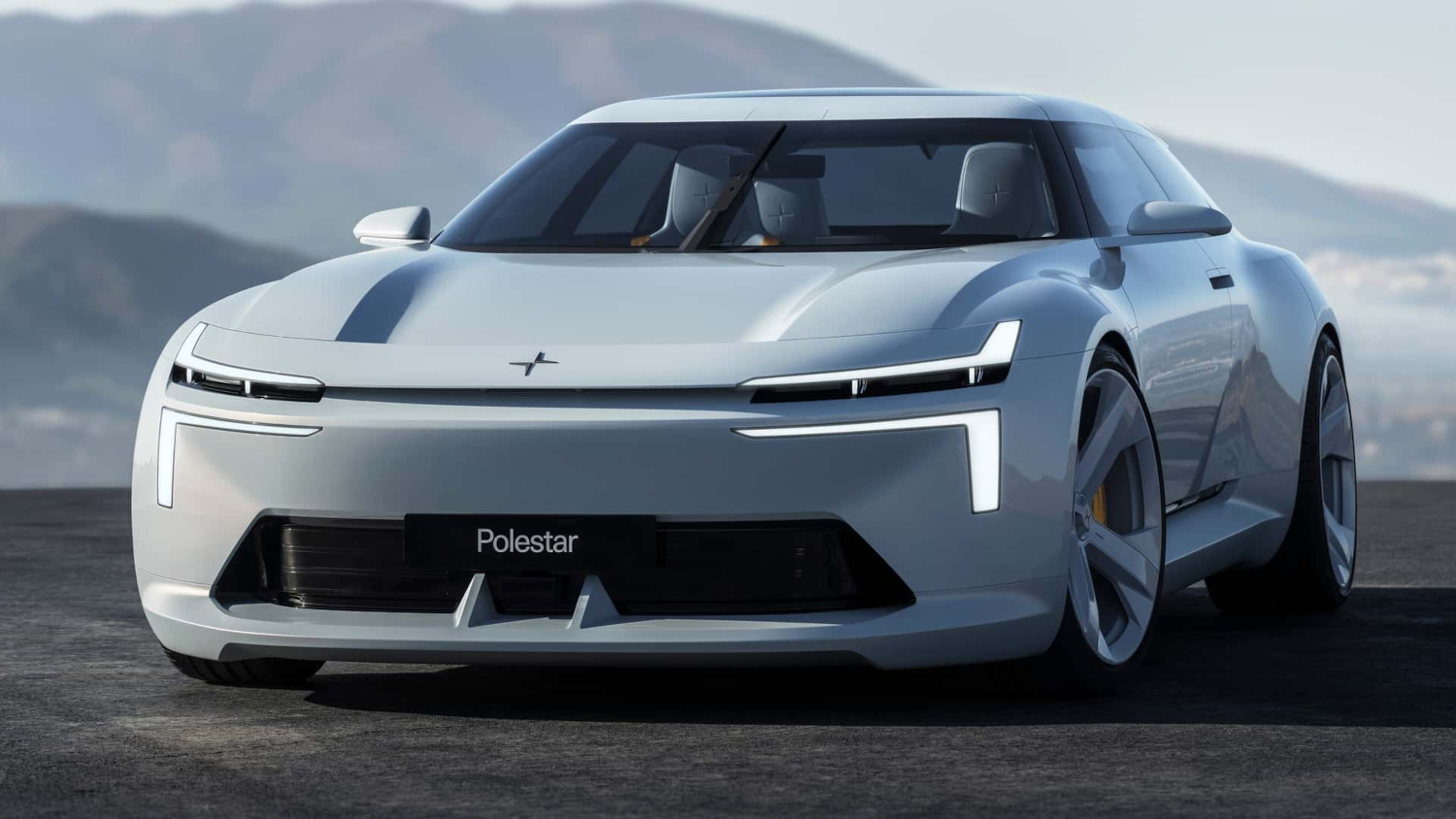
Smooth surfaces, haptic glass, touchscreen menus nested four levels deep — that’s the aesthetic most EV makers settled on. Polestar just drew a line in the asphalt. Formula 2030 is a concept car, not a production vehicle, but according to Polestar, its design DNA will influence the next-generation Polestar 2 and the upcoming Polestar 7 compact SUV. For American enthusiasts, Polestar’s U.S. sales status reportedly remains uncertain — treat any 2030 timeline as an open aspiration, not a confirmed return date.

Built Like It Means It
Every dimension and detail on Formula 2030 communicates intent, from its aggressive stance to its deliberately theatrical underhood reveal.
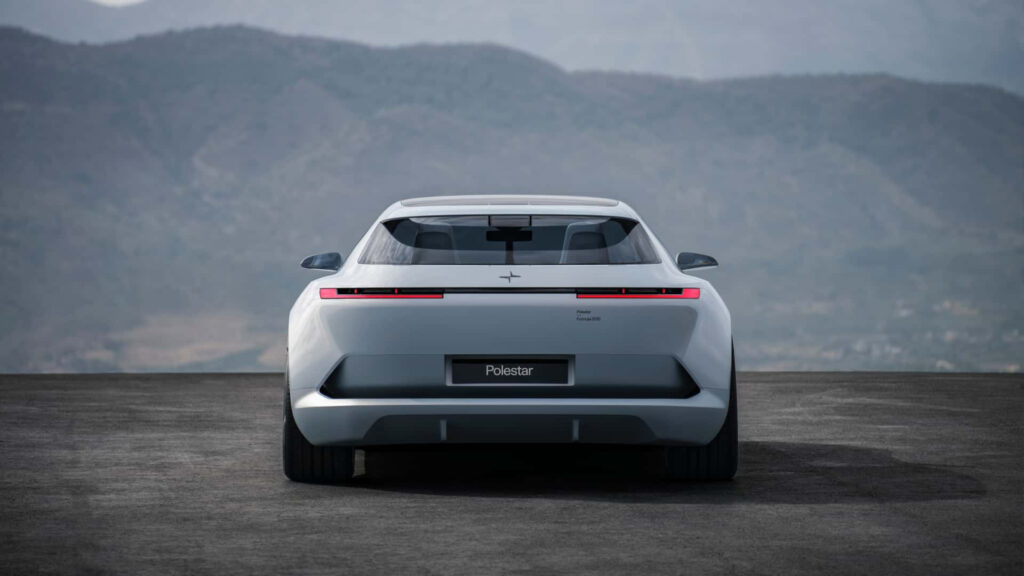
At 4,680mm long, 2,021mm wide, and just 1,350mm tall — with a 2,780mm wheelbase — Formula 2030 sits low and spreads wide. A shark-nose front anchors Dual Blade headlights integrated into an aerodynamic front wing; Single Blade rear lights replace the brand’s familiar full-width bar. Coach-style rear doors eliminate the B-pillar, opening the cabin like a stage curtain. Pop the clamshell hood or hatch and orange Öhlins dampers stare back at you. That’s not an accident. That’s theater.
Key details worth knowing:
- Four-door shooting-brake body on 22-inch wheels with flared rear fenders and short overhangs
- Coach doors and no B-pillar create a wide, unobstructed cabin opening
- 20-inch curved driver-information display mounted on the steering column
- 12.2-inch center screen drops closer in Performance mode; rises in Autonomous mode
- Up to eight customizable physical controls — rotaries, rockers, buttons — assignable by the driver
- Materials include European flax fiber, bio-based polypropylene, and mono-material door panels designed for closed-loop recycling
What This Means For The Cars You Might Actually Buy
The honest answer is that some of Formula 2030’s most striking ideas will be simplified before they ever reach a showroom floor.
Formula 2030 itself won’t reach production. Coach doors, the B-pillar delete, and full hardware configurability could be simplified before surviving cost, safety, and regulatory realities. What travels forward, according to Polestar, is the design language — Dual Blade headlights, shark nose, Single Blade rears — with confirmed influence on the next Polestar 2 and Polestar 7. The configurable physical controls are the genuine editorial bet: tactile switches you actually choose and assign, in an industry sprinting toward screens that feel like nothing. Four individual bucket seats with inflatable bolsters reinforce that all four occupants matter, not just the driver.

No powertrain figures have been disclosed in available materials. Any specs circulating beyond what Polestar has confirmed should be treated with skepticism.
Formula 2030 demonstrates that Polestar still wants to build cars coming that make you feel something. Whether American drivers get that feeling by 2030 remains the open question worth watching.