The nightmare scenario for any used-EV shopper is familiar: buy a three-year-old electric car, watch the battery quietly crater, and suddenly face a repair bill that redefines the word “regret.” Ford’s latest dataset — battery-health records from more than 36,000 2021-model-year Mustang Mach-E vehicles, collectively covering roughly 2 billion miles across the U.S. and Canada — lands as a direct rebuttal to that fear. The numbers are worth examining closely.
What the Numbers Actually Show
Five years of fleet data tells a quieter story than the doomsayers predicted.
Ford analyzed 2021-model-year Mustang Mach-E SUVs over an average ownership period of 5.2 years. Battery state of health — essentially how much usable capacity a pack retains relative to its original factory rating — averaged 92% across the fleet. For a Mach-E configuration rated at 305 EPA miles when new, that works out to roughly 280 miles of theoretical range. Real-world delivery will still vary with temperature, speed, and HVAC load. Retained capacity and actual range are not the same number.
Key findings from Ford’s dataset:
- 95% of vehicles landed between 87% and 97% battery health, suggesting severe degradation was uncommon across the fleet
- More than 2,000 vehicles surpassing 100,000 miles averaged above 91% retained capacity
- More than 30 vehicles past 200,000 miles averaged approximately 88% — a small sample, but an encouraging data point
- The analyzed vehicles use nickel-cobalt-manganese (NCM) battery packs; Ford began introducing lithium-iron-phosphate (LFP) chemistry in newer Mach-E models, so these findings should not be generalized across all configurations
- Ford reports the data is feeding directly into future EV development, giving the study relevance beyond current owners
One important qualifier: this is manufacturer-reported fleet telemetry, not independent laboratory testing. That doesn’t make it useless — more than 36,000 vehicles operating across varied climates and driving patterns is a genuinely large sample — but it should be treated as strong evidence, not an unconditional warranty.
What This Means If You’re Buying Used
A five-year-old Mach-E showing around 90% battery health is consistent with the fleet data — but always verify the individual vehicle before signing anything.
A used Mach-E reporting roughly 90% battery health falls squarely within Ford’s fleet findings and comfortably inside the range covering 95% of vehicles studied. That context matters. Even so, age and odometer readings alone are not reliable proxies for battery condition — a vehicle-specific health report is worth requesting before any buying used decision.
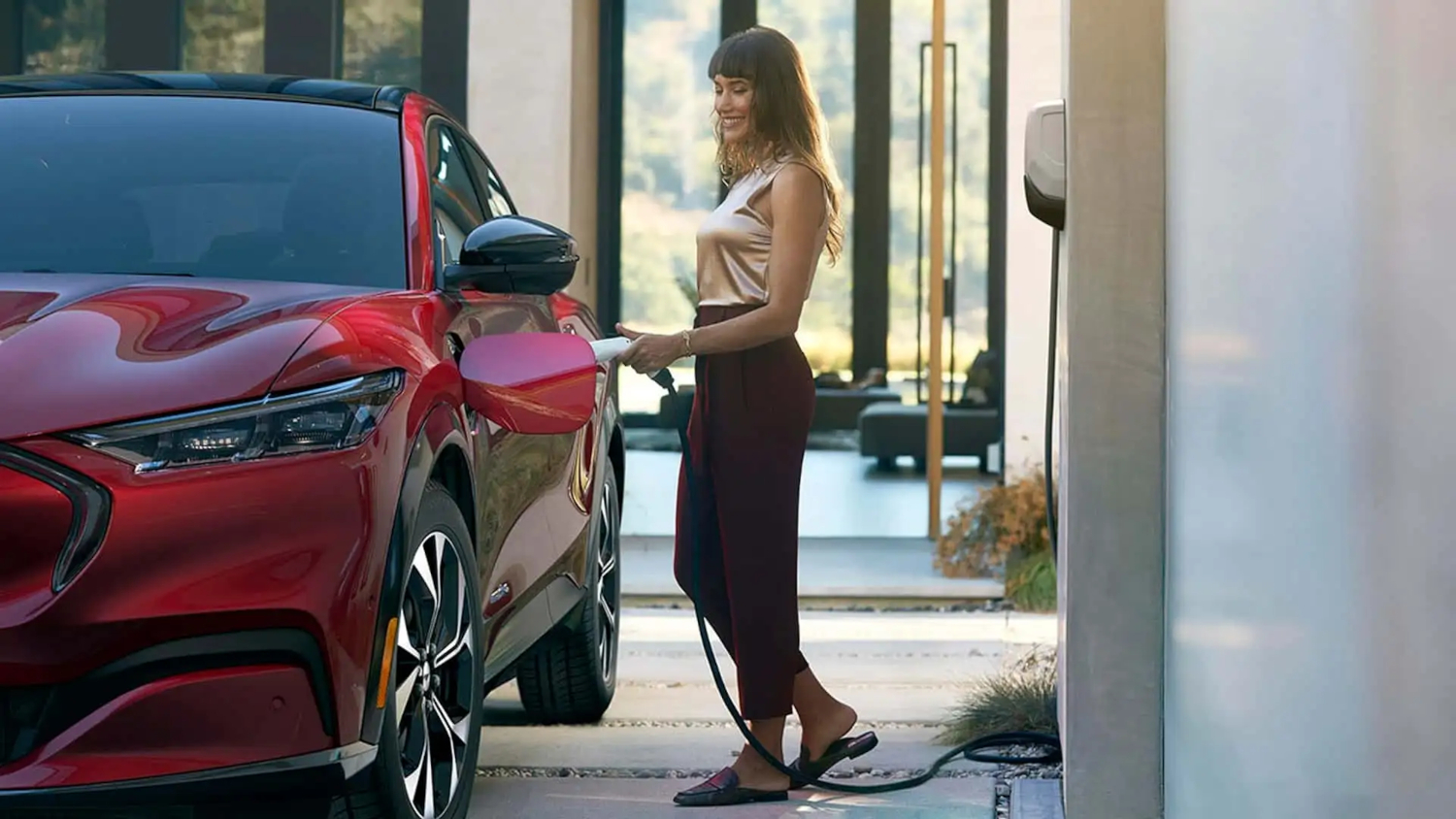
Charging habits also shape long-term outcomes. Frequent DC fast charging, regularly charging to 100%, draining the pack near-empty, and sustained heat exposure can all accelerate wear. Ford’s guidance for routine ownership points toward:
- Level 2 charging for daily needs
- Reserving DC fast charging for longer trips
- Preconditioning the battery while still plugged in
- Avoiding prolonged exposure to extreme heat
Modern EV packs benefit from thermal management systems that smartphone batteries simply don’t have — but those systems work best when charging behavior supports them.
Degradation here looks more like gradual erosion than a sudden cliff edge. For used-EV shoppers who’ve been holding back over battery fears, that distinction reshapes the conversation considerably.
The data doesn’t promise every Mach-E will reach 200,000 miles in perfect health — the vehicles that did represent a small subset, and individual results will always vary. But the battery collapse that used-EV skeptics have long treated as inevitable is not showing up in Ford’s numbers, not at scale, and not after five years of real-world driving across two countries.