

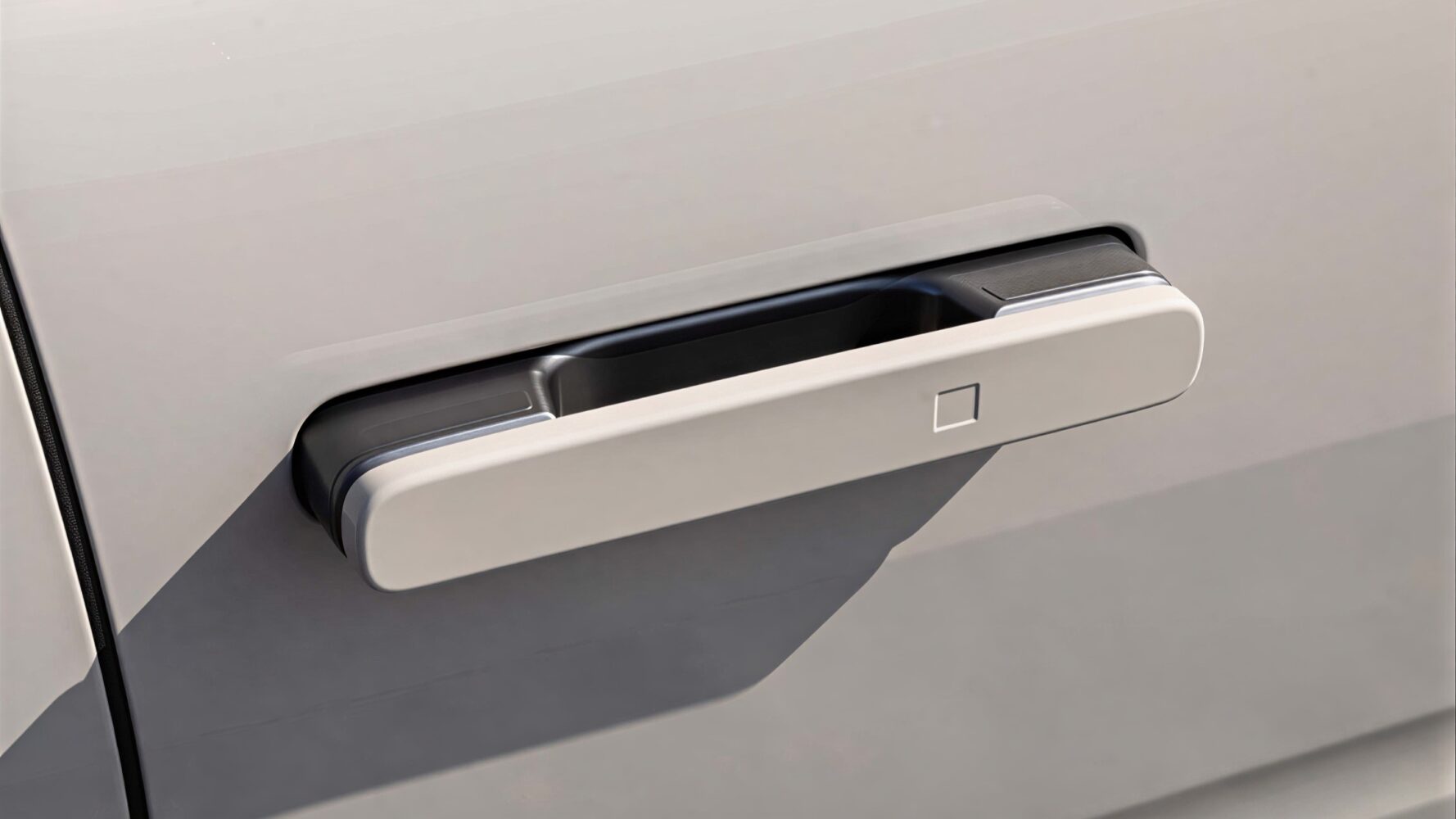
Your car crashes. Power dies, and the door won’t open. That’s not a Black Mirror episode — it’s a failure mode reported across some of the most popular EVs on the road today. Federal Motor Vehicle Safety Standard No. 206, the rule governing door locks and latches, has existed for decades. It was designed to keep you inside during a collision. Getting you out afterward? Entirely unaddressed. NHTSA has now granted a petition to explore industry-wide rules requiring robust, mechanical, clearly marked egress systems in all vehicles — not just Teslas.
A Rule Built for a Different Era
The standard that governs your car door was never written to get you out of one.
NHTSA has formally stated that FMVSS 206 is “narrowly focused on occupant retention” with “no performance requirements for occupant egress.” That’s the regulatory gap. Flush, power-actuated handles — a Tesla signature widely adopted across the EV market — introduced a dangerous new wrinkle: lose 12-volt battery power in a crash, and the door may simply not open from outside. The original rule predates that design reality entirely.
Here’s where things stand:
- NHTSA opened a preliminary evaluation into 2021 Tesla Model Y vehicles after 16 reports of door handles failing at low 12-volt battery voltages.
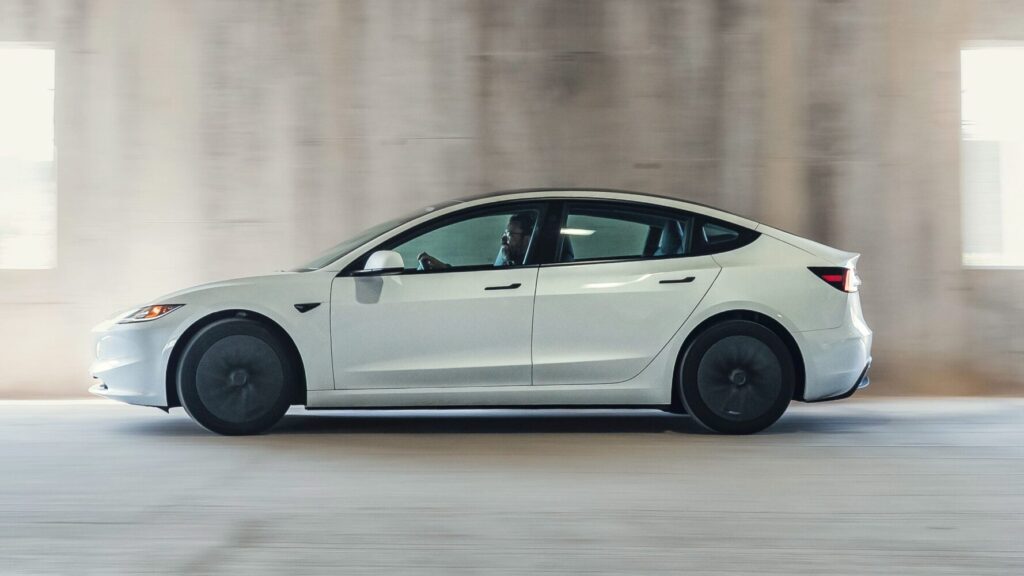
- A separate investigation covers roughly 180,000 Model Year 2022 Tesla Model 3s over emergency releases described as “hidden, unlabeled, and not intuitive to locate during an emergency.”
- NHTSA denied a petition to treat the Model 3’s interior release as a defect under current rules — then pivoted to exploring new standards for all vehicles.
The human-factors problem is straightforward and serious: first responders hunting for hidden releases, panicked passengers who never learned the secret handshake of their own car door. As one complainant’s filing described Tesla’s Model 3 mechanical emergency release, per NHTSA investigation reporting: “Hidden, unlabeled, and not intuitive to locate during an emergency.”
Tesla design chief Franz von Holzhausen has acknowledged the problem and confirmed the company is reworking its door-handle design, according to CNBC. Rivian is reportedly reconsidering flush handles as well. Multiple NHTSA investigations, a granted rulemaking petition, and regulatory action abroad confirm this has moved well past a fringe concern.
What a New Rule Could Actually Require
Mechanical backups, clear labeling, and doors that open when the software doesn’t — that’s the vision, though the timeline is another story.
The granted petition envisions mechanical releases that survive total power loss, positioned where occupants and rescuers expect them, operable without tools. NHTSA hasn’t drafted regulatory text yet — technical studies, public comment, and industry input all come first. Adding pressure from abroad: China’s Ministry of Industry and Information Technology has finalized a ban on flush EV door handles effective January 1, 2027. Automakers facing divergent global standards often gravitate toward a unified, safer design, which could quietly accelerate the U.S. process.
Even so, the timeline is long. “Even if these door-egress rules are fast-tracked, changes are unlikely to appear in showroom vehicles before around 2030,” Michael Brooks of the Center for Auto Safety told Bloomberg.
Granting a rulemaking petition isn’t a law. It’s the starting gun on a process that takes years. The handles on your current EV remain exactly as they were. What’s changed is that regulators have formally acknowledged the old rules were never written for this problem — and that acknowledgment, at least, is a start. For drivers prioritizing easy entry and exit in their next vehicle, the current landscape offers practical guidance while rulemaking catches up.