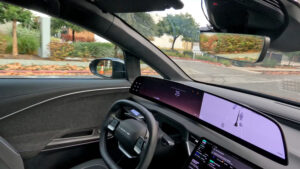


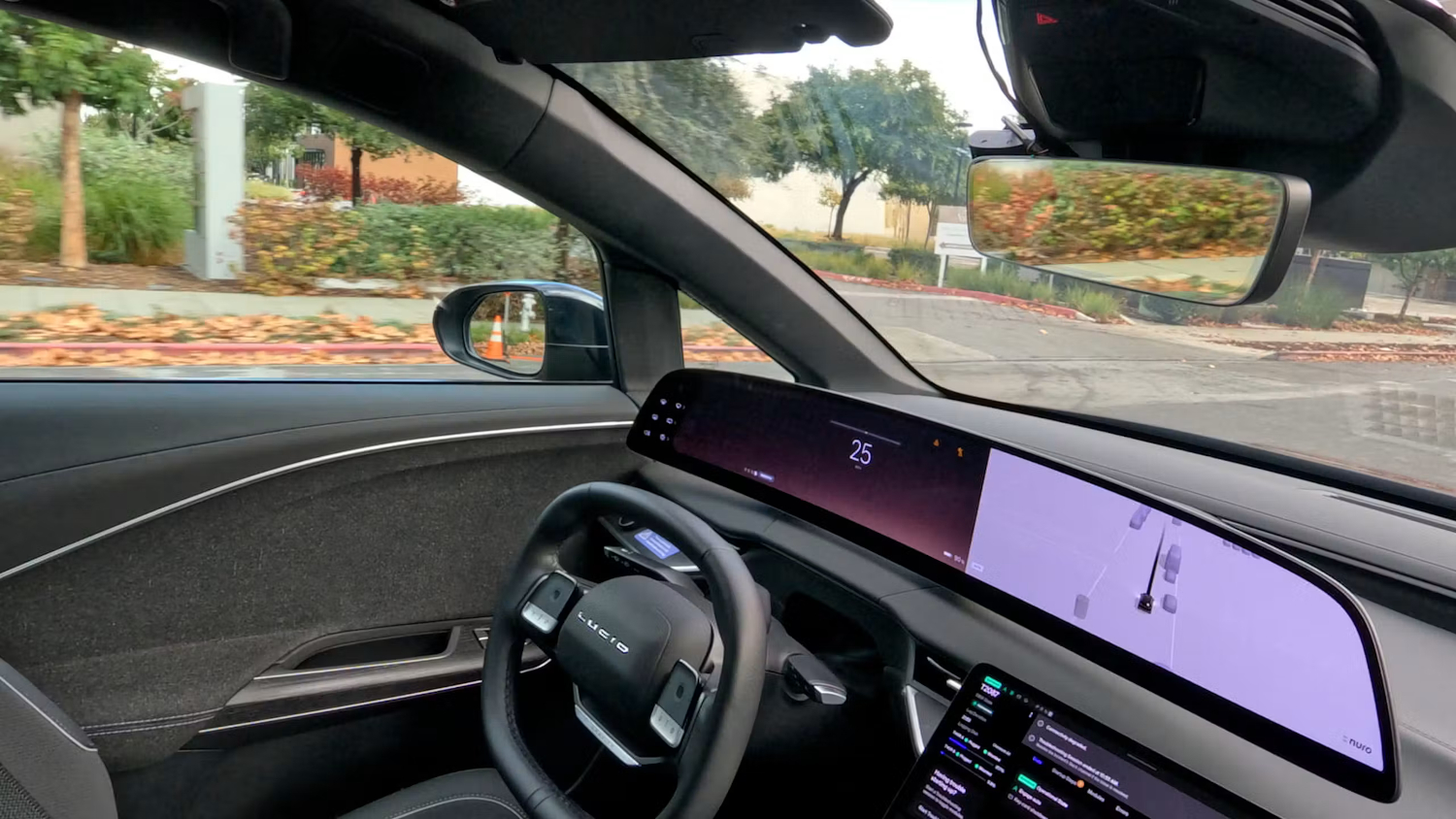
Six months ago, Lucid Gravity robotaxis rolling through the South Bay carried a safety operator up front, ready to intervene. As of November 24, that seat is empty. Nuro, Lucid, and Uber have begun fully driverless public-road testing across Palo Alto, Mountain View, Los Altos, and Sunnyvale — no human backup, real traffic, California DMV permit in hand. According to the companies’ joint announcement, the three partners are targeting a commercial launch on the Uber app in Q1 2027, a timeline that shifted from an earlier 2026 expectation, according to reporting by the Los Angeles Times.
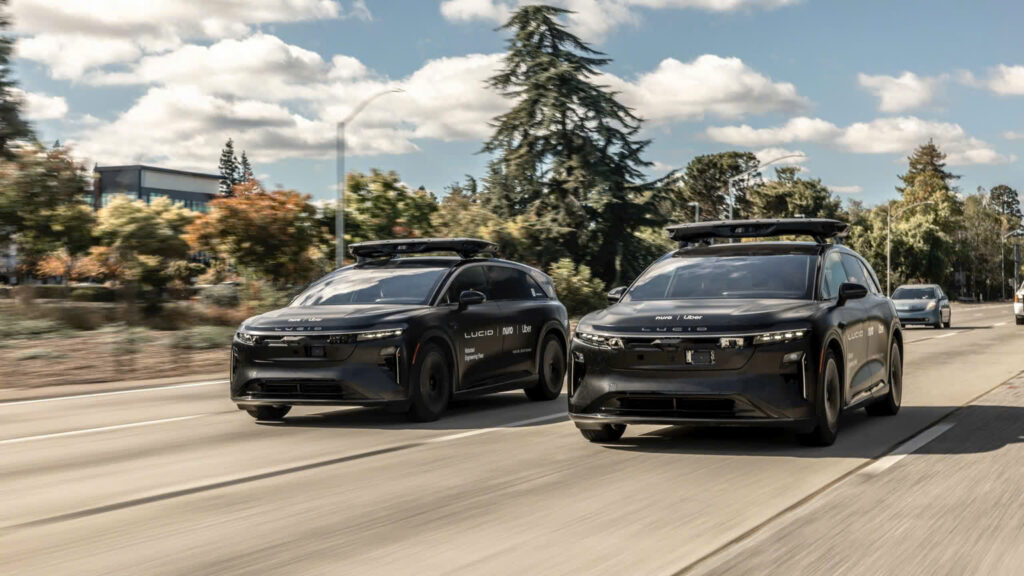
What “Driverless Testing” Actually Means
The program has moved through three distinct stages — and the public hasn’t reached any of them yet.
Supervised testing began in December 2025 with a human operator present. The program has now entered a driverless-testing phase: Nuro’s Level 4 system — meaning it handles all driving within defined conditions, with no human intervention required — operates on public roads under California DMV authorization, with a California Public Utilities Commission permit covering passenger testing. Uber employees are expected to ride in the vehicles next, as an intermediate step before any public access. Ordinary Uber customers are looking at 2027 at the earliest. Day and night operations are both authorized across Santa Clara and San Mateo counties, per the DMV’s permit listing.
The Hardware Doing the Heavy Lifting
Nuro’s autonomous system relies on a layered sensor suite validated across millions of simulated and real-world miles.
What’s under the skin of these vehicles matters:
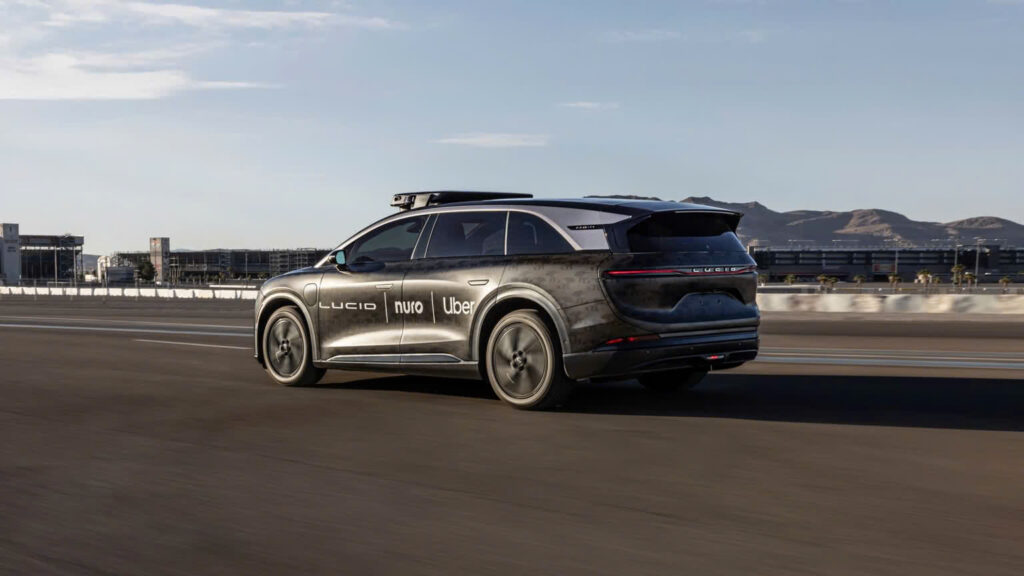
- Cameras, lidar, radar, and a roof-mounted sensor halo work together to give each vehicle redundant coverage of its surroundings.
- Nuro’s validation work spans large-scale simulation, closed-course testing, and real-world scenarios including pedestrian encounters and right-of-way violations.
- The robotaxi fleet is built on the Lucid Gravity electric SUV, updated with the hardware and software required for driverless operation.
- Uber has committed to purchasing at least 35,000 Lucid vehicles equipped with Nuro’s system for long-term fleet deployment, according to the companies’ announcement.
A Crowded Track in the Bay Area
Waymo is already running commercial driverless rides in San Francisco, and this partnership is entering a market with little patience for a slow ramp-up.
Uber’s role here differs from earlier autonomous-vehicle arrangements. Rather than simply providing a software platform, the company plans to own and operate this fleet through its partners — a considerably larger operational commitment. That scale makes the Q1 2027 target meaningful, and the conditions attached to it equally consequential.
The empty front seat represents a genuine milestone for the partnership. But it is not the destination. Meeting safety regulations, securing the necessary regulatory sign-offs, and earning passenger trust are all conditions that have to hold before anyone can actually hail one of these vehicles through the Uber app. If you’re watching for signals that the 2027 launch is on track, the ones to follow are:
- an expanded geographic footprint
- a successful Uber employee-ride program
- any update to Nuro’s CPUC passenger-service authorization
None of which are guaranteed on any particular schedule.