

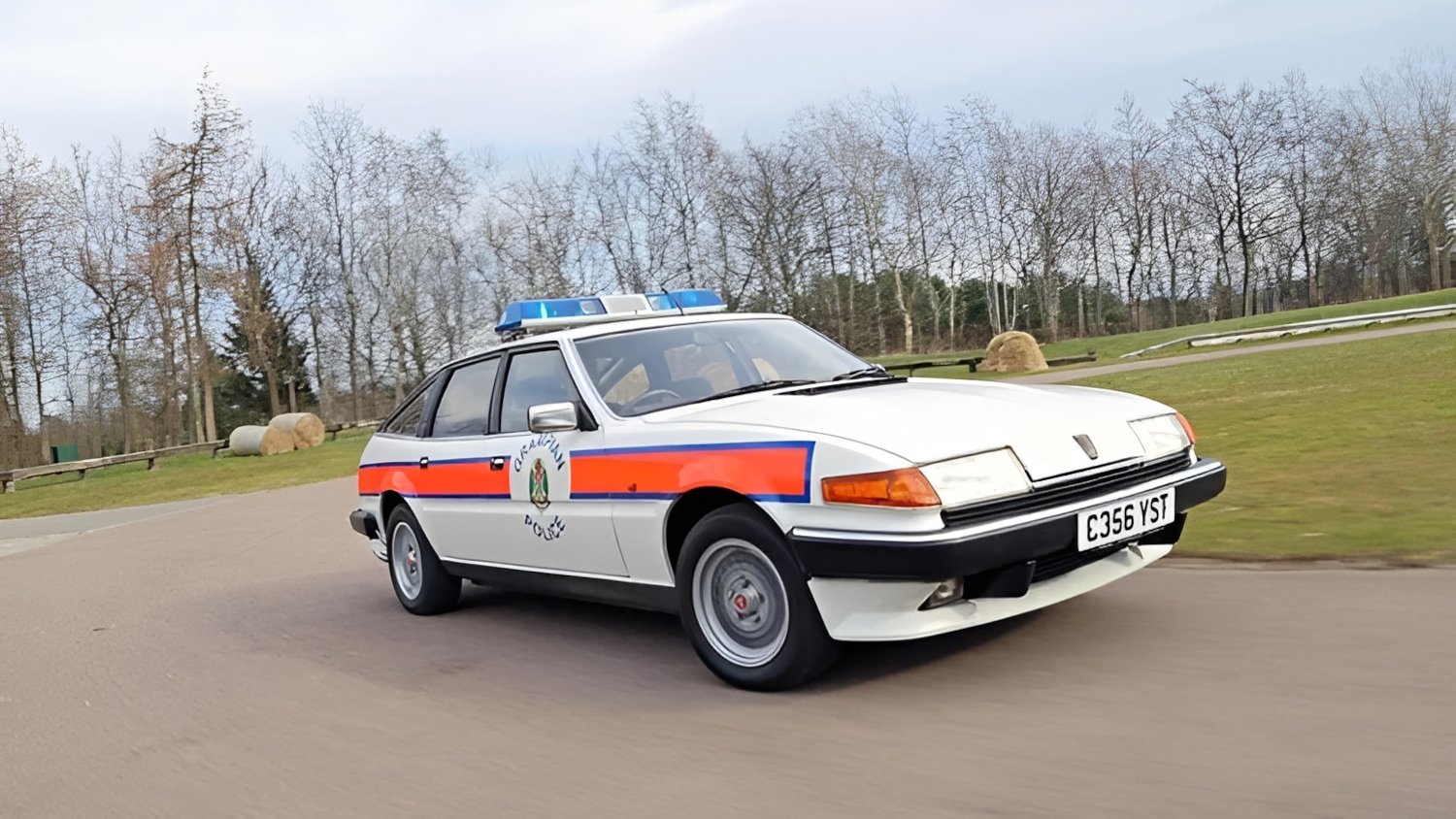
British forces have a habit of inspiring food-based vehicle nicknames. “Panda car” described black-and-white patrol cars whose two-tone livery did most of the explanatory work. Then forces began replacing those blocky color schemes with white or silver bodies carrying broad fluorescent red-orange side stripes. East Sussex Constabulary reportedly ran a thin amber stripe as early as 1965, though the precise chronology varied between forces. By the time the stripe went wide and vivid across fleet vehicles nationwide, the sandwich comparison was already forming in the public imagination. A pale car with a red stripe down its flank needed very little introduction.
What Made the Name Stick
The nickname was entirely unofficial — but that only made it stick faster.
“Jam sandwich” was purely informal slang; no police force ever used the term in an official capacity. A regional variant, sometimes rendered as “jam butty,” circulated in northern England, though the exact geographic boundaries of each term remain loosely documented at best. The stripe color itself varied by force and period — red, orange, or amber — but the pale body against a vivid stripe always communicated the same visual joke to anyone who had ever assembled a school lunch.
According to historical records of Metropolitan Police fleet changes, the force introduced their version of the livery in 1978, initially applied to high-performance Rover SD1 traffic cars. The SD1 was not selected for aesthetic reasons: V8-engined police versions were serious motorway pursuit machines, built for traffic enforcement at speed. Other vehicles wore the same livery across different forces, but the SD1 became the mental image most closely associated with the era — large, fast, and instantly recognizable from a distance. Television appearances in British crime dramas of the period reportedly helped embed “jam sandwich” into popular vocabulary, though specific programs that drove its widespread adoption are difficult to verify precisely.
Battenburg Ate the Sandwich
A cake-named replacement eventually made the jam sandwich obsolete — and the British naming tradition continued unbroken.
The blue-and-yellow checkerboard “Battenburg” markings were developed through police visibility research, with government guidance formally describing the high-conspicuity design in the 2000s. Engineered for long-distance and low-light recognition — night-time testing showed it significantly outperformed earlier liveries — the pattern was practical, conspicuous, and, true to form, named after another British cake. The Metropolitan Police began introducing Battenburg markings on new vehicles in 2012, according to contemporaneous reports, marking the effective end of the classic London jam sandwich. The old livery did not vanish dramatically. It aged out, one fleet replacement at a time, until the red stripe survived mainly in archive photographs and specialist motoring forums.
Britain compressed an entire institutional design history into a lunchbox metaphor. The Battenburg replaced it, the panda car preceded it, and somewhere between those two cakes, a red stripe on a white Rover announced itself before the siren ever needed to.