

Emissions regulations and the fuel crisis defined the early 1970s automotive landscape in ways that most muscle cars did not survive intact. A handful did — through clever engineering, late-production timing, or corporate stubbornness — and several of them never received the attention their performance warranted. This list covers 15 of those cars, researched using Hemmings, Muscle Car Review, and the Hot Rod Network. Each one packed more performance than its sales numbers reflected, and most remain genuinely difficult to find today.
15. 1971 Ford Torino Cobra 429 SCJ (Exterior)

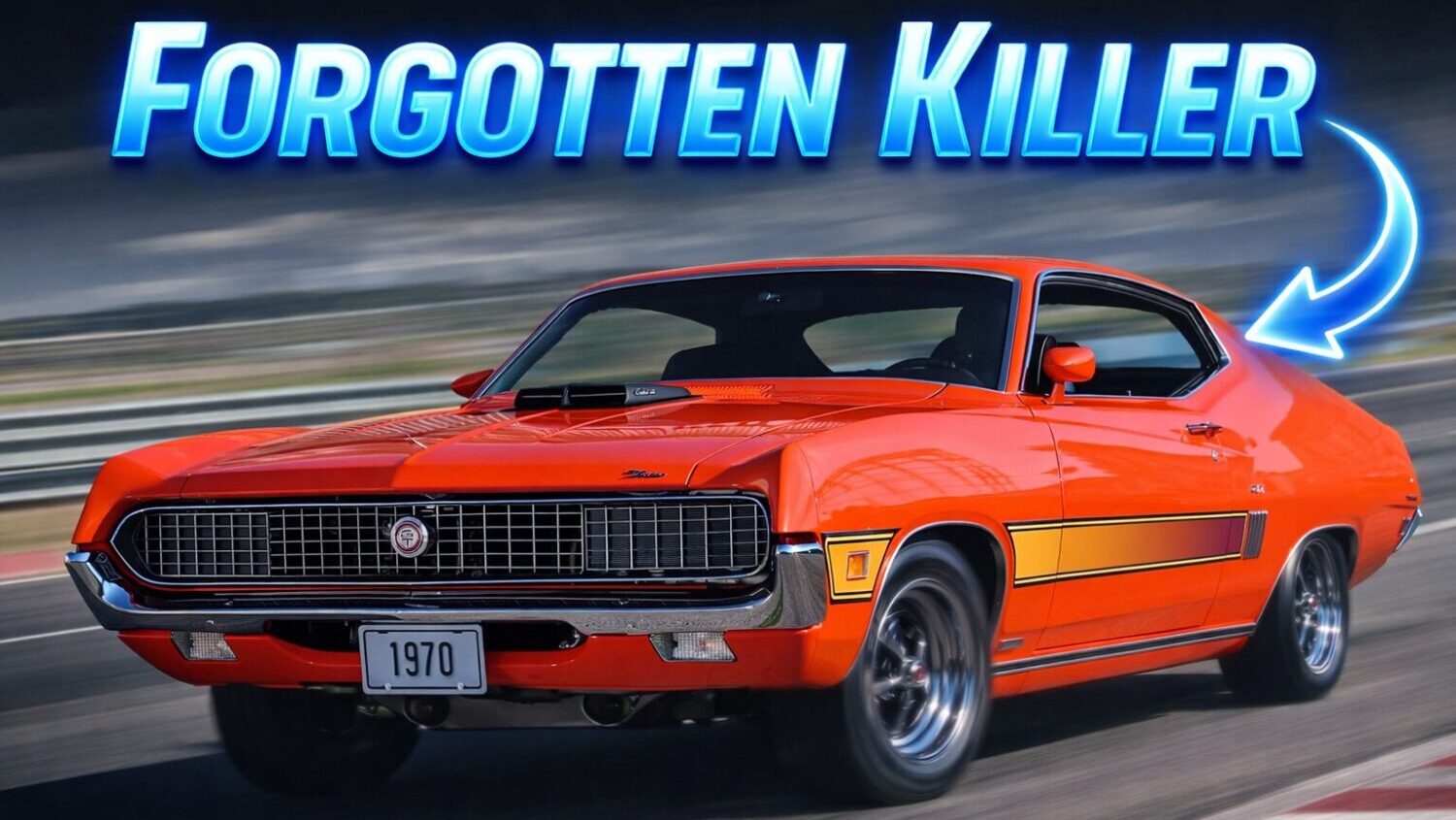
Ford produced 3,054 total Cobras that year, with the Super Cobra Jet being an elite subset carrying Cobra badges and a functional hood scoop that fed cold air to the 429’s intake. The Torino Cobra’s exterior was aggressive without being overloaded with graphics — swept bodywork and a purposeful stance that held up well as the Mustang absorbed most of the contemporary attention. The SCJ package represented the top of what Ford offered in the Torino line for 1971, which was also the last year before regulations began reducing output significantly.
1971 Ford Torino Cobra 429 SCJ (Interior)

High-back bucket seats and a floor-mounted shifter defined the Cobra’s cockpit. The 429 Super Cobra Jet produced 375 horsepower, and most Cobra Jet models ran the quarter mile in approximately 14.5 seconds at 102 mph — figures that varied somewhat between individual test cars in period magazine coverage. Ford balanced the driving experience well here: the Cobra delivered genuine straight-line performance without the spine punishment that some of its contemporaries required as the cost of admission.
14. 1970 AMC Rebel Machine (Exterior)

The first 1,000 Rebel Machines left the factory in a red, white, and blue paint scheme that made the patriotic intent explicit. Later examples came in solid colors while keeping the oversized hood scoop and bold graphics. The functional ram-air scoop, blackout grille, and discrete badging gave the Machine a street-credible stance that held its own against better-funded competitors from Pontiac and Dodge. AMC operated with a fraction of the marketing budget of its Detroit rivals, so the Machine had to communicate its capabilities through the hardware rather than advertising.
1970 AMC Rebel Machine (Interior)

The 390 cubic inch V8 produced 340 horsepower and 430 lb-ft of torque routed through a Hurst four-speed shifter. The Machine reached 60 mph in 6.8 seconds, which was quick enough to embarrass big-block competitors from more prestigious nameplates. Supportive bucket seats, wood-grain accents, and direct gauges built a cockpit focused on driving rather than display. The Rebel Machine made AMC’s performance case with results rather than reputation, and it remains the clearest statement of what the company could do when it committed fully to the segment.
13. 1973 Pontiac Firebird Formula 455 SD (Exterior)

Only 43 Formula SD-455 units were produced in 1973, compared to 252 Trans Ams carrying the same engine — making the Formula the significantly rarer car despite sharing the most significant mechanical component. The Formula took a restrained visual approach compared to the Trans Am’s screaming eagle graphics: cleaner lines, functional twin scoops, and subdued badges that made no announcement about what was underneath. In a year when the muscle car era was closing, Pontiac built this specific variant in numbers so low that encountering one today requires genuine fortune.
1973 Pontiac Firebird Formula 455 SD (Interior)

The officially rated 300 to 310 horsepower from the SD-455 was widely regarded as a conservative figure — period magazine tests confirmed performance that exceeded what those numbers would normally suggest. The engineering milestone came on February 7, 1973, when the SD-455 passed California’s stringent emissions requirements while preserving the performance characteristics intact — a technical achievement that seemed contradictory at the time and remains impressive given the regulatory environment. The SD-455 represents the last high-water mark of American muscle before regulations fundamentally changed what was possible.
12. 1970 Buick GSX Stage 1 (Exterior)

From a total of 678 GSX models produced, 400 featured the Stage 1 package, each finished in either Saturn Yellow or Apollo White. GM‘s Buick division took a measured approach to the exterior — tasteful spoilers, blacked-out grille, and subtle fender flares communicated performance without the graphic overload that other divisions used. The GSX demonstrated that Buick’s engineering ambitions were every bit as serious as the more celebrated performance divisions, a point that surprises buyers encountering one for the first time. For a broader look at GM’s overlooked performance cars, the weirdest GM muscle cars covers more ground in this territory.
1970 Buick GSX Stage 1 (Interior)

The 455 cubic inch V8 produced 360 horsepower and 510 lb-ft of torque — the torque figure being the number that defined this engine’s character and the reason it destroyed Hemis at stoplights. Quarter mile times of 13.38 seconds at 105.5 mph and a 0-60 time of 6.5 seconds were documented in period testing. Comfortable bucket seats, a floor-mounted shifter, and upscale trim created an environment that worked equally well on a cross-country drive and at a dragstrip. The Stage 1 was the most complete package Buick ever built — serious performance delivered with the refinement the brand had always promised.
11. 1977 Pontiac Can-Am (Exterior)
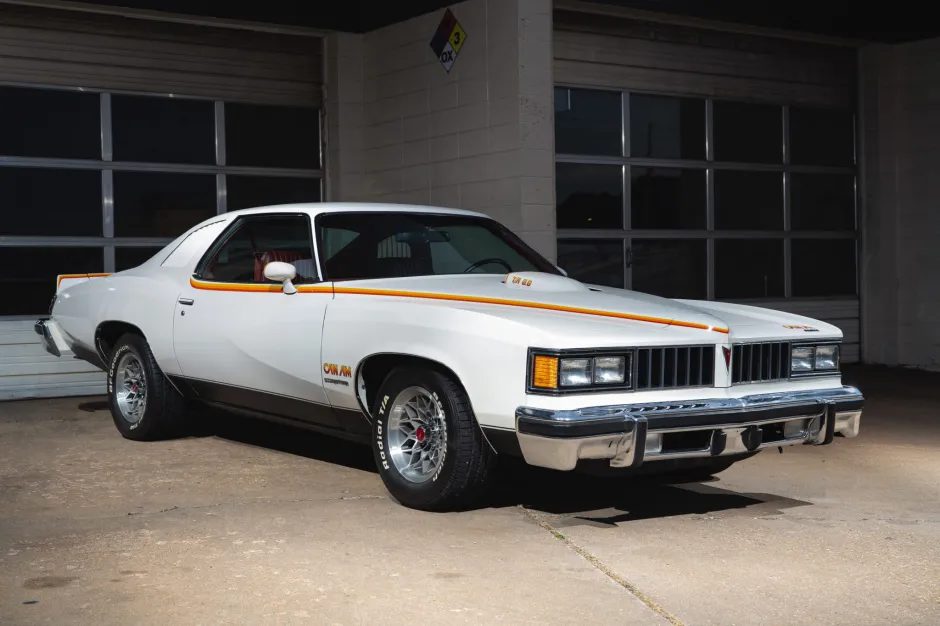
Production was limited to just 1,377 examples — partly because a broken spoiler mold interrupted manufacturing. The Can-Am used the LeMans body finished in polar white with multi-colored stripes, a functional shaker hood scoop, and a rear spoiler borrowed from Trans Am styling. The combination brought Trans Am visual aggression to the more refined LeMans platform, creating a car that looked significantly more expensive than its price and carried genuine performance credibility in a year when finding either quality in a domestic vehicle required searching.
1977 Pontiac Can-Am (Interior)

The 400 cubic inch V8 produced 180 horsepower — the emissions-era reality — while still generating approximately 305 lb-ft of torque that pushed the Can-Am to 60 mph in 10 seconds. In 1977, when the majority of domestic offerings struggled to motivate themselves, that was a legitimate performance claim. Pontiac specified a 2.41 rear axle ratio to optimize highway efficiency rather than quarter-mile times, which reflected the practical driving reality of the period. The Can-Am was a car that made the most of what the regulations left available.
10. 1970 Mercury Cyclone Spoiler 429 CJ (Exterior)

The Cyclone Spoiler’s aerodynamic bodywork had direct NASCAR origins — this was essentially the street-legal version of what David Pearson raced, with a knife-edge front end, semi-fastback profile, and a trunk-mounted wing that generated genuine downforce rather than serving as decoration. Competition Orange, Blue, and Yellow were the available colors. The NASCAR pedigree was functional rather than marketing: the Cyclone’s aerodynamic package was developed on the track before it reached showrooms, which gave it a highway stability advantage that most competitors could not match.
1970 Mercury Cyclone Spoiler 429 CJ (Interior)

The 429 Cobra Jet produced 370 horsepower and propelled the Cyclone to 60 mph in 6.2 seconds, with the quarter mile passing in 14.1 seconds at 100 mph — numbers that matched or exceeded most of its direct competitors. The drag pack option added serious hardware upgrades for buyers who intended to use the car’s capabilities fully. High-back bucket seats, full instrumentation, and a woodgrain dash created an interior that balanced Mercury’s luxury tradition with the performance focus the powertrain demanded. The Cyclone Spoiler remains Mercury’s most overlooked performance achievement.
9. 1971 Plymouth GTX 440+6 (Exterior)

The 1971 GTX arrived wearing Plymouth’s fuselage styling with a shortened wheelbase that tightened the stance and improved handling compared to the previous generation. The Air Grabber hood was functional — the vacuum-operated system opened under acceleration to feed the triple-carburetor intake directly. Plymouth shortened the wheelbase specifically to improve the car’s dynamics, giving the GTX a more compact, muscular proportions that represented the last version of Mopar muscle before regulations changed the fundamental performance calculus.
1971 Plymouth GTX 440+6 (Interior)

The 440 Six Pack — three two-barrel carburetors on a single intake manifold — produced 385 horsepower and launched the GTX to 60 mph in 5.7 seconds, with the quarter mile passing in 13.7 seconds at 102 mph. The dashboard angled toward the driver with proper rally gauges, and the pistol-grip shifter provided mechanical feedback that remains a reference point for manual transmission interface design. The GTX’s interior was purpose-built without being stripped — Plymouth understood that the buyers for this car expected both performance and reasonable daily usability.
8. 1971 AMC Javelin AMX (Exterior)

Designer Dick Teague produced bodywork on the Javelin AMX that remains one of the most polarizing designs of the era — bulging fender flares, deeply inset headlights, a menacing grille, and a power bulge hood that made no attempt at understatement. The design was either excessive or exactly right depending on the viewer, and that division of opinion has defined the car’s collector reputation ever since. Some early models received weight-saving fiberglass hoods that improved both performance and now add to the desirability of specific examples.
1971 AMC Javelin AMX (Interior)

The 401 cubic inch V8 — the largest engine ever offered in a pony car at that point — produced 330 horsepower and moved the Javelin AMX to 60 mph in approximately 8 seconds with a quarter mile around 16 seconds. The Pierre Cardin Edition interior package offered fabric patterns that are now period artifacts — either celebrated or avoided depending on collector preference — but stood as a genuine collaboration between automotive and fashion design that no other manufacturer attempted. Transmission choices included three-speed automatic and four-speed manual, both routing power through a drivetrain built for the 401’s output.
7. 1964 Ford Galaxie 500 XL 429 (Exterior)

The Galaxie 500 XL presented clean, formal exterior styling — stacked headlights, a traditional roofline, optional wire wheel covers, and restrained chrome trim — that gave no visual indication of the performance potential available under the hood. This full-size body’s appearance communicated American luxury rather than muscle car aggression, which made the available engine options all the more surprising to buyers who looked past the exterior to the specification sheet.
1964 Ford Galaxie 500 XL 429 (Interior)

It should be noted that the 429 engine was not available until 1969 — the 1964 Galaxie’s top engine option was the 427 V8 delivering up to 425 horsepower, with the 390 as a lower-rung choice that reached 60 mph in about 9 seconds versus the 427’s sub-7-second capability. The XL trim added sporty bucket seats and a console-mounted shifter that elevated the luxury experience. This full-size Ford combined NASCAR-developed engine options with the highway comfort of a proper touring car, creating a performance machine that worked across multiple use cases in a way that most dedicated muscle cars could not.
6. 1970 Oldsmobile Rallye 350 (Exterior)

The Rallye 350 wore Sebring Yellow on every exterior surface — body panels, bumpers, wheels, and frame — creating a visual presence that was impossible to overlook in a showroom or on a street. Only 3,547 examples were produced, making this a genuinely scarce car today. For a broader look at overlooked period vehicles, these forgotten 1970s cars cover the range of what the decade produced. Oldsmobile’s strategy was deliberate: offer the visual impact buyers wanted without the big-block displacement that drove insurance rates beyond reach for younger buyers, creating a performance package the target market could actually afford to own.
1970 Oldsmobile Rallye 350 (Interior)

The 310 horsepower V8 reached 60 mph in 7 seconds and cleared the quarter mile in 15.27 seconds — legitimate performance numbers that supported the car’s visual claims. Both manual and automatic transmissions were available. Supportive bucket seats, a comprehensive gauge package, and wood-grain accents built an interior that was comfortable enough for daily use while focused enough for the stoplight encounters the Rallye 350’s exterior would inevitably invite. The insurance advantage over big-block alternatives was real and meaningful for the buyers Oldsmobile was targeting.
5. 1973 Ford Gran Torino Sport 429 (Exterior)

The 1973 Gran Torino Sport wore a long hood, fastback roofline, and hidden headlamps in a design that balanced muscle car presence with the personal luxury coupe aesthetic the market was beginning to prefer. Clean body lines flowed more gracefully than most mid-1970s domestic designs, with subtle performance cues rather than the graphic-heavy approach of earlier muscle cars. The Gran Torino’s styling would gain wide recognition through television later in the decade, but its performance credentials were established before that cultural moment arrived.
1973 Ford Gran Torino Sport 429 (Interior)

The 429 cubic inch V8 produced 360 horsepower with a 0-60 mph time of 8 to 10 seconds and a top speed around 130 mph. The suspension handled road imperfections well, the ventilated vinyl seats managed interior temperature effectively, and the braking system was confidence-inspiring for a vehicle of this size and speed. The Gran Torino Sport occupied the transition point between the raw muscle car era and the comfort-oriented personal luxury coupe market — it understood both categories well enough to satisfy buyers from either direction.
4. 1971 Dodge Super Bee 440+6 Pack (Exterior)

Moving from the Coronet to the Charger platform gave the 1971 Super Bee the most aggressive front fascia Dodge had applied to a production car. The twin-scoop hood, bold graphics, and cartoon bee mascot created an exterior identity that communicated the car’s intentions without subtlety. The lightweight hood secured with racing pins was a functional choice — reducing unsprung weight over the front wheels for improved handling — rather than a purely aesthetic decision. The 1971 Super Bee represented the final iteration of Mopar’s uncompromising approach before the regulatory environment forced changes.
1971 Dodge Super Bee 440+6 Pack (Interior)

The 440 cubic inch V8 with three two-barrel carburetors produced an officially rated 390 horsepower and launched the Super Bee to 60 mph in 5.9 seconds, with the quarter mile falling in 14.2 seconds. Driver-focused gauges, high-back bucket seats, and a pistol-grip shifter built a purposeful environment inside. The Super Bee was Mopar’s final statement that emissions regulations and insurance penalties had not yet fully neutralized the performance argument — a statement made most clearly by what those numbers looked like when tested against the stopwatch.
3. 1975 Chevrolet Laguna S3 400 (Exterior)

Chevrolet built only 7,100 Laguna S3s, each wearing a sloped nose developed for NASCAR aerodynamics — a body-colored flexible front bumper and a profile shaped to reduce drag at track speeds. The distinctive front end and Opera window louvers gave the S3 a visual identity that separated it from the tape-stripes-and-fake-scoops approach other manufacturers took to maintain the appearance of performance during the malaise era. The Laguna S3 had genuine wind tunnel origins rather than a styling department approximation of them.
1975 Chevrolet Laguna S3 400 (Interior)

The 400 cubic inch small-block reached 60 mph in 10.5 seconds and cleared the quarter mile in 17.8 seconds — not the performance of the preceding muscle car generation, but the best available in 1975. Swiveling bucket seats and upscale trim added a practical luxury dimension to the NASCAR-inspired package. The Laguna S3 preserved performance credibility during the most difficult period of the emissions era by combining genuine aerodynamic development with the best output the regulations permitted — a more honest approach than most of its contemporaries managed.
2. 1976 Dodge Aspen RT 360 (Exterior)

The Aspen RT debuted with first-year sales topping 500,000 units across all trim levels — a commercial success that reflected how well the compact platform matched what the mid-1970s market wanted. The RT version added stripes, spoilers, and specific badging that telegraphed performance intentions within the smaller, lighter body that both fuel economy concerns and changing buyer preferences had made necessary. The Aspen RT honored Dodge’s performance heritage in a package scaled to the new market reality.
1976 Dodge Aspen RT 360 (Interior)

The 360 cubic inch V8 reached 60 mph in 9.1 seconds with a 16.8-second quarter mile — numbers that represented genuine performance relative to the 1976 competitive landscape. Supportive bucket seats and a full gauge complement made the interior usable for drivers who intended to use the car’s performance. Rust problems, ignition reliability issues, and numerous recalls seriously damaged the Aspen’s ownership reputation despite the decent performance figures. The RT remains the last meaningful performance expression from Chrysler before the K-car platform restructured the brand’s product strategy entirely.
1. 1978 Dodge Magnum XE 400 (Exterior)

The 1978 Dodge Magnum XE was developed with NASCAR aerodynamics as a primary design objective. Hidden headlamps, a sloped front end, and a profile with better wind resistance than earlier Chrysler performance models were the specific outcomes of that process. Richard Petty raced the Magnum in NASCAR, though with limited competitive success, before moving to Ford. Production cars received T-tops and luxury features that positioned the Magnum as a personal luxury coupe with performance credentials — a combination reflecting exactly where the market had moved by 1978.
1978 Dodge Magnum XE 400 (Interior)

The 400 cubic inch V8 produced 190 horsepower — the emissions-constrained reality of 1978 — with 0-60 mph in 11.6 seconds and a quarter mile of 18.6 seconds. Padded surfaces, woodgrain accents, and comfort-oriented seating reflected the brougham aesthetic that dominated the period. Petty’s NASCAR program with the Magnum was ultimately unsuccessful, and the car itself was discontinued as Chrysler’s front-wheel drive transition absorbed engineering resources. The Magnum XE stands as the final chapter of traditional Mopar big-block production — what remained of the muscle car era after regulations and market shifts had extracted everything else from it.