

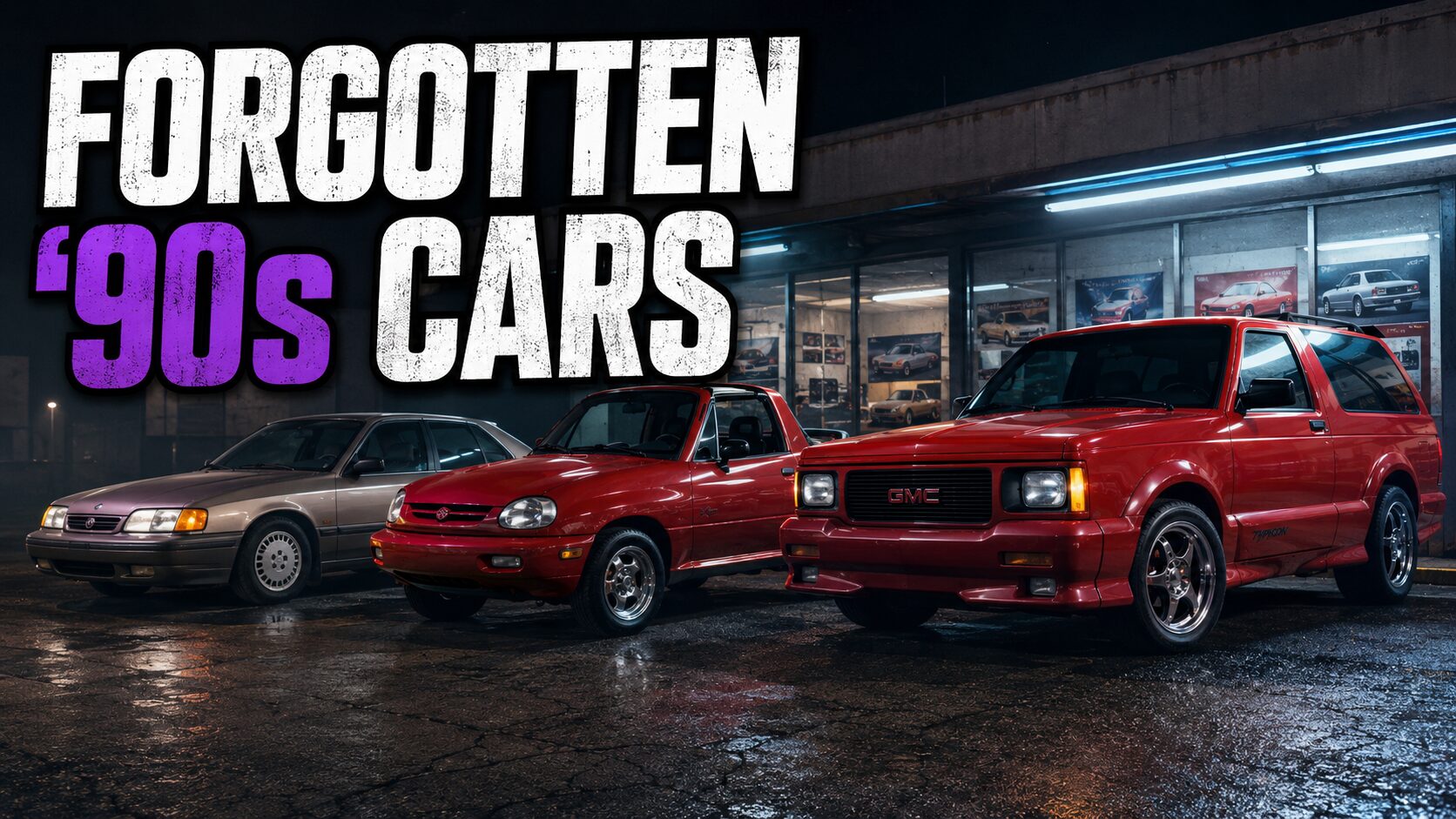
The 1990s produced a specific kind of automotive ambition — companies and engineers convinced that if they built something genuinely extraordinary, the market would recognize it. Sometimes they were right. The GMC Typhoon hit 60 mph in 5.3 seconds and confused everyone who assumed SUVs could not do that. The Mosler Consulier GTP won so consistently that racing series banned it rather than lose to it again. The Cizeta-Moroder V16T put two Lamborghini V8s together transversely and called it an engine. None of them survived commercially. Most of them deserved better than they got.
10. Suzuki X-90 (Exterior)
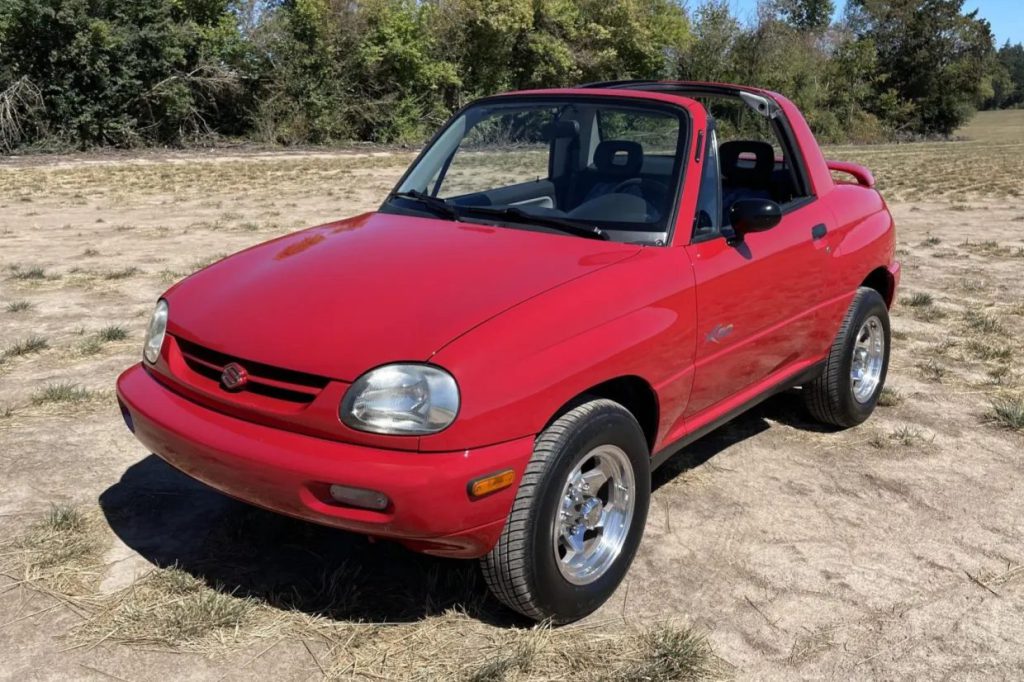
The micro-SUV that answered a question nobody had asked.
The X-90 shared its platform with the Sidekick but abandoned every practical attribute that made the Sidekick useful. This two-seater targa-top micro-SUV was Suzuki’s attempt at an urban runabout for buyers who apparently wanted genuine 4WD capability paired with virtually no cargo space and seating for exactly two. The product definition problem was apparent from launch and never resolved during the vehicle’s brief market life.
Suzuki X-90 (Interior)
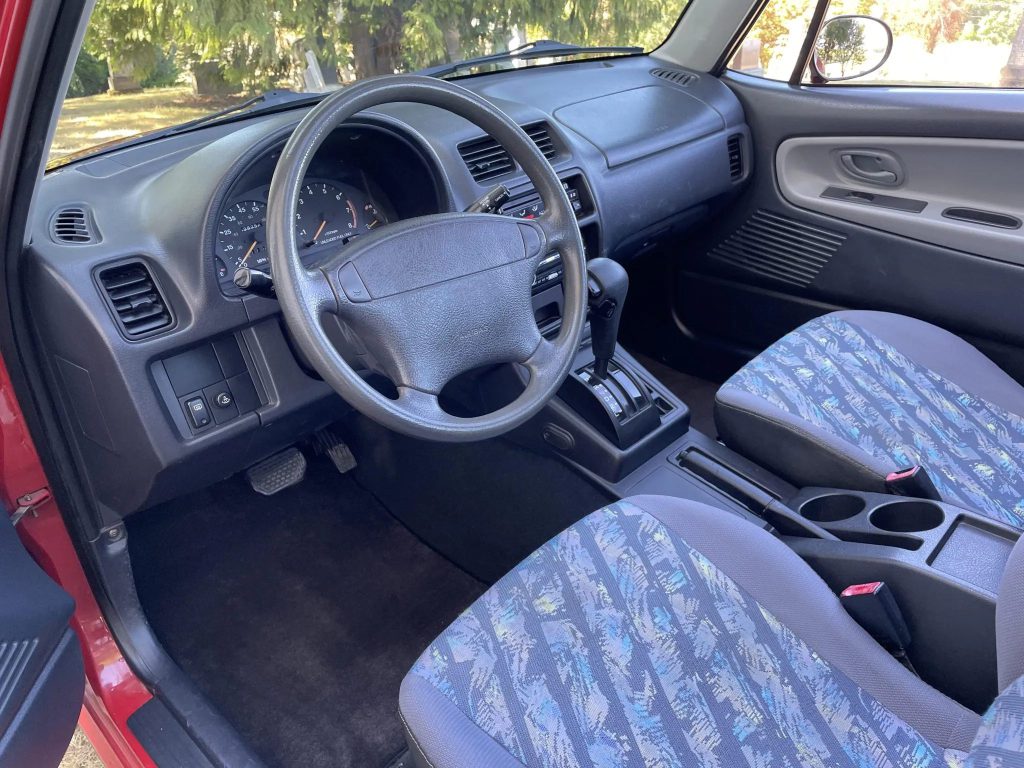
The 1.6-liter four-cylinder produced roughly 97 horsepower — adequate for the vehicle’s size but not the performance argument that might have compensated for the practicality limitations. Approximately 1,400 units sold in the US between 1995 and 1997, making surviving examples genuinely rare. The X-90 is not remembered fondly by collectors but it is remembered — which puts it ahead of most automotive failures that simply disappeared without leaving an impression.
9. Merkur Scorpio (Exterior)
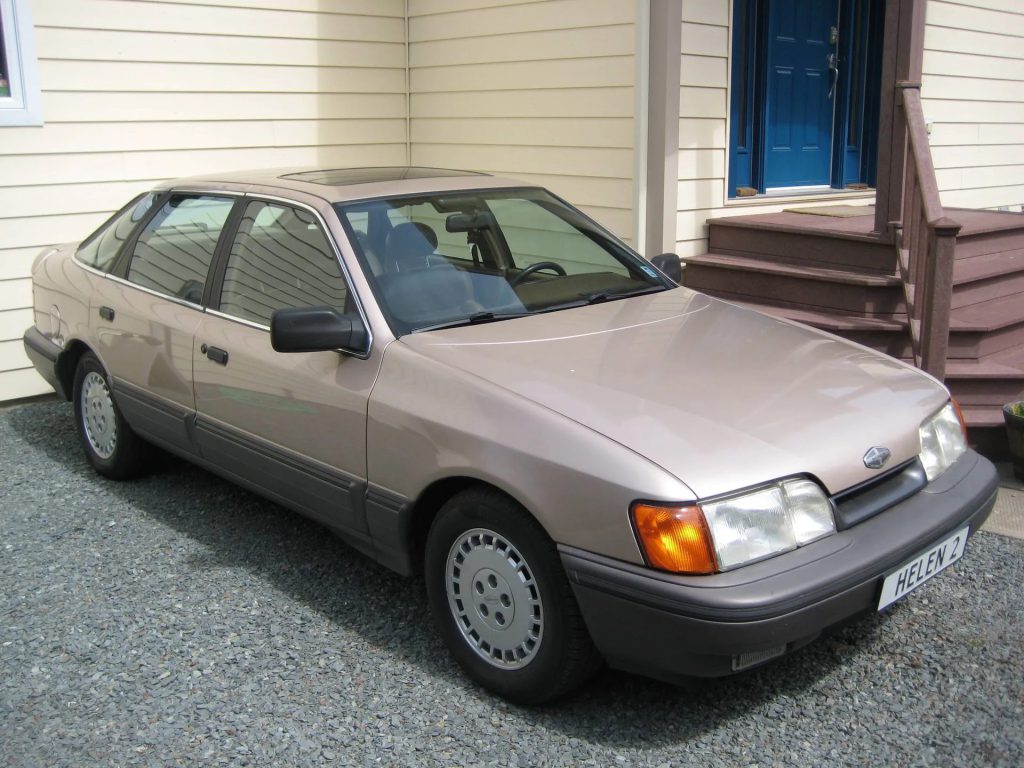
Ford’s luxury sub-brand experiment that could not resolve the brand recognition problem.
The Merkur sub-brand was Ford’s attempt to sell European-market vehicles in America under a separate badge that would not carry Ford’s mainstream associations. The Scorpio was its final entry — a rebadged European Ford Granada positioned against BMW and Mercedes, which created an immediate credibility problem that the vehicle’s actual quality could not overcome. European luxury engineering paired with a brand name that required explanation at every social occasion is not a winning retail proposition.
Merkur Scorpio (Interior)
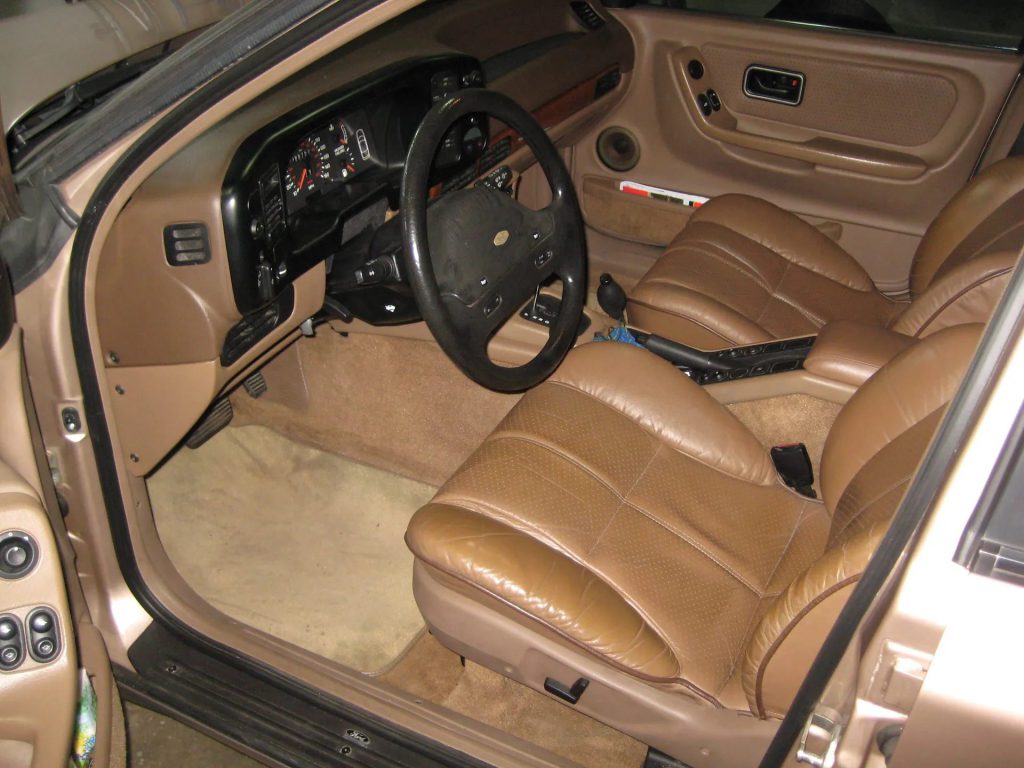
The Scorpio offered European luxury features alongside electronics whose reliability in the American market did not match the premium pricing. Under 22,000 units sold during its US run through 1990. The Merkur experiment demonstrated that selling European engineering in America requires either an established brand with existing credibility or a marketing budget capable of building one — the Scorpio had neither in sufficient quantity to survive.
8. GMC Typhoon (Exterior)
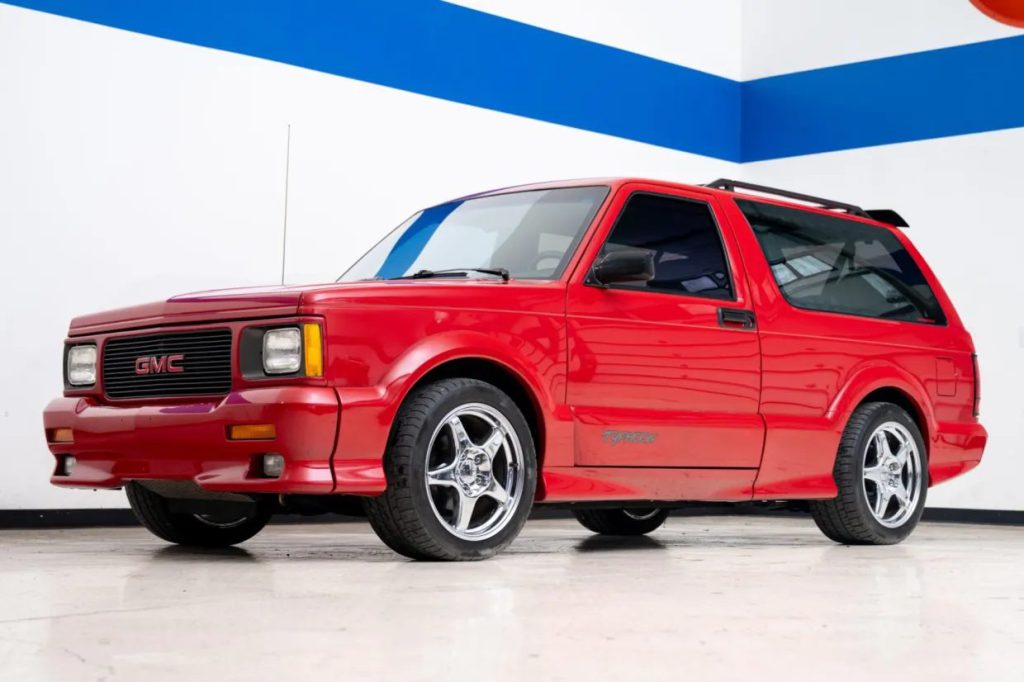
A turbocharged AWD SUV that reached 60 mph faster than most contemporary sports cars.
The Typhoon is what GMC produced when engineering priorities overrode market research. Built on the compact Jimmy platform with a turbocharged 4.3-liter V6 producing 280 horsepower and all-wheel drive, the result was a compact SUV that accelerated from zero to sixty in 5.3 seconds — a figure that embarrassed dedicated sports cars in 1992. The performance specification was not a rounding error or a favorable test condition. It was genuine.
GMC Typhoon (Interior)
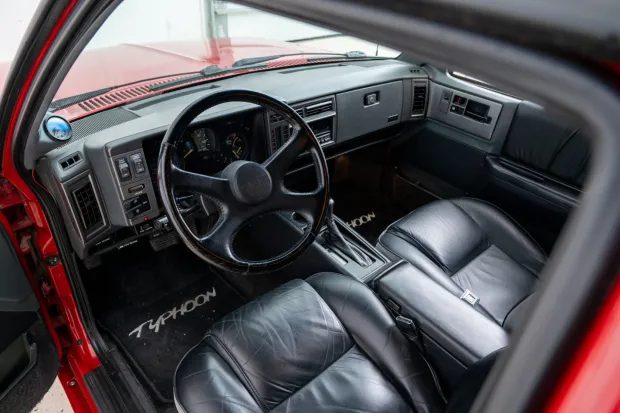
GMC produced approximately 4,500 Typhoons in 1992, most in black. The vehicle delivered performance alongside legitimate SUV utility — a combination that the market did not know it wanted until the Typhoon demonstrated it was possible. Clean examples now command serious collector prices, which reflects how accurately the Typhoon predicted the performance SUV category that would dominate the market two decades later.
7. Mosler Consulier GTP (Exterior)
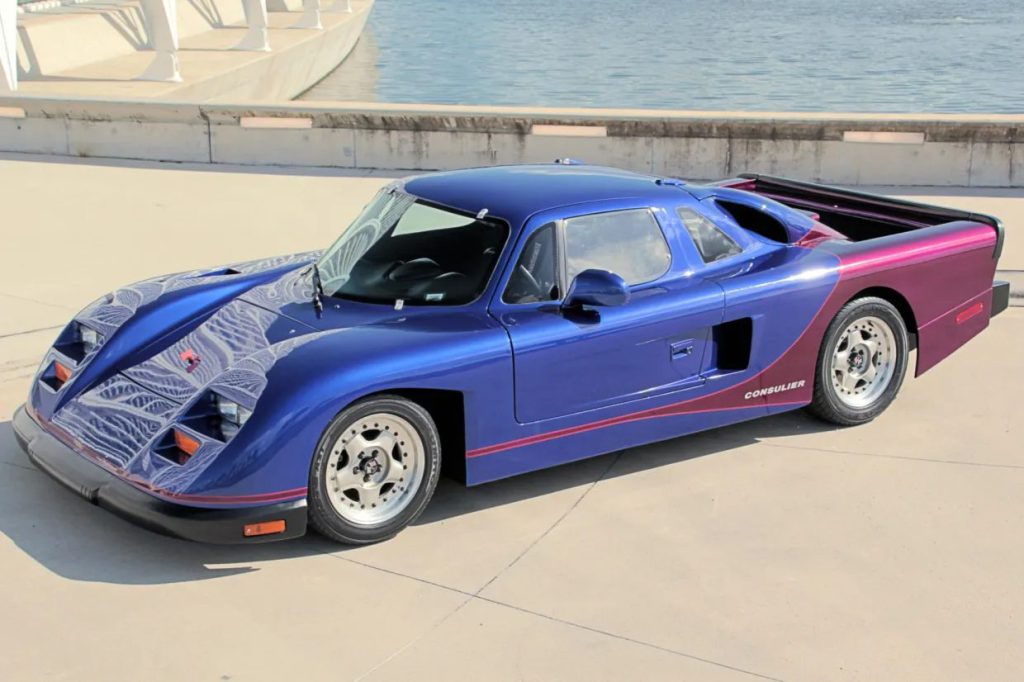
The track weapon that won so consistently it was banned from competing.
Warren Mosler’s Consulier GTP used a turbocharged 2.2-liter Chrysler engine in a lightweight Kevlar and fiberglass body to produce a vehicle that dominated amateur racing so thoroughly that multiple racing series banned it for being disproportionately quick relative to its cost. The engineering premise was straightforward: extreme lightweight construction plus adequate power produces lap times that more powerful, heavier vehicles cannot match. The GTP proved the premise correct on track and struggled to find buyers who appreciated the argument off it.
Mosler Consulier GTP (Interior)
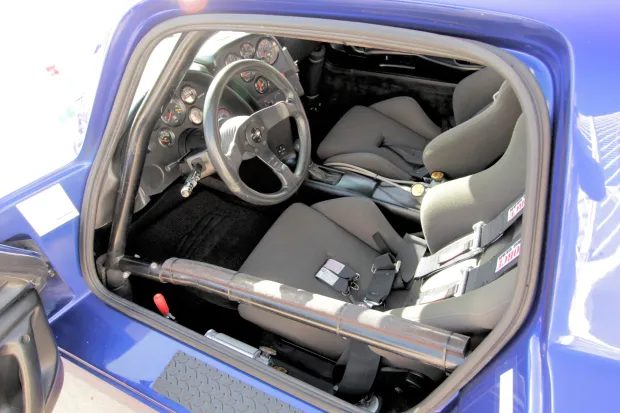
Approximately 100 units were built between 1988 and 1993. The GTP demonstrated that American engineering could out-lap Italian exotica at a fraction of the purchase price — a result that impressed track users and failed to impress the luxury buyer audience whose purchasing decision was based on entirely different criteria. The disconnect between what the GTP achieved and what the market rewarded remains one of the more instructive case studies in niche automotive history.
6. Vector M12 (Exterior)
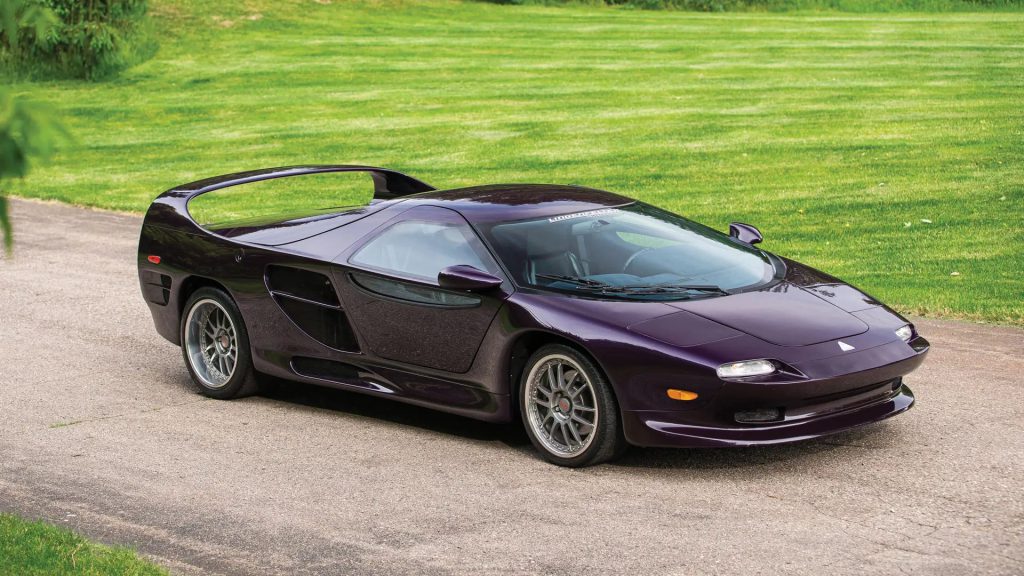
An American supercar with Lamborghini mechanicals that collapsed under its own complications.
The Vector M12 combined American angular bodywork with a Diablo-sourced V12 engine — a specification that should have produced one of the decade’s most compelling supercars. The execution did not match the specification. Indonesian ownership through the Megatech corporation produced approximately 14 examples before quality problems and corporate instability ended the project. The build quality issues were significant enough that Italian supercar reliability looked favorable by comparison.
Vector M12 (Interior)
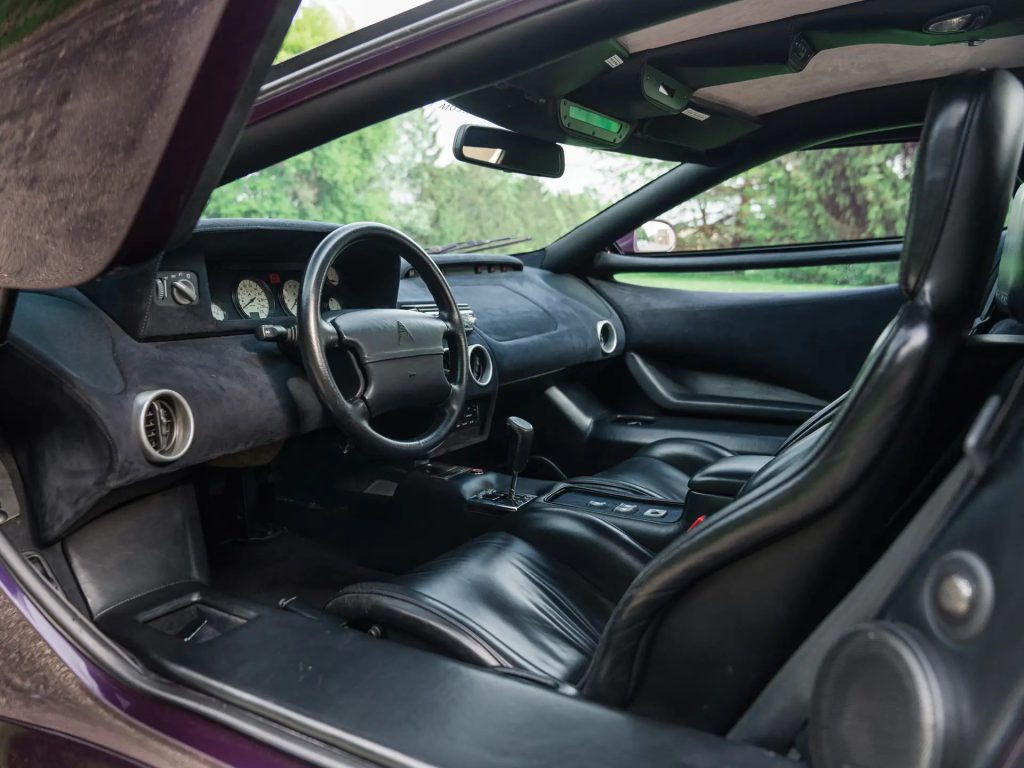
The surviving examples represent the Vector M12’s specific tragedy: the hardware was genuinely capable of delivering a legitimate American supercar experience, and the corporate circumstances that surrounded production never gave it the chance to demonstrate that consistently. What the M12 could have been is more interesting than what it was, which is both the most compelling argument for its inclusion on this list and the most honest summary of its actual history.
5. Venturi Atlantique
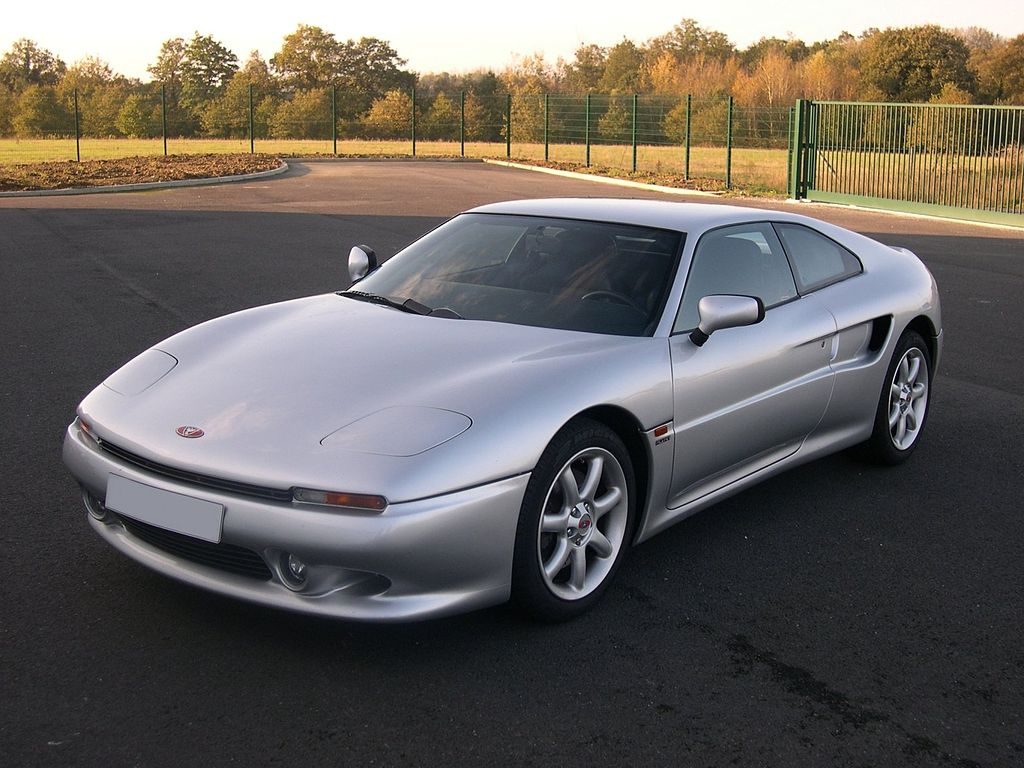
France’s mid-engine Porsche rival, built in numbers that guaranteed obscurity.
The Atlantique was France’s attempt to build a mid-engine sports car capable of competing with Porsche and Ferrari on engineering terms. The chassis work was genuinely advanced, and the powertrain options — a PRV turbo V6 or twin-turbo 3.0-liter depending on which version customers could actually obtain — provided legitimate performance credentials. Venturi produced only a few hundred Atlantique models between 1991 and 2000, with US imports rare enough that most American enthusiasts have encountered one only in automotive literature.
Venturi’s financial instability across its production run meant that owning an Atlantique required accepting parts availability as a philosophical variable rather than a practical certainty. The company’s continued existence is its own minor achievement — a small manufacturer that somehow survived long enough to transition to electric vehicles, which is the outcome that most observers at any point in its history would not have predicted.
4. Bitter SC (Exterior)
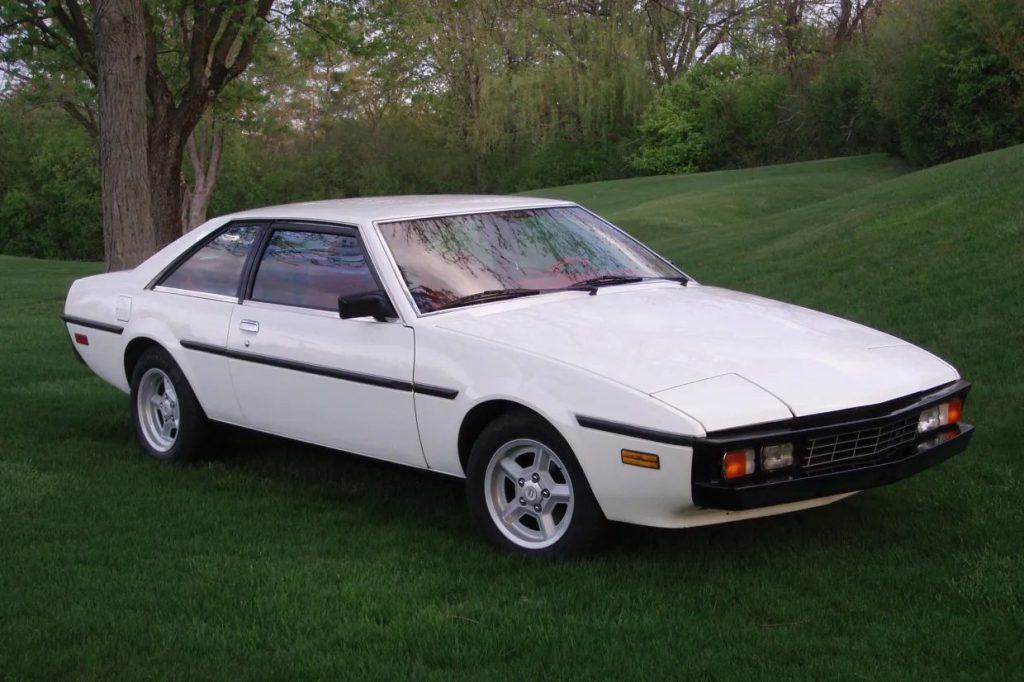
Opel mechanicals, Italian coachwork, and production numbers that made it effectively custom-order.
Erich Bitter built the SC on the Opel Senator platform and clothed it in custom coachwork, targeting buyers who found BMW and Mercedes insufficiently exclusive but still required Autobahn capability and German engineering reliability. The combination of proven mechanicals with bespoke bodywork produced a vehicle that delivered on both counts — a grand tourer with proven underpinnings and a visual identity that no other vehicle on the road shared.
Bitter SC (Interior)
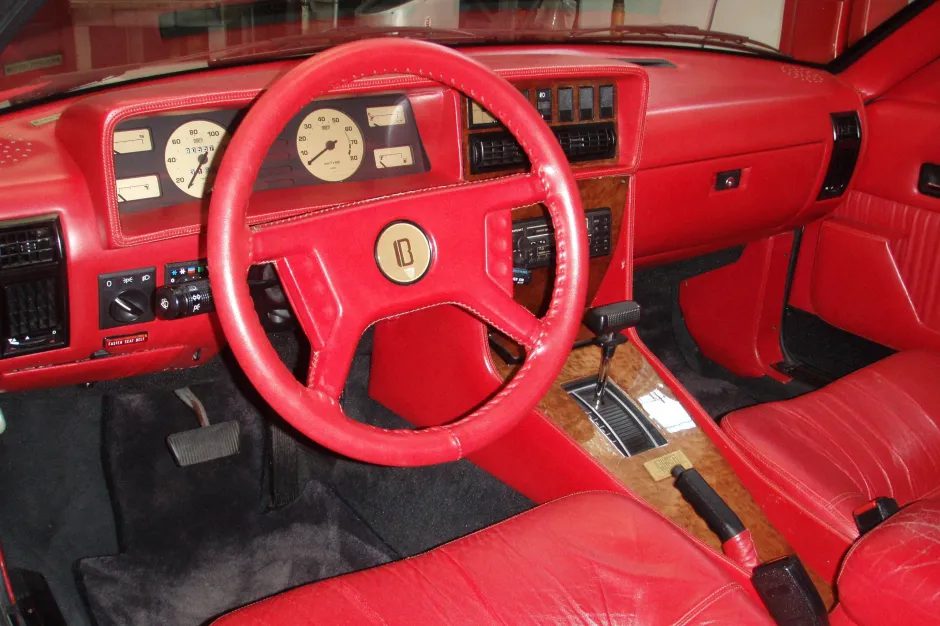
Production ran between 1981 and 1993 with total output under 500 units — a figure that made the SC a custom proposition by the early 1990s rather than a catalogued model. Bitter’s survival as a manufacturer across that period represents something genuinely unusual: a tiny coachbuilder that maintained production long enough to accumulate a legitimate collector following among buyers who understood what they were purchasing and why it cost what it did.
3. Mega Track
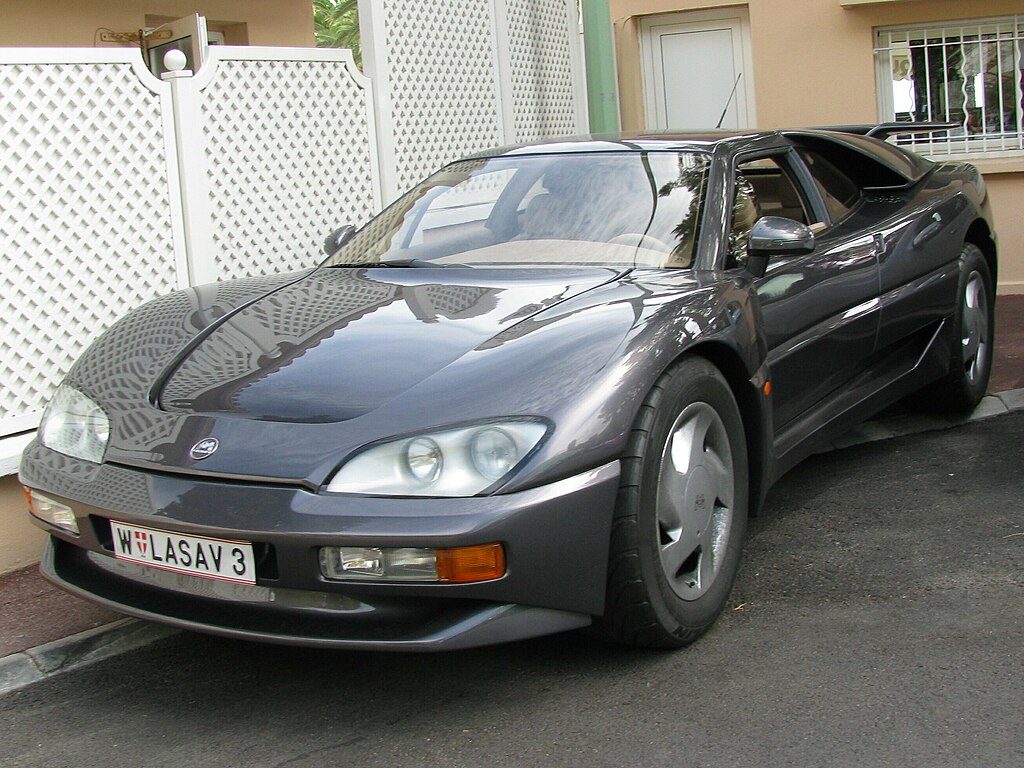
Five examples built: Mercedes V12, AWD, adjustable ride height, approximately $600,000 in 1995.
The Mega Track represented the outer limit of 1990s supercar ambition. AWD, Mercedes V12 power, adjustable ride height for off-road capability, and a price of approximately $600,000 in 1995. Aixam-Mega built five examples. The specification was genuinely extraordinary for its era; the production number reflects how completely the vehicle’s ambition exceeded any realistic commercial calculation. Each of the five built represents the pinnacle of what a small manufacturer could achieve when the goal was demonstrating capability rather than building a business.
The Track exists primarily as an automotive footnote known to collectors who appreciate audacity measured in units built rather than units sold. Five vehicles at $600,000 each in 1995 is an achievement of a specific kind — the kind that requires no commercial justification because it was never attempting commercial success.
2. Yamaha OX99-11
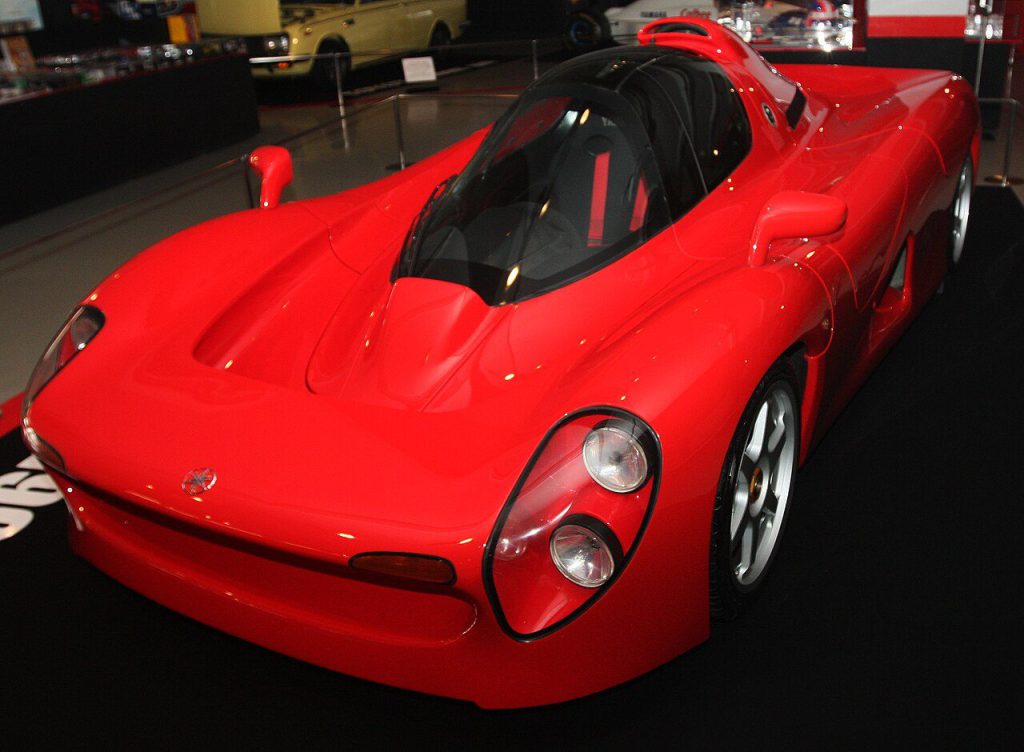
A Yamaha-developed 3.5-liter V12, Formula 1 aesthetics, three prototypes — ended by Japan’s economic bubble.
The OX99-11 was Yamaha’s application of Formula 1 engineering to a road car — a Yamaha-developed 3.5-liter V12 in bodywork that drew directly from contemporary F1 visual language. The project was a product of Japan’s bubble economy confidence at its peak, when manufacturers were willing to fund automotive experiments that made no commercial sense but demonstrated what was technically possible.
Three examples were built before Japan’s economic contraction ended the project. The surviving prototypes remain in Yamaha’s private collection, appearing occasionally at special events as artifacts of a specific moment in automotive history when the combination of available capital and engineering ambition produced objects that would not be attempted again under normal commercial conditions.
1. Cizeta-Moroder V16T (Exterior)
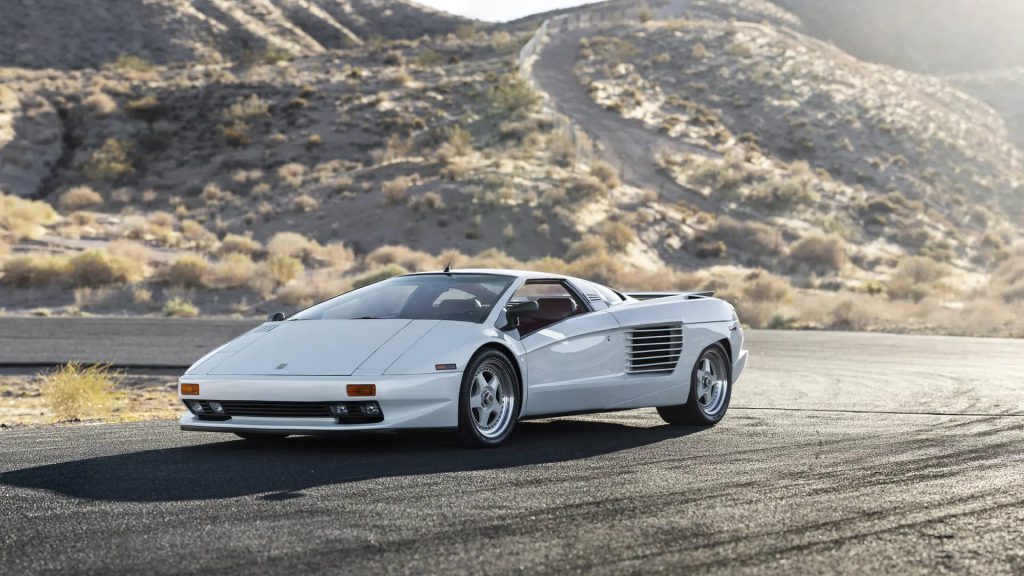
A transverse V16 built from two Lamborghini V8s, designed by former Lamborghini engineers, fewer than 20 completed.
The Cizeta-Moroder V16T took the cylinder count argument to its logical extreme: a transverse-mounted V16 constructed from two Lamborghini V8s joined together, developed by engineers who had worked on the vehicles that inspired the architecture. The technical achievement was genuine. Two V8s sharing a crankcase produces a powerplant that is simultaneously fascinating as an engineering object and impractical as a production proposition — which is an accurate description of the entire V16T project.
Cizeta-Moroder V16T (Interior)
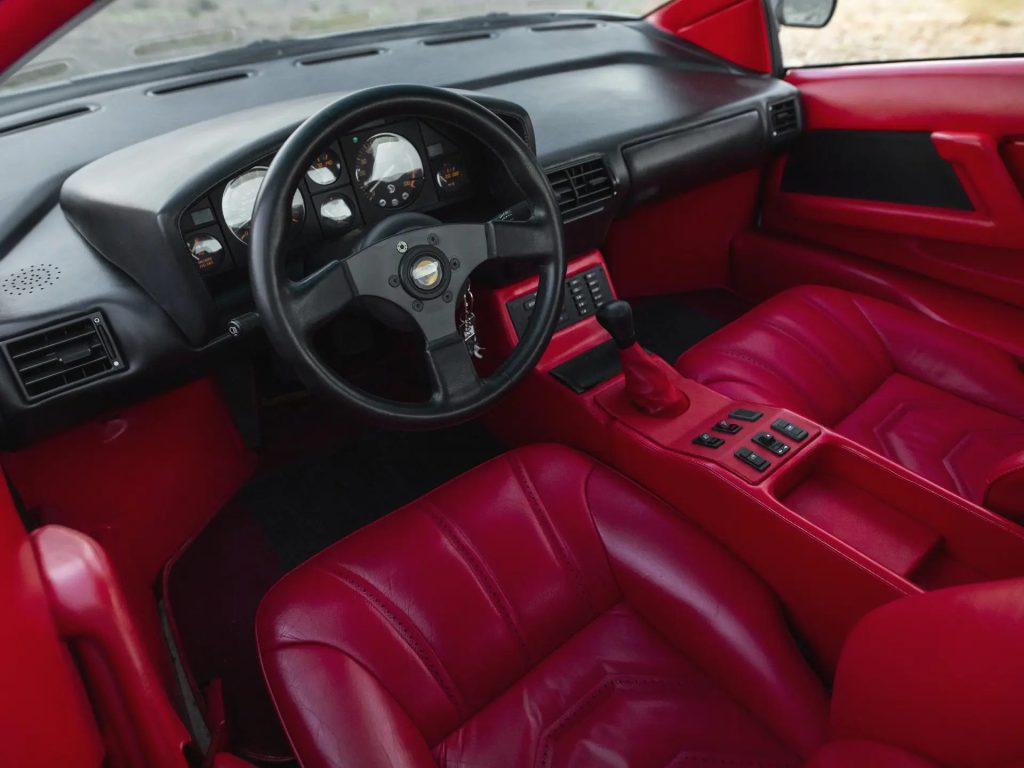
Fewer than 20 examples were completed before the project collapsed. The extreme wedge exterior and performance figures that impressed period automotive press could not attract sufficient buyers at a price that reflected the engineering investment. Surviving examples are collector objects recognized primarily by enthusiasts who encountered them in period magazine coverage — which is the specific kind of immortality available to vehicles that were too interesting for the market that existed but exactly right for the one that did not.