

Formula 1 undergoes an era-defining regulatory overhaul for 2027 and 2028, with the power unit split shifting to 58/42 in favor of the combustion engine. Major aerodynamic surfaces, energy management systems, and even the calendar’s testing schedule face comprehensive redesigns. These changes eliminate frustrating “super-clipping,” intensify wheel-to-wheel battles, and fundamentally reshape how teams approach setup. The sport delivers a complete technical reset—comparable to rebuilding a vintage muscle car for modern endurance racing—promising more intuitive driving and captivating spectacle.
1. 2027 F1 Floor Plank Change
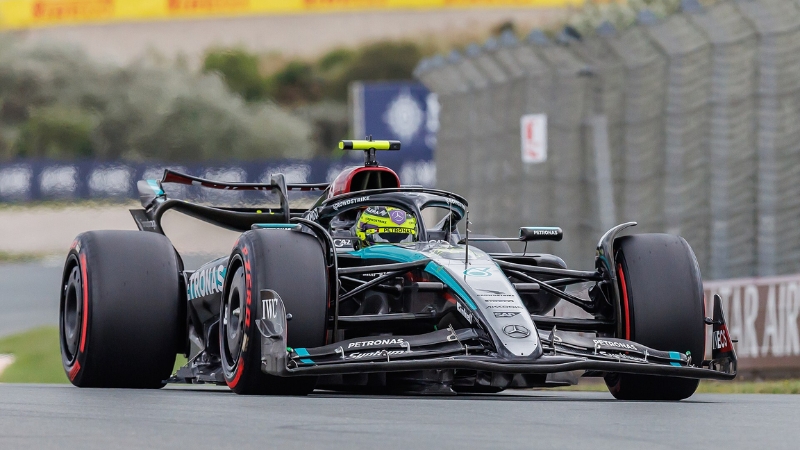
Shortening the front plank from 900 mm to 600 mm allows teams to run the nose lower without breaching wear limits.
Even a millimeter’s difference in a car’s floor drastically alters aerodynamic behavior. Teams aggressively pushed ride height for ground effect, sometimes triggering disqualifications—like at the 2023 United States GP—due to worn floor planks. To counter this, the 2027 regulations shrink the mandatory hardwood or composite plank’s front section from 900 mm to 600 mm.
This adjustment enables teams to run the front of the car lower without breaching the 9 mm minimum thickness rule. Anyone who has tweaked a street car’s alignment to eliminate a persistent push understands how crucial such fine-tuning becomes. The shortened plank shifts the bib tray area rearward, altering how teams control rake and ride height on bumpy circuits. This seemingly small dimension cut will reshape vehicle dynamics and setup philosophy.
2. Hamilton and Leclerc 2023 US GP Plank Disqualification
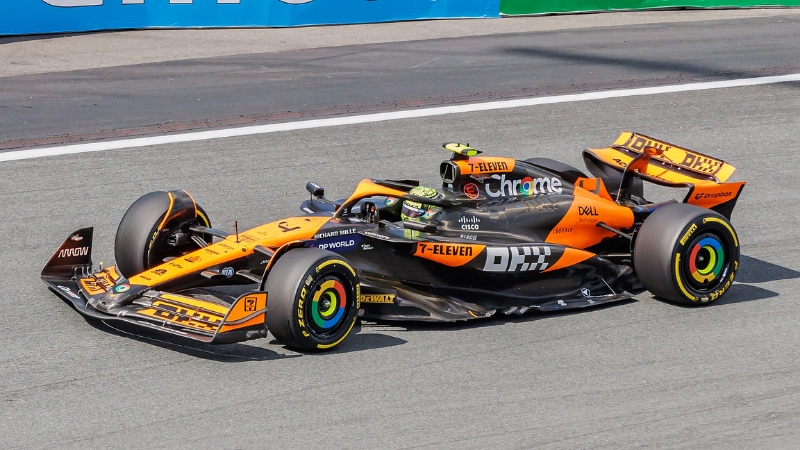
Post-race scrutineering found excessive wear on the skid blocks, confirming both cars ran too low to the track.
Formula 1 technical regulations are pitiless; a single millimeter of deviation wrecks a race weekend. Lewis Hamilton and Charles Leclerc discovered this when they were disqualified from the 2023 United States GP. Post-race scrutineering revealed excessive wear on their cars’ skid blocks—mandatory hardwood strips under the chassis designed to enforce minimum ride height.
Regulations require a new plank to be 10 mm ± 0.2 mm thick, with a minimum 9 mm thickness allowed after wear. Their cars simply ran too low. Worn planks confirmed both exploited ground effect aerodynamics by running too close to the tarmac, gaining crucial performance that ultimately made them non-compliant. The ruling makes clear that even the most minute technical breach is a bridge too far.
3. 2027 Rear Wing Changes
A 20 mm shallower mainplane reduces drag while a new central pylon brace revives “monkey-seat”-style devices.
Rear wings anchor an F1 car’s stability, much like a well-set suspension keeps a canyon carver planted. For 2027, the mainplane becomes 20 mm shallower, directly reducing downforce and drag. Regulations also ban “rotation brackets” that once stiffened the upper wing element, further cutting rear-end load. These changes moderate closing speeds in slipstream battles, reducing reliance on electric deployment at high speed.
To help compensate for lost rear downforce, a new central pylon brace between the wing supports is introduced. This structural addition allows for small “monkey-seat”-style devices that fine-tune airflow over the diffuser. These elements offer a legal tool for recovering crucial rear balance. Re-optimizing the overall aero balance will be brutal; engineers will chase every tenth because rear downforce lost from the rear wing must be recovered via the floor and other permitted surfaces.
4. 2027 Exhaust Wing Ban
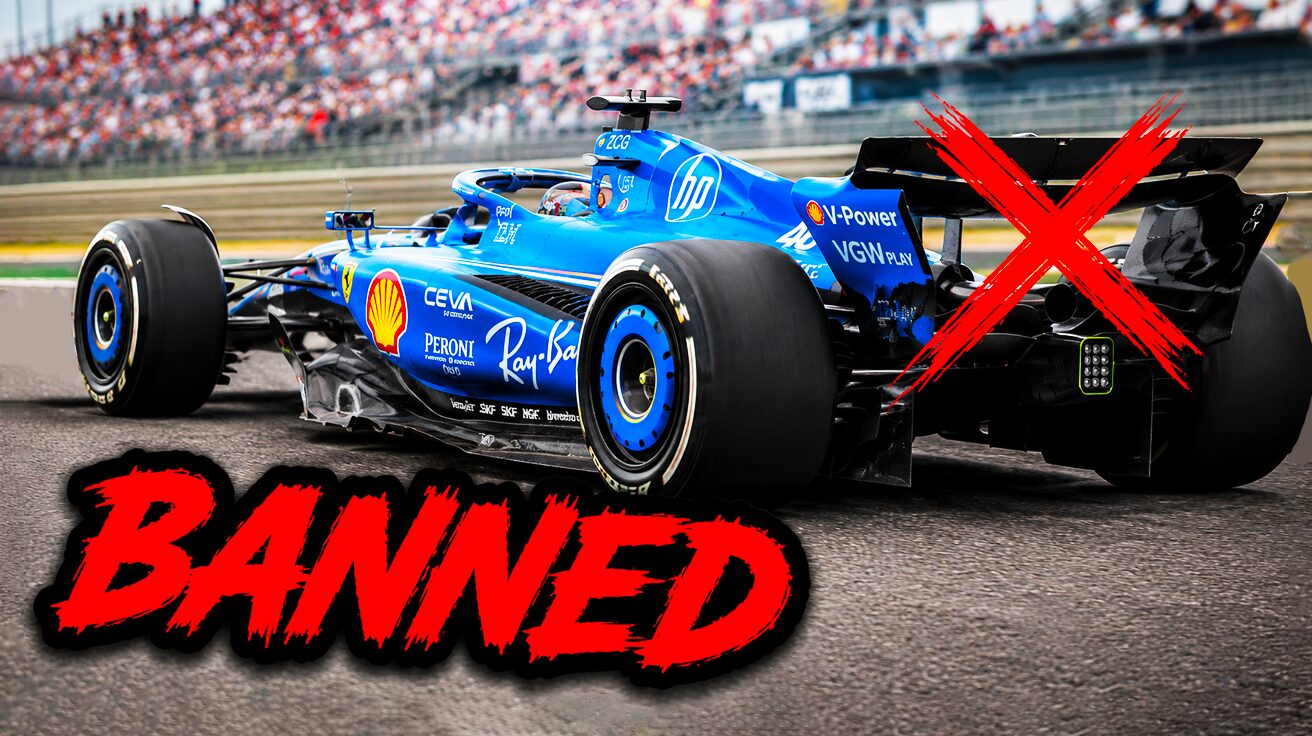
An exhaust exclusion zone 20 mm larger than the pipe diameter completely outlaws Ferrari’s pioneering exhaust wing concept.
Ferrari pioneered a compact wing element—often dubbed an “exhaust wing”—mounted directly around the tailpipe exit to exploit the hot, fast exhaust plume for extra rear downforce. Other teams adopted variations of this concept, which sits close to the tailpipe and interacts with central airflow above the diffuser and below the rear wing.
For 2027, the FIA introduces an exhaust exclusion zone that is 20 mm larger than the pipe diameter, completely outlawing such devices. Regulations that previously allowed tailpipe supports—often used as mounting points—are also removed. The FIA’s aim is to tidy up rear aero, reduce turbulent wakes, and avoid a development race around highly sensitive exhaust-driven devices.
5. Revival of ‘Monkey Seat’ Wings

The new central pylon brace provides a legal mounting location for mini winglets reminiscent of the 2014–2017 era.
Subtle aerodynamic tweaks can make or break a car’s grip profile. In the early turbo-hybrid era (2014–2017), Formula 1 teams ran a clever “monkey seat” winglet mounted between the rear wing supports, specifically designed to energize airflow over the diffuser. These small devices generated crucial upwash and vortices to stick the car to the tarmac.
With the exhaust wing ban for 2027, the new central pylon brace on the rear wing offers a fresh, constrained legal location for similar mini-elements. This re-engineered “monkey seat” aims to restore some of that lost rear balance. It acts as a crucial fine-tuning tool for diffuser performance when the usual tricks are off-limits, helping to manage grip without the unbridled freedom of its predecessors.
6. 2027-2028 ICE/MGU-K Power Split & Fuel Flow Increase

The combustion engine’s share climbs from 53% to 60% by 2028, while fuel flow increases by 13% to raise ICE output to approximately 563 bhp.
The power unit philosophy shifts significantly for 2027, moving away from a near-even split between combustion and electric. The 2026 53% ICE / 47% MGU-K ratio leans heavily toward the internal combustion engine, adjusting to 58/42 in 2027 and 60/40 by 2028. The fuel flow limit to the ICE increases by 5% in 2027, totaling 13% by 2028, pushing ICE output from around 536 bhp to approximately 563 bhp.
At the same time, the maximum continuous power of the MGU-K in race mode drops from 350 kW to 300 kW, though a robust 350 kW “Overtake Mode” remains available for short bursts to aid overtaking. Anyone who has mashed the accelerator only to feel the car fall flat due to energy clipping knows the frustration. These adjustments are designed to minimize super-clipping, providing more consistent power when the battery is low.
7. 2027-2028 Battery Capacity & MGU-K Harvesting Power Increases
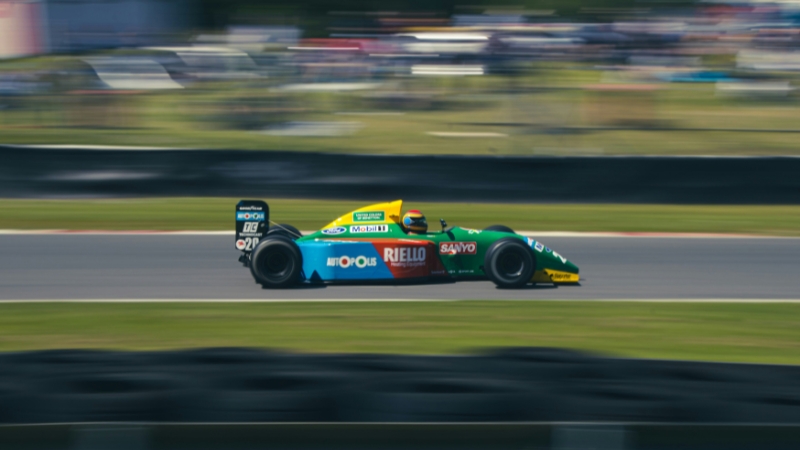
Battery capacity grows from 4 MJ to 5 MJ by 2028, while harvesting power climbs to 400 kW for quicker regeneration.
Modern hybrid racing demands razor-sharp energy management. To counter “super-clipping”—that infuriating power drop mid-straight for battery recharge—F1 is significantly boosting energy store capacity. From 4 MJ in 2026, it climbs to 4.5 MJ in 2027, then 5 MJ in 2028, allowing cars to store and regenerate more electrical energy over a lap.
The MGU-K harvesting power also gets a robust upgrade. Currently at 350 kW in 2026, it leaps to 375 kW in 2027 and 400 kW in 2028. Quicker battery regeneration under braking turns kinetic energy directly into usable electric boost. Combined with the reduction in continuous MGU-K deployment power, the system moves toward “generate more, use slightly less,” reducing extended periods of super-clipping and giving drivers more consistent throttle response on long straights.
8. 2026-2028 Power Unit Component Allocation & Grid Penalties
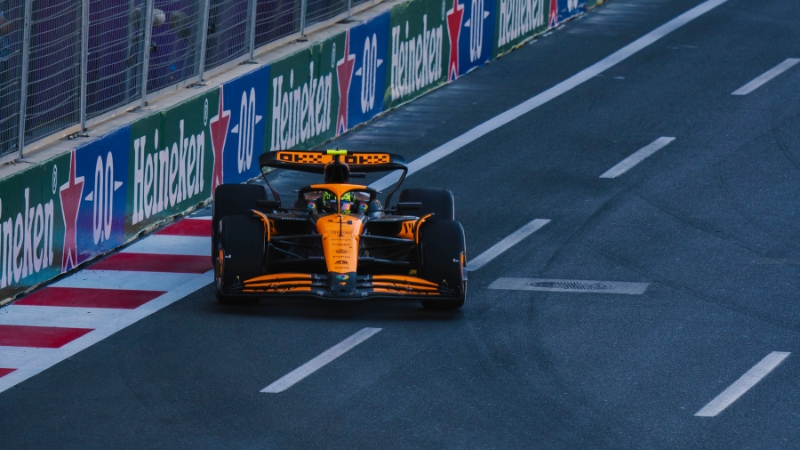
Drivers retain access to four ICEs and four turbochargers through 2028, reducing reliability-related grid drops.
Grid penalties have routinely sent top drivers to the back, infuriating fans who just want a straight fight. The FIA’s decision to maintain the higher power unit component allocation from 2026–2028 aims to ease this pain. Drivers retain generous access to parts like four ICEs and four turbochargers, reducing the scramble for reliability.
Originally, from 2027 the plan was to revert to lower allocations (3 ICE/TC, 2 MGU-K/ES/CE), increasing the risk of penalties. While exceeding limits still incurs a 10-place grid penalty for the first breach and 5-place penalties thereafter, this continuity reduces reliability-related grid drops. It ensures teams focus on pure racing rather than just surviving the weekend.
9. 2027 Pre-Season Testing Increase
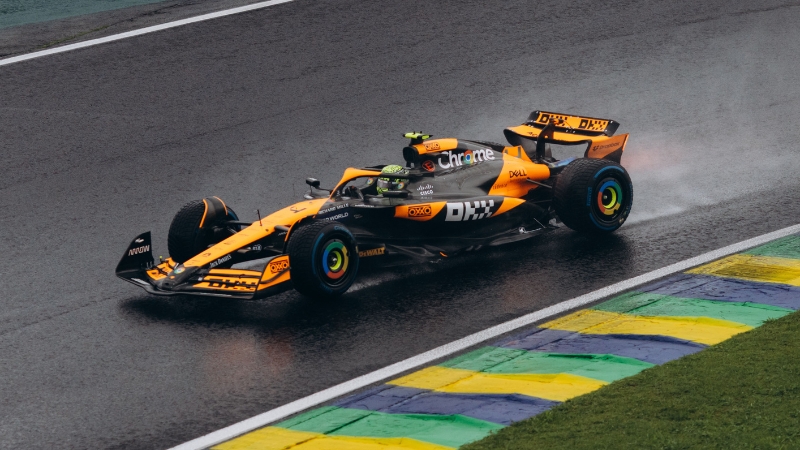
An extra day—a 33% boost in official track time—gives teams a full 8-hour session to validate aero changes and power unit strategies.
In recent seasons, pre-season testing has been limited to three days, compressing mileage and making it harder for teams to understand new regulations. The Formula 1 Commission, responding to concerns over complex 2027 regulations, approved an increase from three to four pre-season test days. This provides a 33% boost in official track time, delivering an additional full 8-hour session.
The decision explicitly responds to concerns from teams and drivers that the combination of major aero and energy-system changes in 2027 demanded more real-world running for safety, cost-control, and competitive balance. For midfield teams with tighter budgets, this time offers a critical chance to transform simulation data into tangible on-track speed.
10. Super-Clipping & 2026 Energy Rules Criticism
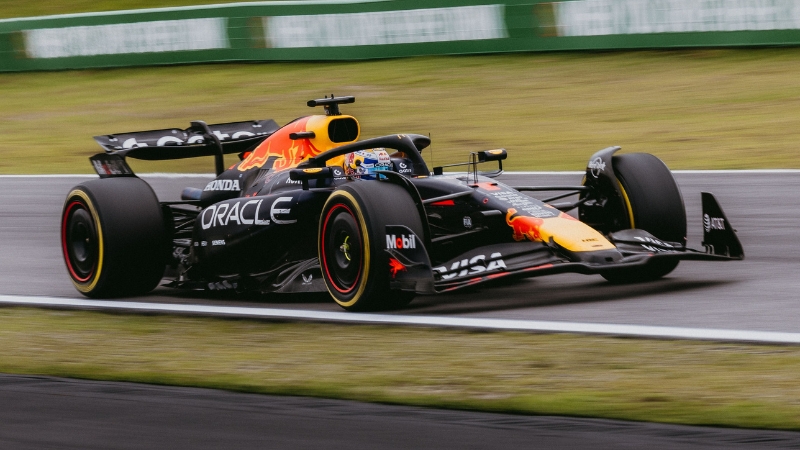
Max Verstappen called the 2026 package “Formula E on steroids,” highlighting the frustration of power drops at over 300 km/h.
Max Verstappen called the 2026 F1 power unit package “anti-racing” and “Formula E on steroids,” pinpointing the existential dread of super-clipping. This phenomenon causes cars to decelerate on straights despite full throttle, as the energy management system aggressively diverts engine power to recharge the battery. Drivers face the constant frustration of having their surge cut short, sometimes lifting at over 300 km/h just to manage energy rather than racing.
The FIA responded with interim tweaks, reducing permitted recharge from 8 MJ to 7 MJ and adjusting super-clip power windows to shorten clipping duration to roughly 2–4 seconds per lap. The more fundamental fix comes via the 2027–2028 changes: lower continuous MGU-K deployment (300 kW), higher harvesting limits (up to 400 kW), and larger battery capacity (to 5 MJ). These adjustments aim to reduce extreme super-clipping and make performance more intuitive for drivers.
11. James Vowles’ Comments on 2027 Aero Changes

“The 2027 aero rules are fairly significant,” Williams team principal James Vowles stated, warning teams that carry-over designs from 2026 face exposure.
Williams team principal James Vowles stated during the 2026 Belgian Grand Prix that 2027 aero rules are “fairly significant,” affecting the bib, rear wing, and parts of the floor. He emphasized that the changes mean 2027 cars will not be as much of a carry-over from 2026 as teams had expected, implying substantial redesign work and budget allocation will be required.
The mainplane of the rear wing will be 20 mm shallower, and the front plank is shrinking from 900 mm to 600 mm, moving the bib tray area rearward. Detailed reporting notes reductions in allowable floor-edge elements (from five to three), the shallower rear wing with banned rotation brackets, and a new central brace. Vowles supports the direction, saying the modifications should help create a better show on TV, aligning aero with the revised power-unit regulations to improve racing quality.
12. Planned Return of V8 Engines (2030-2031)
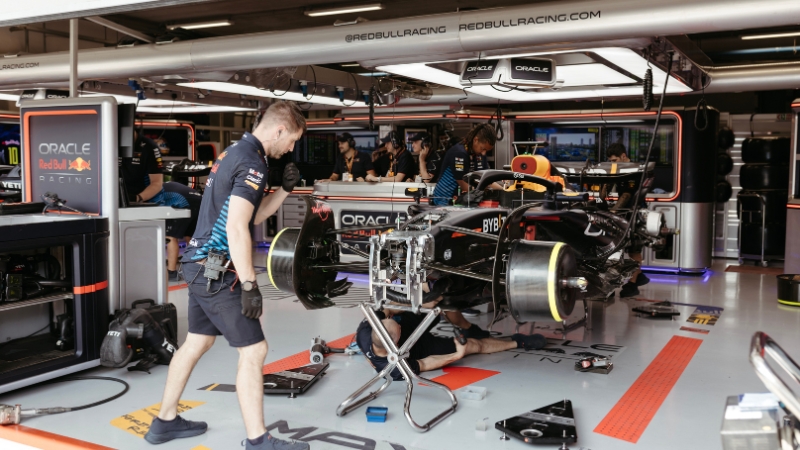
FIA President Mohammed Ben Sulayem pledges V8s with “very, very minor electrification” could arrive by 2030, with full regulatory authority to impose them by 2031.
FIA President Mohammed Ben Sulayem has publicly pledged that Formula 1 will switch from the current V6 turbo-hybrid units to V8s with “very, very minor electrification,” describing the change as “a matter of time.” He has indicated that V8s could arrive as early as 2030, with full regulatory authority to introduce them by 2031 even without power-unit manufacturers’ approval.
Reports quoting Ben Sulayem suggest the hybrid element would provide around 10–20% of total power, with the majority coming from the combustion engine—a stark contrast to the current near-50% electric contribution. Motivations cited include better sound, reduced complexity, lower weight, and the use of sustainable fuels plus more standardized components to control costs while maintaining environmental credentials. The prospective V8 rules are framed as the next major regulation reset after the 2027–2028 interim fixes, effectively shaping teams’ long-term planning horizon toward a fundamentally different powertrain concept.