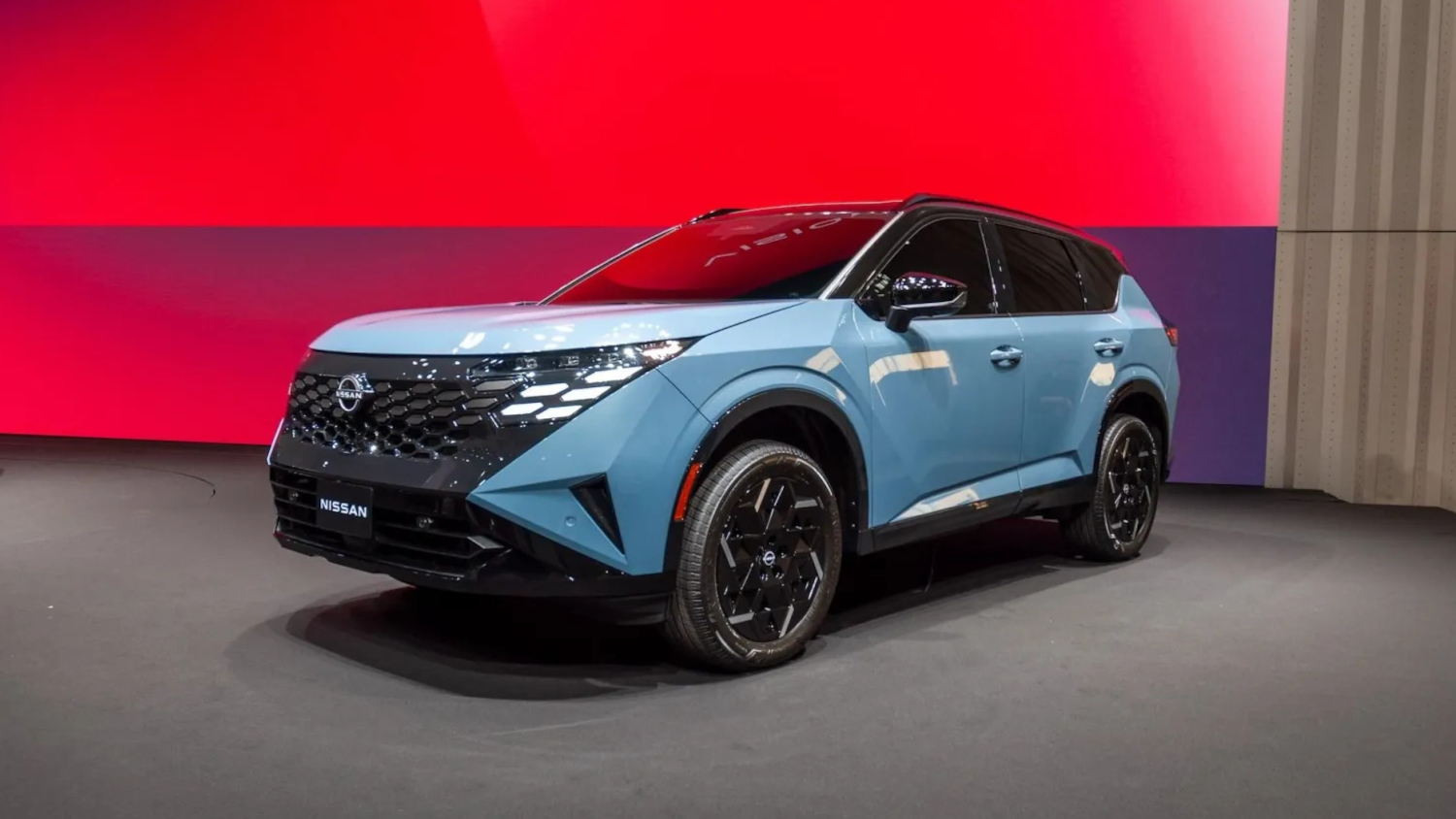


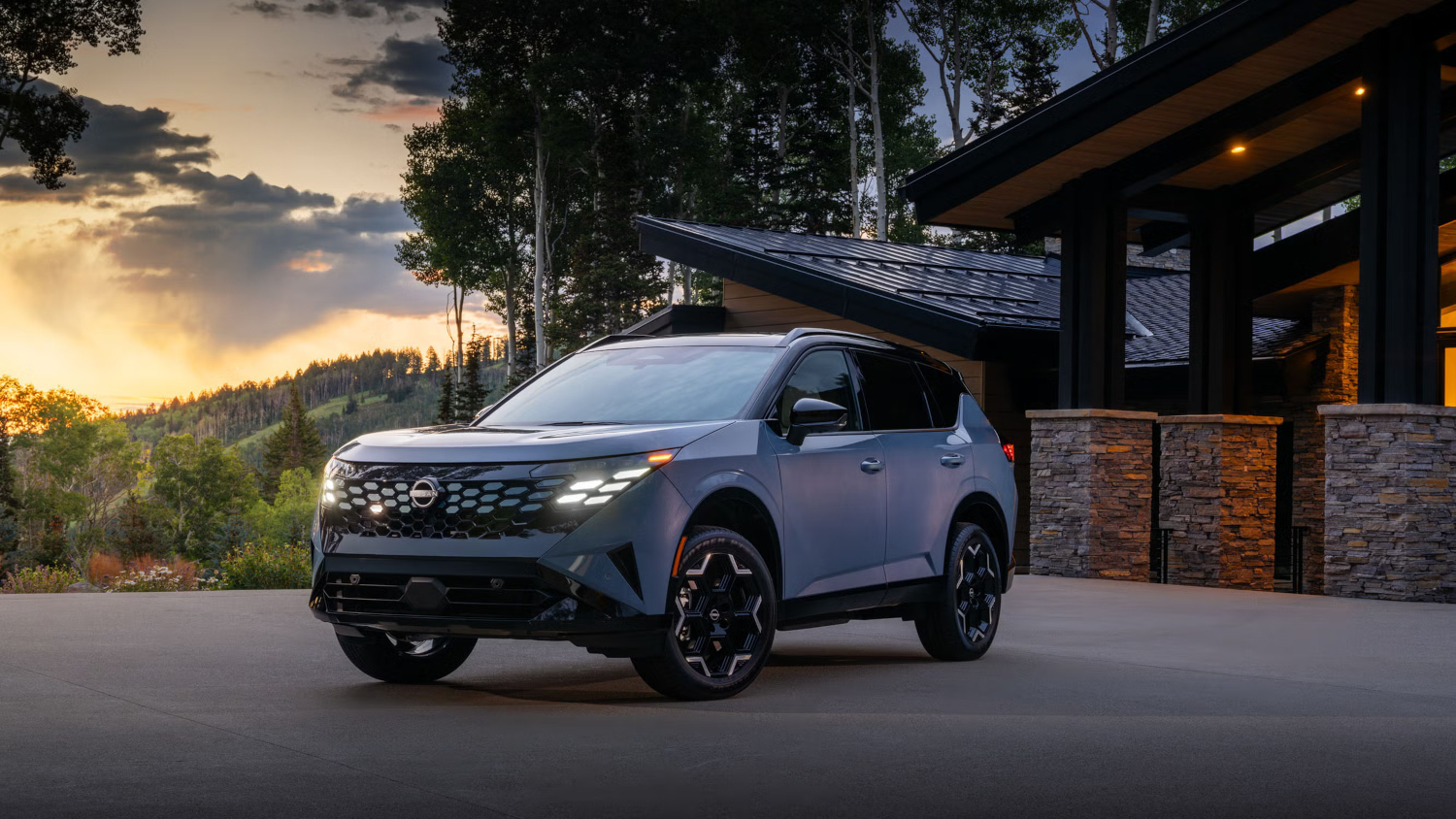
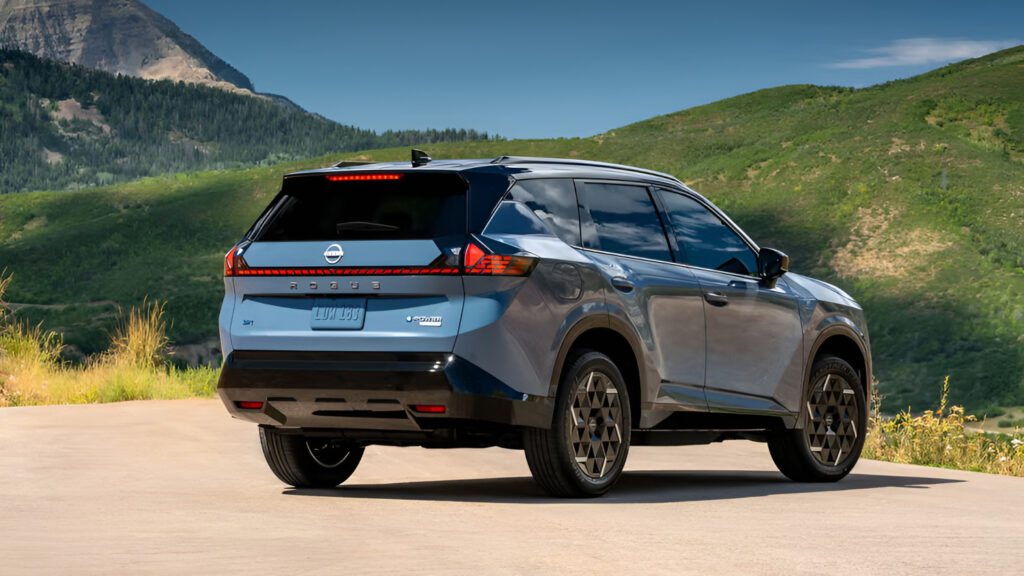
Most compact hybrid SUVs work the same way: gas engine and electric motor share driving duties, swapping control depending on speed and load. The 2027 Nissan Rogue Hybrid doesn’t do that. Its turbocharged 1.5-liter three-cylinder never touches the wheels — it exists solely to charge a battery, while dual electric motors handle all propulsion. For anyone cross-shopping the RAV4 Hybrid or CR-V Hybrid and wondering when Nissan would show up with something serious, here’s the answer. The catch: that $37,065 entry price isn’t what’s arriving first.
The Engine That Never Touches the Road
Nissan’s e-Power system means every throttle input goes straight to electric motors — no exceptions.
Merging onto a highway, the power delivery feels unnervingly smooth, with none of the gear-hunting hesitation of a conventional hybrid. That’s e-Power at work. Nissan says the system produces 225 horsepower with AWD standard and returns a preliminary 40 mpg city, 36 highway, and 38 combined. It also includes e-Pedal regenerative braking, plus a Smooth Stop feature designed to eliminate the jerky brake feel common to most one-pedal systems.
It drives like an EV. It refuels like a gas car. That’s the whole pitch — and it’s a genuinely different one.
What You’re Actually Getting:
- 225 hp, AWD standard via dual electric motors
- Fuel economy: 40 city / 36 highway / 38 combined (Nissan preliminary estimate, not yet EPA-confirmed)
- Cargo: 31 cu ft seats up, 66 cu ft folded; 1,500-lb tow rating
- Rear doors open nearly 90 degrees; five LATCH anchors across the rear seat
- Infotainment: 12.3-inch touchscreen standard; 14.3-inch with Google Maps, Gemini AI, and Play Store on SR Technology and Platinum trims

Priced for Reality, Not the Brochure
The entry price and the launch price are separated by $6,000 and several months.
The $37,065 SV base trim exists — it’s just not arriving this fall. The launch model, the SR with SR Technology package, starts at $43,065. The full lineup — SV at $37,065, SR at $39,065, and Platinum at $45,065 — follows later, likely early next year. Nissan is prioritizing higher-margin trims at launch, which is standard industry practice. Nothing deceptive about it, but worth knowing before walking into a dealership expecting a $37K sticker on the lot.
For context, the Toyota RAV4 Hybrid starts closer to $33,000, though its parallel hybrid system operates on fundamentally different mechanical principles than Nissan’s series e-Power setup.
Built for the Minivan-Resisters
ProPilot upgrades and near-90-degree rear doors make a quiet but convincing case for families who swore off three-row rigs.
For anyone hauling car seats and navigating school pickup, the Rogue Hybrid’s packaging details matter more than horsepower figures. Updated ProPilot Assist adds lane-change capability and Hands-off Traffic Jam Support for low-speed divided-highway crawls, according to Nissan. Rear doors that swing open to nearly 90 degrees, combined with five LATCH anchor positions across the back seat, mean fewer contortions when installing child seats. These are practical advantages that don’t show up on spec sheets — but absolutely show up on Tuesday mornings.
If the SV trim’s $37,065 price is the draw, patience pays off. If 225 hp, 38 mpg combined, and Google-powered infotainment sound worth waiting for at $43K right now, the SR Technology launch model is a complete package. Either way, Nissan has finally brought something worth comparing.